
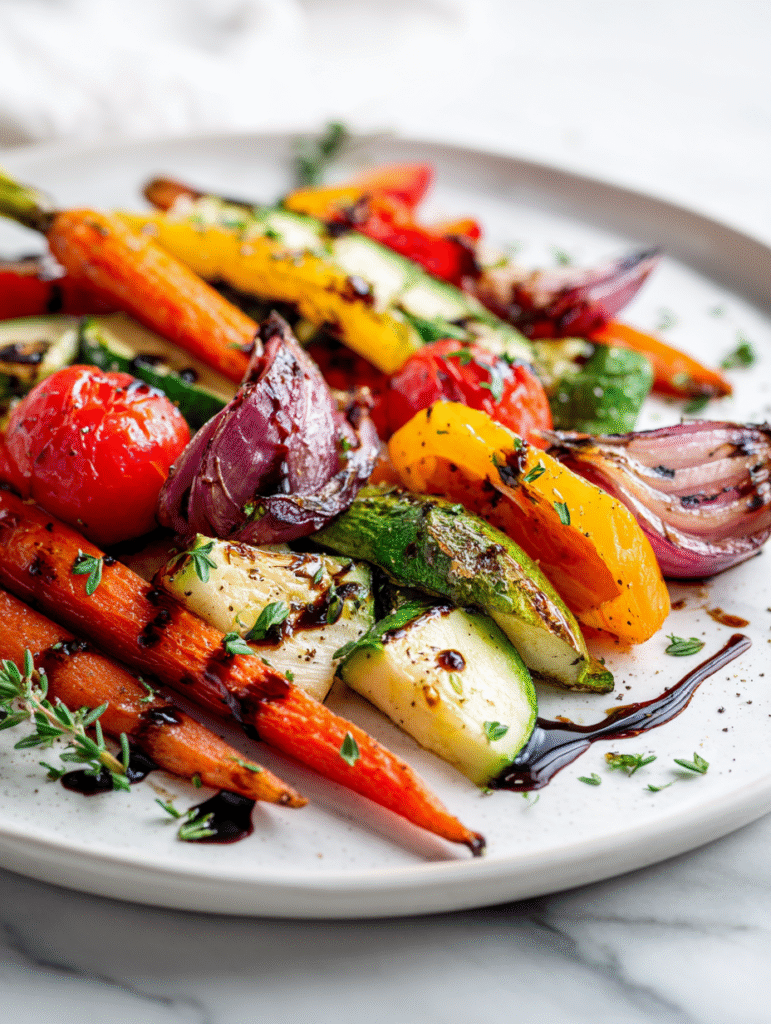
Roasted vegetables hold a quiet magic, especially at Christmas. It’s the kind of dish that feels familiar but invites experimentation—think a splash of orange juice or a handful of toasted nuts. This isn’t about perfection; it’s about capturing the essence of seasonal bounty in a simple, honest way.
Why I keep returning to this simple roast
It’s honest, forgiving, and always feels festive. The smell alone makes the house feel warm and alive. Plus, you can tweak it endlessly—adding nuts, different herbs, or a splash of vinegar—making each batch unique.
What’s in the mix? An honest look at the ingredients
- Root vegetables:: Carrots, parsnips, sweet potatoes—staples that develop a sweet, smoky flavor when roasted.
- Olive oil:: The backbone of flavor and crispness—use good quality for best results.
- Fresh thyme:: Gives a fragrant, earthy aroma—swap with rosemary or sage if you prefer.
- Salt and pepper:: Essential to bring out natural sweetness—don’t skimp.
- Lemon zest or juice:: Brightens the dish with a citrusy zing—skip if you prefer a mellow profile.
- Honey or maple syrup:: Adds a touch of caramel sweetness—optional but recommended.
- Garlic (optional):: For that aromatic punch—roast with garlic for a deeper flavor.
Tools of the trade for roasting vegetables efficiently
- Baking sheet or roasting pan: Provides a flat surface for even heat transfer and caramelization.
- Chef’s knife: Cuts vegetables into uniform pieces for consistent cooking.
- Cutting board: A stable surface for chopping.
- Silicone spatula or tongs: Turns vegetables during roasting to ensure even color and texture.
- Aluminum foil or parchment paper: Eases cleanup and prevents sticking.
Step-by-step guide to roasting vegetables that steal the show
Step 1: Preheat your oven to 220°C (430°F).
Step 2: Chop a mix of root vegetables—carrots, parsnips, sweet potatoes—into uniform pieces for even roasting.
Step 3: Toss vegetables with olive oil, salt, pepper, and a sprinkle of fresh thyme.
Step 4: Spread on a baking sheet in a single layer, ensuring no overcrowding.
Step 5: Roast for about 30-35 minutes, flipping halfway through.
Step 6: Look for golden edges and a tender interior—test with a fork.
Step 7: Once done, sprinkle with a little lemon zest and a drizzle of honey for brightness.
Step 8: Let the vegetables rest for 5 minutes before serving to deepen flavors.
Cooking checkpoints and tips for perfect roasted vegetables
- Ensure vegetables are cut to similar sizes for even cooking.
- Keep an eye on the edges; they should turn a deep golden brown.
- Smell for a toasted, nutty aroma—signs of caramelization.
- Test tenderness with a fork—no resistance, but not mushy.
Common roasting mistakes and how to fix them
- Vegetables are greasy.? Use too much oil → Lighten up on the oil; just a thin coating is enough.
- Vegetables steam instead of roast.? Overcrowd the pan → Roast in batches or use two sheets.
- Under or overcooked veggies.? Roast at too high or too low a temp → Stick to 220°C (430°F) for a golden finish.
- Uneven color and texture.? Forget to flip halfway → Turn vegetables to promote even browning.
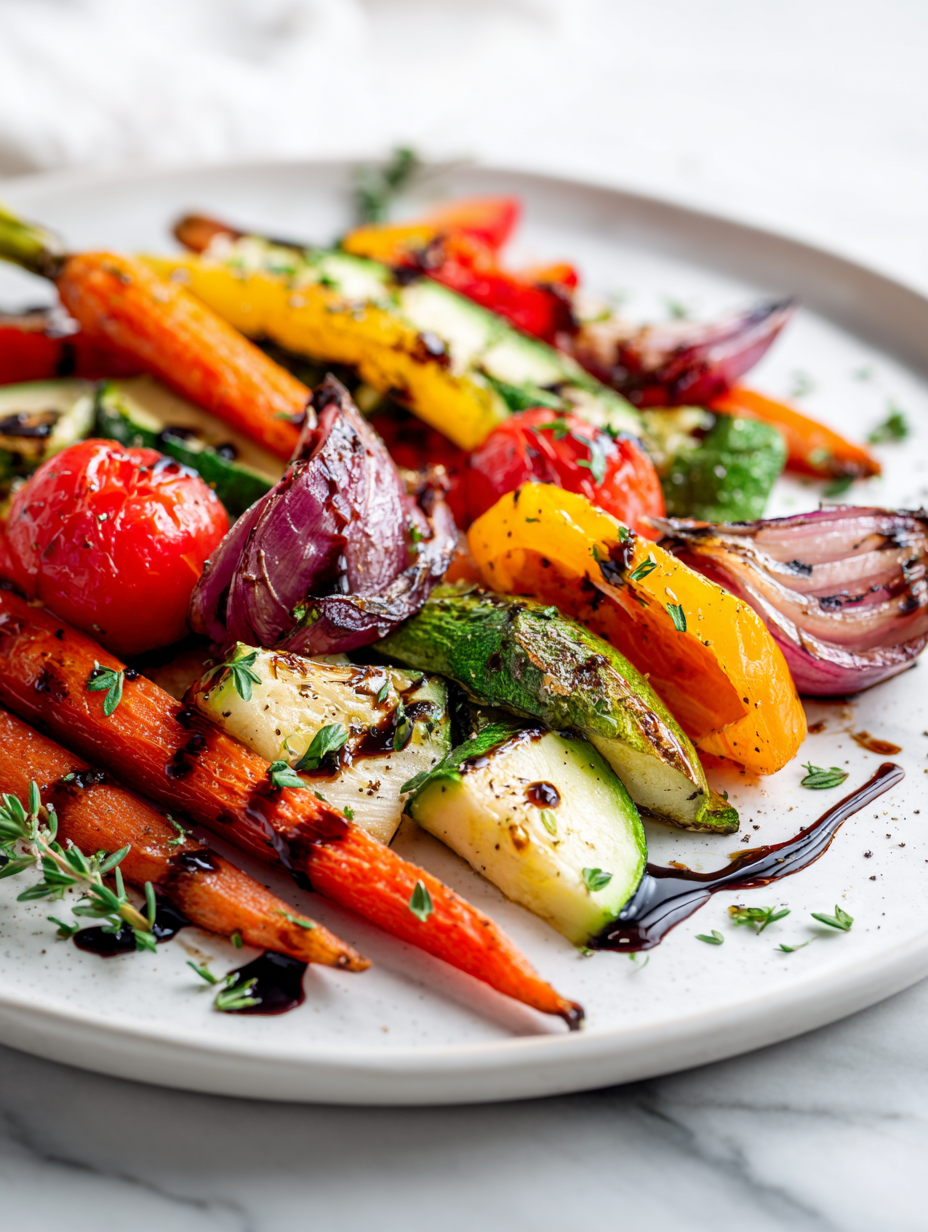
Festive Roasted Vegetables
Ingredients
Equipment
Method
- Preheat your oven to 220°C (430°F) and line a baking sheet with parchment paper or aluminum foil for easy cleanup.
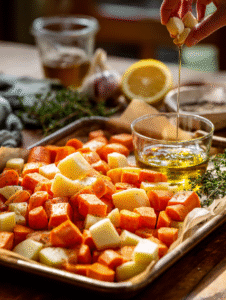
- Chop the root vegetables into even-sized pieces, about 1 to 1.5 inches, so they cook uniformly and develop caramelization.
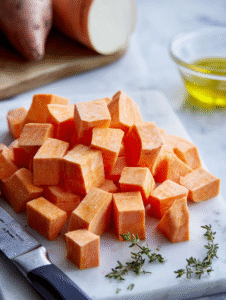
- In a large bowl, toss the chopped vegetables with olive oil, ensuring each piece is lightly coated for crisp edges.
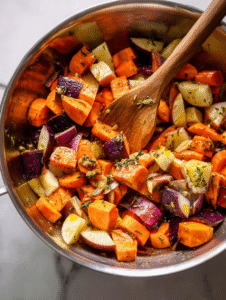
- Add fresh thyme, salt, pepper, and minced garlic if using, tossing again to evenly distribute the herbs and seasonings.
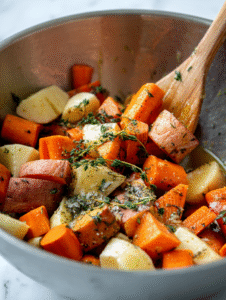
- Spread the coated vegetables in a single layer on the prepared baking sheet, giving each piece space for proper roasting.
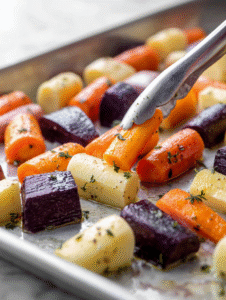
- Roast in the oven for 30 to 35 minutes, flipping the vegetables halfway through with tongs or a spatula, until they are golden brown and tender when pierced with a fork.
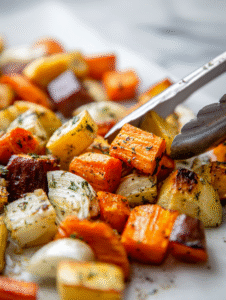
- Remove from the oven, then sprinkle with lemon zest or squeeze fresh lemon juice over the hot vegetables for a bright, citrusy finish.
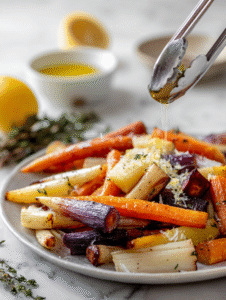
- Drizzle with honey or maple syrup for a touch of caramel sweetness, then toss gently to coat evenly.
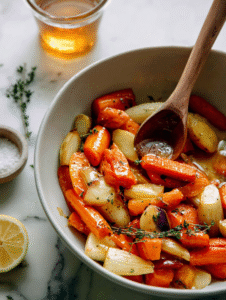
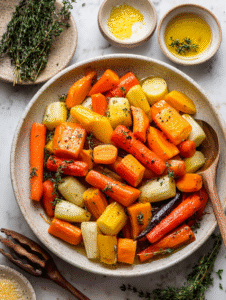
- Let the vegetables rest for 5 minutes to allow flavors to deepen and serve warm, garnished with additional herbs if desired.
Notes

Hi, I’m Clara Sage – and welcome to my kitchen of small revelations.
I created The Language of Aha not just as a recipe blog—but as a space to celebrate the little lightbulb moments that happen in the kitchen.