
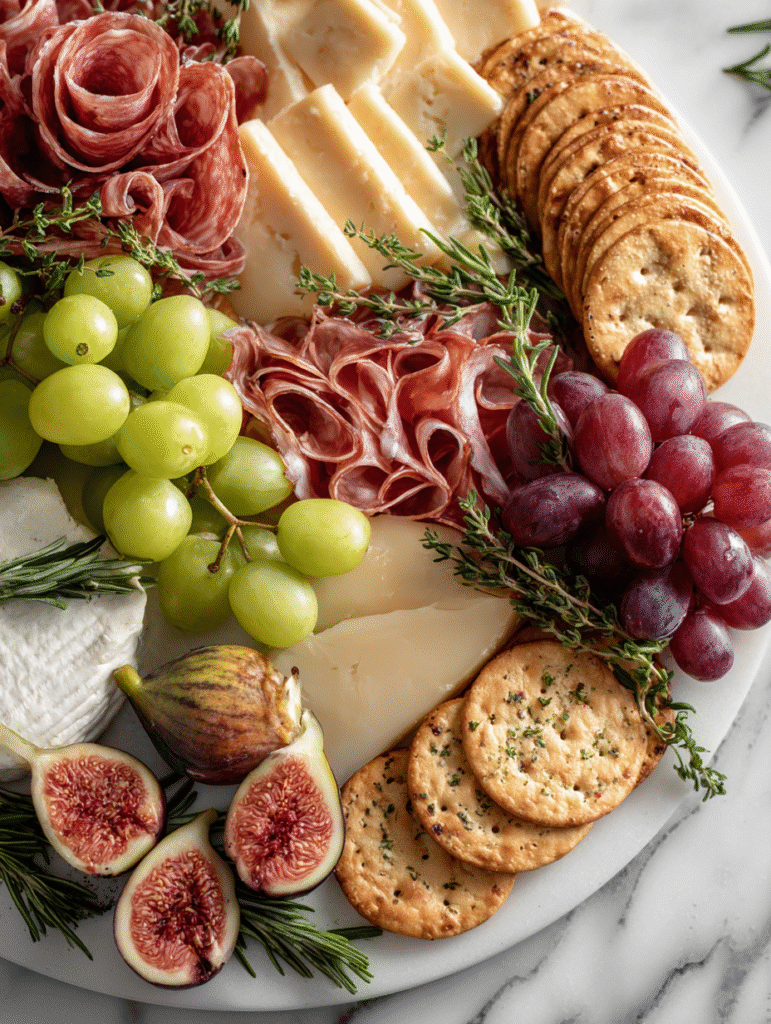
Charcuterie boards are traditionally about luxury and indulgence, but I like to think of them as a playground for flavors and textures. I often experiment with unexpected pairings—like smoky paprika almonds or tangy pickled vegetables—that surprise and delight. They’re perfect for when you want to impress without stress, or just need an excuse to indulge a little.
Why this board keeps calling me back.
It’s the freedom to experiment, to combine flavors that seem unlikely but work beautifully. Each time, I discover new textures and pairings that surprise even me. It’s tactile, visual, and deeply satisfying to craft something so vibrant and inviting.
Breaking down the essentials of a standout board.
- Aged Cheddar: Sharp, crumbly, and full-flavored. Substitute with Gruyère for a nuttier vibe.
- Prosciutto: Salty, silky slices that drape beautifully. Swap with serrano ham if needed.
- Dried Figs: Sweet, chewy bites that contrast savory. Fresh figs work in season.
- Spicy Mustard: Adds a punch and balances richness. Dijon or whole grain are versatile.
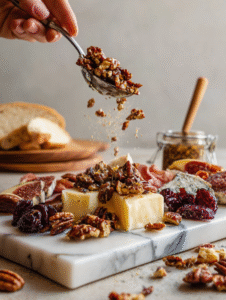
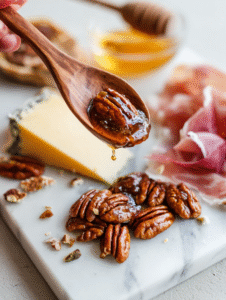
- Candied Pecans: Crunchy, sweet, and slightly smoky. Toast them lightly for extra flavor.
- Baguette Slices: Crusty, airy, perfect for spreading and piling. Try crostini for a rustic touch.
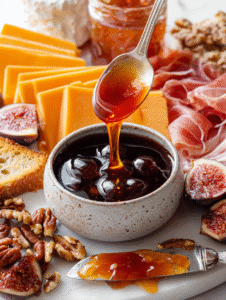
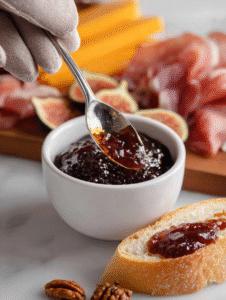
- Fig Jam: Sweet, sticky, and fragrant. Honey can substitute if you’re in a pinch.
Tools and equipment for assembling your masterpiece.
- Wooden Board or Platter: The canvas for your creation, big enough to hold all elements.
- Cheese Knives: Different knives for soft, hard, and crumbly cheeses to avoid mess.
- Small Bowls: Contain condiments, pickles, or spreads.
- Knife and Cutting Board: Prepping ingredients and slicing meats.
- Tweezers or Tongs: Placing delicate items precisely.
Step-by-step guide to building your playful, personalized charcuterie board.
Step 1: Start with choosing a theme—think smoky, tangy, or sweet. It guides your selections and makes the board more cohesive.
Step 2: Arrange your cheeses first—vary textures and colors, from crumbly to creamy, big to small.
Step 3: Add your meats—fold, roll, or pile to add interest. Don’t forget some spicy sausage or prosciutto for a punch.
Step 4: Layer in fruits and nuts—think dried figs, candied pecans, or fresh berries for pops of color and flavor.
Step 5: Finish with condiments—mustard, honey, fig jam. Place them in small bowls or smear directly on the board.
Step 6: Add bread and crackers—slice or break into irregular shapes to complement everything else.
Step 7: Garnish with fresh herbs or edible flowers for that extra touch of freshness and visual appeal.
Cooking checkpoints and tips to keep your board perfect.
- Cheeses should be at room temperature for better flavor and easier slicing.
- Meats should be sliced thinly—think paper-thin for easier bites and better flavor.
- Fruits and nuts should be fresh and not overly dried or stale.
- Condiments should be accessible but not overpowering—balance is key.
Common pitfalls and how to fix them.
- Overloading one section, making it crowded and awkward to serve.? FORGOT to balance flavors, leading to a dull board. → Add a tangy chutney or spicy mustard.
- Using only one type of cracker, making the board monotonous.? DUMPED all cheeses in one corner. → Spread them out, mixing textures and colors.
- Not allowing cheeses to come to room temp. → Take them out at least 30 mins before.? OVER-TORCHED meats, leading to dryness. → Serve thin slices and keep an eye on the heat.
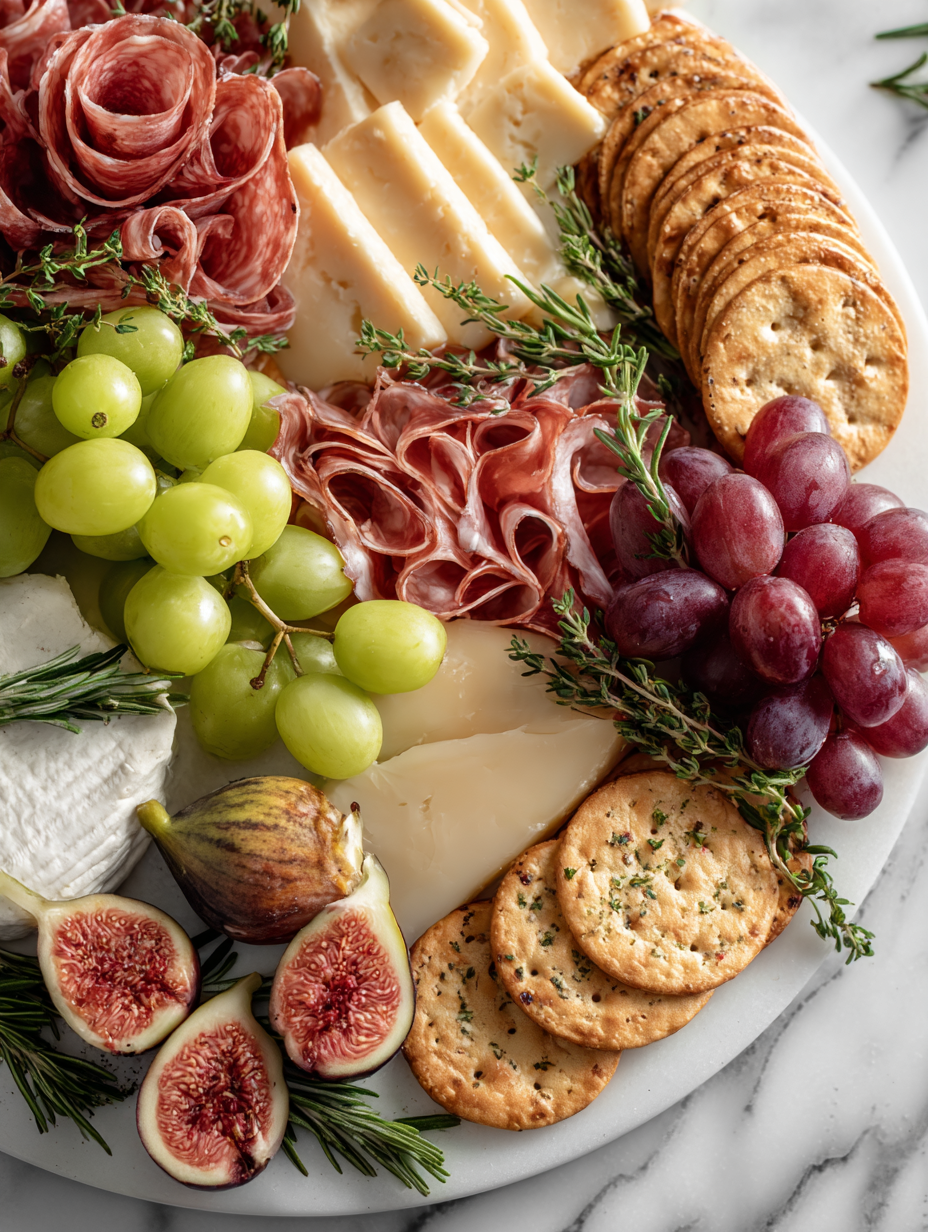
Artisan Charcuterie Board
Ingredients
Equipment
Method
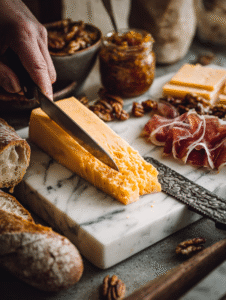
- Begin by arranging your cheeses first, placing the crumbly aged cheddar in one area of the board, varying the shapes and textures for visual interest.
- Next, gently fold or roll the slices of prosciutto and place them artistically nearby, allowing some drapes for a natural look.
- Add dried figs around the cheeses and meats, creating small clusters that add vibrant color and a chewy texture.
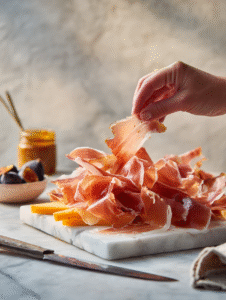
- Spoon the fig jam into small bowls and position them on the board, or smear some directly onto the board for easy access.
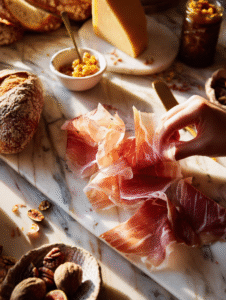
- Scatter candied pecans across the board, ensuring some are nestled near the cheeses and others closer to the jams for contrast.
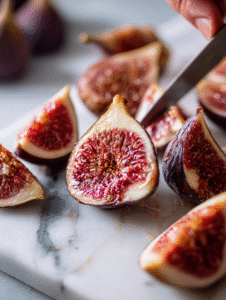
- Slice the baguette into irregular pieces, then arrange them around the edges of the board for easy grabbing.
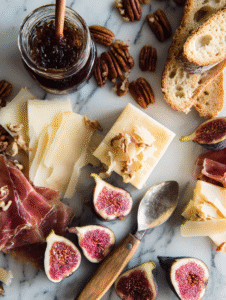
- Add small dollops or drizzles of spicy mustard in small bowls or directly onto the board for a punch of flavor.
- Use tweezers or tongs to place delicate items like herbs or edible flowers if desired, for a fresh finishing touch.
- Step back and adjust the placement for visual balance, ensuring colors and textures are evenly distributed and inviting.
- Serve the board at room temperature, letting flavors develop and textures soften for the perfect bite.

Hi, I’m Clara Sage – and welcome to my kitchen of small revelations.
I created The Language of Aha not just as a recipe blog—but as a space to celebrate the little lightbulb moments that happen in the kitchen.