
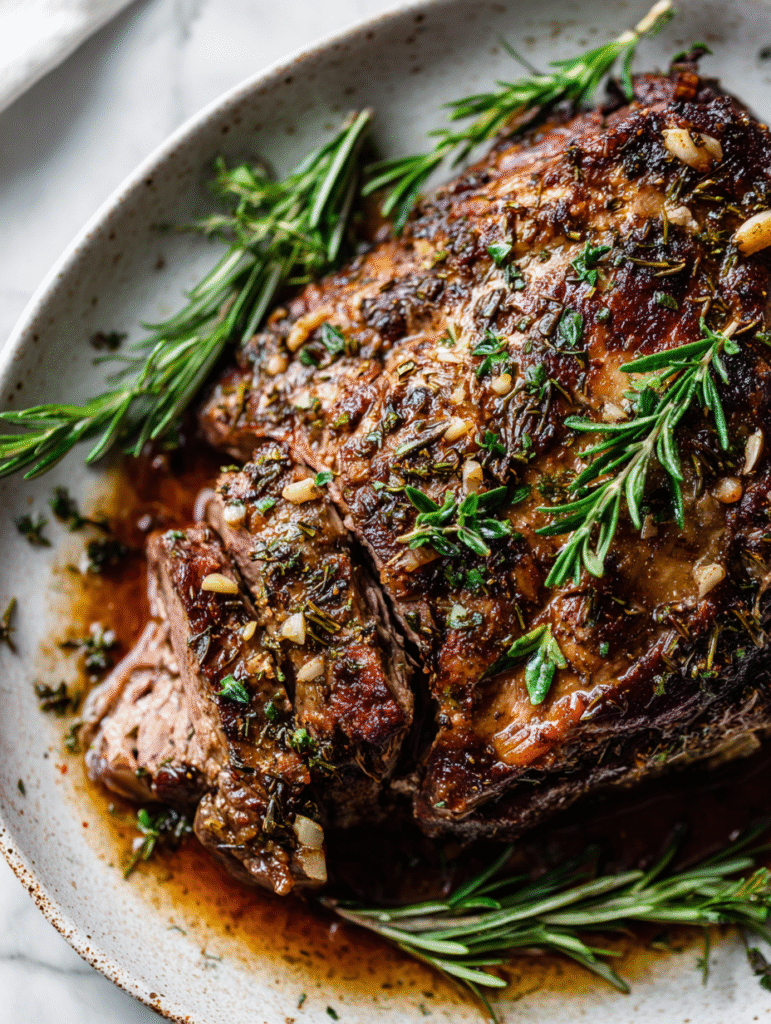
Roasting a lamb shoulder for Christmas might sound traditional, but I like to think of it as a chance to get a little creative. Instead of the usual herb crust, I love rubbing it with garlic and rosemary, then roasting it slow and low until it’s melt-in-your-mouth tender. It’s a messy, fragrant process that somehow makes the house smell like a festive kitchen.
Why This Roast Calls Me Back Year After Year
The process of rubbing, roasting, and resting creates a messy, fragrant kitchen that feels like home. The flavors deepen with each season, and the crispy edges remind me that simple ingredients, treated well, are enough. Plus, it feeds a crowd, doesn’t demand perfection, and always turns out tender and juicy — a real comfort in December.
Breaking Down the Key Ingredients
- Lamb Shoulder: Rich, slightly fatty, perfect for slow roasting. If unavailable, try a leg but adjust cooking time.
- Garlic: Pungent and aromatic, it infuses the meat with flavor. Use fresh cloves for best punch.
- Rosemary: Fragrant, woody herbs that complement lamb beautifully. Substitute with thyme if needed.
- Salt and Pepper: Fundamental for flavor. Don’t skimp on salt — it helps tenderize.
- Olive Oil: Helps the herb rub stick and promotes crispiness. Use good quality for richer flavor.
- Balsamic Vinegar: Adds a subtle tang and sweetness, balancing the richness of lamb. Skip if you prefer a cleaner taste.
- Root Vegetables: Carrots, parsnips, and potatoes roast alongside, soaking up juices and adding sweetness.
Tools & Equipment That Make It Easier
- Roasting Pan with Rack: Ensures even heat and crispy crust, keeps the lamb elevated to cook evenly.
- Meat Thermometer: Checks internal temperature for perfect doneness.
- Basting Brush: Helps apply herb rubs or juices evenly.
- Sharp Carving Knife: Slices through the rested lamb smoothly.
Step-by-Step Guide to a Juicy, Flavorful Christmas Lamb Roast
Step 1: Preheat your oven to 220°C (430°F).
Step 2: Rub the lamb generously with a mix of crushed garlic, rosemary, salt, and pepper. Let sit for at least 30 minutes.
Step 3: Place the lamb on a roasting rack in a roasting pan. Roast for 20 minutes to develop a crispy crust.
Step 4: Lower the oven temperature to 160°C (320°F). Continue roasting for about 1.5 to 2 hours, or until internal temp reaches 60°C (140°F) for medium rare.
Step 5: Let the lamb rest for at least 15 minutes before carving. Resting allows juices to redistribute, keeping the meat moist.
Step 6: Serve sliced, with pan juices or a simple gravy, alongside roasted root vegetables.
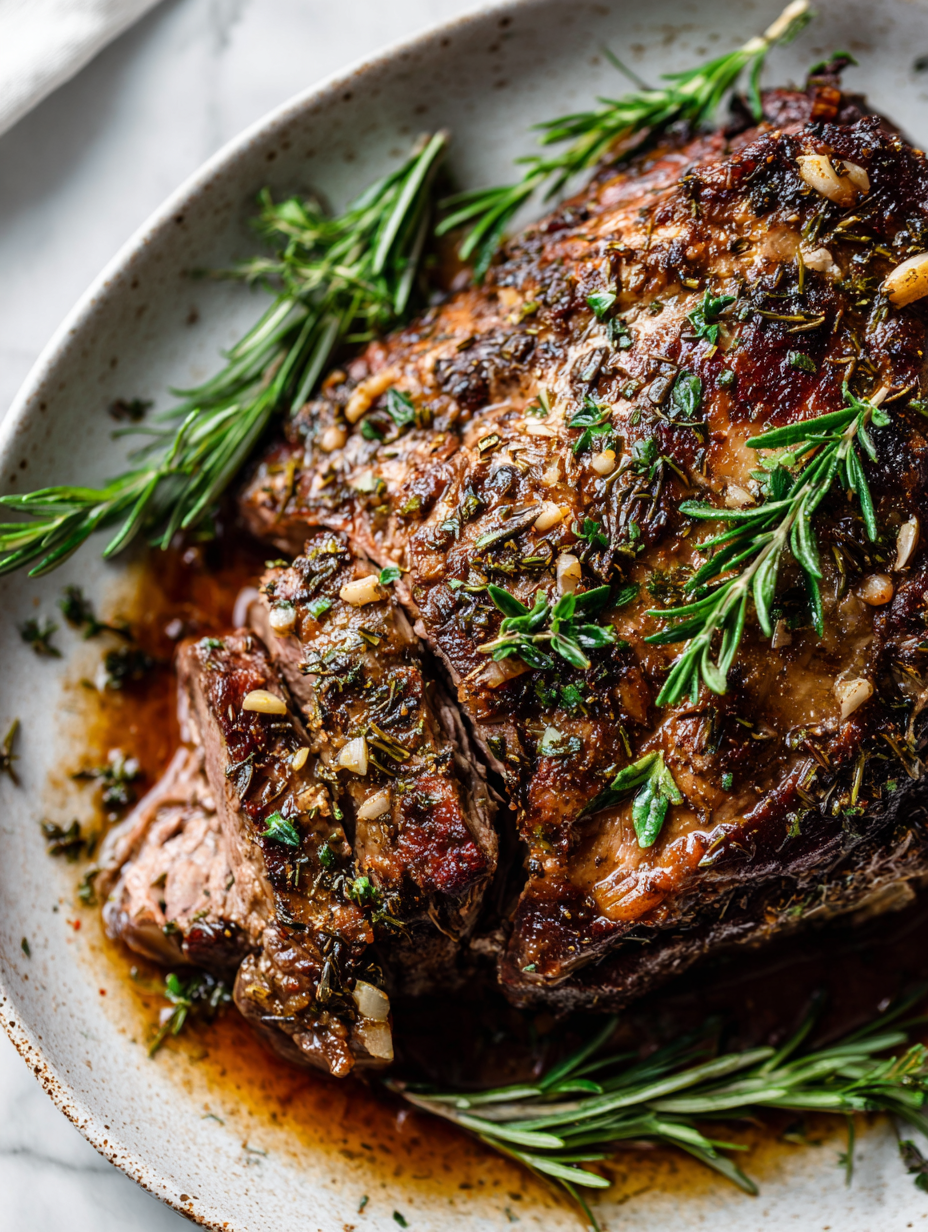
Herb-Rubbed Slow-Roasted Lamb Shoulder
Ingredients
Equipment
Method
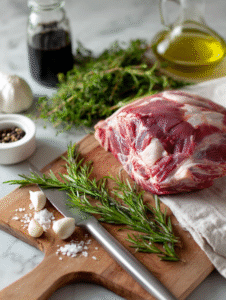
- Preheat your oven to 220°C (430°F). Place the lamb shoulder on a cutting board and pat dry.
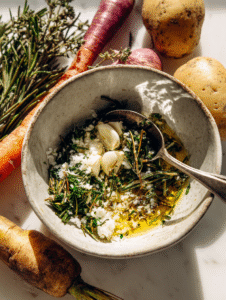
- In a small bowl, mix crushed garlic, chopped rosemary, salt, pepper, and olive oil to create a fragrant herb paste.
- Rub the herb mixture generously all over the lamb, pressing it into the meat. Let it sit at room temperature for at least 30 minutes to absorb the flavors.
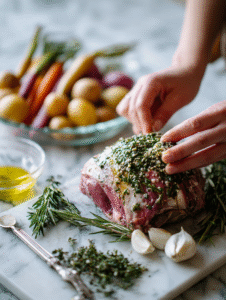
- Place the lamb on a roasting rack set inside a roasting pan. Roast in the preheated oven for 20 minutes, until the surface begins to brown and develop a crispy crust.
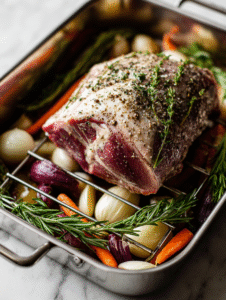
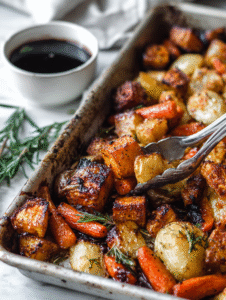
- Reduce the oven temperature to 160°C (320°F). Add chopped root vegetables around the lamb in the pan, and drizzle balsamic vinegar over everything for added flavor.
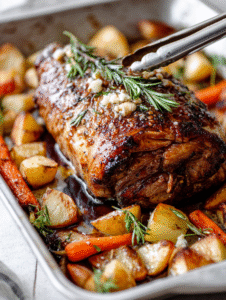
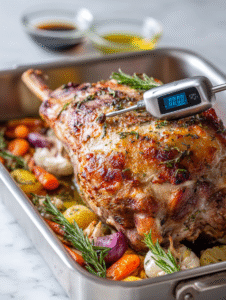
- Continue roasting the lamb for approximately 1.5 to 2 hours, or until a meat thermometer inserted into the thickest part reads 60°C (140°F) for medium rare. The meat should be tender and juicy.
- Remove the lamb from the oven and transfer it to a cutting board. Cover loosely with foil and let rest for at least 15 minutes. This helps juices redistribute, ensuring moist slices.
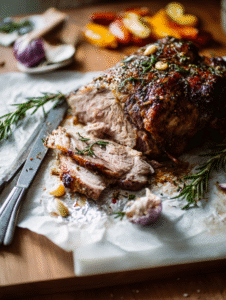
- While the lamb rests, check the roasted vegetables—they should be caramelized and tender, soaking up flavorful pan juices.
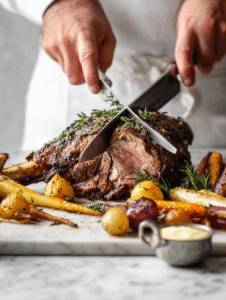
- Carve the rested lamb with a sharp knife, slicing against the grain for tender portions. Serve with the roasted vegetables and pan juices or a simple gravy.
Notes
Cooking Checkpoints & Tips
- The crust should be deep golden and crackly, not burnt.
- Internal temperature of 60°C (140°F) indicates medium rare, perfect for juicy lamb.
- Juices should run clear when the thickest part is pierced.
- If the meat feels too firm or too soft, adjust roasting time accordingly.
Common Mistakes and How to Fix Them
- Cooking by time alone can lead to dry meat.? Use a meat thermometer to avoid overcooking.
- Cutting into hot meat causes juices to escape.? Rest the lamb properly for at least 15 minutes.
- Roasting at too high a temperature for too long.? Keep oven temperature steady at 220°C then reduce.
- Neglecting seasoning can lead to blandness.? Score the fat and season generously.
This lamb roast isn’t just about the holiday tradition — it’s about the messy, fragrant moments that make the season special. The crusty exterior, the tender, juicy inside, all coated in herbs and garlic, feels like a warm embrace after a long day. Feel free to tweak the herbs or add a splash of balsamic or honey for a personal touch. Enjoy every bite, knowing it’s a dish built on honest effort and good flavors.

Hi, I’m Clara Sage – and welcome to my kitchen of small revelations.
I created The Language of Aha not just as a recipe blog—but as a space to celebrate the little lightbulb moments that happen in the kitchen.