
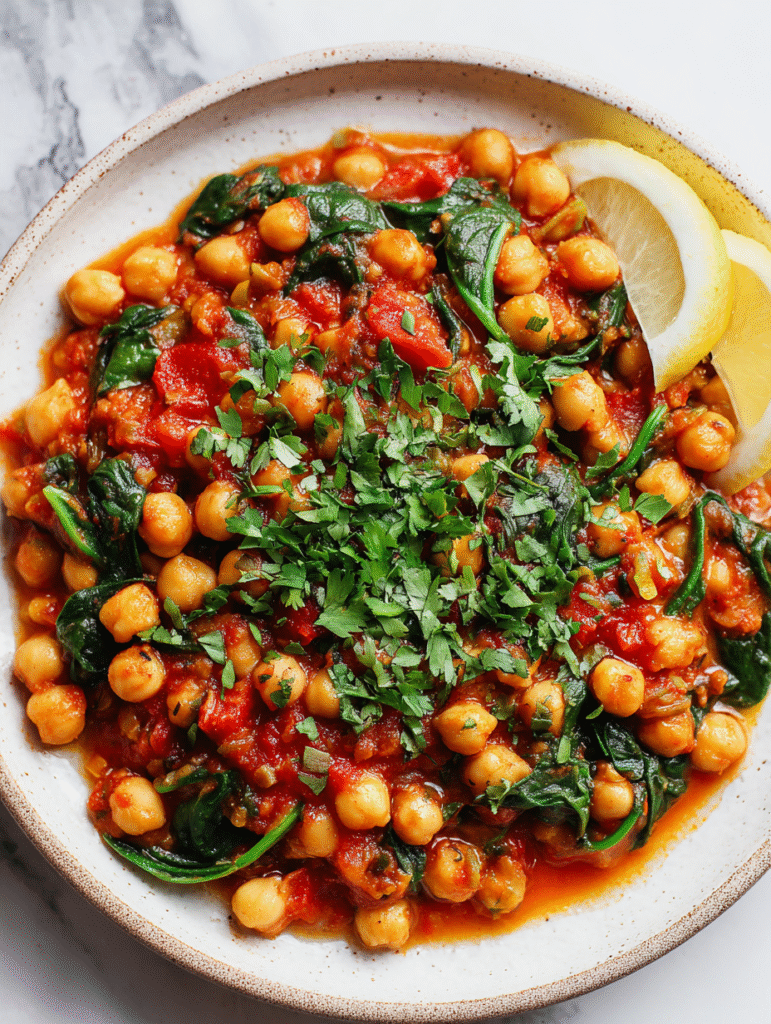
This chickpea spinach curry is a nod to my grandmother’s kitchen chaos, where she’d toss together whatever was on hand and somehow turn it into magic. It’s not about precision, but about feeling your way through spices, textures, and those fleeting moments when everything just clicks. The aroma of cumin and garlic bubbling together takes me right back to her cluttered stove, laughter echoing through the small, warm space.
I love how this dish feels like a little rebellion against the neat, overly planned meals. It’s about improvisation, about trusting your instincts and using pantry staples and fresh greens to create something soulful. It’s perfect for those days when your fridge feels half empty but your craving for something hearty and vibrant won’t let up.
This recipe is inspired by my late grandmother’s spontaneous kitchen improvisations, where she combined pantry staples with a handful of fresh greens, turning everyday ingredients into a comforting, soulful curry. It’s a reminder that the best dishes often come from what’s at hand, not a perfect plan.
Improv in the Kitchen
- Cooking this reminds me of lazy Sunday afternoons at my grandmother’s house, where she’d toss together whatever she had and make magic.
- This dish saved me during a hectic week—fast, hearty, and somehow still soulful in every bite.
- There’s a quiet pride in creating something so simple yet packed with flavor, especially when it’s from pantry staples.
- It’s a little act of rebellion against over-complicated meals; trusting your instincts makes all the difference.
- Every time I make it, I feel a rush of nostalgia, like a warm hug from my kitchen memories.
The story behind this recipe
- This curry came together on a rainy afternoon when I was low on fresh ingredients but craving something warm and satisfying. I remembered my mother’s quick improvisations—she’d toss in whatever was in the pantry and somehow turn it into a dish that made everyone feel cared for. That memory pushed me to keep it simple, honest, and flexible. It’s become my go-to when I want a comforting bowl without fuss or waiting for perfect produce.
- Every time I make this, I think about how humble ingredients, combined with a little patience and a few spices, can create something surprisingly soulful. It’s not about perfection, but about trusting your instincts and embracing the chaos of a busy kitchen. That spontaneous spirit reminds me that good food doesn’t need to be complicated—just honest and made with love.
- It’s a dish I make when I need a little reminder that simplicity can be deeply satisfying. Plus, it’s perfect for those days when I want to clean out the pantry and still end up with something vibrant and nourishing. Cooking this feels like a little act of rebellion against the overcomplicated, reminding me that comfort food can be modest but mighty.
Cultural Roots and Trivia
- This curry echoes the culinary improvisation traditions of South Asian kitchens, where pantry staples are turned into comforting dishes.
- Chickpeas and spinach have been staples in many cultures for centuries, symbolizing sustenance and seasonal adaptability.
- The combination of legumes and greens in curries is a practical, nutrient-rich solution that traveled through trade routes and local farms alike.
Ingredient breakdown: key components
- Chickpeas: I use canned chickpeas for convenience, but dried ones soaked overnight are creamier and more flavorful, especially when simmered slowly. Try to find plump, firm beans; they hold their shape better.
- Fresh spinach: I prefer baby spinach for its tender texture and mild flavor. Wilted spinach releases a green aroma that’s fresh and slightly nutty—perfect for the curry. If using kale, give it a quick chop and a longer cook time.
- Coconut milk: I love full-fat coconut milk for its rich, creamy texture that coats every chickpea. If you want a lighter version, swap with almond milk, but expect a subtler, less luxurious sauce.
- Garlic & ginger: I keep these minced fresh, as they add a bright, pungent aroma that awakens the spices. Roasting them lightly before adding spices can deepen their flavor, making the curry more earthy.
- Spices (cumin, turmeric, coriander): I toast them briefly in oil until fragrant, which releases their essential oils and boosts flavor. If you’re pressed for time, pre-ground spices work fine, but toast them first for better aroma.
- Onion: I use yellow onion, sliced thin. When sautéed, it turns sweet and caramelized, providing a gentle base note. If you want more heat, add a pinch of chili flakes at the same time.
- Lemon juice: A squeeze at the end brightens everything up. The citrus livens the curry, making it feel fresh and vibrant, especially if it’s been sitting a bit too long in the fridge.
Spotlight on key ingredients
Chickpeas & Spinach:
- Chickpeas: I use canned chickpeas for convenience, but dried ones soaked overnight are creamier and more flavorful, especially when simmered slowly. Try to find plump, firm beans; they hold their shape better.
- Fresh spinach: I prefer baby spinach for its tender texture and mild flavor. Wilted spinach releases a green aroma that’s fresh and slightly nutty—perfect for the curry. If using kale, give it a quick chop and a longer cook time.
Notes for ingredient swaps
- Canned Chickpeas: I prefer the convenience of canned, but dried chickpeas soaked overnight and cooked until tender give a creamier, more flavorful bite. If you have time, go for dried.
- Fresh Spinach: Baby spinach is tender and quick to wilt, but kale or collard greens work well if chopped small and cooked longer. It’s about texture you prefer.
- Coconut Milk: Full-fat coconut milk offers richness and creaminess, but almond or cashew milk can be lighter swaps—less oozy, more subtle flavor.
- Garlic & Ginger: Fresh minced garlic and ginger provide brightness. You can use pre-minced versions for convenience, but fresh is always more vibrant.
- Spices: Toasting whole cumin seeds or coriander before grinding releases more aroma. Ground spices are fine, just toast them briefly to boost flavor.
- Onion: Yellow onion adds sweetness and depth. Shallots or leeks can be used for a milder, slightly different flavor profile.
- Lemon Juice: Adds brightness and cuts richness. Lime juice can swap in for a slightly tangier, more citrusy note.
Equipment & Tools
- Large skillet or Dutch oven: For sautéing spices, cooking and simmering the curry.
- Wooden spoon: To stir ingredients without scratching the pan.
- Measuring spoons and cups: To measure spices, liquids, and seasonings accurately.
- Can opener: To open the chickpea and tomato cans easily.
Step-by-step guide to chickpea spinach curry
- Gather your equipment: a large skillet or Dutch oven, a wooden spoon, and measuring spoons. The skillet is for sautéing spices and simmering; the spoon helps stir everything evenly.
- Drain and rinse a can of chickpeas. If using dried, soak overnight and cook until tender, about 45 minutes. Set aside.
- Heat 2 tablespoons of oil over medium heat (about 160°C/320°F). Add a teaspoon of cumin seeds; let them crackle for about 30 seconds until fragrant.
- Add 1 chopped onion (about 150g). Sauté for 5-7 minutes, stirring often, until it turns golden and soft. If it sticks, add a splash of water.
- Stir in 3 minced garlic cloves and 1 teaspoon grated ginger. Cook for 1-2 minutes until aromatic and slightly golden.
- Add 1 teaspoon turmeric, 1 teaspoon ground coriander, and 1 teaspoon smoked paprika. Toast spices for 30 seconds, until fragrant. If spices burn, reduce heat immediately.
- Pour in 400ml (about 1 2/3 cups) coconut milk and 1 cup of crushed tomatoes. Stir well and bring to a gentle simmer (about 80°C/176°F).
Once the sauce is thickened and the chickpeas are heated through, stir in a handful of fresh spinach until wilted. Squeeze over fresh lemon juice, then serve hot with rice or flatbread. Let it rest for 2 minutes before plating to allow flavors to meld.
How to Know It’s Done
- Spices are toasted and fragrant, not burnt or bitter.
- Onion is golden and translucent, not burnt or raw.
- Sauce is bubbling gently, not boiling vigorously or simmering flat.
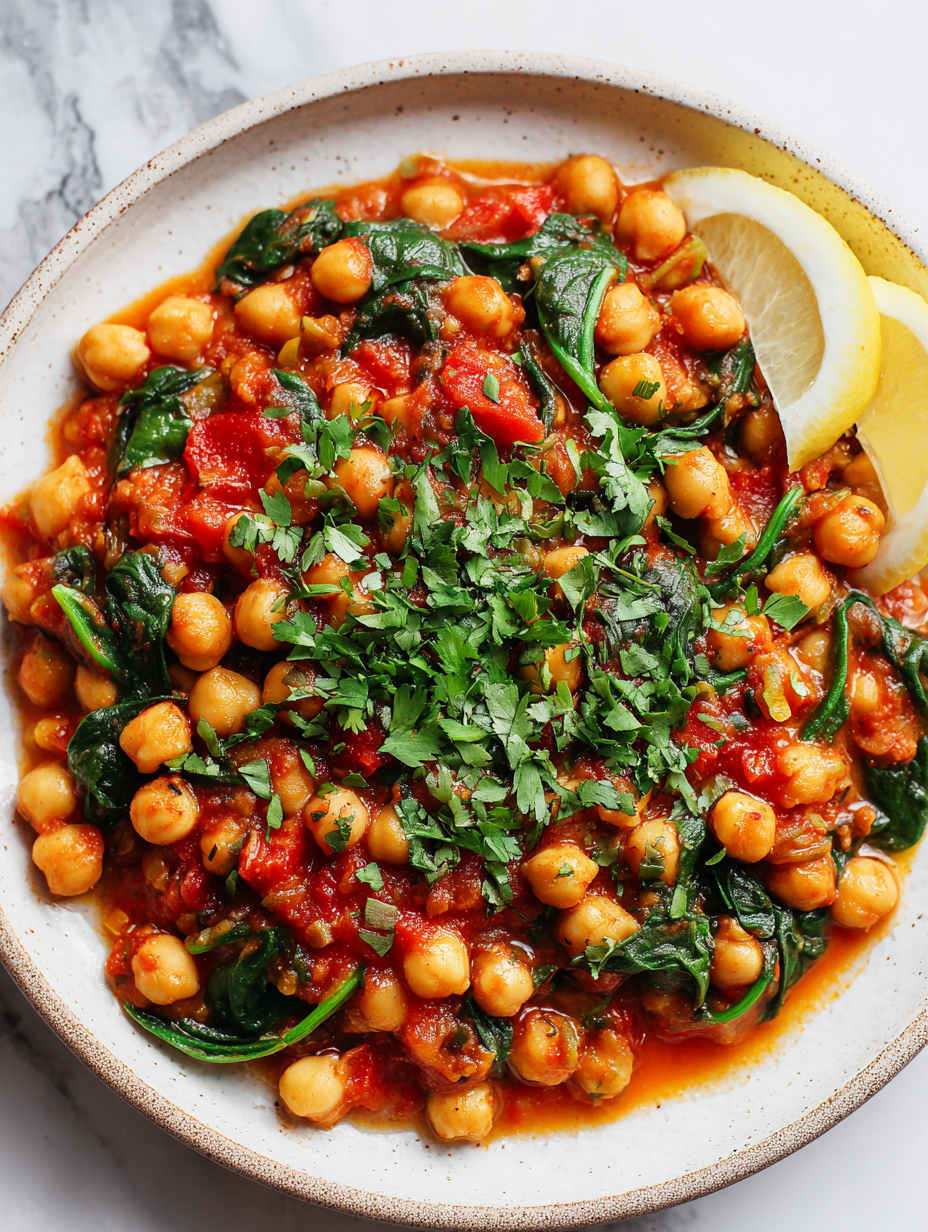
Chickpea Spinach Curry
Ingredients
Equipment
Method
- Heat the oil in a large skillet over medium heat until it shimmers, and add the cumin seeds. Let them crackle for about 30 seconds until fragrant.
- Add the sliced onion to the pan and sauté for 5-7 minutes, stirring often, until it turns golden and soft, filling your kitchen with a sweet aroma.
- Stir in the minced garlic and grated ginger, cooking for another 1-2 minutes until fragrant, and the mixture begins to bubble slightly.
- Add the turmeric and ground coriander, stirring briefly to toast the spices for about 30 seconds until their aroma intensifies.
- Pour in the crushed tomatoes and coconut milk, stirring well to combine everything into a rich, fragrant sauce. Bring to a gentle simmer and let it cook for about 5 minutes, allowing the flavors to meld and the sauce to thicken slightly.
- Add the drained chickpeas to the sauce, stirring to coat them evenly. Continue simmering for another 5-7 minutes until the chickpeas are heated through and the sauce has thickened further.
- Gently fold in the fresh spinach, cooking for 2-3 minutes until wilted and vibrant green, filling your kitchen with a fresh, earthy aroma.
- Squeeze fresh lemon juice over the curry, stirring to brighten the flavors. Taste and adjust salt if needed.
- Serve the hot chickpea spinach curry over steamed rice or with flatbread, enjoying the creamy texture and vibrant colors that make this dish so comforting and soulful.
Tips and Tricks for Perfect Curry
- Bolded mini-head: Toast spices briefly in oil until fragrant to unlock maximum aroma and flavor.
- Bolded mini-head: Sauté onions slowly over medium heat until golden for natural sweetness and depth.
- Bolded mini-head: Add garlic and ginger towards the end of sautéing to prevent burning and preserve brightness.
- Bolded mini-head: Use fresh coconut milk for a rich, oozy sauce; shake well before pouring to incorporate cream and liquid.
- Bolded mini-head: Wilt spinach at the end to maintain vibrant color and fresh flavor, avoiding overcooking.
- Bolded mini-head: Squeeze lemon juice just before serving to brighten the curry with a fresh, citrusy note.
- Bolded mini-head: Taste and adjust salt and spice levels at the end to fine-tune the balance of flavors.
Common mistakes and how to fix them
- FORGOT to check spice toasting; burnt spices taste bitter — lower heat and toast briefly again.
- DUMPED all ingredients in at once; layered flavors by adding spices after onions soften.
- OVER-TORCHED onion; stir more often or reduce heat to prevent browning too quickly.
- UNDERESTIMATED chickpeas’ cooking time; simmer until tender and sauce thickens, about 10 minutes longer.
Quick kitchen fixes
- When sauce is too thick, splash in warm water and stir until smooth.
- If spices burn, quickly add a splash of coconut milk to mellow bitterness.
- Splash some lemon juice if the curry feels dull or flat.
- Patch over a burnt spice base with a spoonful of fresh coconut milk for richness.
- Shield delicate greens with a gentle simmer to prevent overcooking and preserve color.
Prep, store, and reheat tips
- Prep the chickpeas and spinach: drain and rinse canned chickpeas, chop spinach if using fresh, to save time later. Keep in airtight containers in the fridge for up to 2 days.
- Make the curry base ahead: sauté onions, garlic, and spices, then let it cool. Store in an airtight jar in the fridge for up to 2 days, the aroma will deepen overnight.
- Reheat gently: warm the curry over low heat, stirring occasionally. The flavors will bloom again, and the sauce will become oozy and vibrant. Add a splash of water or coconut milk if it thickens too much.
- Shelf life: cooked curry keeps well for about 3 days in the fridge. For longer storage, freeze in portions for up to 3 months, the flavors develop even more after a day or two frozen.
- Sensory note on reheating: smell should be warm and fragrant, the sauce should be slightly thickened but still smooth. Texture might soften, but it should still feel hearty and comforting.
Common Questions About Chickpea Spinach Curry
1. Can I use dried chickpeas instead of canned?
Canned chickpeas are quick, tender, and hold their shape well. Dried require soaking and longer cooking but have a creamier texture.
2. What greens work best for this curry?
Fresh spinach wilts quickly, releasing a bright, slightly nutty aroma. Kale or collard greens need longer cooking and a chop.
3. Can I substitute coconut milk?
Full-fat coconut milk adds richness and a silky texture, while lighter versions or almond milk change the creaminess and flavor subtly.
4. Is pre-minced garlic okay to use?
Fresh garlic and ginger provide a vibrant, pungent aroma. Pre-minced versions are convenient but less bright in flavor.
5. Should I toast the spices?
Toasting whole spices like cumin seeds enhances aroma. Ground spices are fine, but toast briefly first to boost flavor.
6. Can I use a different onion?
Yellow onions bring sweetness and depth. Shallots or leeks can be used for a milder, different flavor note.
7. How important is lemon juice?
A squeeze of lemon brightens the dish, adding freshness. Lime juice can work as a tangy alternative.
8. How do I know when spices are toasted enough?
Cooking the spices until fragrant, not burnt, is key. Taste and adjust seasoning at the end for balance.
9. How do I reheat leftovers?
Reheat gently over low heat, stirring often. Adding a splash of water or coconut milk helps restore creaminess.
10. Why is this recipe great for busy nights?
This dish is quick, hearty, and flexible. It’s perfect for pantry improvisation and using whatever greens you have.
This chickpea spinach curry is a reminder that simple ingredients, combined with a little intuition, can create something truly satisfying. It’s a dish born from improvisation, a bit of chaos, and a lot of love for honest food.
Making this dish feels like a small act of rebellion against overthought meals—trust your instincts, embrace the mess, and enjoy every hearty, vibrant bite. It’s perfect for those days when you want comfort without fuss, rooted in flavors that feel like a warm memory.

Hi, I’m Clara Sage – and welcome to my kitchen of small revelations.
I created The Language of Aha not just as a recipe blog—but as a space to celebrate the little lightbulb moments that happen in the kitchen.