
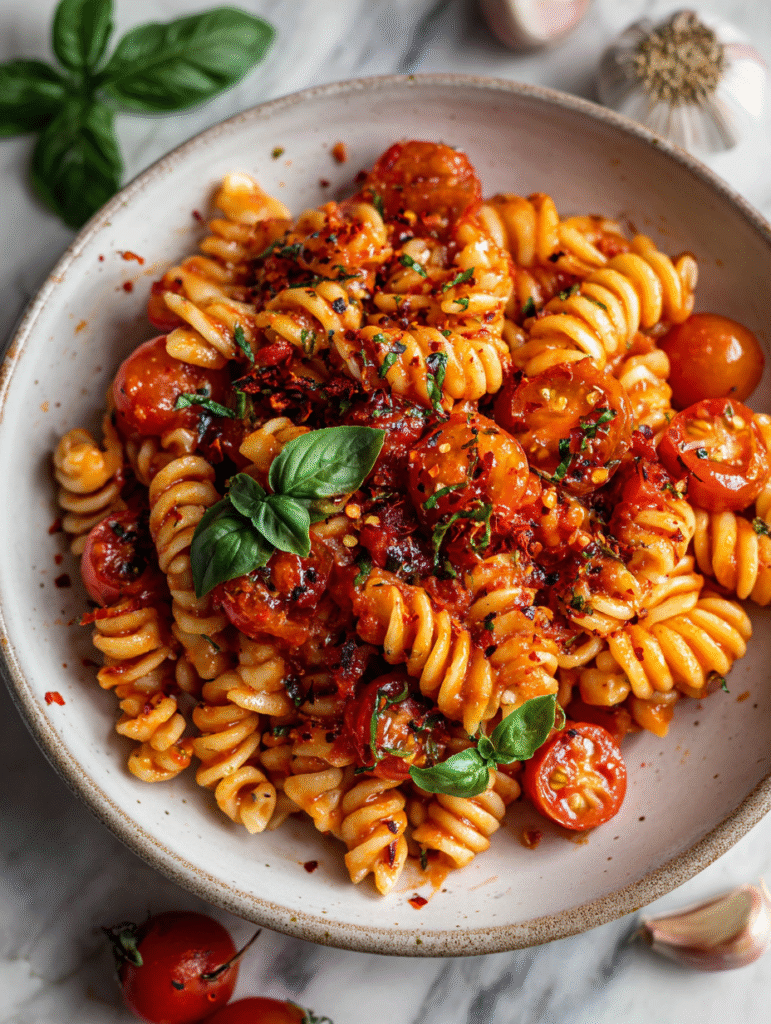
Arrabbiata is that fiery sauce that somehow feels like a warm hug, even when it bites. I love how the spicy kick can turn a simple pasta into something invigorating, a little rebellious, a lot satisfying. Making it vegan means I get to enjoy that bold, punchy flavor without any fuss, just pure tomato heat and garlic goodness.
What draws me back to this dish is how the heat awakens all the senses—smell of roasting garlic, the shimmer of bright tomato sauce, and that slight crackle of chili oil. It’s a recipe that’s honest, no fancy tricks, just ingredients that punch through with authenticity. It’s comfort food that’s also a little wild, perfect for chilly nights or when I need a quick, soul-level pick-me-up.
Focusing on how the spicy kick of arrabbiata can be a comforting yet invigorating way to connect with bold flavors, even when vegan, for those who crave a fiery, soul-satisfying meal.
The story behind this recipe
- This recipe came together one rainy evening when I realized I was craving something fiery and comforting, but with a twist—something I could whip up quickly after a long day. I’ve always loved how arrabbiata’s heat can clear the mind and warm the soul, and making it vegan felt like a natural way to keep it pure and accessible.
- The inspiration struck during a trip to Italy, where I tasted a version that wasn’t just spicy but also deeply layered with garlic and smoky tomato flavors. I wanted to recreate that feeling—simple, bold, and honestly satisfying—without relying on dairy or overly processed ingredients.
- heading: The story behind this recipe
Key Ingredients and Tips
- San Marzano tomatoes: I love how their deep, sweet tang melts into a vibrant sauce, but you can swap in any ripe plum tomato for a similar brightness.
- Garlic: I often crush it with the side of my knife to release more aroma, but if you’re sensitive, start with half a clove—this sauce hits hard with garlic.
- Red chili flakes: I use a generous pinch for that kick, but reduce if you want a milder heat—look for the smoky, slightly oily flakes for best flavor.
- Olive oil: I prefer a good extra virgin that shimmers when heated, adding a rich, fruity base, but a milder oil works if you want the chili to shine more.
- Fresh basil: I toss in torn leaves at the end for a pop of green and freshness, but dried basil can work in a pinch—just add it earlier for more infusion.
- Salt: I taste as I go, aiming for that balanced, savory punch, but a pinch of sugar can tame the acidity if the tomatoes are too sharp.
- Pasta: I usually go for spaghetti, but penne or rigatoni hold the sauce beautifully—just cook al dente for that perfect bite.
Spotlight on key ingredients
Tomatoes:
- San Marzano tomatoes: I love how their deep, sweet tang melts into a vibrant sauce, but you can swap in any ripe plum tomato for a similar brightness.
- Garlic: I often crush it with the side of my knife to release more aroma, but if you’re sensitive, start with half a clove—this sauce hits hard with garlic.
- Red chili flakes: I use a generous pinch for that kick, but reduce if you want a milder heat—look for the smoky, slightly oily flakes for best flavor.
Chili & Garlic:
- Red chili flakes: I sprinkle them directly into hot oil, and the crackle and aroma tell me they’re ready to infuse the sauce with heat—just don’t let them burn or they turn bitter.
- Garlic: When I add garlic, I look for it to turn golden at the edges, releasing a fragrant, nutty aroma—if it browns too fast, lower the heat immediately.
Notes for ingredient swaps
- Canned tomatoes: I prefer San Marzanos for their sweetness and depth, but any ripe, peeled plum tomatoes work well—just adjust the seasoning for acidity.
- Garlic: I love using freshly crushed cloves for aroma, but roasted garlic offers a milder, sweeter flavor—skip the raw punch if you’re sensitive.
- Red chili flakes: I add a hearty pinch for that fiery kick, but you can reduce or omit if you want milder heat, or try smoked paprika for a smoky twist.
- Olive oil: Extra virgin gives that fruity richness, but light olive or avocado oil can be a neutral alternative, especially if you want the chili to shine.
- Fresh basil: I toss in torn leaves at the end for vibrancy, but dried basil can be used—just add earlier to let it infuse the sauce with herbal depth.
- Salt: I taste as I go, aiming for balance, but a splash of vegan Worcestershire or a squeeze of lemon can brighten the sauce if needed.
- Pasta: Spaghetti is classic, but penne or rigatoni hold sauce nicely—cook to al dente for a perfect bite, regardless of shape.
Equipment & Tools
- Large skillet: For cooking sauce and pasta simultaneously
- Wooden spoon: To stir and combine ingredients without scratching the skillet
- Sharp knife: To chop garlic, chili, and herbs precisely
- Cutting board: To provide a stable surface for chopping
- Colander: To drain pasta efficiently
Step-by-step guide to Vegan Arrabbiata
- Gather your equipment: a large skillet, a wooden spoon, a sharp knife, and a cutting board. Use the skillet for sauce and pasta, the spoon for stirring, and the knife for chopping garlic and chili.
- Bring a large pot of salted water to a boil, about 4-5 liters (1-1.3 gallons). Cook spaghetti until just al dente, about 8 minutes. Drain, save a cup of pasta water, and set aside.
- While pasta cooks, heat 2 tablespoons of good-quality olive oil in the skillet over medium heat (about 160°C/320°F). When shimmering, add 4-6 minced garlic cloves. Sauté until fragrant, about 30 seconds. Do not burn the garlic—if it starts to brown too quickly, lower the heat.
- Add 1 teaspoon of red chili flakes to the garlic oil. Let them crackle and toast gently, about 15 seconds. The oil should turn fragrant with a slight smoky note. If it smokes excessively, turn down the heat.
- Pour in 400g (14 oz) of crushed San Marzano tomatoes or ripe plum tomatoes. Stir to combine. Bring to a gentle simmer, about 5 minutes, until the sauce thickens slightly and deepens in color. Stir occasionally.
- Taste and season with salt—about 1 teaspoon, or to your liking. If the sauce is too acidic, add a pinch of sugar to balance. For a richer flavor, stir in a teaspoon of vegan butter or a splash of olive oil.
- Add cooked pasta directly into the sauce, tossing well to coat. If the sauce seems too thick, add a splash of reserved pasta water to loosen and help it cling to the noodles.
- Finish by stirring in a handful of torn fresh basil leaves. Let them wilt for about 30 seconds. The aroma should be bright, and the sauce glossy and fiery red.
- Plate immediately. Garnish with extra basil, a drizzle of olive oil, or vegan Parmesan if desired. Serve hot, with a side of crusty bread if you like.
Toss the pasta with the sauce in the skillet for a minute to meld flavors. Serve immediately with extra basil or vegan cheese if desired. For best flavor, eat soon after plating; if needed, keep warm in a low oven for up to 15 minutes.
How to Know It’s Done
- Sauce should be vibrant red, slightly thickened, with a fragrant garlic and chili aroma.
- Pasta is al dente, with a slight bite and well-coated with sauce.
- Basil is wilted but fresh, adding a bright green contrast and herbal aroma.
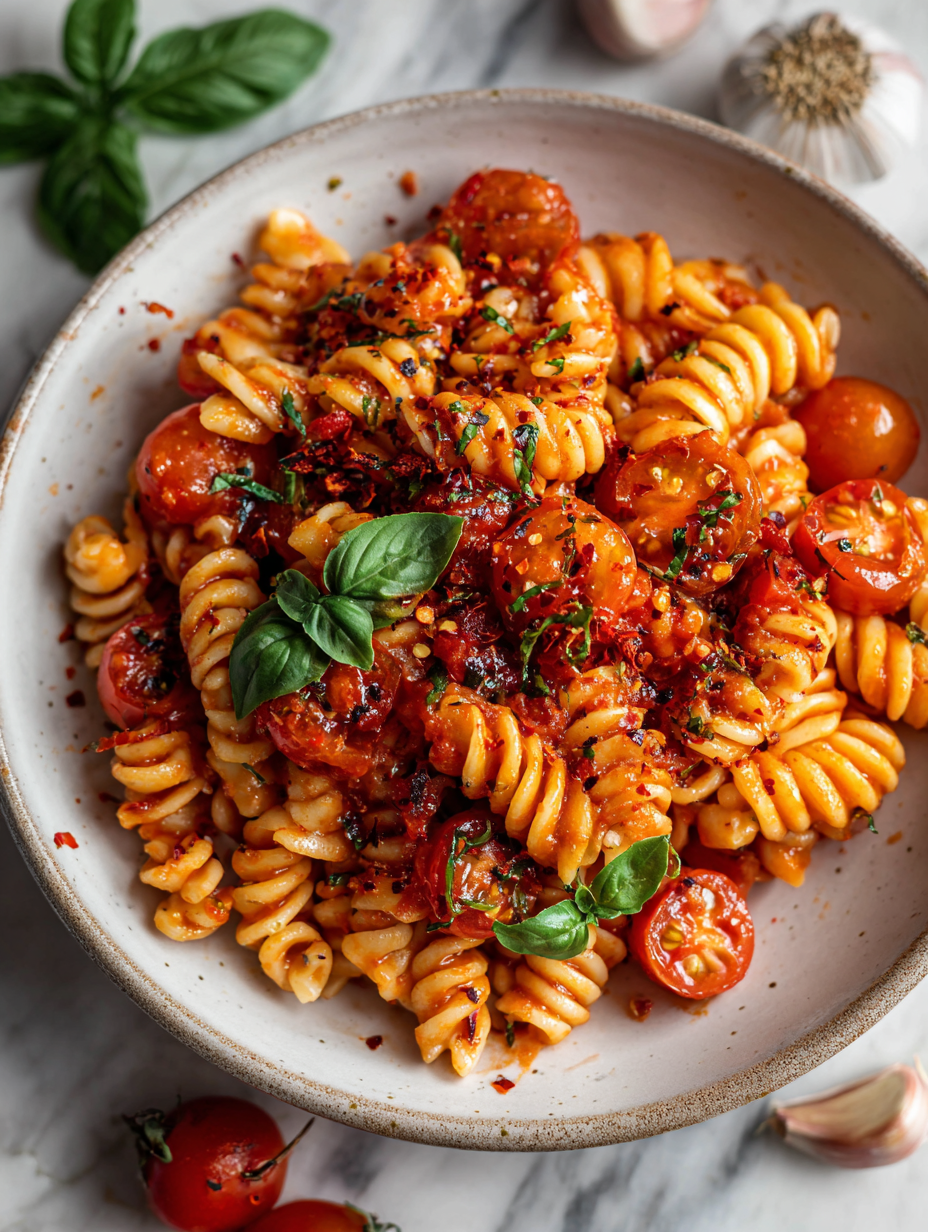
Vegan Arrabbiata Pasta
Ingredients
Equipment
Method
- Bring a large pot of salted water to a boil, then cook the spaghetti until just al dente, about 8 minutes. Drain and set aside, saving a cup of pasta water.
- While the pasta cooks, heat olive oil in a large skillet over medium heat until shimmering and fragrant.
- Add the crushed garlic cloves to the hot oil and sauté for about 30 seconds until fragrant and lightly golden, making sure not to burn it.
- Sprinkle the red chili flakes into the garlic oil and toast them briefly for about 15 seconds, releasing their smoky aroma.
- Pour in the crushed tomatoes, stirring to combine with the garlic and chili flakes. Bring the sauce to a gentle simmer and cook for about 5 minutes until it thickens slightly and deepens in color.
- Season the sauce with salt to taste, and add a pinch of sugar if the acidity feels sharp. Stir well and let it simmer gently.
- Transfer the cooked pasta into the skillet with the sauce, tossing to coat each strand evenly. If the sauce is too thick, add a splash of the reserved pasta water and stir until glossy.
- Add torn fresh basil leaves to the pasta and sauce, giving it a gentle stir to wilt the basil and release its aroma.
- Serve immediately, garnished with extra basil and a drizzle of olive oil if desired, for a vibrant, spicy pasta dish with a glossy appearance and inviting aroma.
Tips for Perfect Vegan Arrabbiata
- Bolded mini-head: Toast chili flakes briefly in oil until fragrant—this releases their smoky, oily aroma.
- Bolded mini-head: Crush garlic with the side of your knife to maximize flavor release—less bitter than chopping finely.
- Bolded mini-head: Use high-quality olive oil—it shimmers and adds fruity richness that balances the heat.
- Bolded mini-head: Simmer tomatoes on low for at least 5 minutes—this deepens sweetness and develops flavor.
- Bolded mini-head: Taste and adjust seasoning at the end—balance salt, acidity, and heat for perfect harmony.
- Bolded mini-head: Toss pasta directly into sauce and stir—this helps the sauce cling and meld with every strand.
Common mistakes and how to fix them
- FORGOT to stir sauce? Fix with quick stir over low heat, avoid burning garlic.
- DUMPED too much chili? Reduce next time, or add a splash of coconut milk to mellow.
- OVER-TORCHED garlic? Lower heat immediately, add more oil, and start over if burnt.
- SKIPPED tasting? Always taste and adjust salt or spice before serving, for balanced flavor.
Quick Fixes and Pantry Swaps
- When sauce is too thick, splash in hot pasta water and stir until glossy.
- Splash a little vinegar if the tomato flavor feels dull or flat.
- Patch over-salted sauce with a splash of coconut milk or more crushed tomatoes.
- Shield burnt garlic by removing from heat immediately and starting fresh with new garlic.
- If chili heat is too mild, add a pinch of smoked paprika for smoky depth and extra warmth.
Prep, store, and reheat tips
- Prep the sauce ingredients ahead: chop garlic, measure chili flakes, and crush tomatoes the day before for quicker cooking.
- Store the prepared sauce in an airtight container in the fridge for up to 2 days; the flavors deepen and meld overnight, intensifying the tomato and garlic aroma.
- Cooked pasta can be stored separately in a sealed container for up to 24 hours; reheat gently to prevent sticking and overcooking, noticing that the sauce may thicken slightly.
- Reheat the sauce in a skillet over low heat, stirring frequently. Add a splash of water or reserved pasta water to loosen, and look for that bright, fiery red and fragrant garlic aroma to return.
- Avoid freezing the sauce, as the texture may break down and become watery upon thawing. Freshly cooked reheats are typically preferable for that lively, spicy kick.
Top questions about Vegan Arrabbiata
1. Can I use canned tomatoes instead of fresh?
Yes, using canned tomatoes speeds things up and still gives a bright, fresh flavor. Just choose good-quality, ripe-tasting ones.
2. Can I make this sauce ahead?
Absolutely. Just add a splash of water or vegan broth to loosen the sauce if it thickens too much.
3. Should I add basil during cooking or after?
Yes, but I recommend adding the fresh basil just before serving to keep its bright aroma.
4. How spicy is this recipe?
Reduce the chili flakes if you want milder heat. Start with a small pinch and add more if needed.
5. Can I use a different oil?
Use a good-quality extra virgin olive oil for the best flavor. It adds a fruity, rich note that balances the heat.
6. Can I use different pasta shapes?
Yes, you can swap in gluten-free pasta or any shape you like—just cook to al dente for the best texture.
7. What if I burn the garlic?
Burnt garlic can ruin the sauce. If it happens, start over with fresh garlic, and keep the heat moderate.
8. How do I fix overly acidic sauce?
Add a pinch of sugar or a splash of vegan balsamic to tame the acidity if the sauce tastes too sharp.
9. Can I freeze leftover sauce?
Yes, you can freeze the sauce for up to a month. Reheat gently and add a little water if it thickens.
10. How do I balance flavors at the end?
The key is to taste and adjust seasoning. A splash of lemon or vinegar can brighten flavors just before serving.
This vegan arrabbiata isn’t just about heat; it’s about that rush of flavor that awakens the senses. When the garlic and chili oil mingle in the pan, it’s like capturing a moment of fiery honesty in every bite.
In these busy times, I keep coming back to this recipe because it’s quick, bold, and deeply satisfying. It reminds me that simple ingredients, treated right, can deliver something wildly memorable—no fuss, just pure, honest flavor.

Hi, I’m Clara Sage – and welcome to my kitchen of small revelations.
I created The Language of Aha not just as a recipe blog—but as a space to celebrate the little lightbulb moments that happen in the kitchen.