
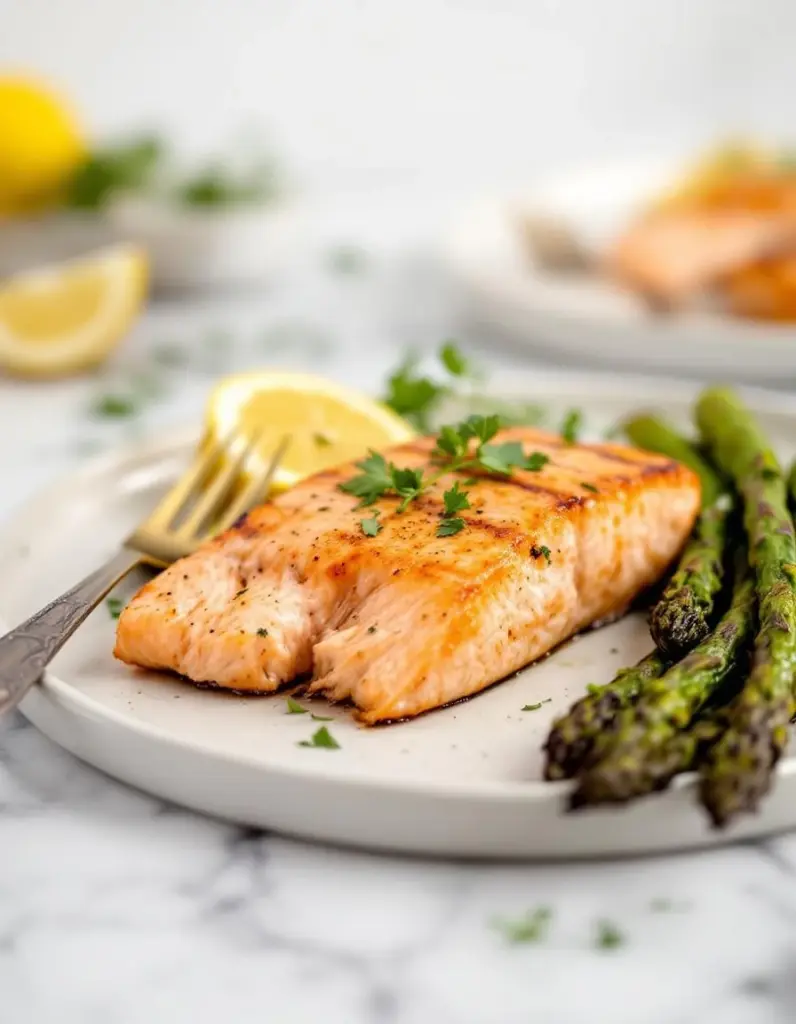
Getting the grill hot enough is half the battle; I crank it up until I see the metal shimmer. The salmon’s skin crisps up fast, so I lay it down carefully, listening for that satisfying sizzle. Asparagus gets tossed on the cooler side, where it chars just enough to bring out its smoky flavor.
I keep a close eye on everything, flipping the salmon only once, avoiding overcrowding the grill. The asparagus should be tender but still have a slight bite, with some blackened spots for that roasted edge. It’s about managing heat and timing, not rushing through the process.
Listening to the sizzle of the salmon hitting the hot grill, the crackle of asparagus as it chars slightly, that mix of smoky and crispy sounds—it’s the best part, really, the honest symphony of cooking outdoors.
What goes into this dish
- Salmon fillets: I prefer skin-on for that crispy edge, but you can skip it if you’re squeamish. Bright, fresh salmon feels firm to the touch, almost oily—look for that shiny, slightly translucent flesh.
- Asparagus: Thick spears hold up better on the grill, but thin ones get super tender and smoky fast. Toss with oil, salt, and lemon zest—those aromatic oils really boost the flavor and help with charring.
- Olive oil: Use a good-quality extra virgin for that fruity, peppery note. Skip it if you’re out—just make sure your fish gets a light brush to prevent sticking and promote crispness.
- Lemon: Fresh lemon zest and juice brighten everything up—think bright, citrusy aroma when you squeeze. No fresh? a splash of bottled lemon juice works, but it’s less vibrant.
- Garlic: Minced garlic adds a subtle punch, but if you’re sensitive, scale back or use garlic powder. Just watch it burn on the grill; it chars quickly and turns bitter.
- Salt and pepper: Simple, but don’t skip. I prefer flaky sea salt and freshly cracked black pepper—those textures and flavors really stand out after grilling.
- Optional herbs: A sprinkle of dill or parsley at the end adds freshness, but you can skip if you want pure smoky salmon and asparagus—sometimes less is more.
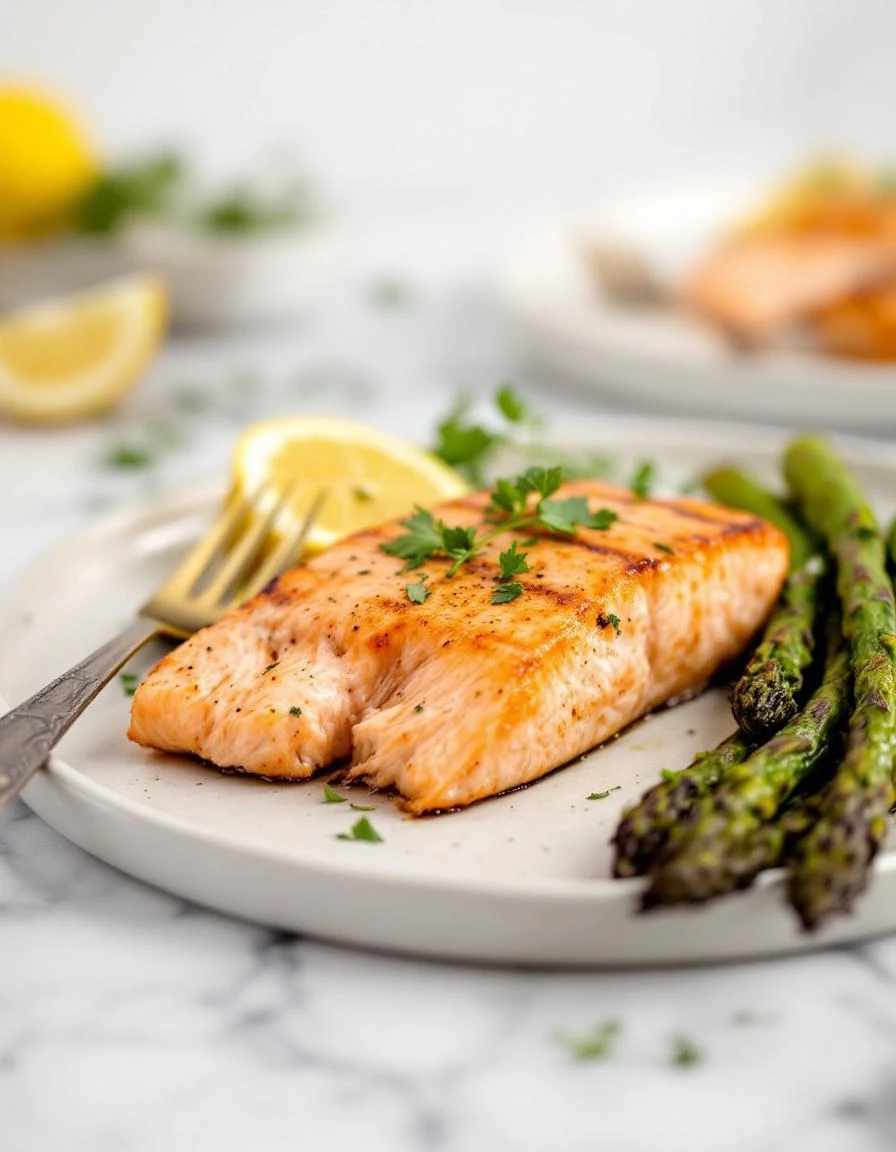
Grilled Salmon with Charred Asparagus
Ingredients
Equipment
Method
- Preheat your grill to high heat until you see the metal shimmer and feel the heat radiating. This ensures a hot surface for crispy skin and good searing.
- Brush the salmon fillets lightly with olive oil, then season generously with salt, pepper, and lemon zest to enhance flavor and help prevent sticking.
- Place the salmon fillets skin-side down on the hot grill, listening for a satisfying sizzle. Cook for about 4-5 minutes without moving, until the skin is crispy and golden brown.
- While the salmon cooks, trim the woody ends off the asparagus and toss them in a little olive oil, salt, and lemon zest. Arrange the spears on the cooler side of the grill to prevent burning.
- Flip the salmon carefully with tongs and cook for another 3-4 minutes, until the fish flakes easily and reaches your desired doneness.
- Check the asparagus; they should be tender with some blackened spots for charred flavor. Remove from the grill once they reach your preferred char and tenderness.
- Remove the salmon from the grill and let it rest for a minute; this helps the juices redistribute for a juicy bite.
- Squeeze fresh lemon juice over the salmon and asparagus, then sprinkle with chopped dill or parsley if desired for extra freshness.
- Serve the crispy-skinned salmon alongside the smoky asparagus for a vibrant, flavorful meal that showcases simple grilling techniques.
Common mistakes and how to fix them
- FORGOT to preheat the grill? Fix by giving it enough time to reach proper temperature before cooking.
- DUMPED the salmon on cold grill? Ensure grill is hot enough to sizzle immediately upon contact.
- OVER-TORCHED the asparagus? Move it to cooler spots or reduce heat to prevent burning and bitterness.
- MISSED seasoning? Be generous with salt and oil to enhance flavor and prevent sticking.
Make-Ahead and Storage Tips
- Prep the salmon and asparagus earlier in the day—season and oil them, then keep refrigerated for up to 24 hours.
- You can pre-marinate the salmon with herbs and lemon zest a few hours ahead; just cover and chill in the fridge.
- Asparagus can be washed, trimmed, and tossed in oil and salt the night before—keeps for 1-2 days in an airtight container.
- Freeze any leftover cooked salmon in an airtight container for up to 2 months; reheat gently to avoid drying out.
- Flavors intensify if you season the salmon slightly more than usual before refrigerating; fresh lemon brightens reheated fish.
- Reheat the salmon in a warm oven or skillet—look for a flaky texture and a slight aroma of smokiness, avoid overcooking.
FAQs
1. How do I know when the salmon is done?
Salmon should feel firm but spring back when pressed, with a shiny, slightly oily surface. That way, it’s juicy inside and crisp outside when grilled.
2. How can I tell if the asparagus is cooked enough?
Check the asparagus for a tender bite—pierces easily but still firm. Look for some blackened spots for that smoky flavor.
3. What if the salmon sticks to the grill?
If the salmon sticks when you try to flip, it’s probably not ready. Use a thin spatula and give it a gentle nudge to lift.
4. How do I avoid overcooking the fish and veggies?
Overcooking makes the salmon dry and crumbly, and the asparagus bitter. Keep a close eye and remove as soon as it hits your preferred tenderness.
5. How can I prevent sticking and ensure good grill marks?
Use a clean, hot grill and oil the grates well. That crispy skin and charred asparagus are what you’re aiming for—hot, smoky, and fragrant.

Hi, I’m Clara Sage – and welcome to my kitchen of small revelations.
I created The Language of Aha not just as a recipe blog—but as a space to celebrate the little lightbulb moments that happen in the kitchen.