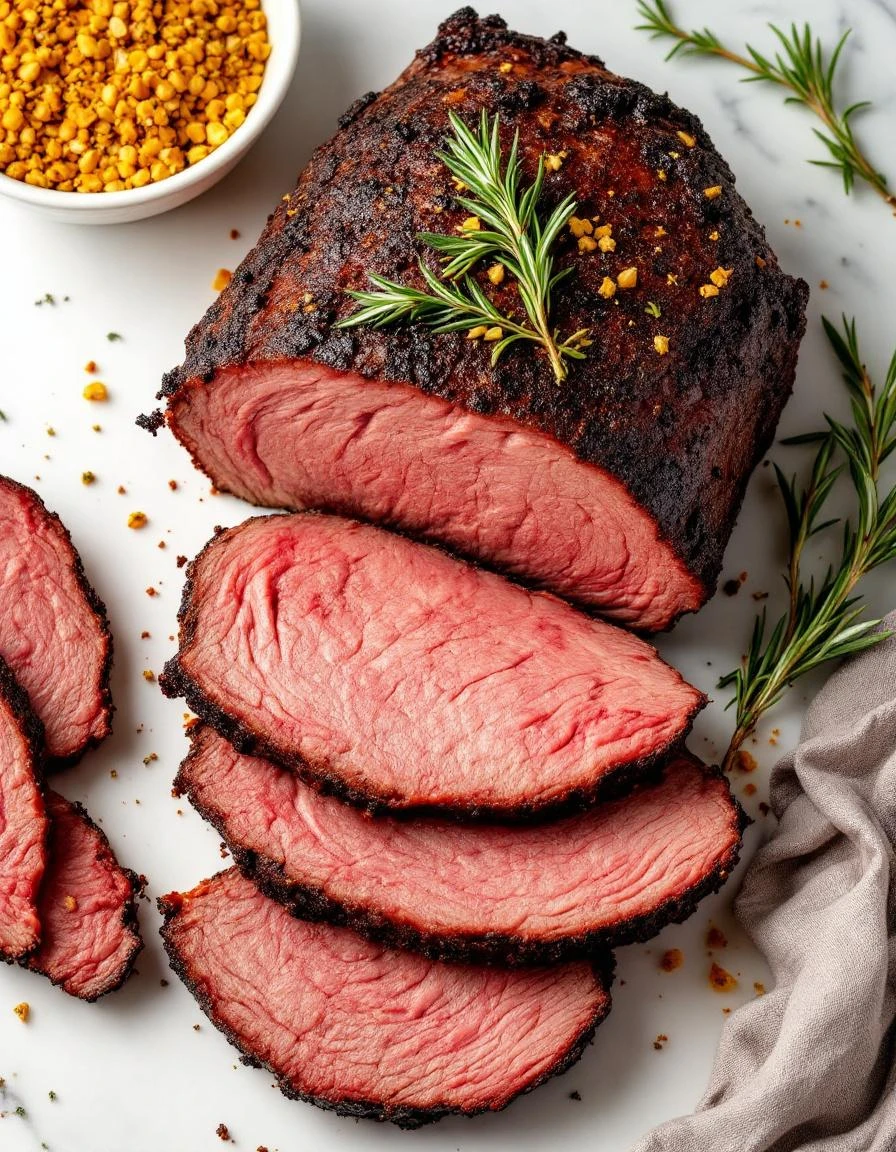
Start by trimming excess fat from the brisket, leaving a nice layer to keep the meat moist during smoking. Mix the salt, black pepper, and smoked paprika to create your rub, then generously coat the entire surface of the brisket with this mixture, pressing it into the meat.
Prepare your smoker by adding wood chips to the firebox, aiming for a steady low temperature around 225°F. Place the brisket on the smoker rack fat-side up, ensuring good air circulation around the meat.
Close the lid and maintain a steady temperature, adding more wood chips gradually to create a consistent smoky environment. Use a meat thermometer to monitor internal temperature, aiming for about 165°F.
Every hour or so, spritz the brisket with apple cider vinegar using a basting brush or spray bottle to keep the meat moist and enhance flavor. Continue this process for the first several hours of smoking.
Once the brisket reaches around 165°F and develops a deep, crackly bark, wrap it tightly in aluminum foil along with a splash of beef broth or stock if desired. This helps tenderize the meat further while preserving moisture.
Return the wrapped brisket to the smoker and continue cooking until the internal temperature reaches about 195°F to 205°F. This slow process allows the connective tissue to break down, resulting in tender, juicy slices.
Remove the brisket from the smoker and let it rest, still wrapped, for at least 20 minutes. This resting period helps the juices redistribute throughout the meat, ensuring maximum tenderness.
Unwrap the brisket carefully and place it on a carving board. Slice against the grain into thin, even slices, revealing the smoky, juicy layers inside and the crackly bark on the outside.
Serve the slices hot, showcasing the deep mahogany bark and tender meat. Enjoy the smoky aroma and rich flavor as you dig in.