
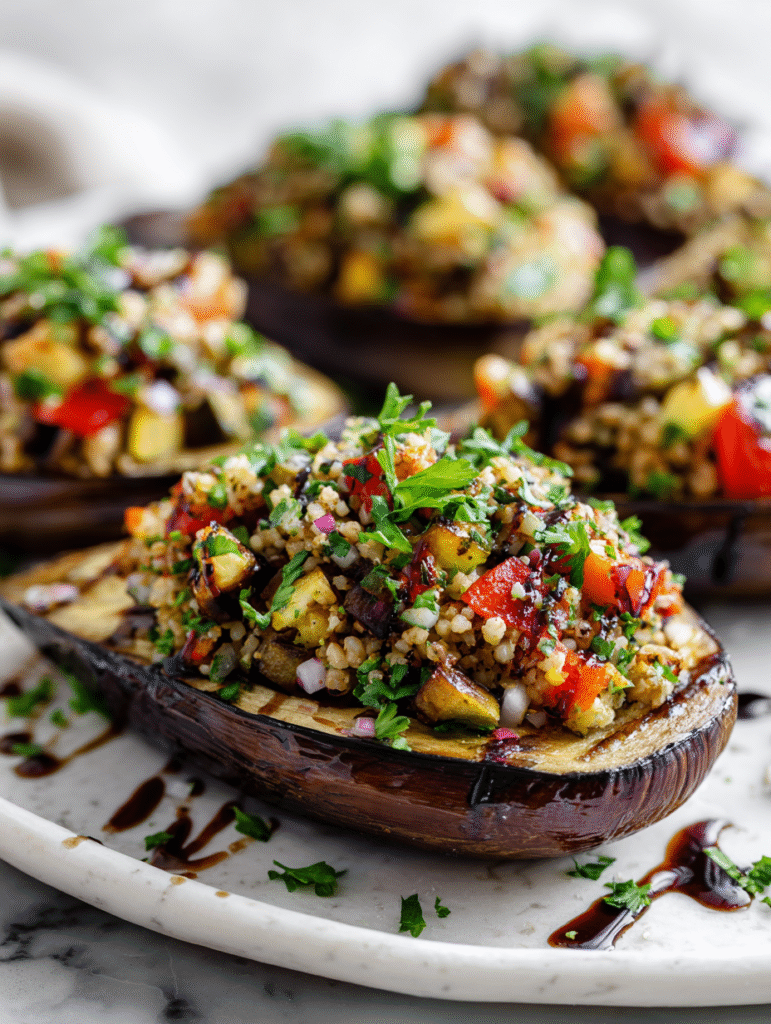
This vegan stuffed eggplant recipe is my way of holding onto childhood flavors, even as an adult. I remember my grandma’s kitchen filled with the smell of roasted veggies and her gentle, reassuring voice. Turning those memories into a dish that’s both simple and deeply nostalgic feels like a quiet act of kindness for myself.
Eggplants have always been a tricky vegetable for me—so forgiving yet so easily overcooked. Stuffing them with a savory, seasoned filling makes them feel like a cozy, portable meal I can carry through my busy days. It’s comfort food with a bit of a grown-up twist, perfect for when I need a reminder of home but want something fresh and plant-based.
Focusing on the nostalgic comfort of childhood flavors, this recipe turns simple eggplants into a savory, memory-laden dish that feels like a warm hug from the past.
Nostalgic Comfort in Every Bite
- Cooking this dish reminds me of lazy Sunday afternoons at my grandma’s house, where the aroma of roasting eggplants filled the air and made everything feel cozy.
- I used to dread eggplants because of their bitterness, but stuffing them with herbs and spices transforms their flavor into something unexpectedly vibrant and satisfying.
- There’s a small thrill in stuffing those little eggplant boats, watching them bake to a tender, slightly caramelized perfection that makes me smile every time.
The story behind this recipe
- This dish came together one rainy afternoon when I was trying to use up the last of my summer eggplants. I remembered how my mother used to stuff peppers and wondered if I could do something similar with eggplants, turning their natural bitterness into a rich, savory filling. It’s a bit of a homage to those lazy, flavor-packed weekends I spent in her kitchen, experimenting with what I had.
- I love how stuffing transforms a humble vegetable into something special—like giving it a new voice. The process of scooping out, filling, and baking feels almost meditative, a slow act of care. It’s become my go-to when I want a meal that feels hearty but is still bright and fresh, perfect for these in-between seasons.
- heading
Historical & Cultural Roots
- Eggplant has a long history in Mediterranean and Middle Eastern cuisines, where stuffing and roasting are traditional techniques.
- Stuffed vegetables date back thousands of years, with ancient recipes often filled with grains, herbs, and nuts—much like this modern vegan take.
- The idea of turning a humble vegetable into a flavorful vessel reflects a long-standing culinary trend of resourcefulness and flavor amplification.
- In some cultures, eggplants were once considered exotic or even mysterious, inspiring creative ways to incorporate them into everyday meals.
Key Ingredients at a Glance
- Eggplants: I love how their slightly bitter, smoky flavor deepens when roasted—just watch not to overcook until mushy; aim for tender but intact.
- Olive oil: Brushed generously, it crisps the edges and adds a rich, fruity aroma that’s essential—don’t skimp here, even a little extra makes a difference.
- Breadcrumbs: I prefer toasted for crunch, but if you want gluten-free, try crushed almonds—just watch their oils release during baking.
- Herbs & spices: Fresh basil and oregano give a bright, aromatic lift, but dried works fine—just use a little more to compensate for the concentrated flavor.
- Tomatoes: Roasted until oozy and smoky, they meld with the filling; use ripe, juicy ones for the best flavor—skip if your garden’s not bursting this season.
- Lemon juice: Adds a zing that cuts through richness—brightens the whole dish, so don’t hold back on this fresh squeeze, especially before baking.
- Nuts (optional): Toasted pine nuts or walnuts bring a buttery crunch—consider skipping if nut allergies are a concern, but they add a lovely depth.
Spotlight on key ingredients
Eggplants:
- I love how their slightly bitter, smoky flavor deepens when roasted—just watch not to overcook until mushy; aim for tender but intact.
- Olive oil: Brushed generously, it crisps the edges and adds a rich, fruity aroma that’s essential—don’t skimp here, even a little extra makes a difference.
- Breadcrumbs: I prefer toasted for crunch, but if you want gluten-free, try crushed almonds—just watch their oils release during baking.
Herbs & Spices:
- Tomatoes: Ripe, juicy, and roasted until oozy and smoky—they meld beautifully with the filling and add a vibrant brightness.
- Fresh basil and oregano provide a fragrant, lively aroma, but dried herbs work just as well—just use a little more for that punch.
Notes for ingredient swaps
- Dairy-Free: Nutritional yeast instead of cheese for a cheesy umami flavor—less creamy but still satisfying.
- Gluten-Free: Use crushed almonds or gluten-free breadcrumbs in place of regular breadcrumbs—adds crunch without wheat.
- Oil Substitute: Swap olive oil for avocado oil or a light spray—keeps it light but still helps with roasting and sautéing.
- Grain Swap: Quinoa can be replaced with cooked millet or cauliflower rice—different texture, but equally hearty.
- Tomatoes: Use roasted red peppers or sun-dried tomatoes for a deeper, smoky sweetness—skip fresh if out of season.
- Herbs & Spices: Fresh basil and oregano add brightness—dried versions work, just add a little more for flavor.
- Nuts & Seeds: Toasted pine nuts or walnuts add richness—consider omitting for nut allergies, but don’t skip the crunch.
Equipment & Tools
- Sharp paring knife: Scooping out eggplant flesh cleanly
- Baking dish: Roasting eggplants evenly
- Mixing bowl: Combining filling ingredients
- Spoon: Stuffing eggplants with filling
- Skillet: Sautéing filling components
Step-by-step guide to stuffed eggplant
- Equipment & Tools: Gather a sharp paring knife (for scooping), a baking dish (to hold eggplants), a mixing bowl (for filling), and a spoon (to stuff).
- Preheat oven to 200°C (390°F). Slice eggplants in half lengthwise. Use the paring knife to carefully scoop out the flesh, leaving about a 1/2-inch border. Chop the scooped flesh and set aside.
- Brush the eggplant halves with a tablespoon of olive oil, then place cut side up in the baking dish. Roast for 20 minutes until the flesh softens and edges begin to caramelize. Check for tender, slightly browned edges.
- While eggplants roast, heat a tablespoon of olive oil in a skillet over medium heat (about 160°C/320°F). Sauté chopped eggplant flesh with minced garlic, onion, and spices for 8-10 minutes. The mix should smell savory and slightly smoky.
- Add cooked quinoa or rice, chopped tomatoes, herbs, and a squeeze of lemon juice to the skillet. Season generously with salt and pepper. Stir well and cook for another 2-3 minutes until heated through and fragrant.
- Remove eggplants from oven. Spoon the filling into each hollow, pressing gently to pack. Top with a sprinkle of breadcrumbs or toasted nuts for crunch. Bake for an additional 15 minutes at 180°C (355°F).
- When done, the eggplants should be tender but holding shape, filling bubbling with vibrant color, and a golden breadcrumb topping. Let rest for 5 minutes to settle.
- Finish with a drizzle of fresh lemon or olive oil. Plate with extra herbs and a side salad. Serve warm, observing the crispy edges and fragrant filling.
Let the stuffed eggplants rest for 5 minutes, then drizzle with fresh lemon or olive oil. Serve warm, garnished with herbs for added brightness.
How to Know It’s Done
- Eggplant flesh is tender and caramelized after roasting.
- Filling is hot, fragrant, and bubbling before stuffing.
- Breadcrumbs or nuts are golden and crispy after baking.
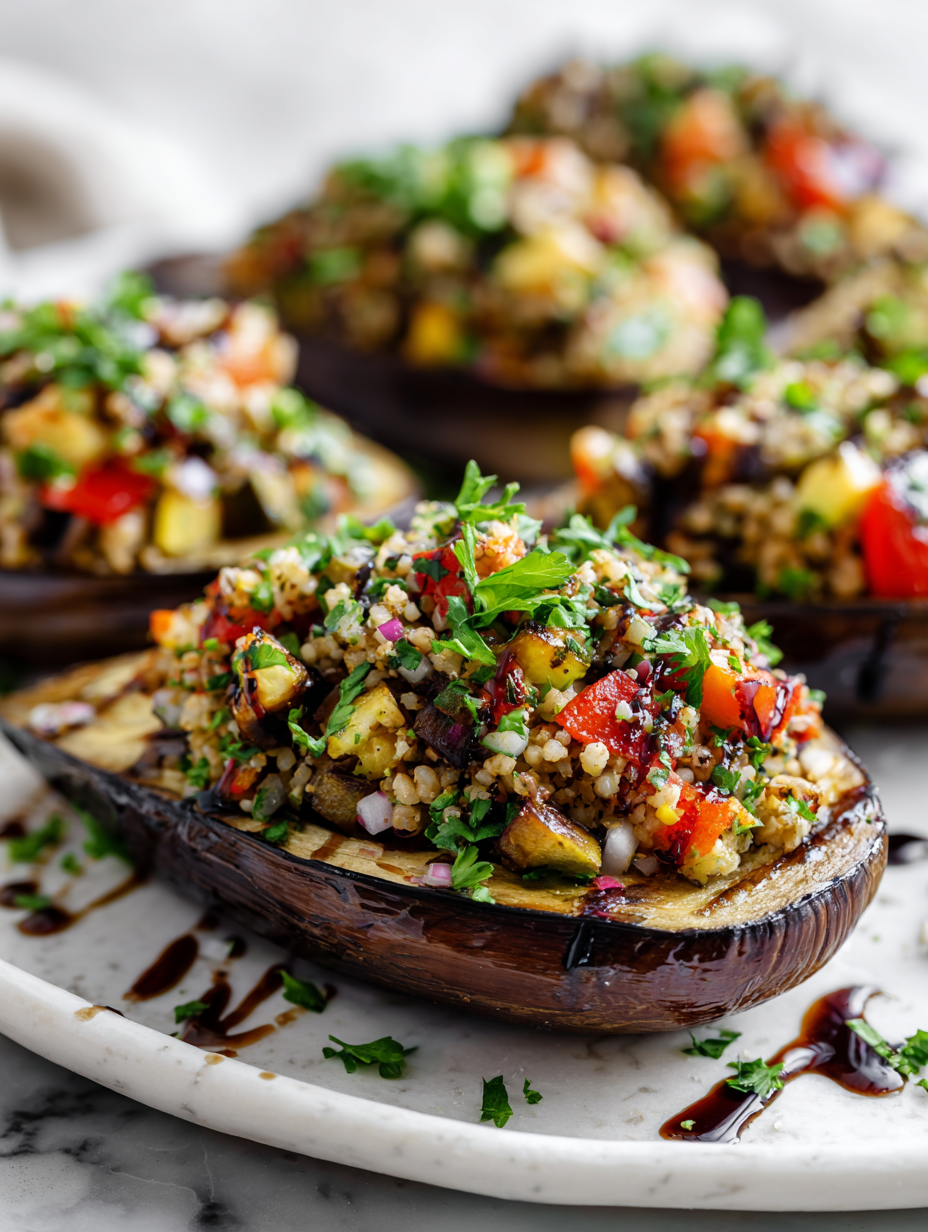
Vegan Stuffed Eggplant
Ingredients
Equipment
Method
- Preheat your oven to 200°C (390°F). Use a paring knife to carefully slice each eggplant in half lengthwise, then scoop out the flesh, leaving about a 1/2-inch border to keep the shape intact. Chop the scooped flesh and set aside.
- Brush the cut sides of the eggplants with a tablespoon of olive oil, then place them cut side up in a baking dish. Roast in the oven for about 20 minutes, until they are tender and slightly caramelized around the edges.
- While the eggplants roast, heat a tablespoon of olive oil in a skillet over medium heat. Sauté the chopped onion and minced garlic for 5-7 minutes until fragrant and translucent.
- Add the chopped eggplant flesh to the skillet and cook for another 8-10 minutes, stirring occasionally, until the mixture is soft and fragrant. The vegetables should smell savory and slightly smoky.
- Stir in the chopped tomatoes, cooked quinoa, chopped basil, oregano, and lemon juice. Season generously with salt and pepper. Cook for another 2-3 minutes until everything is heated through and well combined.
- Remove the eggplants from the oven once they are tender. Gently stuff each half with the filling mixture, pressing lightly to pack it in.
- Sprinkle the toasted breadcrumbs and optional chopped nuts over the filled eggplants to add a crispy topping. Return the dish to the oven and bake for an additional 15 minutes at 180°C (355°F), until topping is golden and bubbling.
- Remove from oven and let rest for 5 minutes. The eggplants will be tender, with a bubbling, flavorful filling and a crispy topping. Drizzle with extra lemon juice or olive oil if desired, then serve warm garnished with fresh herbs.
Top Tips for Perfect Stuffed Eggplant
- Bolded crust: Brushing eggplants with oil before roasting helps develop a golden, crispy skin that adds texture.
- Flavor layering: Sauté the chopped flesh with garlic and spices until fragrant; this deepens the filling’s savory profile.
- Temperature check: Roast eggplants until tender but still holding shape—test with a fork at 200°C (390°F).
- Breadcrumb crunch: Toast breadcrumbs before topping for a nutty, crispy finish—don’t skip this step for extra texture.
- Lemon brightness: Squeeze fresh lemon juice just before serving to brighten and balance the smoky, savory flavors.
- Stuffing pressure: Gently press the filling into the eggplant boats to ensure they stay filled during baking.
- Rest before serving: Let the baked eggplants rest for 5 minutes; this helps set the filling and makes slicing easier.
Common mistakes and how to fix them
- FORGOT to check eggplant tenderness → Pierce with fork; should be soft but not mushy.
- DUMPED filling into eggplants too quickly → Pack gently to avoid overflowing during baking.
- OVER-TORCHED breadcrumbs → Keep an eye; golden and crispy is perfect, blackened is burnt.
- MISSED seasoning in filling → Taste and adjust salt and herbs before stuffing for balanced flavor.
Quick Fixes and Pantry Swaps
- When eggplants collapse, splash a little water on the surface to revive their shape.
- If filling is too dry, open a pantry jar of olive tapenade for instant moisture and depth.
- When breadcrumbs burn quickly, shield with foil and lower oven temperature by 10°C (20°F).
- Dumped too much filling? Patch gaps with extra roasted eggplant bits to prevent spillage.
- When eggplant skin shimmers and crackles, it’s perfect—rescue a slightly undercooked one with 5 more minutes.
Prep, store, and reheat tips
- You can prep the eggplant flesh and filling mixture a day ahead. Keep in separate airtight containers in the fridge. The flavors meld overnight, making the final bake even more fragrant.
- Assemble the stuffed eggplants up to 4 hours before baking. Cover loosely and store in the fridge. The eggplants will soak up some of the flavors, so they taste even better after sitting.
- Store leftovers in an airtight container in the fridge for up to 3 days. The filling may release some moisture, so reheat gently to avoid sogginess.
- Reheat in the oven at 180°C (355°F) for about 15-20 minutes. Expect the filling to be warm and bubbling, and the edges slightly crisp. Check that it’s heated through—no cold spots.
Top questions about vegan stuffed eggplant
1. How do I hollow out the eggplants without breaking them?
Use a fork or spoon to gently scoop out the flesh, leaving a sturdy border so the eggplant holds together during baking.
2. What’s the perfect doneness for the eggplants before stuffing?
Roast the eggplants until they’re tender when pierced with a fork, but avoid overcooking to prevent mushiness.
3. How do I know when the dish is fully cooked?
Bake the stuffed eggplants until the filling is hot and bubbling, and the tops are golden and crispy, about 15 minutes at 180°C.
4. What’s the trick for a crispy topping?
Pre-toast breadcrumbs or nuts for a crunchy topping, and brush eggplants with oil before roasting for a crisp skin.
5. Can I make this dish in advance?
Yes, you can prepare the filling mixture a day ahead, store it in the fridge, and stuff the eggplants just before baking.
6. Can I substitute the tomatoes?
Use ripe, juicy tomatoes for a rich, smoky flavor. If out of season, roasted red peppers or sun-dried tomatoes work well.
7. My filling is too dry, what do I do?
If the filling seems too dry, add a splash of vegetable broth or a drizzle of olive oil to loosen it up.
8. Can I use dried herbs instead of fresh?
Use fresh herbs for a bright aroma, but dried herbs can be used—just increase the quantity slightly.
9. How long should I roast the eggplants?
Be sure to check the eggplants at the 20-minute mark; they should be tender but not falling apart.
10. What if my eggplants fall apart?
If the eggplants leak or fall apart, lower the oven temperature slightly and handle them gently during assembly.
This dish isn’t just about filling eggplants; it’s about reconnecting with those nostalgic flavors that remind us of home. The smoky, savory aroma baking in the oven makes the whole house feel warm and inviting.
Sharing this meal has become a little tradition—something I do when I need comfort or want to celebrate simple, honest flavors. It’s a reminder that good food can be straightforward yet deeply satisfying, especially when it’s made with care and a bit of personal history. Sometimes, that’s all I need to feel grounded.

Hi, I’m Clara Sage – and welcome to my kitchen of small revelations.
I created The Language of Aha not just as a recipe blog—but as a space to celebrate the little lightbulb moments that happen in the kitchen.