
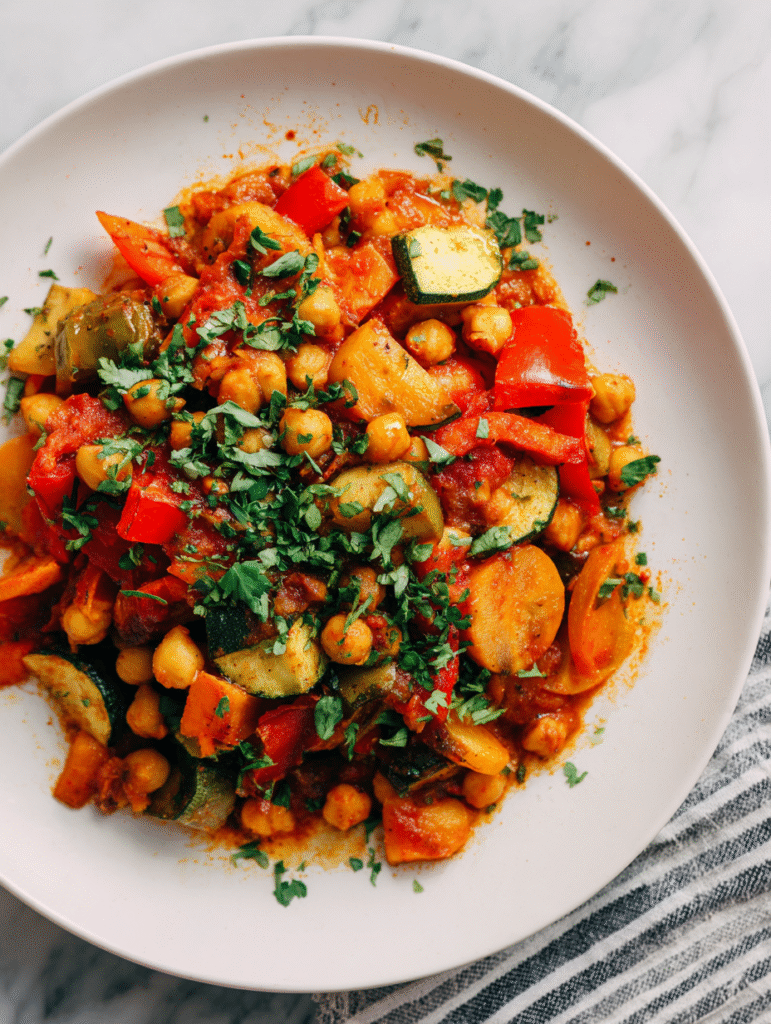
This chickpea vegetable tagine is like a warm hug on a chilly day. It’s a dish I grew up watching my family simmer slowly, filling the house with a fragrant, smoky aroma that makes everyone gather around the table. It’s not fancy, but it’s honest and rooted in those comforting, slow-cooked moments we all crave.
What makes this recipe special isn’t just the spices or the tender veg—it’s how it reminds me of those weekend afternoons when time slows down, and everyone’s stories swirl with the steam. It’s a dish that feels like a quiet celebration of everyday life, with each spoonful carrying a little piece of nostalgia and a lot of heart.
Focusing on how this dish embodies a comforting, slow-cooked meal that doubles as a nostalgic family recipe, despite its exotic ingredients. It’s about the warmth that fills the kitchen and the stories shared over a pot simmering with spices.
A Cozy, Slow-Cooked Classic
- This dish takes me back to lazy Sunday afternoons, the smell of spices mingling with the crisp air outside.
- Filling the pot with vibrant vegetables and chickpeas makes me proud — it’s simple, nourishing, and honest.
- There’s a quiet joy in slow-cooking this stew, watching the flavors deepen and the house fill with warmth.
- Every spoonful reminds me that good food doesn’t have to be complicated — just honest ingredients and patience.
The story behind this recipe
- This recipe came to life during a cold snap when I needed something hearty but still lively in flavor. I remember the first time I made it, I was experimenting with leftover vegetables and a can of chickpeas that was about to expire. The smell of cumin and cinnamon filling the kitchen felt like a warm invitation to slow down and savor the simple things.
- It’s a dish that’s always reminded me to trust my instincts—when in doubt, toss in what’s in the fridge. That improvisation turned into a reliable favorite, especially on nights when I want something nourishing without fuss. Over the years, it’s become a kind of culinary anchor, grounding me in my love for cozy, unpretentious cooking.
- A cozy, slow-cooked classic
- • This dish reminds me of lazy Sunday afternoons, with its fragrant, spice-laden aroma swirling through the house.
• Filling the pot with vibrant vegetables and chickpeas makes me proud — it’s simple, nourishing, and honest.
• There’s a quiet joy in slow-cooking this stew, watching the flavors deepen and the house fill with warmth.
• Every spoonful carries a little piece of nostalgia, connecting me to family and home, even when I’m miles away.
Historical and Cultural Roots
- This dish has roots in North African cuisine, particularly Morocco, where slow-cooked stews like tagines are a staple of communal eating.
- The name ‘tagine’ comes from the earthenware pot it’s cooked in, which traps steam and intensifies flavors—originally designed for slow simmering over open fires.
- Chickpeas have been cultivated in the Mediterranean and Middle East for thousands of years, making them a historic cornerstone in vegetarian and peasant dishes alike.
Key ingredients in my tagine
- Chickpeas: I like using canned, but dried chickpeas soaked overnight bring a nuttier, earthier flavor—just remember to cook them until tender. You want that creamy, almost buttery texture in every bite.
- Sweet Potatoes: Their mellow sweetness and soft, velvety texture add warmth, especially when they break down into the sauce. Swap with carrots if you prefer a firmer bite or want to save time.
- Tomatoes: I prefer ripe, juicy tomatoes for that bright, slightly tangy base, but canned crushed tomatoes work just as well if fresh aren’t in season. The aroma of simmering tomatoes is a promise of comfort.
- Spices: Cumin, cinnamon, and turmeric—these are my backbone. I toast them lightly at first to release their aroma, creating a smoky, fragrant foundation. Adjust to taste if you like more heat or earthiness.
- Vegetables: Bell peppers and zucchini are my go-to, adding color and a fresh bite. But feel free to toss in carrots, squash, or whatever’s lurking in your fridge—just keep an eye on their cook times.
- Olive Oil: Use a good drizzle—its fruity, peppery notes enrich every layer of flavor. If you want to keep it lighter, a splash of vegetable broth works fine but won’t deliver quite the same richness.
- Fresh Herbs: A handful of cilantro or parsley added at the end brightens everything up—think lemon zest for a fresh zing. Skip if you’re not a fan, but it really lifts the dish.
Spotlight on key ingredients
Chickpeas:
- I prefer canned for convenience, but dried soaked ones develop a nuttier, earthier flavor—just simmer until tender and creamy. They’re the heart of this dish’s texture.
- Chickpeas are unexpectedly versatile—they absorb spices and flavors like sponges, giving each bite a satisfying, buttery richness that keeps me coming back.
Sweet Potatoes:
- Their soft, velvety texture and mellow sweetness create a cozy base. When cooked slowly, they almost melt into the sauce, adding depth and a hint of caramelized flavor.
- Sweet potatoes are forgiving—if you prefer a firmer bite, toss in carrots or squash. They also brighten the dish with their natural sweetness and vibrant color during simmering.
Notes for ingredient swaps
- Dairy-Free: Swap coconut milk for cream to add richness without dairy, though it’ll bring a slight coconut aroma. Almond or cashew cream are lighter options.
- Vegetable Variations: Use butternut squash instead of sweet potatoes for a softer, sweeter bite. Both absorb spices beautifully.
- Tomato Options: If fresh tomatoes aren’t ripe, canned crushed or diced tomatoes work just as well. Look for those with no added salt or sugar.
- Spice Adjustments: For a milder dish, reduce cinnamon and cumin; for more punch, add a pinch of cayenne or smoked paprika to deepen the smoky flavor.
- Legume Swap: Lentils make a quick, hearty alternative to chickpeas. Rinse well and cook until tender—about 20 minutes—before adding to the stew.
- Herb Freshness: Fresh cilantro or parsley brightens the dish. If unavailable, a squeeze of lemon juice at the end adds a similar fresh note.
- Oil Choices: Olive oil is classic, but for a nuttier flavor, try toasted sesame oil sparingly. Keep in mind it’s more potent, so use less.
Equipment & Tools
- Heavy-bottomed pot or Dutch oven: Ensures even heat and slow cooking.
- Sharp knife: Chops vegetables cleanly and quickly.
- Wooden spoon or spatula: Stirs ingredients without damaging the pot.
- Measuring cup: Accurately measures liquids for consistency.
Step-by-step guide to chickpea tagine
- Equipment & Tools: Gather a heavy-bottomed large pot or Dutch oven (for even heat), a sharp knife (for chopping), a wooden spoon or spatula (for stirring), and a measuring cup (for liquids).
- Heat 2 tbsp olive oil over medium heat (about 160°C / 320°F). Once shimmering, add 1 tsp cumin seeds (a quick crackle).
- a. Toss in 1 chopped onion (about 150g) and cook until translucent, 5-7 minutes, stirring occasionally. b. Add 2 minced garlic cloves and cook for 30 seconds until fragrant, do not burn. c. Stir in 1 tsp ground cinnamon and 1 tsp turmeric, cook 1 minute, releasing smoky aromas.
- Add 2 diced carrots and 1 large sweet potato (about 300g), cook for 5 minutes, stirring until coated and slightly softened. You want the vegetables to glisten but not brown.
- Pour in 400g chopped tomatoes (or 1 cup canned crushed tomatoes). Stir, then cook uncovered for 10 minutes, letting the mixture thicken and the flavors meld. Smell for a warm, spiced aroma.
- Add 1 can (400g) chickpeas, drained and rinsed. Stir in 250ml vegetable broth or water. Bring to a gentle simmer, then cover. Cook on low heat (about 90°C / 194°F) for 20-25 minutes, until vegetables are tender.
- a. Check that the sweet potatoes are soft by piercing with a fork—should yield easily. b. The sauce should be thickened and fragrant. c. Vegetables should be vibrant and slightly caramelized at edges.
- Remove from heat, stir in chopped fresh cilantro or parsley (optional). Let rest, covered, for 5 minutes. This helps flavors settle and intensify.
- Serve hot, with crusty bread or over rice. The dish should have a rich, fragrant sauce and tender vegetables. The chickpeas should be creamy and hold their shape.
Let the cooked tagine rest, covered, for 5 minutes. Serve directly from the pot, garnished with fresh herbs if desired. The resting period allows flavors to deepen and meld, making each bite more aromatic and rich.
How to Know It’s Done
- The sauce is thick and fragrant, not watery or runny.
- Vegetables are tender but not mushy—pierce easily with a fork.
- Chickpeas are creamy and hold their shape, not falling apart.
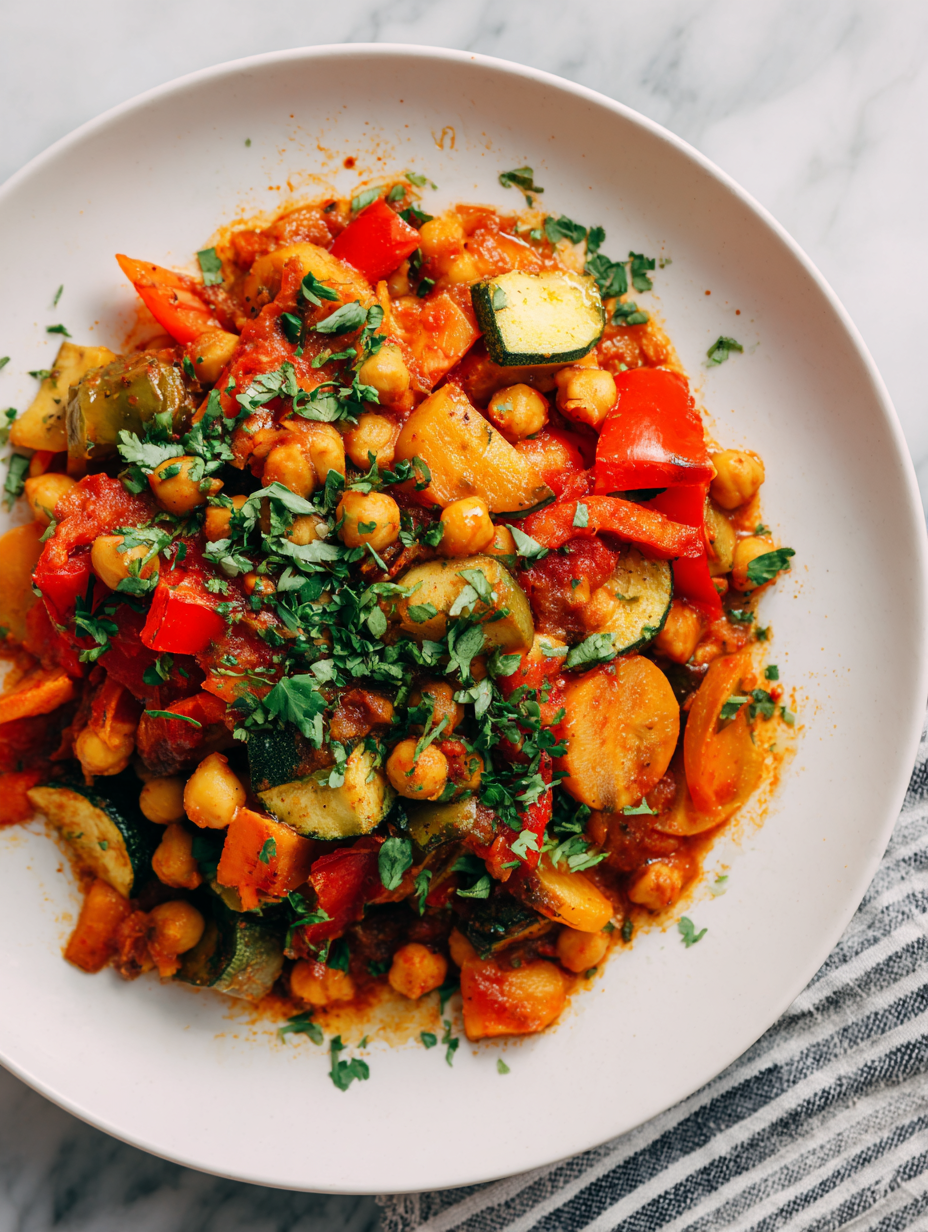
Chickpea Vegetable Tagine
Ingredients
Equipment
Method
- Gather your heavy-bottomed pot, a sharp knife, a wooden spoon, and a measuring cup. Heat the olive oil over medium heat until shimmering, then add the cumin seeds and toast until fragrant, about 30 seconds.
- Add the chopped onion to the pot and cook, stirring occasionally, until translucent and soft—about 5-7 minutes. The onion should smell sweet and fragrant.
- Stir in the minced garlic, ground cinnamon, and turmeric, cooking for another 30 seconds until the spices release their aroma and the mixture is fragrant.
- Add the diced carrots and sweet potato to the pot, stirring well to coat them with the spices. Cook for about 5 minutes, letting the vegetables soften slightly and absorb the flavors.
- Pour in the chopped tomatoes, stirring to combine. Let this mixture simmer uncovered for about 10 minutes, until the tomatoes break down and the sauce thickens, filling your kitchen with a warm, spiced aroma.
- Add the drained chickpeas, then pour in the vegetable broth. Stir everything together, bringing the mixture to a gentle simmer.
- Reduce the heat to low, cover the pot, and let everything cook gently for 20-25 minutes. During this time, vegetables will become tender, and flavors will deepen, filling the house with a comforting smell.
- Uncover the pot and check that the sweet potato and carrots are easily pierced with a fork—they should be soft and yielding. The sauce should be thickened and fragrant.
- Stir in chopped fresh cilantro or parsley, and season with salt and pepper to taste. Let the stew rest, covered, for 5 minutes to allow flavors to meld.
- Serve the chickpea vegetable tagine hot, garnished with extra herbs if desired, alongside crusty bread or over rice. Enjoy the rich, fragrant sauce and the tender vegetables that make this dish so comforting.
Pro tips for perfect chickpea tagine
- Bolded mini-head: Toast spices briefly in oil to release their aromatic oils and deepen flavor.
- Bolded mini-head: Use a heavy-bottomed pot for even heat distribution and slow simmering.
- Bolded mini-head: Add chickpeas towards the end if using dried ones to prevent overcooking and mushiness.
- Bolded mini-head: Deglaze the pot with a splash of water or broth after sautéing to lift flavorful bits.
- Bolded mini-head: Let the tagine rest covered for 5 minutes before serving to meld flavors and improve texture.
- Bolded mini-head: Incorporate fresh herbs at the end for a bright, fragrant finish that balances spices.
- Bolded mini-head: Adjust seasoning with salt and lemon juice just before serving to brighten the dish.
Common mistakes and how to fix them
- FORGOT to brown spices early? Toast them longer for richer aroma, not burnt.
- DUMPED ingredients accidentally? Add a splash of water and stir gently to recover.
- OVER-TORCHED vegetables? Remove from heat immediately, and add a bit of water to deglaze.
- MISSED seasoning? Taste and adjust salt or spices before serving, for balanced flavor.
Quick fixes and pantry swaps
- When sauce is too thin, splash in a bit of tomato paste and simmer for 5 minutes to thicken.
- If chickpeas are mushy, drain and add fresh ones—avoid overcooking for that perfect creamy bite.
- Splash lemon juice when the dish tastes flat to brighten flavors instantly.
- Patch burnt vegetables with a spoonful of fresh tomato or broth to lift the smoky taste.
- Shield delicate herbs with a lid during reheating to preserve their bright, fresh aroma.
Prep, store, and reheat tips
- Chickpeas and vegetables can be chopped and prepped up to a day in advance; keep refrigerated in airtight containers. The flavors deepen overnight, developing richer spice notes.
- Store cooled tagine in an airtight container in the fridge for up to 3 days. The sauce thickens slightly, and the spices become more integrated, giving a mellower, harmonious flavor.
- Reheat gently on the stovetop over low heat, stirring occasionally. The aroma will revive as the sauce warms, and vegetables should be tender but not overcooked—about 10 minutes.
- For longer storage, freeze in portions for up to 2 months. Thaw overnight in the fridge, then reheat slowly, watching for any excess moisture. The dish may be a little softer, but the deep flavors remain.
Top questions about chickpea tagine
1. Can I use dried chickpeas instead of canned?
Canned chickpeas are quick and easy, but dried ones soaked overnight develop a nuttier flavor and creamier texture. Rinse canned well before use.
2. Can dried chickpeas be used in this recipe?
Yes, but soak them overnight and simmer for about an hour until tender. They absorb flavors better and add a richer, earthier taste.
3. Can I skip the broth or use water?
A good vegetable broth adds depth, but water works. Adjust seasoning if you use water to compensate for less flavor.
4. What other vegetables can I use?
Sweet potatoes add a soft, velvety sweetness, but carrots or squash can be substituted for different textures and flavors.
5. Is this dish vegan-friendly?
To keep it vegan, use olive oil and skip any dairy-based toppings. For extra richness, a splash of coconut milk works well.
6. Should I toast the spices first?
Cooking the spices early releases their oils and aroma, giving the dish its warm, smoky flavor. Toast spices in oil briefly without burning.
7. How do I reheat leftovers?
Yes, reheat gently over low heat, stirring occasionally. The flavors will deepen, and the sauce will re-emerge fragrant and thickened.
8. How do I know when it’s ready?
The dish is done when vegetables are tender, sauce is thick, and chickpeas are creamy. Check for a fragrant aroma and vibrant color.
9. When should I add fresh herbs?
Adding fresh herbs at the end brightens the dish, giving it a fresh, aromatic lift. Cilantro or parsley work best.
10. How can I fix a watery sauce?
If the sauce gets too watery, simmer uncovered for a few more minutes to thicken. If it’s too thick, add a splash of broth or water.
Cooking this chickpea vegetable tagine reminds me that simplicity often carries the most warmth. It’s a dish that magnifies the natural sweetness of vegetables and the deep, smoky spices, filling the house with a scent that feels like a warm hug. It’s honest, nourishing, and a quiet celebration of slow, unpretentious cooking.
Whenever I make it, I’m reminded of why I started loving food in the first place—those small, leisurely moments where flavors deepen and stories unfold over simmering pots. It’s a dish I keep coming back to, especially when I need something familiar yet alive with spice and soul.

Hi, I’m Clara Sage – and welcome to my kitchen of small revelations.
I created The Language of Aha not just as a recipe blog—but as a space to celebrate the little lightbulb moments that happen in the kitchen.