
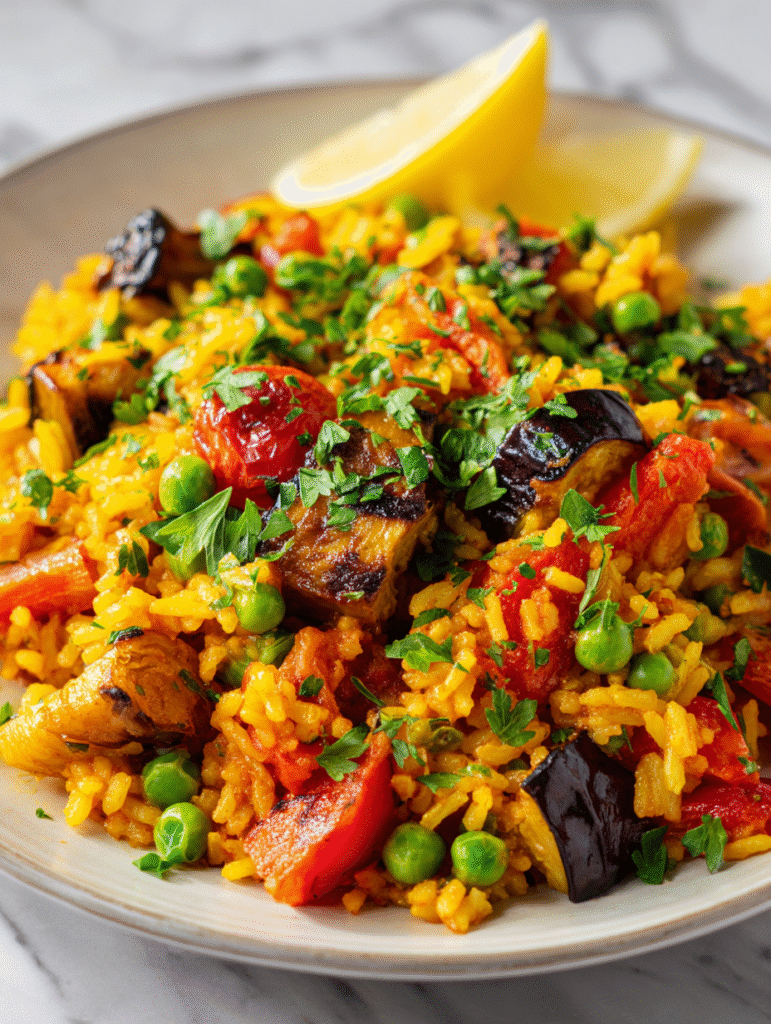
Recreating the smoky, caramelized depth of traditional paella without meat or seafood sounds like a tall order, but it’s doable with a few honest tricks. I’ve spent years trying to get that perfect, slightly charred rice crust, and I finally cracked it with plant-based ingredients. This version is about coaxing out those rich, smoky flavors using simple kitchen techniques, not shortcuts or artificial smoke sprays.
What I love about this vegan paella is how it surprises folks who expect a bland, veggie-heavy dish. Instead, it offers a complex aroma, a hint of toasted rice, and a satisfying bite that mimics the real deal. It’s honest cooking that respects the tradition but makes space for creativity, and honestly, I’d rather have this on a weeknight than any takeout. It’s a slow-building flavor, a little chaos in the pan, and a lot of pride in the results.
Focusing on how to recreate the smoky depth of traditional paella using only plant-based ingredients and techniques, without relying on artificial flavors or shortcuts.
The smoky magic of plant-based paella
- Seeing the first hint of smoky caramel on the rice always makes me smile, like I’ve unlocked a secret.
- I love how this dish reminds me of summers spent in Spain, with the sun on my face and the smell of saffron in the air.
- There’s a quiet pride in pulling off that perfect crust—crispy, golden, and just enough chew.
- Cooking this paella feels like a small rebellion—vegan but bold, layered, and deeply satisfying.
- Every time I make it, I feel a little more connected to the traditions I admire, reimagined in my own kitchen.
The smoky magic of plant-based paella
- This vegan paella grew out of my obsession with smoky, caramelized rice and a need to recreate that depth without relying on traditional seafood or chicken. I spent months experimenting with different woods, charred vegetables, and bold spices, trying to capture that elusive, slightly burnt flavor that makes paella so special. It’s honest effort, layered with a little chaos in the pan, and a lot of tasting and adjusting.
- What keeps me coming back to this dish is how it surprises even the skeptics—those expecting a bland veggie mess. Instead, it’s a rich, smoky, almost meaty bite that makes you pause. I love how it transforms simple ingredients into something complex and satisfying. Over time, it’s become more than just a recipe; it’s a ritual of slow patience, a bit of culinary rebellion, and a reminder that plant-based can be bold and deeply rooted in tradition.
- heading: The smoky magic of plant-based paella
Paella’s surprising plant-based evolution
- Paella originated in Valencia, Spain, as a humble rice dish cooked over an open fire with local ingredients.
- Traditionally, seafood and meats were central, but regional variations included rabbit and snails, reflecting local hunting traditions.
- The smoky, caramelized rice crust called ‘socarrat’ is considered the soul of authentic paella, achieved by careful heat control.
- Vegan adaptations often mimic the smoky depth using charred vegetables and paprika, honoring the dish’s rustic roots.
- This dish’s communal origins make it more than food; it’s a collective celebration of local harvests and shared stories.
Ingredient breakdown: key components
- Smoked paprika: I always use good smoked paprika—it’s the smoky backbone here. If you don’t have it, a pinch of chipotle powder can work. That smoky aroma makes all the difference.
- Saffron threads: They’re expensive but worth it. I crush mine with a bit of warm water first—brightens the rice and adds a subtle floral note. Skip if you’re in a pinch, but it’s not the same without that golden hue.
- Vegetables: I love a mix of bell peppers and cherry tomatoes—bright, juicy, and slightly charred. If you’re rushed, just use what’s in the fridge, but don’t skip that char for flavor complexity.
- Plant-based protein: I prefer artichoke hearts or hearty mushrooms—they soak up flavors and add texture. If you want extra bite, try adding some smoked tofu at the end, just to boost that smoky depth.
- Rice: Short-grain or arborio works best—creamy, tender, with a slight chew. I avoid long-grain here; it doesn’t absorb the smoky flavors as well and can be a bit dry if overcooked.
- Vegetable broth: Use a rich homemade or store-bought broth. I always simmer mine with a few bay leaves and thyme—gives the rice a deeper, savory note. No need for salt in the broth if it’s well-flavored.
- Olive oil: A good splash at the start helps build flavor and aids in that crispy socarrat. I toast the rice just a little in the oil until it’s slightly translucent—this step is key for that toasted aroma.
Spotlight on key ingredients
Smoked paprika:
- I always use good smoked paprika—it’s the smoky backbone here. If you don’t have it, a pinch of chipotle powder can work. That smoky aroma makes all the difference.
- Saffron threads: They’re expensive but worth it. I crush mine with a bit of warm water first—brightens the rice and adds a subtle floral note. Skip if you’re in a pinch, but it’s not the same without that golden hue.
- Vegetables: I love a mix of bell peppers and cherry tomatoes—bright, juicy, and slightly charred. If you’re rushed, just use what’s in the fridge, but don’t skip that char for flavor complexity.
Saffron and rice:
- Artichoke hearts: I prefer these—they soak up flavors and add a tender, slightly briny bite. If you want extra smoky depth, try adding some smoked tofu at the end for a real punch.
- Rice: Short-grain or arborio works best—creamy, tender, with a slight chew. Avoid long-grain; it doesn’t absorb the smoky flavors well and can be dry if overcooked.
- Broth: Use a rich homemade or store-bought broth. I simmer mine with bay leaves and thyme—gives the rice a deeper, savory note. No need to salt heavily if it’s well-flavored.
Notes for ingredient swaps
- Smoked paprika: I always use good smoked paprika—it’s the smoky backbone here. If you don’t have it, a pinch of chipotle powder can work. That smoky aroma makes all the difference.
- Saffron threads: They’re expensive but worth it. I crush mine with a bit of warm water first—brightens the rice and adds a subtle floral note. Skip if you’re in a pinch, but it’s not the same without that golden hue.
- Vegetables: I love a mix of bell peppers and cherry tomatoes—bright, juicy, and slightly charred. If you’re rushed, just use what’s in the fridge, but don’t skip that char for flavor complexity.
- Plant-based protein: I prefer artichoke hearts or hearty mushrooms—they soak up flavors and add texture. If you want extra bite, try adding some smoked tofu at the end, just to boost that smoky depth.
- Rice: Short-grain or arborio works best—creamy, tender, with a slight chew. I avoid long-grain here; it doesn’t absorb the smoky flavors as well and can be a bit dry if overcooked.
- Vegetable broth: Use a rich homemade or store-bought broth. I always simmer mine with a few bay leaves and thyme—gives the rice a deeper, savory note. No need for salt in the broth if it’s well-flavored.
- Olive oil: A good splash at the start helps build flavor and aids in that crispy socarrat. I toast the rice just a little in the oil until it’s slightly translucent—this step is key for that toasted aroma.
Equipment & Tools
- Paella pan: Provides a wide surface for even cooking and crust formation.
- Wooden spoon: For stirring and spreading ingredients without damaging the pan.
- Heat diffuser or stove with consistent heat: Ensures even heat distribution, crucial for socarrat formation.
- Ladle or small cup: For adding broth in small increments if needed.
Step-by-step guide to vegan paella
- Gather your equipment: a wide, shallow paella pan (about 30cm diameter), a wooden spoon for stirring, and a heat diffuser if your stove runs hot.
- Heat 2 tbsp olive oil over medium heat (about 160°C / 320°F) in the pan. Add chopped onion and minced garlic; cook until translucent and fragrant, about 5 minutes.
- Stir in 1 ½ cups short-grain rice, toast for 2 minutes until it turns slightly translucent and smells nutty. This builds flavor and helps the rice absorb broth evenly.
- Add 1 tbsp smoked paprika and a pinch of chili flakes if you like heat. Stir well to coat all the rice, then pour in 4 cups warm vegetable broth infused with saffron threads (crushed and steeped in a bit of warm water).
- Spread the rice evenly across the pan. Arrange chopped bell peppers, cherry tomatoes, and artichoke hearts on top. Turn up the heat to high (about 200°C / 390°F) for 5 minutes, cracking the surface and creating a slight sizzle.
- Reduce heat to medium-low (about 130°C / 265°F). Let the paella simmer undisturbed for 15-20 minutes. Do not stir. Check the rice: it should be tender and the liquid mostly absorbed, with a golden, slightly crispy crust forming at the bottom.
- If the liquid evaporates too quickly and rice is still firm, add a splash more broth and continue simmering. If it burns or sticks, reduce heat immediately and add a splash of water to loosen.
- Once the rice is cooked and a crust (socarrat) forms, turn off heat. Cover loosely with a clean towel and let rest for 5 minutes to settle flavors.
- Serve directly from the pan, garnished with fresh herbs if desired. The top should be beautifully caramelized, with a smoky aroma and tender, flavorful rice underneath.
Once off heat, cover the pan loosely with a clean towel and let rest for 5 minutes. This helps the flavors meld and the crust to firm up without steaming away the smoky aroma. Serve straight from the pan, encouraging everyone to dig in and enjoy the crispy bits at the bottom.
How to Know It’s Done
- The rice is tender and slightly chewy, with a golden crust at the bottom.
- The socarrat (crispy rice layer) has a rich, toasted aroma without burning.
- Vegetables are charred in spots, adding smoky depth, and broth is fully absorbed.
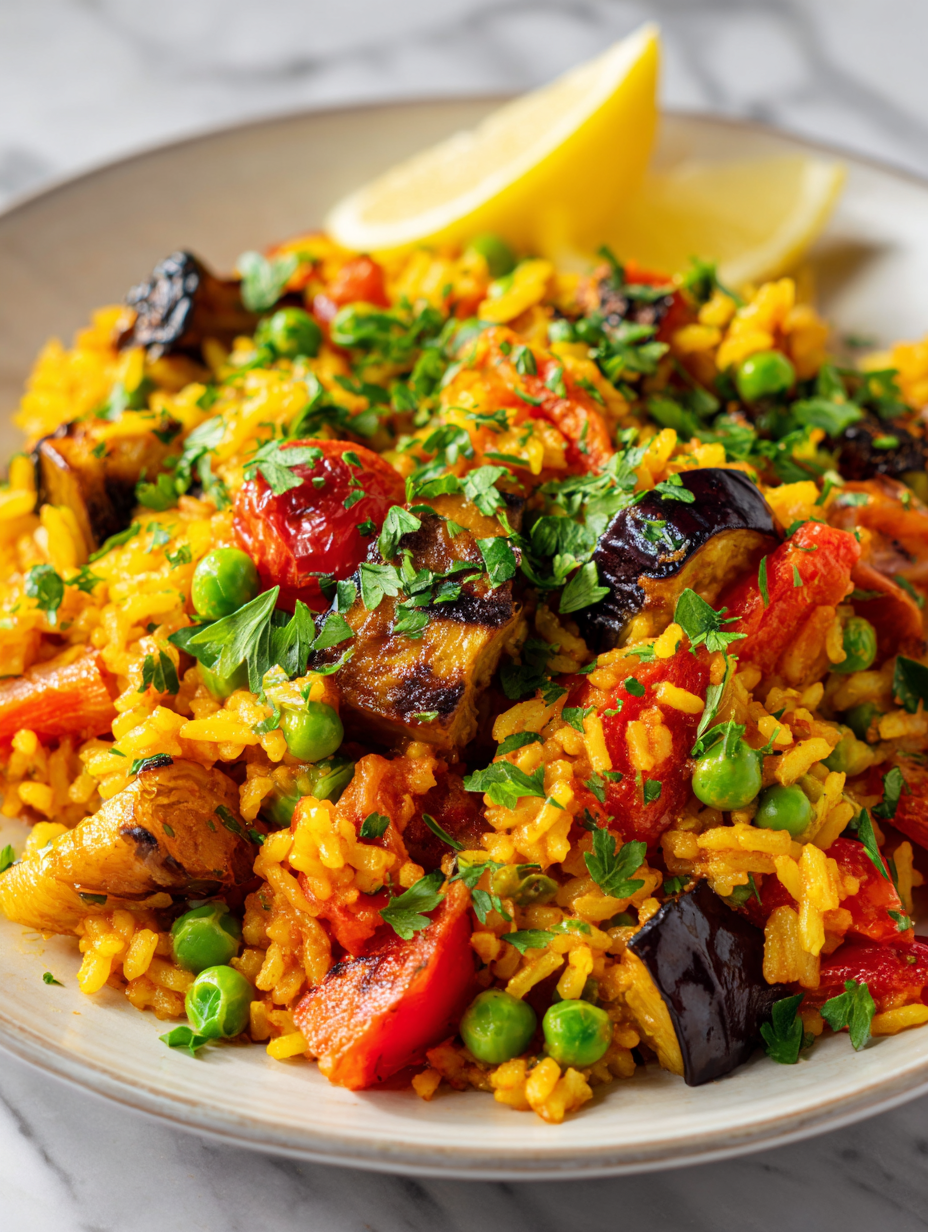
Smoky Vegan Paella
Ingredients
Equipment
Method
- Heat olive oil in a wide paella pan over medium heat until shimmering. Add chopped onion and minced garlic; cook, stirring occasionally, until translucent and fragrant, about 5 minutes.
- Add the short-grain rice to the pan, stirring to coat each grain with oil. Toast the rice for about 2 minutes until it turns slightly translucent and smells nutty.
- Sprinkle in smoked paprika and chili flakes if using, stirring quickly to evenly distribute the smoky spice throughout the rice.
- Pour in the warmed vegetable broth infused with crushed saffron threads. Stir gently to distribute the rice evenly and arrange the vegetables on top.
- Increase heat to high and cook for about 5 minutes, allowing the mixture to bubble vigorously and start forming a sizzle. This helps develop the crispy bottom layer.
- Reduce heat to medium-low and simmer gently for 15-20 minutes without stirring, until rice is tender and the liquid has mostly absorbed. You’ll notice a golden, crispy crust forming at the bottom—this is the socarrat.
- In the last few minutes, add the charred bell peppers, cherry tomatoes, artichoke hearts, and sliced mushrooms on top of the rice. Let everything cook together, allowing the flavors to meld.
- Once the liquid is absorbed and rice is tender, turn off the heat. Cover the pan loosely with a clean cloth or towel and let it rest for 5 minutes to settle the flavors and enhance the crust.
- Remove the cover and serve directly from the pan, ensuring you get some of that crispy socarrat on each plate. Enjoy the smoky, tender rice with charred vegetables and a vibrant aroma.
Tips & Tricks for Perfect Paella
- Bolded mini-head: Toast the rice briefly in oil before adding broth to enhance nuttiness and help it absorb flavors better.
- Bolded mini-head: Use a wooden spoon to gently scrape the pan’s bottom during simmering; this encourages that crispy socarrat without sticking.
- Bolded mini-head: Keep the heat steady and don’t stir after adding broth; patience makes a crunchy, caramelized rice crust.
- Bolded mini-head: For smoky depth, char some vegetables until blackened in spots—this adds a natural, rich flavor that mimics traditional smoked meats.
- Bolded mini-head: Rest the paella off heat, covered with a towel for 5 minutes, allowing flavors to meld and the crust to set without steaming away the smoky aroma.
- Bolded mini-head: If the socarrat isn’t forming, increase the heat for the last 2 minutes, listening for a crackling sound and a toasted aroma.
- Bolded mini-head: Use a splash of water or broth if the rice starts to burn at the bottom—this quickly cools the pan and prevents a bitter taste.
Common mistakes and how to fix them
- FORGOT to monitor rice moisture → Keep an eye for tender, not mushy, rice.
- DUMPED too much broth at once → Add broth gradually to control absorption and crust formation.
- OVER-TORCHED socarrat → Reduce heat immediately if burning occurs, and sprinkle a little water.
- MISSED the resting time → Rest the paella 5 minutes covered for full flavor development.
Quick Fixes and Pantry Swaps
- When rice sticks, splash cold water into the pan and gently scrape to loosen.
- If the socarrat isn’t forming, increase heat slightly and listen for crackling to develop.
- Splash a bit of broth if the bottom starts to burn—quick rescue for that toasted aroma.
- Dumped too much broth? Add a splash more if rice remains undercooked; keep simmering uncovered.
- When smoky flavor is weak, toast a handful of chopped vegetables until charred for instant depth.
Prep, store, and reheat tips
- Prep chopped vegetables and measure rice and broth a day in advance; store in airtight containers in the fridge. The flavors will meld better overnight, and it saves time on the day of cooking, with a fresh, vibrant aroma when reheated.
- Refrigerated paella keeps well for up to 2 days. The rice may absorb some moisture, so gently reheat with a splash of broth or water until steaming and fragrant. Expect a slightly softer texture, but the smoky aroma remains strong.
- Freeze leftovers for up to a month. Reheat directly in a skillet or microwave, adding extra broth or water to revive the texture. The smoky scent may mellow slightly, but the flavors still shine through with proper reheating.
- To reheat, warm gently over medium heat, stirring occasionally, until the rice is hot and the socarrat (crispy crust) regains some of its crunch. Be cautious not to overheat, which can cause the rice to dry out or burn.
Top questions about vegan paella
1. How do I get that smoky flavor without meat or seafood?
Use smoked paprika and charred vegetables like peppers and tomatoes to mimic smoky depth. It’s about layering those flavors until the rice smells toasted and slightly caramelized.
2. Can I skip saffron or use a substitute?
Crush saffron threads in warm water before adding to rice. It brightens the dish with a floral aroma and gives that characteristic golden hue.
3. How can I tell when the paella is done?
Use a wide, shallow pan and cook on steady medium-high heat. Keep an eye on the socarrat—listen for crackling and look for a golden crust at the bottom.
4. What if my rice ends up undercooked or mushy?
Add broth gradually, in small pours, so the rice absorbs slowly. If you add too much at once, it can turn mushy or burn the bottom.
5. Can I use regular long-grain rice?
Use short-grain or arborio rice for creaminess and better flavor absorption. Long-grain rice tends to stay dry and won’t soak up the smoky broth as well.
6. Why should I let the paella rest before serving?
Rest the paella covered with a towel for 5 minutes after cooking. It helps the flavors settle and preserves the crispy socarrat.
7. Are there any tricks to get a good crust or socarrat?
Char some vegetables until blackened in spots for added smoky depth, which mimics traditional wood-fired flavors naturally.
8. What should I do if the bottom burns?
Use a splash of water or broth to cool the pan if the bottom starts to burn; this quick fix prevents bitterness and preserves flavor.
9. How do I reheat paella without losing flavor?
Reheat leftovers gently on the stove with a splash of broth, stirring softly. The smoky aroma stays strong, and the rice softens nicely.
10. Can I add other vegetables or proteins?
Feel free to experiment with hearty mushrooms or artichoke hearts as plant-based proteins—they soak up flavors and add texture, making the dish more filling and smoky.
This vegan paella isn’t just a dish; it’s a reminder that bold flavors can come from simple, honest ingredients. Every time I make it, I’m struck by how smoky, comforting, and surprisingly layered it turns out, even without seafood or meat.
In a world of fast fixes and shortcuts, this recipe asks for patience and a little chaos—trust the process, and you’ll end up with something that feels both familiar and new. It’s a way to connect with tradition while making space for your own kitchen stories.

Hi, I’m Clara Sage – and welcome to my kitchen of small revelations.
I created The Language of Aha not just as a recipe blog—but as a space to celebrate the little lightbulb moments that happen in the kitchen.