
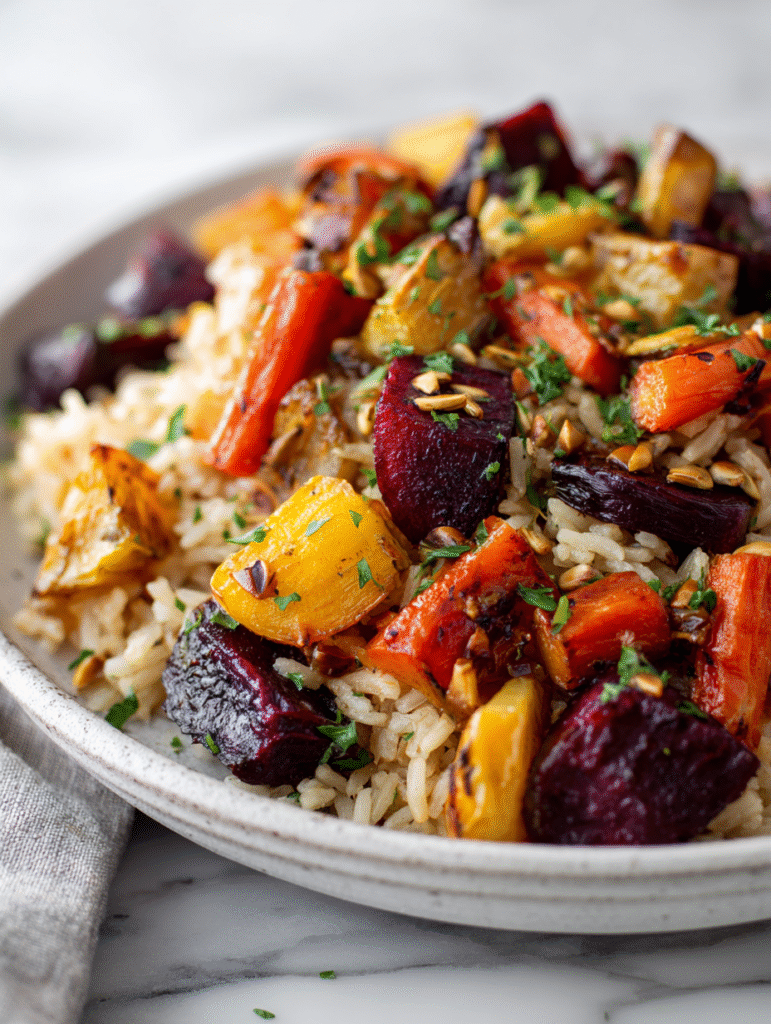
Root vegetables often get overlooked in everyday cooking, but they hold a quiet power to transform a simple vegan pilaf. Their earthy sweetness, when roasted or sautéed briefly, brings depth and a natural umami that’s hard to beat. I’ve found that giving carrots, parsnips, or even beets a little extra attention really elevates the whole dish.
This isn’t just about adding vegetables—it’s about celebrating their versatility. Roasting root veggies caramelizes their sugars, creating a smoky, sweet contrast to the tender grains. It’s a humble dish that surprises with its layered flavors, making it perfect for cozy nights or when you want something nourishing but not fussy.
Focusing on the overlooked power of root vegetables in elevating a simple vegan pilaf, highlighting their earthy sweetness and how they transform with roasting and quick sautéing for maximum flavor.
Root Vegetables’ Hidden Power
- Discovering how roasting carrots can add a smoky sweetness that makes the pilaf feel special.
- Feeling proud every time I turn simple grains into a hearty, colorful bowl that everyone loves.
- Relieved when I realize this dish is forgiving — a little overcooking or skipping an ingredient still tastes great.
- Joyful memories of cooking this for friends and hearing their surprised reactions to the earthy flavors.
The inspiration behind this dish
- This recipe was born out of a messy week where I needed something hearty but quick, and I had a bunch of root veggies that needed using. I love how roasting carrots and parsnips caramelizes their natural sugars, adding a smoky sweetness that makes the whole dish feel special, even if it’s just a weekday dinner. It’s a way to turn humble ingredients into something that feels like comfort food with a bit of an upgrade.
- I remember experimenting with different grains and ending up with this perfect, fluffy pilaf that holds all those earthy flavors together. It’s become my go-to for busy nights when I want something nourishing and satisfying without fuss. And honestly, it’s always a hit — the kind of dish that makes you feel like you’re giving simple food a little bit of magic.
- heading
- story_type
Historical & Cultural Roots
- Root vegetables have been a staple in many ancient diets, prized for their storage longevity and earthy flavors.
- The concept of pilafs originated in Persia, where aromatic rice dishes were often combined with vegetables and spices for celebratory meals.
- Vegan pilafs gained popularity during the vegetarian movement of the 20th century, emphasizing plant-based ingredients for hearty, satisfying meals.
Ingredient breakdown: key components
- Carrots: I love how their sweet, slightly earthy aroma deepens when roasted. You can swap with sweet potatoes for a softer, milder sweetness.
- Parsnips: Their nutty undertone adds complexity, especially when sautéed until lightly caramelized. Turn to celeriac if parsnips aren’t available.
- Bell peppers: I prefer red or orange for vibrant color and sweetness, but yellow or even roasted poblano peppers work for smoky depth.
- Grains: I opt for jasmine or basmati rice — their fragrant aroma brings a lovely lift. Quinoa can be a quick, protein-rich substitute.
- Broth: A rich vegetable broth makes everything pop with umami. If you’re out, a splash of soy sauce or miso dissolved in water can do the trick.
- Herbs & spices: Fresh cilantro and a squeeze of lemon brighten the dish, while cumin or smoked paprika add warmth. Use dried herbs if fresh isn’t handy.
- Oil & seasoning: A good splash of olive oil or toasted sesame oil adds depth. Don’t skimp — the oil helps bloom the spices and coat the grains beautifully.
Spotlight on key ingredients
Carrots and Parsnips:
- Carrots: Their sweet, earthy aroma deepens when roasted, becoming oozy and caramelized. Swap with sweet potatoes if you want a softer, milder sweetness.
- Parsnips: Offer a nutty, slightly spicy note that becomes more pronounced as they cook. Celeriac can be a good substitute if parsnips aren’t available.
Notes for ingredient swaps
- Vegetable Broth: I prefer homemade or low-sodium to control salt, but store-bought works fine. For richer flavor, add a splash of soy sauce or miso.
- Root Vegetables: Carrots are sweet and reliable, but parsnips or sweet potatoes bring different earthy or mellow notes. Beets add vibrant color and a slightly sweet, mineral taste.
- Grains: Jasmine or basmati rice give a fragrant, fluffy texture. Quinoa or millet are quick alternatives, with a nuttier flavor and slightly firmer bite.
- Oil & Seasonings: Extra virgin olive oil adds depth, but toasted sesame oil offers a nutty aroma. Dried herbs like thyme or oregano can replace fresh herbs if needed.
- Herbs & Citrus: Fresh cilantro and lemon brighten the dish, but parsley or lime juice are good swaps for different flavor profiles. Dried herbs work in a pinch, just use less.
- Spices: Cumin and smoked paprika add warmth and smoky depth. Curry powder or coriander can replace or complement these for a different spice kick.
- Vegan Protein: For extra heft, toss in chickpeas or toasted nuts. They add crunch and protein, but the dish is satisfying on its own without them.
Equipment & Tools
- medium-sized pot or saucepan: To cook the rice and vegetables evenly.
- sharp knife: For chopping root vegetables and herbs.
- chopping board: To prepare ingredients safely and comfortably.
- wooden spoon: For stirring and preventing sticking.
- measuring cups and spoons: To ensure accurate quantities of rice, broth, and spices.
- lid for the pot: To trap steam and cook rice evenly.
Step-by-step guide to Vegan Vegetable Pilaf
- Gather all your equipment: a medium-sized heavy-bottomed pot or wide saucepan, a sharp knife, and a chopping board. Have a lid nearby for simmering and a wooden spoon for stirring.
- Rinse 1 cup of long-grain rice (jasmine or basmati) under cold water until the water runs clear. Set aside to drain.
- Peel and chop 2 carrots and 2 parsnips into 1/2-inch cubes. Keep the pieces uniform for even cooking.
- Heat 2 tablespoons of olive oil over medium heat (about 160°C/320°F). Once shimmering, add the chopped root vegetables. Sauté for about 5-7 minutes, stirring occasionally, until lightly browned and fragrant.
- Add 1 teaspoon of cumin and 1/2 teaspoon of smoked paprika to the vegetables. Cook for 30 seconds until the spices release their aroma. Be careful not to burn them.
- Pour in 2 cups of vegetable broth (or water with a teaspoon of miso or soy sauce for umami). Bring to a gentle boil, then add the rinsed rice. Stir once to distribute evenly.
- Lower the heat to a gentle simmer (around 85°C/185°F). Cover with a tight-fitting lid. Cook for 15-18 minutes, until the liquid is absorbed and the rice is tender. Check occasionally to prevent burning; if the rice sticks, add a splash more broth.
- When the rice is fluffy and the vegetables are tender but not mushy, turn off the heat. Let it rest, covered, for 5 minutes to allow flavors to meld.
- Fluff the pilaf with a fork, then stir in chopped fresh herbs like cilantro or parsley. Squeeze over a bit of lemon juice for brightness.
- Serve warm, garnished with a drizzle of good olive oil or toasted sesame oil, and enjoy the earthy sweetness of the roasted root vegetables.
Let the pilaf rest, covered, for 5 minutes off the heat. Fluff gently with a fork, then stir in herbs and lemon juice. Serve immediately, drizzled with a little extra oil if desired.
How to Know It’s Done
- The rice should be tender and slightly fluffy, with no excess liquid remaining.
- Root vegetables should be soft but not mushy, with a caramelized aroma.
- The dish should have a vibrant, slightly smoky scent from the spices and roasted veggies.
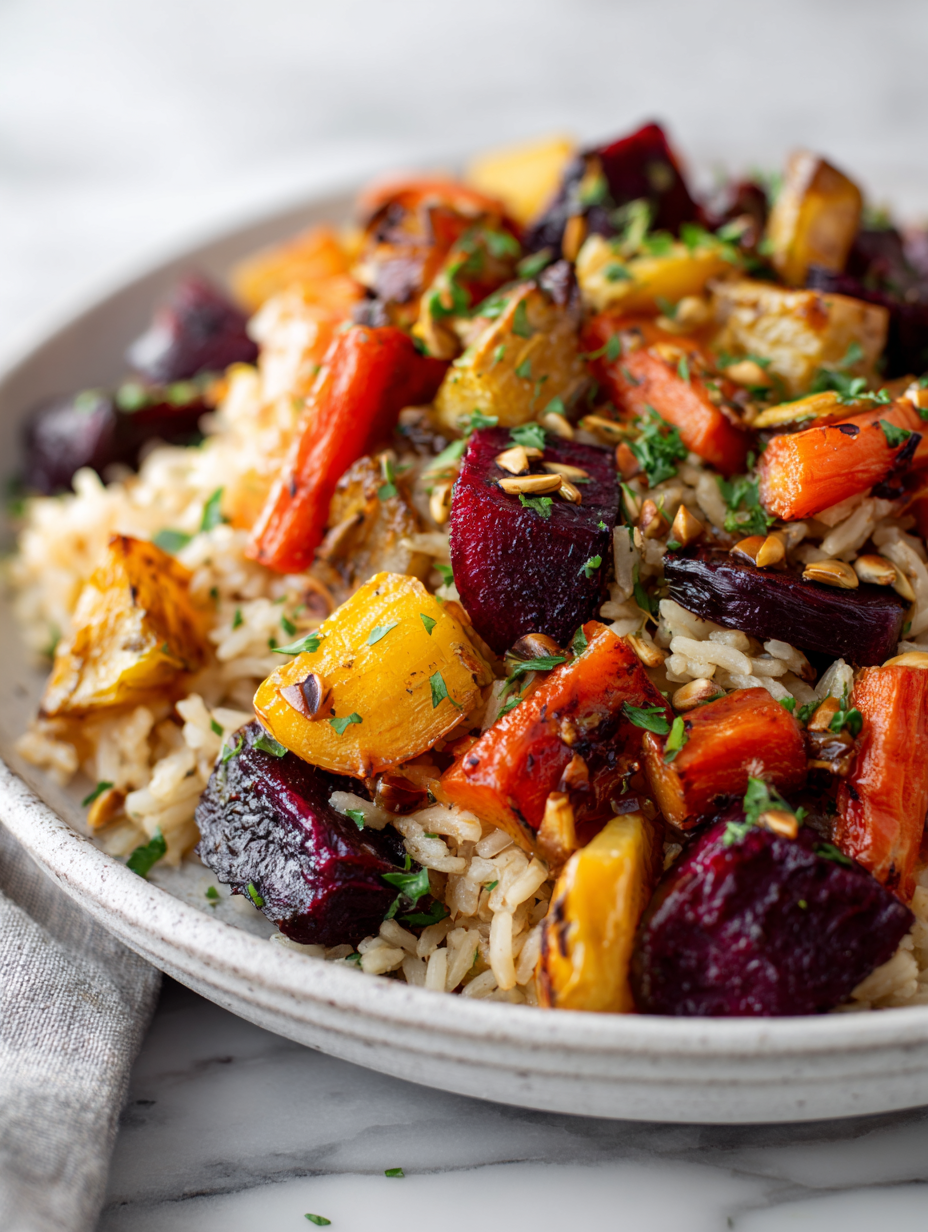
Vegan Root Vegetable Pilaf
Ingredients
Equipment
Method
- Gather all your equipment: a medium-sized pot or saucepan, a sharp knife, a chopping board, a wooden spoon, measuring cups, and a lid.
- Rinse the rice under cold water until the water runs clear, then set aside to drain.
- Peel and chop the carrots and parsnips into uniform 1/2-inch cubes, creating colorful, bite-sized pieces.
- Heat the olive oil in your pot over medium heat until shimmering, then add the chopped root vegetables. Sauté for 5-7 minutes, stirring occasionally, until they start to brown and release a sweet aroma.
- Add the cumin and smoked paprika to the vegetables, stirring quickly to toast the spices for about 30 seconds—your kitchen will fill with fragrant warmth.
- Pour in the vegetable broth, bringing it to a gentle boil, then add the rinsed rice. Give everything a quick stir to distribute the ingredients evenly.
- Reduce the heat to low, cover the pot tightly, and simmer for 15-18 minutes, until the liquid is absorbed and the rice is tender. You’ll hear gentle bubbling, and the aroma will deepen.
- Turn off the heat and let the pilaf rest, covered, for 5 minutes. This helps the flavors settle and the grains to become fluffy.
- Uncover the pot and gently fluff the rice with a fork, mixing in the tender, caramelized root vegetables throughout the grains.
- Chop fresh cilantro or parsley and stir into the pilaf, then squeeze fresh lemon juice over the top for brightness. Give everything a final gentle toss.
- Serve the vibrant, earthy pilaf warm, garnished with additional herbs and a drizzle of olive oil if desired. Enjoy the layered sweetness and smoky aroma in every bite!
Notes
Tips & Tricks for Perfect Pilaf
- Bolded mini-head: Sauté vegetables until caramelized → Develops deep, smoky sweetness with a slightly crispy edge.
- Bolded mini-head: Use a wide pan for even heat distribution → Prevents burning and promotes uniform cooking.
- Bolded mini-head: Toast spices gently before adding liquids → Unlocks their full aroma and flavor complexity.
- Bolded mini-head: Cover the pot tightly during simmering → Traps steam, ensuring fluffy rice and tender root veggies.
- Bolded mini-head: Let the pilaf rest off heat for 5 minutes → Allows flavors to meld and prevents mushiness.
- Bolded mini-head: Fluff with a fork instead of stirring → Keeps grains separate and light, avoiding mash.
- Bolded mini-head: Finish with a squeeze of lemon or herbs → Brightens flavors and adds fresh contrast.
Common mistakes and how to fix them
- FORGOT to pre-soak grains → Rinse and soak for 10 minutes for fluffier rice.
- DUMPED vegetables in all at once → Sauté root veggies first to deepen caramelization.
- OVER-TORCHED spices → Toast spices gently over low heat, watch for fragrant aroma.
- MISSED resting time → Let the pilaf rest for 5 minutes to settle flavors and prevent mush.
Quick fixes and pantry swaps
- When dishes seem bland, splash in a dash of soy sauce or lemon zest for brightness.
- If the rice sticks, do a quick rescue with a splash of hot water and a gentle stir.
- DUMPED too much oil? Patch it with a squeeze of lemon to balance richness.
- When spices burn quickly, shield them by lowering heat and stirring constantly.
- Splash extra broth if vegetables are undercooked or if grains aren’t fluffy enough.
Prep, store, and reheat tips
- Chop root vegetables and measure rice ahead of time; store separately in airtight containers in the fridge for up to 24 hours. Vegetables stay vibrant and fresh, ready to sauté.
- Cooked pilaf can be refrigerated for up to 3 days. Keep in a sealed container to preserve the earthy aroma and prevent drying out.
- Reheat gently on the stove over low heat, adding a splash of broth or water to revive moisture. Expect grains to be fluffy and vegetables to rewarm with a slight caramelized smell.
- Avoid freezing as texture can become mushy, but if you must, do so within 1 month. Thaw overnight in the fridge, then reheat with extra broth to restore softness.
- Flavors deepen slightly after a day, so taste and adjust herbs or lemon before serving again. The smoky-sweet notes become even more pronounced upon reheating.
Top questions about vegan vegetable pilaf
1. Can I use frozen vegetables in this pilaf?
Use firm, fresh vegetables like carrots and parsnips for the best flavor and texture. Sauté until caramelized for sweetness.
2. How do I prevent the rice from sticking?
Yes, but adjust cooking time accordingly. Frozen veggies may release more moisture, so sauté a bit longer to evaporate excess water.
3. What’s the best rice type for this dish?
Use a wide, heavy-bottomed pan and keep the heat moderate. Fluff the rice gently with a fork after cooking to keep grains separate.
4. Can I make this ahead of time?
Long-grain varieties like jasmine or basmati work best—they stay fluffy and fragrant. Short grain may turn mushy.
5. How do I reheat without losing texture?
Yes, prepare the vegetables and rice separately, then combine and reheat. Store in airtight containers up to 3 days in the fridge.
6. What spices enhance this pilaf?
Reheat gently on the stove with a splash of broth or water, stirring occasionally until warm and fluffy again.
7. Can I add protein to this dish?
Cumin, smoked paprika, and fresh herbs like cilantro or parsley add warmth and brightness. Adjust to taste for a personalized touch.
8. What if my vegetables burn while sautéing?
Yes, chickpeas, toasted nuts, or tofu cubes work well. Add them during the last few minutes of cooking for extra heft.
9. Is this dish suitable for meal prep?
Lower the heat immediately, add a splash of water or broth, and stir to lift any burnt bits from the pan.
10. How can I make this dish more vibrant?
Absolutely. It keeps well in the fridge and can be reheated easily, with flavors deepening over time.
This dish isn’t just about feeding yourself; it’s about how humble root vegetables can shine with a bit of attention. The earthy aroma, the slightly crispy edges, and that smoky sweetness make each bite feel thoughtful and satisfying. It’s a reminder that even simple ingredients can surprise you when treated with care.
In these busy times, a wholesome, plant-based meal like this brings comfort and a touch of nostalgia. It’s flexible enough for leftovers and forgiving enough to adapt to whatever you have in the fridge. Sometimes, it’s the quiet, unpolished dishes that stick with you most long after the last bite.

Hi, I’m Clara Sage – and welcome to my kitchen of small revelations.
I created The Language of Aha not just as a recipe blog—but as a space to celebrate the little lightbulb moments that happen in the kitchen.