
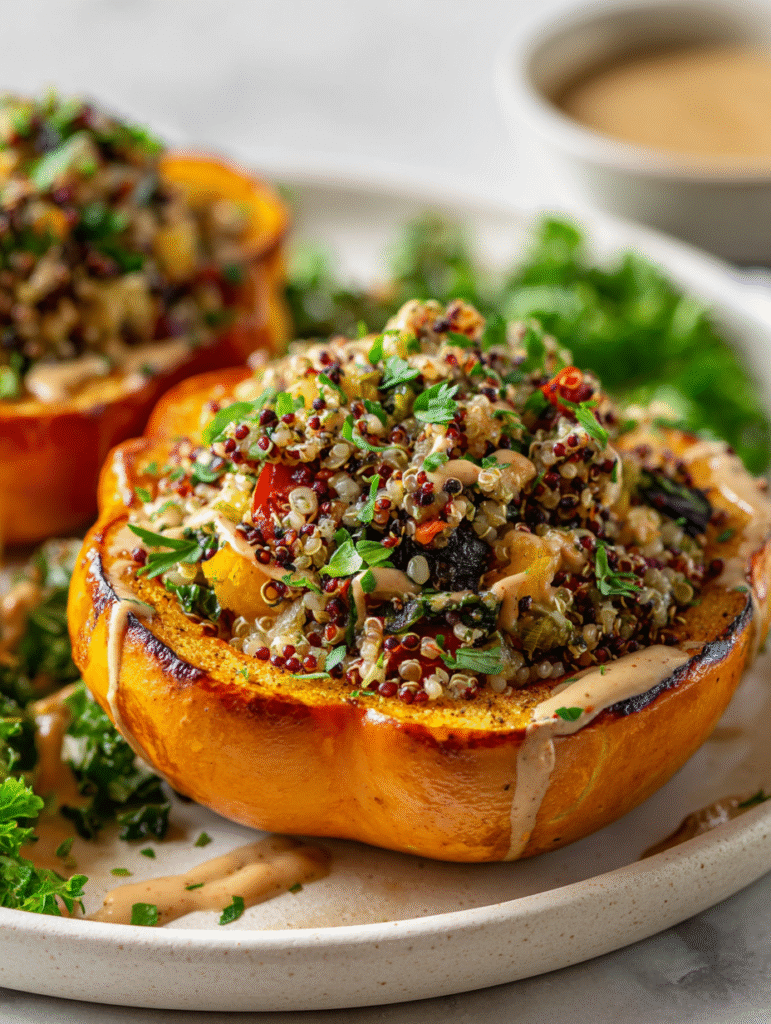
This vegan stuffed squash recipe is my way of honoring the fall harvest. There’s something about hollowing out a golden acorn or delicata squash that feels like a small celebration of the season’s bounty. I love how the warm, caramelly sweetness of roasted squash pairs with a hearty, savory filling that’s packed with herbs and grains—it’s cozy but still vibrant.
Honestly, I stumbled onto this dish during a hectic week when I needed something nourishing but easy to throw together. The squash acts as both plate and centerpiece, which makes serving feel a little special even on a busy night. Plus, it’s a great way to turn simple ingredients into something a little more festive without much fuss.
Focusing on how this dish turns seasonal squash into a festive centerpiece, blending comforting textures with vibrant flavors that celebrate harvest time.
Turning seasonal squash into a celebration
- This dish made me rethink what cozy fall dinners can be—something simple yet packed with flavor.
- I remember the first time I got the filling just right—like a warm hug in every bite.
- Cooking this always brings a little chaos—trying to stuff the squash without spilling filling everywhere, but it’s worth it.
- Sharing this with friends feels like a small victory, seeing how everyone scoops out the last bit with a smile.
- It’s a reminder that humble ingredients, when prepared with care, can turn into a real celebration.
The spark behind this dish
- This recipe came together during a chilly weekend when I was craving something hearty but wanted to keep it light and fresh. I had a leftover butternut squash that needed a purpose, and as I tossed ingredients together, I realized this filling could be a star on its own, wrapped in squash like a cozy blanket. It’s kind of a messy, imperfect process—perfectly suited for a dish that celebrates rustic, honest flavors.
- The moment I first roasted the squash and saw its sweet, caramelized edges, I knew I was onto something. Stuffing it with a medley of grains, beans, and herbs felt like giving new life to simple ingredients, making them feel special without fuss. It’s one of those dishes I keep coming back to when I want to feed people something satisfying and honest, with a little bit of fall magic.
- heading
- story_type
Historical & Cultural Roots
- This dish has roots in traditional Mediterranean cuisines, where stuffed vegetables have long been a table centerpiece.
- Historically, squash was seen as a humble, nourishing food for autumn harvest festivals across North America and Europe.
- The idea of stuffing squash likely evolved as a way to make simple, seasonal ingredients feel more celebratory and filling during harvest times.
Key Ingredients Breakdown
- Butternut squash: I love how its sweet, nutty flavor intensifies as it roasts—skip the peeling, just halve and seed. You can swap in acorn or delicata, just adjust roasting time for different textures.
- Quinoa: It’s my go-to grain—light, fluffy, with a nutty bite. If you’re short on time, pre-cooked rice works. Keep an eye on it; overcooked quinoa turns mushy fast.
- Black beans: Creamy and hearty, they add protein and texture. Canned beans are easiest—rinse thoroughly to remove the metallic taste—no need to cook from dry.
- Herbs: Fresh parsley and cilantro bring brightness, but dried works in a pinch—just halve the amount. I love a splash of lemon juice at the end for zing.
- Nuts: Toasted walnuts or pecans add crunch and richness—don’t skip this step. For a nuttier aroma, toast until fragrant and golden—your kitchen will smell amazing.
- Olive oil: Drizzle generously before roasting for caramelization and flavor. If you want a smoky note, try smoked paprika oil—adds depth without fuss.
- Spices: Smoked paprika and cumin give warmth and depth. Too much can overpower—start small, then taste before stuffing the squash.
Spotlight on key ingredients
Butternut squash:
- I love how its sweet, nutty flavor intensifies as it roasts—skip the peeling, just halve and seed. You can swap in acorn or delicata, just adjust roasting time for different textures.
- Quinoa: It’s my go-to grain—light, fluffy, with a nutty bite. If you’re short on time, pre-cooked rice works. Keep an eye on it; overcooked quinoa turns mushy fast.
Black beans and fresh herbs:
- Black beans: Creamy and hearty, they add protein and texture. Canned beans are easiest—rinse thoroughly to remove the metallic taste—no need to cook from dry.
- Herbs: Fresh parsley and cilantro bring brightness, but dried works in a pinch—just halve the amount. I love a splash of lemon juice at the end for zing.
Ingredient Swap Tips
- Dairy-Free: Use coconut yogurt or cashew cream instead of cheese for creaminess, but expect a slightly sweeter note.
- Grains: Swap quinoa for bulgur or millet—different textures, but they soak up flavors well and add variety.
- Beans: Lentils work as a hearty substitute for black beans—softer texture, milder flavor, and equally filling.
- Herbs: Fresh basil or thyme can replace parsley and cilantro—each adds a distinct aroma and fresh punch.
- Nuts: Almonds or sunflower seeds bring crunch and richness; toast them first to maximize flavor.
- Olive Oil: Use toasted sesame oil for a nutty twist or avocado oil for a milder, buttery flavor.
- Spices: Smoked paprika can be swapped with chipotle powder for a smoky kick, or turmeric for earthiness.
Equipment & Tools
- Baking sheet: Roast the squash and bake the stuffed halves evenly.
- Parchment paper: Prevent sticking and make cleanup easier.
- Large skillet: Cook the filling ingredients on the stove.
- Spoon: Scoop out flesh and fill the squash.
- Knife: Cut the squash and chop ingredients.
- Cutting board: Provide a stable surface for prep.
Step-by-step guide to stuffed squash
- Preheat your oven to 200°C (390°F). Select a small to medium acorn or delicata squash. Slice the top off and scoop out the seeds and strings with a spoon. Lightly brush the insides with olive oil, then place cut-side down on a baking sheet lined with parchment paper. Roast for 40-45 minutes until the flesh is tender and edges are caramelized. Let cool slightly before handling.
- While the squash roasts, prepare the filling. In a large skillet over medium heat (about 180°C/356°F), add a tablespoon of olive oil. Sauté a small chopped onion and minced garlic until fragrant, about 2 minutes. Stir in cooked quinoa (or pre-cooked rice), drained black beans, chopped herbs, and spices. Cook together for another 3-4 minutes, until heated through and fragrant. Taste and adjust seasoning—add a squeeze of lemon if you want brightness.
- Check the roasted squash for doneness. The flesh should be soft enough to scoop, and the edges slightly browned. Carefully turn the squash halves over. Using a spoon, gently scoop out some of the flesh into a bowl, leaving a border of about 1/2 inch to keep the shell sturdy. Mix this flesh into the filling mixture for extra flavor and moisture. Season again if needed.
- Stuff the squash halves generously with the filling, pressing gently to pack it in. If you have extra filling, mound it on top or save for another use. Place the stuffed squash back onto the baking sheet. Bake for an additional 15-20 minutes at 180°C (356°F) until the filling is heated through and slightly crisp on top. The squash should be tender and the filling bubbly.
- Remove from oven. Let rest for 5 minutes so the filling firms up slightly. For presentation, sprinkle with toasted nuts and fresh herbs. Serve directly in the squash halves, perhaps with a drizzle of olive oil or lemon juice for extra zing.
Let the stuffed squash rest for 5 minutes after baking. Serve directly in the shells, garnished with nuts and herbs. Drizzle with a little extra olive oil or lemon juice for brightness.
How to Know It’s Done
- Squash flesh is tender and easily pierced with a fork.
- Filling is hot, baked, and slightly bubbling on top.
- Nuts are toasted and fragrant, with a golden hue.
Vegan Stuffed Squash
Ingredients
Equipment
Method
- Preheat your oven to 200°C (390°F). Halve the squash lengthwise and scoop out the seeds and stringy bits with a spoon. Brush the insides lightly with 1 tablespoon of olive oil, then place cut-side down on a parchment-lined baking sheet. Roast for 40-45 minutes until the flesh is soft and caramelized around the edges.
- While the squash roasts, cook the quinoa according to package instructions—usually boiling in twice the amount of water until fluffy and tender, about 15 minutes. Fluff with a fork and set aside.
- Heat the large skillet over medium heat and add 1 tablespoon of olive oil. Sauté the chopped onion and minced garlic until fragrant and translucent, about 2 minutes. Stir in the cooked quinoa, drained black beans, chopped herbs, smoked paprika, cumin, salt, and pepper. Cook for another 3-4 minutes, until heated through and aromatic.
- Once the squash is tender and cool enough to handle, flip them over carefully. Use a spoon to scoop out some of the flesh into a bowl, leaving about a 1/2-inch border to maintain the shell's shape. Mix this flesh into the skillet filling for extra moisture and flavor.
- Gently stuff each squash half with the filling, pressing lightly to pack it in. Mound any extra filling on top if desired, then place the stuffed halves back onto the baking sheet.
- Bake the stuffed squash for an additional 15-20 minutes at 180°C (356°F) until the filling is bubbling and the edges of the squash are caramelized and tender. Toast the chopped nuts in a dry skillet until golden and fragrant, about 2-3 minutes, then sprinkle on top of the baked squash.
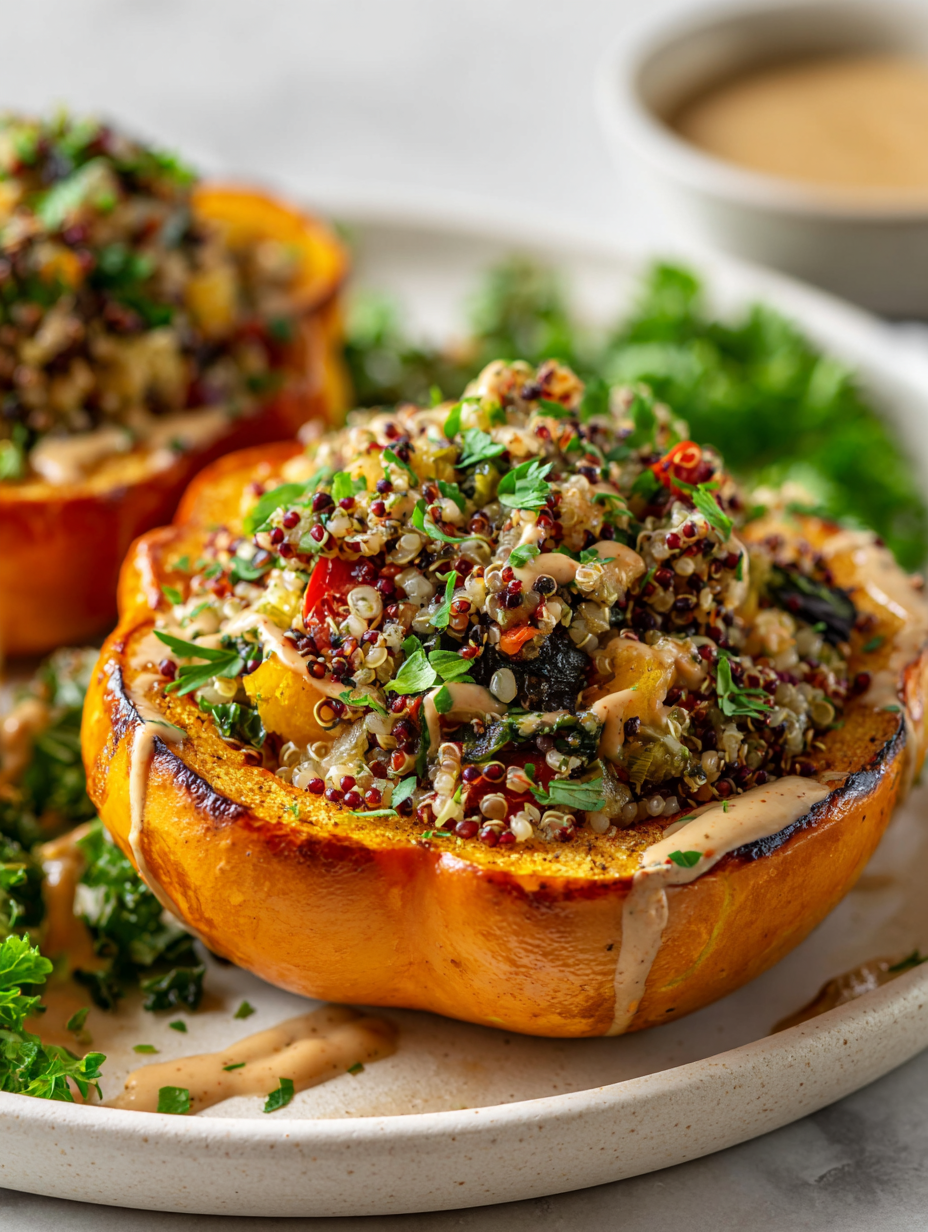
- Remove from the oven and let sit for 5 minutes. Drizzle with lemon juice or zest if using, and sprinkle with toasted nuts and extra herbs for color and flavor. Serve warm, directly in the squash shells for a beautiful presentation.
Pro Tips for Perfect Stuffed Squash
- Use a sharp knife to halve squash cleanly, reducing slipping and uneven edges.
- Roast the squash flesh-side up to get caramelized edges with a sweet, smoky aroma.
- Toast nuts until fragrant and golden for maximum crunch and flavor punch.
- Gently stuff the squash to avoid spilling filling—use a spoon for neatness.
- Bake stuffed squash until filling is bubbling and edges are slightly crisp for perfect texture.
- Rest the baked squash for 5 minutes to let flavors meld and filling set.
- Finish with fresh herbs and a squeeze of lemon for a bright, fresh contrast.
Common mistakes and how to fix them
- FORGOT to adjust oven temperature → Ensure proper roasting and baking times.
- DUMPED filling too quickly → Gently stuff squash to avoid spilling and compact filling.
- OVER-TORCHED nuts → Toast nuts until fragrant and golden, watch closely to prevent burning.
- MISSED resting time → Let stuffed squash sit 5 minutes before serving for better texture.
Quick Fixes and Pantry Swaps
- When squash flesh is too firm → Splash with a little water, cover, and steam for 5 minutes.
- If filling is too dry → DUMP in a splash of vegetable broth or lemon juice to loosen it up.
- Over-torched nuts → PATCH with a quick sprinkle of salt and a drizzle of honey or maple syrup.
- Forgot to toast nuts → Shield with foil and toast for 3-4 minutes until fragrant.
- When filling spills while stuffing → Rescue with a spoon and gently press filling back in.
Prep, store, and reheat tips
- You can roast the squash and prepare the filling a day ahead; store separately in airtight containers in the fridge. The squash flesh becomes slightly sweeter overnight.
- Refrigerate the roasted squash for up to 2 days; reheat in a warm oven at 180°C (356°F) for about 10-15 minutes until warmed through, with a pleasant aroma of caramelized edges.
- The filling can be made ahead and kept for up to 3 days in the fridge. Warm it gently on the stove, stirring occasionally, until it’s hot and fragrant—smells like herbs and toasted nuts.
- For freezer storage, freeze cooked, cooled squash halves wrapped tightly in plastic wrap and then foil for up to a month. Thaw overnight in the fridge and reheat as above. Expect the texture to soften slightly, but flavors remain vibrant.
- Reheated leftovers will develop a more melded flavor profile, with the squash flesh absorbing some of the filling’s spices. The nuts may lose their crunch, so consider adding fresh toasted nuts just before serving for contrast.
Top questions about vegan stuffed squash
1. Can I use a different type of squash?
Use any squash that can be halved and has a sturdy shell—acorn, delicata, or kabocha work well. Roast until tender, then scoop out some flesh before stuffing.
2. Can I substitute canned beans with dried beans?
Canned black beans are easiest—rinse well to remove the metallic taste. For a fresher flavor, cook dry beans from scratch, but it takes longer.
3. What grains can I use instead of quinoa?
Pre-cooked grains like quinoa or rice work best. If using dry grains, cook them fully before mixing into the filling. They should be fluffy and not mushy.
4. Can I use dried herbs instead of fresh?
Yes, you can swap in other herbs like basil or thyme. Use fresh herbs for brightness or dried herbs for convenience—just halve the amount.
5. How do I add more smoky flavor?
To add a smoky flavor, try smoked paprika or chipotle powder. Toasted nuts like walnuts or pecans add crunch—toast until fragrant and golden.
6. How long does it take to cook the stuffed squash?
Roast the squash at 200°C (390°F) for 40-45 minutes until tender and caramelized. Stuff with prepared filling, then bake for another 15-20 minutes at 180°C (356°F).
7. Can I make this dish ahead of time?
You can prepare the squash and filling a day in advance. Keep separately in the fridge. Reheat in a warm oven, about 180°C (356°F), until heated through.
8. What if my squash isn’t tender enough after roasting?
If the squash flesh is too firm, splash with water, cover, and steam for about 5 minutes. For overcooked filling, stir in a splash of broth to loosen it.
9. How do I fix burnt nuts?
When nuts are burnt, quickly sprinkle with a little salt and a drizzle of honey or maple syrup to mask bitterness and add crunch.
10. Any tips for preparing the squash?
Use a sharp knife for clean halving. Toast nuts until fragrant. Rest the stuffed squash for 5 minutes before serving to let flavors meld.
This dish is more than just a cozy dinner; it’s a way to celebrate the season’s best produce with honest, simple ingredients. Turning squash into a centerpiece feels like a small act of gratitude for the harvest, especially now when seasonal flavors really shine.
Sharing this recipe reminds me that good food doesn’t need to be complicated. It’s about rustic textures, vibrant flavors, and a bit of messy joy in the kitchen—something I’ll keep coming back to as the weather turns cooler.

Hi, I’m Clara Sage – and welcome to my kitchen of small revelations.
I created The Language of Aha not just as a recipe blog—but as a space to celebrate the little lightbulb moments that happen in the kitchen.