
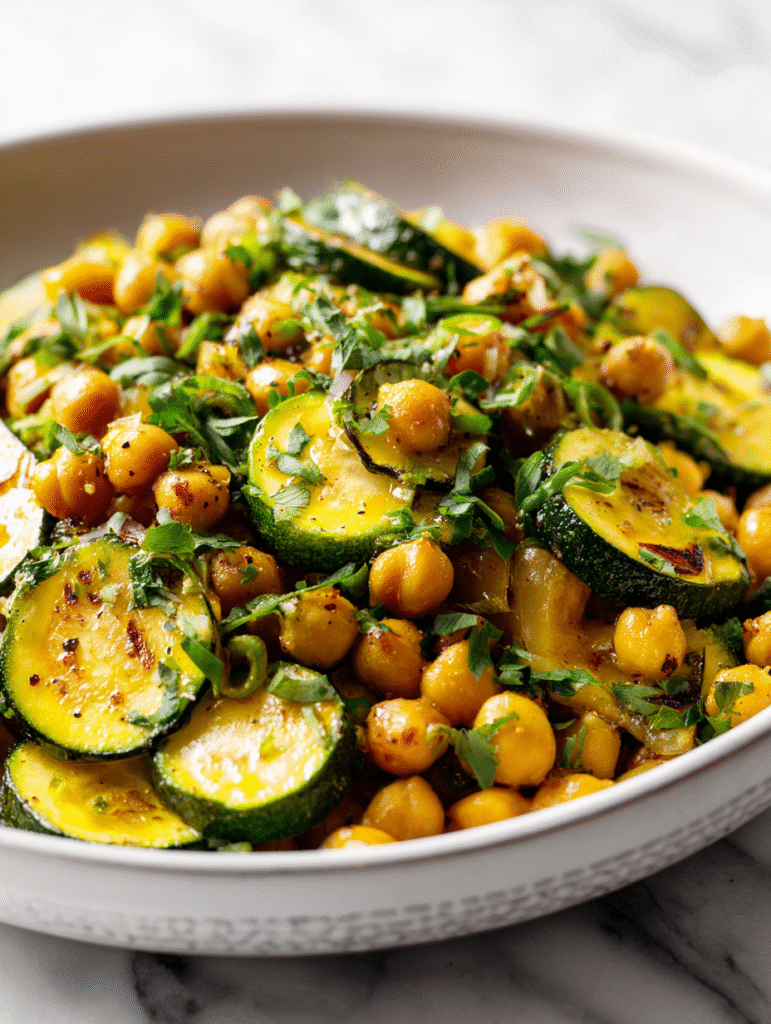
This chickpea zucchini skillet is a testament to the beauty of turning pantry staples into something nourishing and quick. I often find myself reaching for it after long days when I want something satisfying but don’t want to spend hours in the kitchen.
What I love about this dish is how it balances hearty chickpeas with the fresh, slightly sweet bite of zucchini. It’s a simple, unpretentious meal that feels like a warm hug, especially when topped with a squeeze of lemon or a sprinkle of herbs.
Cooking this skillet feels almost meditative—chickpeas crackling in the pan, zucchini softening and releasing its bright aroma. It’s a reminder that sometimes, the simplest ingredients can come together to create real comfort, no matter how hectic the week gets.
This recipe is inspired by my late grandmother’s kitchen, where she turned humble pantry staples into vibrant, comforting meals. I love how a simple skillet can evoke so much nostalgia and bring a bit of her warmth to my busy weeknights.
Reviving nostalgia with everyday ingredients
- Sharing this dish always reminds me of lazy Sunday afternoons in my childhood kitchen.
- There’s a quiet pride in turning everyday ingredients into something unexpectedly flavorful.
- After a hectic day, this skillet’s warm aroma feels like a small victory.
- I love how a simple squeeze of lemon can brighten the whole plate and lift my mood.
- It’s a comfort food that’s quick to make but somehow feels like a hearty, thoughtful meal.
Reviving nostalgia with everyday ingredients
- This dish came together during a week when I had no energy for anything complicated but still craved something filling and fresh. I was rummaging through my pantry and fridge, looking for a way to use up some leftover zucchini and a can of chickpeas that had been languishing too long. The moment I tossed everything in a single skillet and heard that satisfying crackle, I knew I had stumbled on something special.
- It’s funny how simple ingredients can create a moment of clarity—an easy, nutritious meal that’s almost effortless to throw together. That initial burst of aroma—garlic, zucchini, chickpeas—still makes me smile. It’s like a little reminder that sometimes, the best meals are the ones you keep in your back pocket for busy nights.
- heading
- story_type
Historical and cultural roots
- This dish draws inspiration from Mediterranean peasant cooking, where humble ingredients like chickpeas and zucchini were staples turned into flavorful meals.
- Zucchini’s history as a garden vegetable in Europe dates back centuries, often celebrated for its versatility and quick cooking time in rustic dishes.
- Chickpeas have been cultivated for over 7,000 years, originally in the Middle East, making them one of the oldest cultivated legumes—perfect for hearty, no-fuss meals.
Ingredient breakdown: key components
- Chickpeas: I prefer canned for convenience, but dried and soaked work too—just adjust cooking time. They get creamy and slightly nutty when heated through.
- Zucchini: Fresh zucchini has a bright, slightly sweet aroma that intensifies when sautéed. If you only have larger ones, scoop out seeds to prevent excess water.
- Garlic: Mince it finely; it releases that irresistible fragrant aroma which fills the kitchen quickly. If it burns, it turns bitter—add it later or lower the heat.
- Olive Oil: Use good-quality extra virgin for that fruity, peppery note. If you only have light oil, the flavor will be subtler but still works.
- Lemon: Brightens everything with a zesty, juicy burst. Skip it if you prefer a milder finish, but trust me, it lifts the whole dish.
- Seasonings: Salt and pepper are essentials, but a pinch of smoked paprika or cumin can add a smoky depth—go easy and taste as you go.
- Herbs (like parsley or cilantro): Fresh herbs add a lively, herbaceous finish. Dried can work in a pinch but lose some vibrancy—add at the end for best flavor.
Spotlight on key ingredients
Chickpeas:
- I prefer canned for convenience, but dried and soaked work too—just adjust cooking time. They get creamy and slightly nutty when heated through.
- They hold their shape well but become irresistibly tender and slightly crispy at the edges when sautéed properly.
Zucchini:
- Fresh zucchini has a bright, slightly sweet aroma that intensifies when sautéed. If you only have larger ones, scoop out seeds to prevent excess water.
- During cooking, zucchini softens quickly, releasing a mild, vegetal aroma, and should be cooked until just tender to retain some bite.
Notes for ingredient swaps
- Canned Chickpeas: I prefer canned for convenience, but dried and soaked work too—just adjust cooking time. They get creamy and slightly nutty when heated through.
- Zucchini: Fresh zucchini has a bright, slightly sweet aroma that intensifies when sautéed. If you only have larger ones, scoop out seeds to prevent excess water.
- Garlic: Mince it finely; it releases that irresistible fragrant aroma which fills the kitchen quickly. If it burns, it turns bitter—add it later or lower the heat.
- Olive Oil: Use good-quality extra virgin for that fruity, peppery note. If you only have light oil, the flavor will be subtler but still works.
- Lemon: Brightens everything with a zesty, juicy burst. Skip it if you prefer a milder finish, but trust me, it lifts the whole dish.
- Seasonings: Salt and pepper are essentials, but a pinch of smoked paprika or cumin can add a smoky depth—go easy and taste as you go.
- Herbs (like parsley or cilantro): Fresh herbs add a lively, herbaceous finish. Dried can work in a pinch but lose some vibrancy—add at the end for best flavor.
Equipment & Tools
- Large skillet: To cook everything evenly and achieve a good sear.
- Spatula or wooden spoon: To stir and turn ingredients gently.
- Sharp knife: To cut zucchini and mince garlic.
- Cutting board: To prep vegetables safely.
- Lemon: For finishing and brightening the dish.
Step-by-step guide to chickpea zucchini skillet
- Gather your equipment: a large skillet (preferably cast iron or non-stick), a spatula or wooden spoon, a sharp knife, and a cutting board. Have a lid nearby if you want to cover briefly.
- Drain and rinse one can of chickpeas thoroughly. Pat dry slightly to remove excess moisture; this helps them crisp up better.
- Wash and trim the zucchini: cut into half-moons about 1 cm thick. Keep the slices uniform for even cooking.
- Mince 3 cloves of garlic finely. Prepare a squeeze of lemon for finishing. Chop fresh herbs if using.
- Heat 2 tablespoons of good-quality olive oil over medium heat (about 160°C / 320°F). When it shimmers, add the garlic. Sauté for 30 seconds until fragrant—avoid burning.
- Add the zucchini slices to the pan. Cook, stirring occasionally, for about 5-7 minutes. They should turn golden at the edges and soften slightly.
- Toss in the chickpeas. Continue cooking for another 5 minutes, stirring often, until chickpeas are heated through and start to crackle.
- Season with salt, pepper, and if desired, a pinch of smoked paprika or cumin. Mix well and cook for another minute to blend flavors.
- Taste and adjust seasoning. Squeeze lemon over the skillet. If using, sprinkle chopped herbs now or just before serving.
- Remove from heat. Let sit for 1-2 minutes to allow flavors to meld. Serve hot directly from the skillet, garnished with extra herbs or a drizzle of olive oil if you like.
Serve hot from the skillet, garnished with fresh herbs and a squeeze of lemon. Let sit briefly for flavors to settle before diving in.
How to Know It’s Done
- Zucchini: golden edges, slightly translucent, and tender when pierced with a fork.
- Chickpeas: heated through, crispy edges, crackling in the pan.
- Aroma: fragrant garlic and roasted zucchini, with a fresh lemony scent.
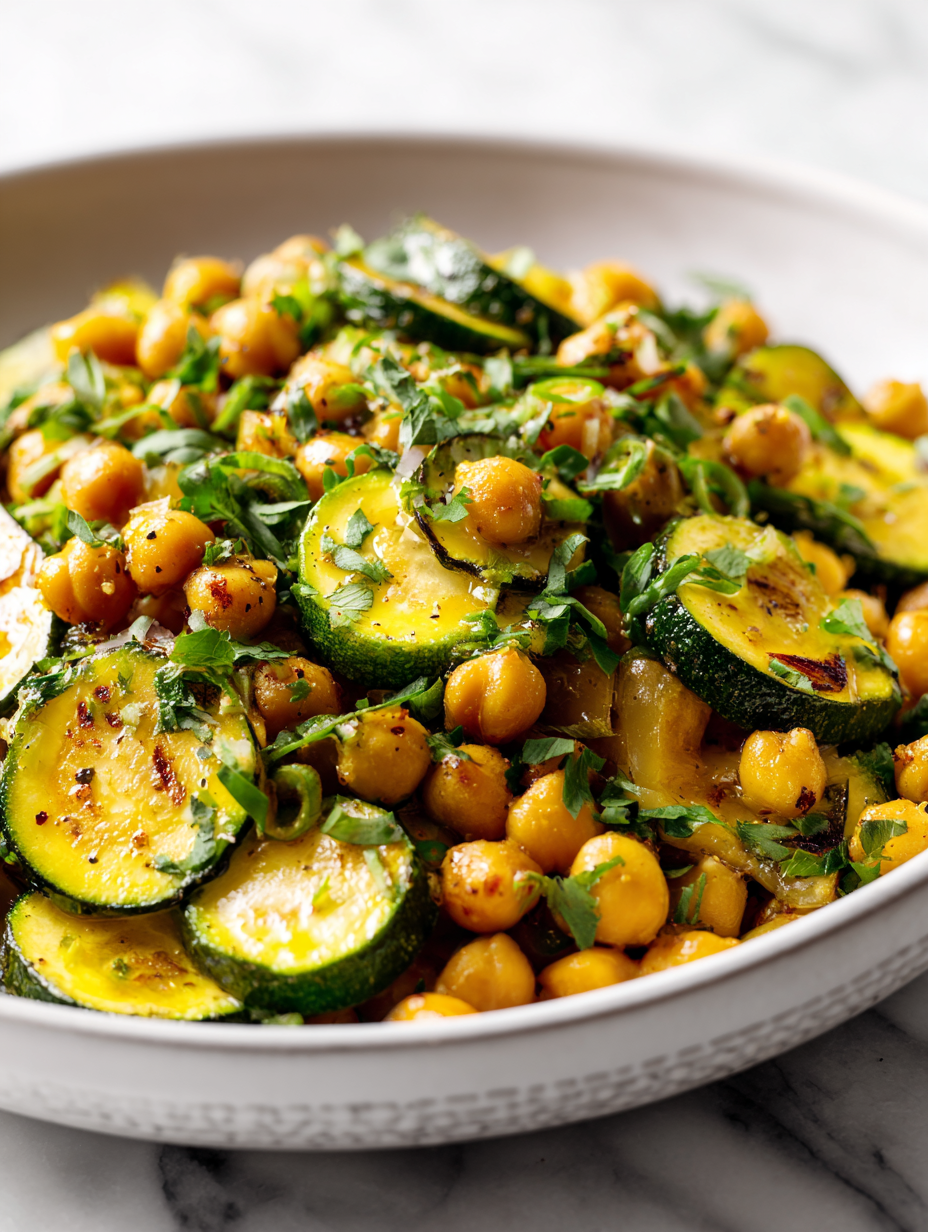
Chickpea Zucchini Skillet
Ingredients
Equipment
Method
- Start by draining and rinsing a can of chickpeas, then pat them dry to help them crisp up better in the pan.
- Wash and trim the zucchini, then cut it into half-moons about 1 cm thick, keeping the slices uniform for even cooking.
- Mince three garlic cloves finely; this releases a fragrant aroma that fills the kitchen as you cook.
- Heat two tablespoons of olive oil in a large skillet over medium heat until it shimmers, indicating it's hot and ready.
- Add the minced garlic to the hot oil and sauté for about 30 seconds until fragrant, stirring constantly to prevent burning.
- Pour in the sliced zucchini and cook, stirring occasionally, for about 5-7 minutes until the edges are golden and zucchini is just tender.
- Add the drained chickpeas to the skillet and cook for another 5 minutes, stirring often, until they are heated through and start to crackle at the edges.
- Sprinkle in salt, pepper, and a pinch of smoked paprika or cumin if using, then stir to evenly coat everything with the seasonings.
- Squeeze fresh lemon juice over the skillet and stir well to brighten the flavors and meld everything together.
- Remove the skillet from heat, sprinkle with chopped fresh herbs like parsley or cilantro, and give it a final gentle stir.
- Serve the skillet hot, garnished with extra herbs if desired, and enjoy the comforting, vibrant flavors.
Pro tips for perfect skillet
- Use high heat initially to get a good sear on zucchini, then lower to prevent burning.
- Toss chickpeas in a little oil before adding to help them crisp up and develop flavor.
- Mince garlic finely to release maximum aroma without burning it—add it at the right moment.
- Sauté zucchini until edges are golden and slightly translucent for the best texture and flavor.
- Squeeze fresh lemon at the end to brighten the dish and enhance the herbs’ vibrancy.
- Use a lid briefly to trap steam if zucchini isn’t softening quickly enough, then uncover to crisp.
- Taste and adjust seasoning after cooking—sometimes a pinch more salt or lemon makes all the difference.
Common mistakes and how to fix them
- FORGOT to dry chickpeas? Pat them dry before adding to crisp better.
- DUMPED too much oil? Use less for a lighter, less greasy skillet.
- OVER-TORCHED zucchini? Lower heat and stir more to prevent burning.
- MISSED the lemon? Squeeze it after cooking for bright flavor.
Quick fixes and pantry swaps
- When chickpeas are undercrisp, splash a little more oil and cook a few extra minutes.
- If zucchini shrinks too much, patch with a splash of water and cover briefly to rehydrate.
- Splash lemon juice when aroma brightens for a quick flavor boost.
- Shield burning zucchini by lowering heat immediately and stirring constantly.
- Rescue over-salted dish with a pinch of sugar or add a splash of water for balance.
Prep, store, and reheat tips
- Chickpeas can be cooked and stored in the fridge for up to 3 days; reheat until hot and crackling in the pan, smelling nutty and toasted.
- Zucchini slices can be prepped a day ahead, kept in an airtight container; they may release more water upon reheating, so pat dry and cook a bit longer.
- The dish can be assembled and stored in the fridge for up to 24 hours; flavors meld better if you add lemon and herbs just before serving.
- Reheat gently in a skillet over medium-low heat, stirring often until warmed through, aroma of zucchini and chickpeas brightens again, and texture remains tender.
- Avoid freezing this dish as zucchini may become mushy; best enjoyed fresh or within the first 24 hours for optimal flavor and texture.
Top questions about chickpea zucchini skillet
1. Can I use dried chickpeas instead?
Canned chickpeas are best for quick meals—they’re already cooked, tender, and ready to crisp up with a quick sauté.
2. Can I prepare this dish ahead of time?
Yes, but soak dried chickpeas overnight and cook until tender before adding to the skillet, which takes about an hour.
3. When should I add the lemon juice?
Add lemon juice at the end of cooking for a bright, fresh flavor. It really lifts the whole dish and enhances the herbs.
4. How do I make chickpeas extra crispy?
To get crispy chickpeas, dry them thoroughly before adding to the hot oil, and don’t overcrowd the pan.
5. What type of oil works best?
Use a good quality extra virgin olive oil for richer flavor and a slight peppery note that complements the vegetables.
6. How do I know when zucchini is done?
Zucchini should be tender but still hold some bite; cook until edges are golden and slightly translucent, about 5-7 minutes.
7. Why is my zucchini watery?
If zucchini releases too much water, sprinkle a little salt on slices beforehand or cook at a slightly higher heat to evaporate moisture.
8. Can I use dried herbs instead of fresh?
You can swap herbs—cilantro or parsley work well, adding at the end to keep their vibrant flavor and aroma.
9. What are common mistakes to avoid?
Overcooking can make zucchini mushy and chickpeas less crispy. Keep an eye on the timing and stir often.
10. How long will leftovers keep?
Store leftovers in an airtight container in the fridge for up to 2 days. Reheat in a skillet until hot and fragrant again.
This skillet is a reminder that simplicity can be deeply satisfying, especially when it comes together quickly after a busy day. The way the chickpeas crackle and the zucchini softens with just a hint of lemon brightens even the dullest evenings.
In a world full of complicated recipes, this one feels honest and unpretentious—yet it never fails to deliver warmth and comfort, straight from the skillet to the plate.

Hi, I’m Clara Sage – and welcome to my kitchen of small revelations.
I created The Language of Aha not just as a recipe blog—but as a space to celebrate the little lightbulb moments that happen in the kitchen.