
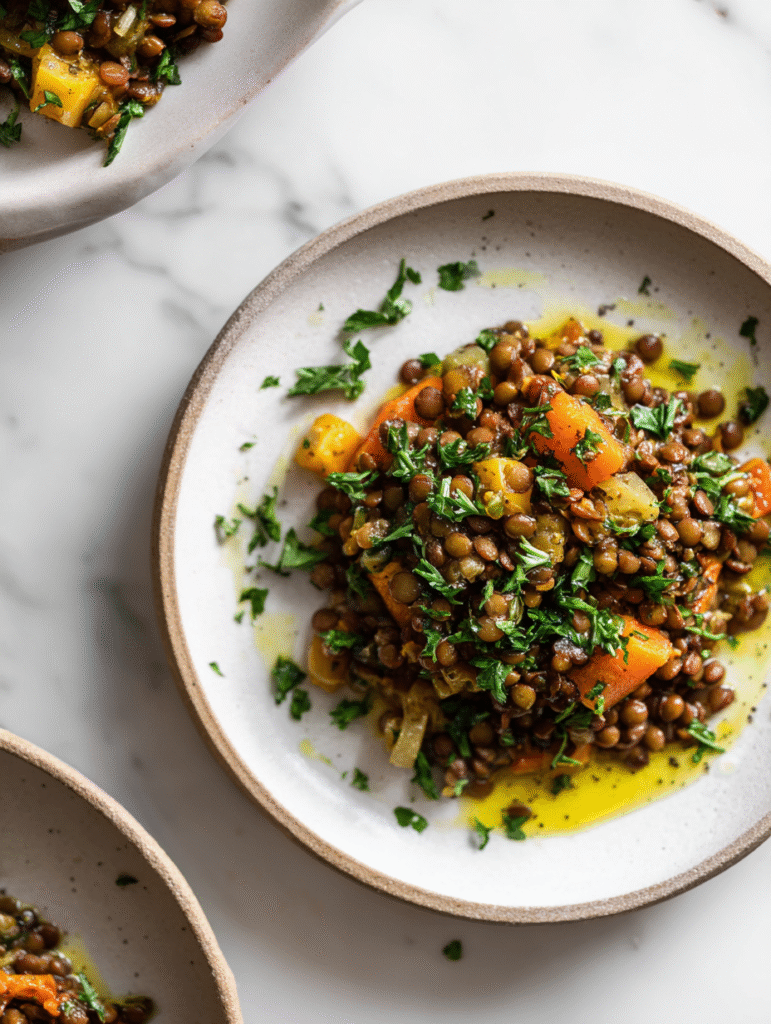
This vegan lentil ragout is my twist on a classic rustic stew, inspired by the warm, hearty dishes from my grandmother’s kitchen. It’s all about slow-cooked, earthy flavors that envelop you in comfort, but with a plant-based punch that surprises. I love how the smoky paprika and caramelized veggies create a smell that practically hugs you as it simmers.
Cooking this dish feels like a quiet act of nostalgia, turning simple ingredients into something soulful and satisfying. I often make a big batch on a Sunday, knowing that the modest lentils and vegetables will turn into something richer and more layered after a day in the fridge. It’s the kind of meal that tastes better the next day, the flavors melding into a deep, smoky harmony.
For me, this ragout isn’t just about filling bellies—it’s about reconnecting with that rustic, homey feeling, no matter where I am. It’s a reminder that good, honest food doesn’t need fancy ingredients, just patience and a little love simmering away.
Focusing on the comforting, rustic charm of a dish that reminds me of my grandmother’s kitchen, but reimagined with plant-based ingredients that pack a punch of smoky, earthy flavors.
Nostalgic Comfort in Every Bite
- This dish reminds me of chilly evenings spent in my grandmother’s kitchen, where the smoky aroma would fill the whole house and make everyone slow down and gather around the table.
- I feel a quiet pride when I serve this ragout; it’s humble yet deeply satisfying, proving that simple, honest ingredients can create something memorable.
- Cooking this feels like a small act of rebellion—vegan, rustic, and full of flavor, it’s a reminder that plant-based can be hearty and comforting without sacrificing depth.
- There’s a nostalgic rush every time I lift my spoon and taste the smoky, earthy richness—the kind of flavor that lingers long after the last bite.
The story behind this recipe
- This recipe came together during a rainy weekend when I was craving something hearty but wanted to keep it simple and honest. I remembered the comforting stews from my childhood, the kind that simmer all day and fill the house with smoky, earthy aromas. Reimagining that with lentils and a few bold seasonings felt like the perfect way to combine nostalgia with practicality.
- What really sparked it was realizing how few vegan options truly capture that rustic, soulful feel without relying on overly processed ingredients. I wanted something that’s forgiving in the pot, forgiving of my busy schedule, and still packed with flavor that sticks to your ribs. It’s become a go-to for nights when I need comfort that’s honest and unpretentious, but still satisfying enough to share.
- heading: The story behind this recipe
Historical and Cultural Roots
- This ragout draws inspiration from rustic European stews, where lentils have been a staple for centuries due to their affordability and hearty nature.
- Historically, lentils have been a symbol of sustenance in many cultures, often cooked slowly with smoky spices to preserve flavor during long winters.
- The smoky flavor in this dish echoes traditional peasant cooking methods, where wood fires and dried herbs impart depth to simple ingredients.
- Vegan adaptations of hearty stews like this have gained popularity only in recent decades, blending tradition with modern plant-based ideals.
Ingredient breakdown: key components
- Lentils: I prefer green or brown—they hold shape but soften beautifully, releasing a nutty aroma that fills the kitchen. Feel free to try red lentils for a softer, creamier texture if you like that silkier bite.
- Carrots & Celery: These humble veggies add sweetness and depth. I chop them into rustic chunks; if you want a smoother sauce, dice smaller so they melt into the ragout quicker.
- Onion & Garlic: The base of flavor. Sauté until they’re deeply fragrant, about 5 minutes. If garlic burns, it turns bitter—add it later or keep the heat moderate.
- Smoked Paprika: It’s the smoky heart of this dish. I use good quality, but if you don’t have it, a touch of chipotle powder works too—just beware, it’s potent. Smell that rich, smoky aroma as you cook.
- Tomato Paste & Broth: I like a good tomato paste for richness; it’s like umami in a jar. Use vegetable broth for depth, but a splash of water with a dash of soy sauce can boost flavor if needed.
- Olive Oil & Herbs: For sautéing and flavor. I lean on robust extra-virgin olive oil, but a milder one works if you prefer a softer note. Fresh thyme or rosemary can brighten it up—add near the end to keep their aroma lively.
- Bay Leaves & Pepper: They add a subtle layer of complexity. Bay leaves need a good 20-minute simmer to bloom. Remember to fish them out before serving—they can be tough if bitten into.
Spotlight on key ingredients
Lentils and Vegetables:
- Lentils: I love green or brown ones—they hold shape and release a nutty aroma. Red lentils soften faster and make a creamier sauce, great if you prefer a silkier texture.
- Carrots & Celery: These add natural sweetness and depth. I chop them rustic, but smaller dice melt into the sauce more quickly, creating a smoother, more integrated flavor.
Notes for ingredient swaps
- Dairy-Free: Coconut milk can replace cream for a rich, slightly sweet note, but it mellows the smoky flavor.
- Vegetable Broth: Use mushroom broth for an earthy depth or water with a splash of soy sauce for umami punch.
- Tomato Paste: Sun-dried tomato purée adds a concentrated tomato flavor if you run out, with a slightly tangy twist.
- Smoked Paprika: Chipotle powder gives a similar smoky kick, just use a pinch less to avoid overpowering the dish.
- Lentils: Red lentils cook faster and create a creamier texture, but might lose some of that firm bite I love in the dish.
- Herbs: Fresh thyme or rosemary brighten the stew, but dried herbs work fine if added early for a mellow aroma.
- Oil: Avocado oil can stand in for olive oil, offering a mild flavor and high smoke point for sautéing.
Equipment & Tools
- Large heavy-bottomed pan or Dutch oven: For even heat distribution and slow simmering.
- Wooden spoon: To stir ingredients gently and prevent sticking.
- Sharp knife: For chopping vegetables efficiently.
- Cutting board: To prepare vegetables on a stable surface.
- Measuring spoons and cups: To ensure accurate seasoning and liquid amounts.
Step-by-step guide to vegan lentil ragout
- Equipment & Tools: Gather a large heavy-bottomed pan or Dutch oven, a wooden spoon for stirring, a sharp knife, and a cutting board. Have measuring spoons and cups ready for accuracy.
- Rinse 1 ½ cups of dried lentils under cold water until the water runs clear. Set aside to drain.
- Heat 2 tbsp olive oil over medium heat (about 160°C/320°F) in your pan. Add a diced large onion and cook until translucent, about 5 minutes. Stir frequently to prevent sticking.
- Add 3 minced garlic cloves and cook for another minute until fragrant. Be careful not to burn the garlic—lower the heat if it starts to turn bitter.
- Toss in 2 chopped carrots and 2 chopped celery stalks. Cook, stirring occasionally, until they start to soften and caramelize, about 8 minutes. The vegetables should develop a slight golden hue and smell sweet.
- Stir in 1 tbsp smoked paprika, 2 tbsp tomato paste, and a pinch of chili flakes if you like heat. Cook for 2 minutes, letting the spices toast and release their aroma.
- Pour in 4 cups vegetable broth and add the drained lentils. Bring to a gentle boil over high heat, then reduce to low (around 85°C/185°F). Cover partially and simmer for 30–35 minutes, stirring occasionally.
- During simmering, check the lentils. They should be tender but not mushy, and the sauce should thicken slightly. If the liquid reduces too much, add a splash more broth or water.
- Remove bay leaves and taste the ragout. Adjust salt and pepper as needed. For a brighter flavor, stir in a squeeze of lemon juice or a dash of vinegar off the heat.
- Resting & Finishing: Let the ragout sit off heat for 5 minutes to meld flavors. Serve hot in bowls, garnished with chopped fresh herbs if desired. It’s best enjoyed with crusty bread or over rice.
Allow the ragout to rest off heat for 5 minutes. Taste and adjust seasoning if needed. Serve with a sprinkle of fresh herbs for a vibrant finish. Keep warm until ready to eat, or reheat gently on low if needed.
How to Know It’s Done
- Lentils are tender and hold shape without falling apart.
- Sauce is thickened but still pourable, with a rich, smoky aroma.
- Vegetables are caramelized and fully softened, infused with spices.
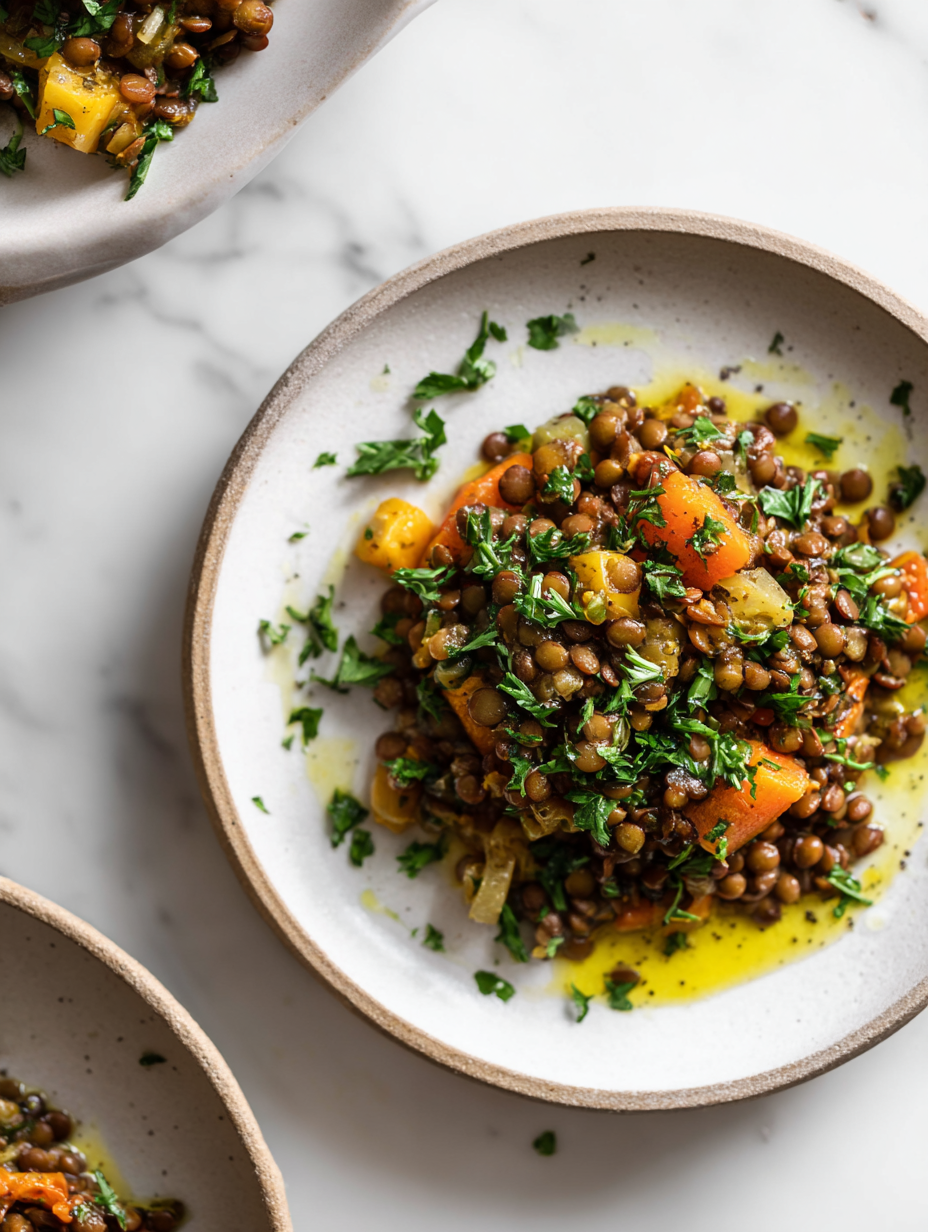
Vegan Lentil Ragout
Ingredients
Equipment
Method
- Gather your pan, ingredients, and measuring tools. Rinse the lentils thoroughly until the water runs clear, then set aside to drain.
- Heat the olive oil in your heavy-bottomed pan over medium heat. Once shimmering, add the diced onion and cook, stirring occasionally, until translucent and fragrant, about 5 minutes.
- Add the minced garlic to the pan and cook for another minute, until it releases a warm, fragrant aroma, but be careful not to burn it.
- Stir in the chopped carrots and celery, cooking until they start to caramelize and develop a golden hue, about 8 minutes. Their sweetness and aroma will deepen, signaling they’re ready.
- Sprinkle in the smoked paprika and tomato paste, stirring well to coat the vegetables evenly. Let the spices toast for about 2 minutes, releasing their smoky aroma.
- Pour in the vegetable broth and add the drained lentils along with the bay leaves. Bring the mixture to a gentle boil over high heat, then reduce the heat to low and cover partially.
- Let the ragout simmer gently for 30 to 35 minutes, stirring occasionally. The lentils should be tender, and the sauce will thicken, coating the vegetables and lentils with a rich, smoky aroma.
- Remove the bay leaves and taste the stew. Adjust seasoning with salt and pepper, and stir in fresh herbs if desired for a bright finish.
- Allow the ragout to rest for 5 minutes off the heat to meld the flavors. Serve hot in bowls, ideally with crusty bread or over rice for a complete meal.
Notes
Pro Tips for Perfect Lentil Ragout
- Bolded Mini-Head: Use a heavy-bottomed pan → Ensures even cooking and prevents hot spots that can burn spices.
- Bolded Mini-Head: Toast spices first → Releases essential oils, intensifying smoky aroma and rich flavor.
- Bolded Mini-Head: Simmer gently → Keeps lentils intact and sauce thickens naturally without turning mushy.
- Bolded Mini-Head: Adjust liquid as needed → If sauce gets too thick, add a splash of broth or water to keep it saucy.
- Bolded Mini-Head: Rest before serving → Allows flavors to meld; the ragout will taste richer and more cohesive.
- Bolded Mini-Head: Use lemon or vinegar → Brightens deep flavors, adding a fresh, zingy contrast to smoky richness.
- Bolded Mini-Head: Stir occasionally during simmer → Prevent sticking and ensure even flavor distribution.
Common mistakes and how to fix them
- FORGOT to drain lentils before cooking → Rinse well to remove debris and excess starch.
- DUMPED all ingredients in at once → Sauté aromatics first, then add vegetables and spices gradually.
- OVER-TORCHED the garlic → Cook on medium-low heat, stirring constantly to prevent bitterness.
- UNDERESTIMATED simmer time → Let lentils fully tender and sauce thickens naturally, about 30-35 minutes.
Quick fixes and pantry swaps
- When sauce simmers too thick, splash in water and stir to loosen the texture.
- If lentils aren’t tender after 35 minutes, extend simmering by 5-10 minutes.
- Splash a bit of lemon juice or vinegar at the end to brighten a dull dish.
- Patch over burning spices by adding a splash of broth and stirring vigorously.
- Shield delicate garlic from direct heat to prevent bitterness and burnt flavor.
Prep, store, and reheat tips
- Prep the lentils and chop vegetables a day ahead; store in airtight containers in the fridge for up to 24 hours. The aroma of fresh chopped veggies makes the kitchen feel alive.
- The ragout can be made a day in advance; it mellows and deepens overnight. Keep it in the fridge for up to 3 days, covered tightly. Reheat until bubbling and fragrant, about 5-7 minutes on low heat.
- Lentil stew tends to thicken as it sits. If reheating, stir in a splash of broth or water to loosen it up, feeling the comforting warmth and smell of smoky spices reignite.
- For longer storage, freeze in portions for up to 3 months. Thaw in fridge overnight, then reheat gently, making sure the aroma and flavors stay rich and inviting.
Top questions about vegan lentil ragout
1. Can I use different lentils?
Use green or brown lentils—they hold shape and have a nutty aroma. Red lentils cook faster and create a softer, creamier sauce.
2. Can I substitute the broth?
Yes, you can substitute vegetable broth with mushroom broth or water plus soy sauce for extra umami.
3. What if I don’t have smoked paprika?
If you don’t have smoked paprika, chipotle powder adds a similar smoky flavor—use sparingly at first.
4. How long should I cook the vegetables?
Cooking the vegetables until caramelized, around 8 minutes, develops sweetness and deepens the flavor.
5. How do I know it’s done?
Simmer the ragout gently for 30–35 minutes until lentils are tender and the sauce thickens naturally.
6. Can I make this in advance?
You can prepare the lentils and chop the vegetables a day ahead, then reheat gently before serving.
7. What if the sauce thickens too much?
If the sauce gets too thick, stir in a splash of broth or water to loosen it up during reheating.
8. Any tips for cooking this better?
Use a heavy-bottomed pan for even heat, and toast spices first to release their smoky aroma.
9. How do I know when it’s perfect?
When the sauce smells smoky and the lentils are tender, it’s ready to serve.
10. My dish tastes flat—what can I do?
If the stew is too bland, add a squeeze of lemon or vinegar for brightness and depth.
This dish isn’t just about filling your belly; it’s about reconnecting with the simple, honest flavors of rustic cooking. The smoky richness and tender lentils make it a comfort that feels rooted in tradition, yet fresh and relevant. Making it on a quiet weekend fills my kitchen with a cozy, earthy aroma that lingers long after the last spoonful.
In the end, this ragout reminds me that good food is often about patience and heart. It’s a dish that tastes like a warm memory, ready to nourish and satisfy, no matter the season or situation. Sometimes, the simplest recipes turn out to be the most meaningful.

Hi, I’m Clara Sage – and welcome to my kitchen of small revelations.
I created The Language of Aha not just as a recipe blog—but as a space to celebrate the little lightbulb moments that happen in the kitchen.