
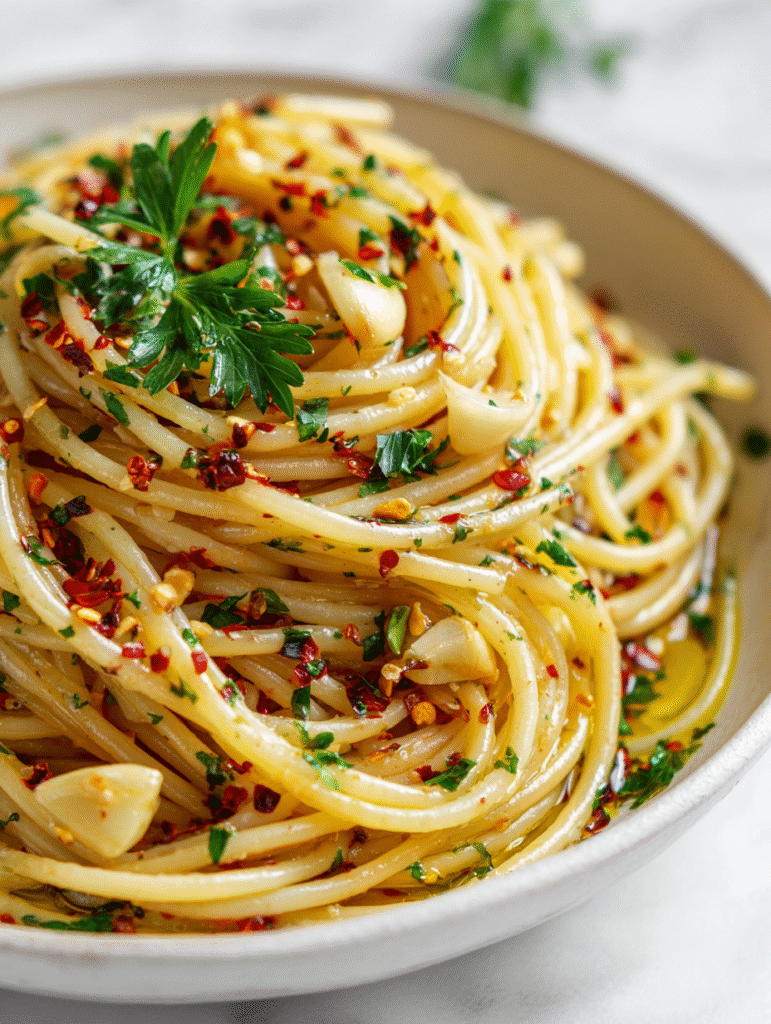
This vegan Spaghetti Aglio e Olio is a love letter to simplicity. No fancy ingredients, just garlic, good olive oil, and spaghetti, yet it’s surprisingly soulful. It’s the kind of dish that reminds me how a few humble elements can come together to create something truly comforting.
I often turn to this recipe on busy nights when I want something warm and satisfying without fuss. It’s a reminder that minimalism in cooking isn’t about sacrificing flavor — it’s about letting each ingredient shine on its own. The aroma alone, garlic crackling in oil, makes the kitchen feel alive and welcoming.
What I love most is how adaptable it is. Toss in a handful of chili flakes, fresh herbs, or even a squeeze of lemon, and suddenly it feels like a new dish. It’s honest, straightforward, and perfect for those moments when you want to keep things simple but still crave something deeply tasty.
Focusing on the overlooked beauty of simple ingredients, this recipe transforms humble garlic and olive oil into a soulful, comforting dish that celebrates minimalism in vegan cooking.
The story behind this recipe
- This dish came together one rainy evening when I was craving something warm but had only a few pantry staples left. I remembered how my grandma used to toss garlic and oil over spaghetti for a quick, comforting meal. That simple act of transforming humble ingredients into something satisfying always stuck with me.
- One night, I decided to veganize that classic, keeping it straightforward but adding a splash of lemon zest for brightness. It felt like reclaiming a childhood memory, making it fresh and relevant for today’s table. Plus, it’s a reminder that some of the best flavors come from minimal fuss and honest ingredients.
- heading: ‘The story behind this recipe’
Ingredient breakdown: key components
- Garlic: I love smashing garlic until it’s just starting to release its pungent aroma, then slicing it thin. If the garlic browns too quickly, turn down the heat to avoid bitterness.
- Olive Oil: Use a good quality extra-virgin oil—it’s the backbone of this dish. A smoky, peppery oil adds depth, but if you prefer a milder flavor, opt for a lighter one.
- Spaghetti: I prefer al dente, with a slight bite—about 8-10 minutes, depending on the brand. Salt the water generously so it flavors the pasta from within.
- Red Pepper Flakes: I sprinkle these in at the end for a fiery kick. If you’re sensitive, start with less and add more after tasting, because it’s easy to overdo.
- Salt & Pepper: I season generously at the end, tasting as I go. A little black pepper brightens the garlic and oil—don’t skip it.
- Lemon (optional): A squeeze of lemon zest or juice right before serving lifts the dish with a bright, zesty note. Skip if you want pure, rich garlic flavor.
- Fresh Herbs (optional): A handful of chopped parsley or basil at the end adds freshness. Use what’s in your fridge—these herbs really make it pop visually and flavor-wise.
Spotlight on key ingredients
Garlic and Olive Oil:
- Garlic: I love smashing garlic until it’s just starting to release its pungent aroma, then slicing it thin. If the garlic browns too quickly, turn down the heat to avoid bitterness.
- Olive Oil: Use a good quality extra-virgin oil—it’s the backbone of this dish. A smoky, peppery oil adds depth, but if you prefer a milder flavor, opt for a lighter one.
Notes for ingredient swaps
- Vegan Butter: Swap olive oil for vegan butter for a richer, slightly creamy texture, but expect a milder garlic flavor.
- Gluten-Free Pasta: Use your favorite gluten-free spaghetti; it cooks similarly but might have a slightly different bite.
- Fresh Garlic: If fresh isn’t available, garlic powder can work in a pinch—use about 1 teaspoon, but it won’t have the same pungency.
- Chili Flakes: Replace with smoked paprika or omit for a milder, smoky undertone or no heat at all.
- Lemon: Skip or replace with a splash of apple cider vinegar for brightness, but the lemon zest really lifts the dish.
- Fresh Herbs: Basil or parsley both work; dried herbs can substitute, but add them at the end for a fresher punch.
- Salt: Use sea salt or Himalayan salt for a different mineral note, but season gradually and taste as you go.
Equipment & Tools
- Large pot: For boiling the spaghetti evenly.
- Deep skillet or wide saucepan: To gently cook garlic and toss pasta.
- Slotted spoon or tongs: To drain and toss pasta.
- Measuring cups and spoons: To measure olive oil and seasonings accurately.
Step-by-step guide to vegan spaghetti aglio e olio
- Equip a large, deep skillet or wide saucepan—preferably with a lid—to give the garlic room to sizzle without overcrowding. Fill a pot with 4 liters (about 1 gallon) of water, add a generous pinch of salt, and bring to a rolling boil at 100°C (212°F).
- Add 400g (14 oz) of spaghetti to the boiling water. Stir immediately to prevent sticking. Cook until just al dente—about 8-10 minutes. Taste test a strand for firm bite; it should have a slight resistance in the center.
- While the pasta cooks, peel and thinly slice 6-8 garlic cloves. In your skillet, pour 1/4 cup (60 ml) of good-quality extra-virgin olive oil over medium heat—around 160°C (320°F). When oil shimmers, add garlic slices in an even layer.
- Cook garlic gently, stirring occasionally, until just golden and fragrant—about 2-3 minutes. Watch carefully; garlic can turn bitter if overcooked or burnt. If it begins to brown too quickly, lower the heat to medium-low.
- Once garlic is ready, turn off heat. Drain pasta, reserving about 1 cup of starchy cooking water. Add cooked spaghetti straight into the skillet with garlic and oil. Toss well to coat evenly—about 30 seconds.
- If the mixture seems dry, add a splash of the reserved pasta water to loosen. Taste and adjust salt—add a pinch more if needed. For a fiery kick, sprinkle in 1/4 teaspoon of red pepper flakes now, tossing again.
- Finish with freshly ground black pepper and, if desired, a squeeze of lemon juice or zest. Toss in chopped fresh parsley or basil for brightness. Serve immediately, garnished with extra herbs if you like.
- Rest the pasta for 1-2 minutes before plating. This helps the flavors meld and prevents it from sticking. Serve in warm bowls, drizzling a little olive oil over the top for extra richness.
Allow pasta to rest for 1-2 minutes after tossing. Serve in warm bowls, drizzle with extra olive oil, and garnish with herbs for a fresh finish.
How to Know It’s Done
- Garlic is golden and fragrant, not burnt or bitter.
- Pasta is al dente, with a slight bite.
- Sauce is glossy and coats the noodles evenly.
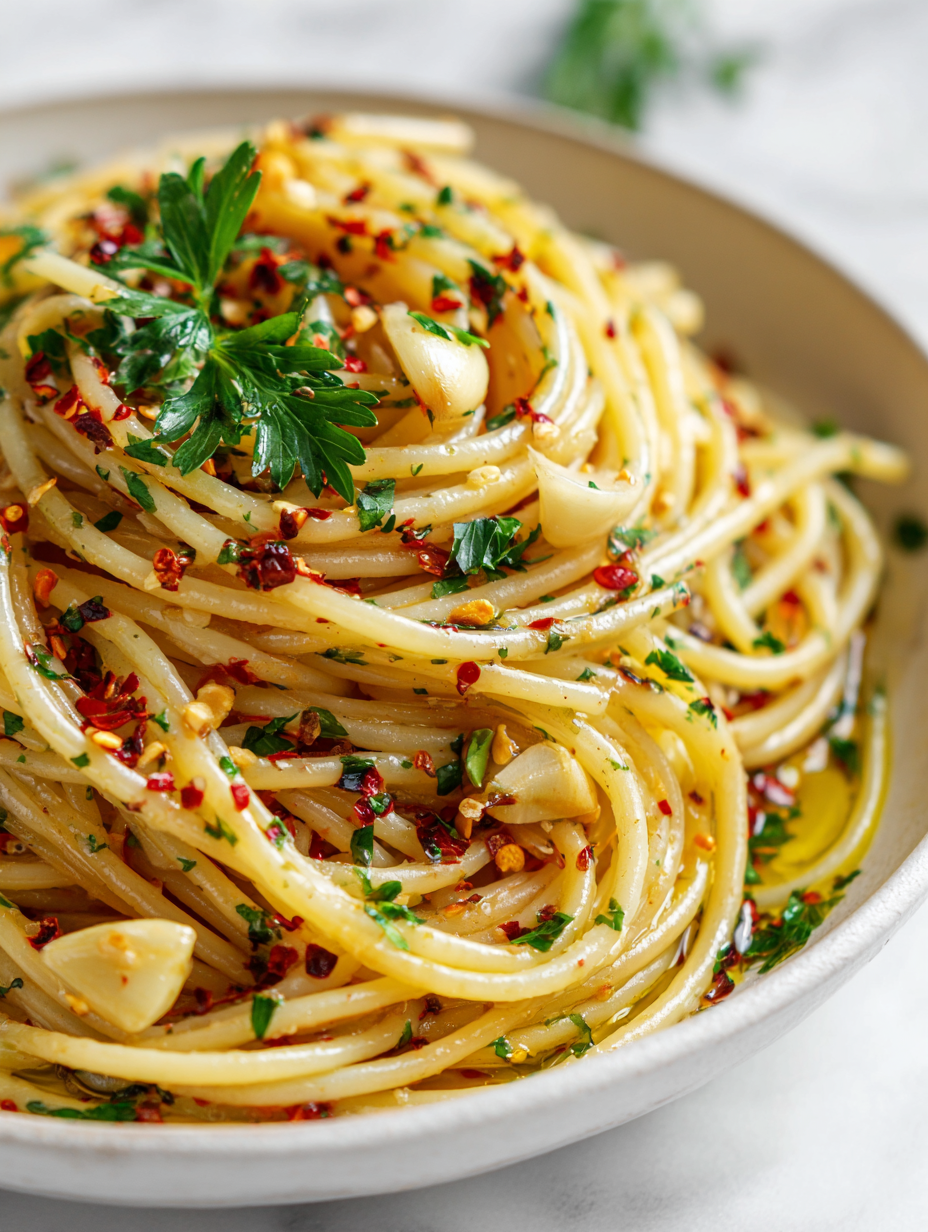
Vegan Spaghetti Aglio e Olio
Ingredients
Equipment
Method
- Bring a large pot of salted water to a rolling boil. Add the spaghetti and cook until just al dente, about 8-10 minutes. Stir occasionally to prevent sticking, then drain, reserving about 1 cup of pasta water.
- While the pasta cooks, heat the olive oil in a deep skillet over medium heat. When the oil shimmers and is warm, add the sliced garlic in an even layer. Gently cook, stirring occasionally, until the garlic turns golden and fragrant—about 2-3 minutes. Keep a close eye to avoid burning.
- Once the garlic is golden, turn off the heat. Carefully add the drained pasta into the skillet with the garlic and oil, tossing gently to coat the noodles evenly. If the mixture seems dry, add a splash of the reserved pasta water and toss again.
- Season the pasta generously with salt and freshly ground black pepper. Sprinkle in the red pepper flakes if using, and toss to distribute. Taste and adjust the seasoning as needed.
- If desired, add lemon zest or a squeeze of lemon juice for brightness. Toss in chopped fresh herbs for a burst of freshness. Give everything one last toss to combine all flavors.
- Serve immediately in warm bowls, garnished with extra herbs if you like. Drizzle a little extra olive oil on top for added richness and aroma. Enjoy this simple yet soulful pasta while it's warm and fragrant.
Pro tips for perfect Aglio e Olio
- Bold garlic slices: Thin slicing exposes more surface area, leading to quicker, more fragrant toasting. Watch closely to prevent browning too fast.
- Low and slow oil: Gently warming the oil over medium-low heat allows garlic to release flavor without burning, creating a sweet, nutty aroma.
- Reserve pasta water: Saving starchy water helps loosen the sauce if it sticks or seems dry, and adds body to the dish.
- Taste before seasoning: Salt and pepper can vary depending on your ingredients—adjust only after tasting the pasta and garlic oil mixture.
- Finish with herbs off heat: Toss chopped herbs in after turning off the stove; residual heat releases their fresh, vibrant flavors.
- Use wide pan: A larger surface area lets garlic cook evenly and prevents overcrowding, which can cause uneven browning.
- Don’t rush the garlic: Patience is key—gentle, slow cooking develops depth of flavor and avoids bitterness from burnt slices.
Common mistakes and how to fix them
- FORGOT to check garlic color → Overcooked garlic turns bitter, lower heat or remove sooner.
- DUMPED pasta water without tasting → Reserve water for sauce, it’s starchy goodness.
- OVER-TORCHED garlic → Turn down heat immediately if garlic starts to brown too fast.
- MISSED seasoning at the end → Taste and adjust salt and pepper to enhance flavors.
Quick fixes and pantry swaps
- When garlic burns quickly, splash a little water to cool and prevent bitterness.
- If pasta clumps, dump it into boiling water with a splash of oil and stir gently.
- Splash olive oil on the pan if garlic starts to stick or brown too fast.
- Patch over-salted sauce with a splash of reserved pasta water to mellow flavors.
- Shield from over-torching by lowering heat immediately if garlic turns too dark and fragrant.
Prep, store, and reheat tips
- Prep garlic slices and measure olive oil a day ahead for quicker cooking. Keep covered in the fridge, smelling pungent and fresh.
- Cook spaghetti until just al dente, then drain and toss with a little olive oil. Store in an airtight container in the fridge for up to 24 hours. Reheat in boiling water for 1 minute to restore texture.
- The flavors meld and intensify after sitting. Reheat gently on the stove over low heat, stirring often, until warm and fragrant again.
- For longer storage, keep leftovers in a sealed container for up to 2 days. Expect the oil to solidify slightly, but it melts back as it warms.
Top questions about vegan spaghetti aglio e olio
1. Can I make this gluten-free?
Yes, you can use gluten-free pasta; it cooks similarly but might have a different bite and texture.
2. Can I make it less spicy?
Absolutely, skip the chili flakes or reduce the amount for milder heat that still flavors the oil well.
3. Can I add herbs?
Yes, adding chopped fresh herbs like parsley or basil right before serving enhances freshness and aroma.
4. Can I substitute the olive oil?
Yes, you can replace olive oil with vegan butter for a richer, creamier texture, but the flavor will be slightly different.
5. Can I add lemon?
Certainly, use lemon juice or zest to brighten the dish; skip if you prefer a richer garlic flavor without citrus.
6. How do I store leftovers?
Yes, the dish can be stored in the fridge for up to 2 days. Reheat gently on the stove, adding a splash of water if it dries out.
7. How do I know it’s cooked properly?
Make sure garlic is golden and fragrant, not burnt, and pasta is al dente before combining to ensure perfect texture.
8. What kind of olive oil should I use?
Use a good quality extra-virgin olive oil for depth of flavor. Cheaper oils may lack the same richness and aroma.
9. How can I fix a dry sauce?
Add reserved pasta water gradually to loosen the sauce if it seems too dry or sticky, creating a glossy finish.
10. Can I add more heat?
Yes, you can add chili flakes or fresh chili for extra heat, but start with less and taste before adding more.
This simple dish reminds me how much flavor can come from just a handful of ingredients. It’s honest, comforting, and perfect for those nights when you want something warm without fuss. The aroma of garlic and olive oil filling the kitchen is a little ritual I cherish.
In a world of complex recipes, this one keeps me grounded. It’s a quick reminder that minimalism in cooking often lets each element shine. Sometimes, the simplest things turn out to be the most memorable.

Hi, I’m Clara Sage – and welcome to my kitchen of small revelations.
I created The Language of Aha not just as a recipe blog—but as a space to celebrate the little lightbulb moments that happen in the kitchen.