
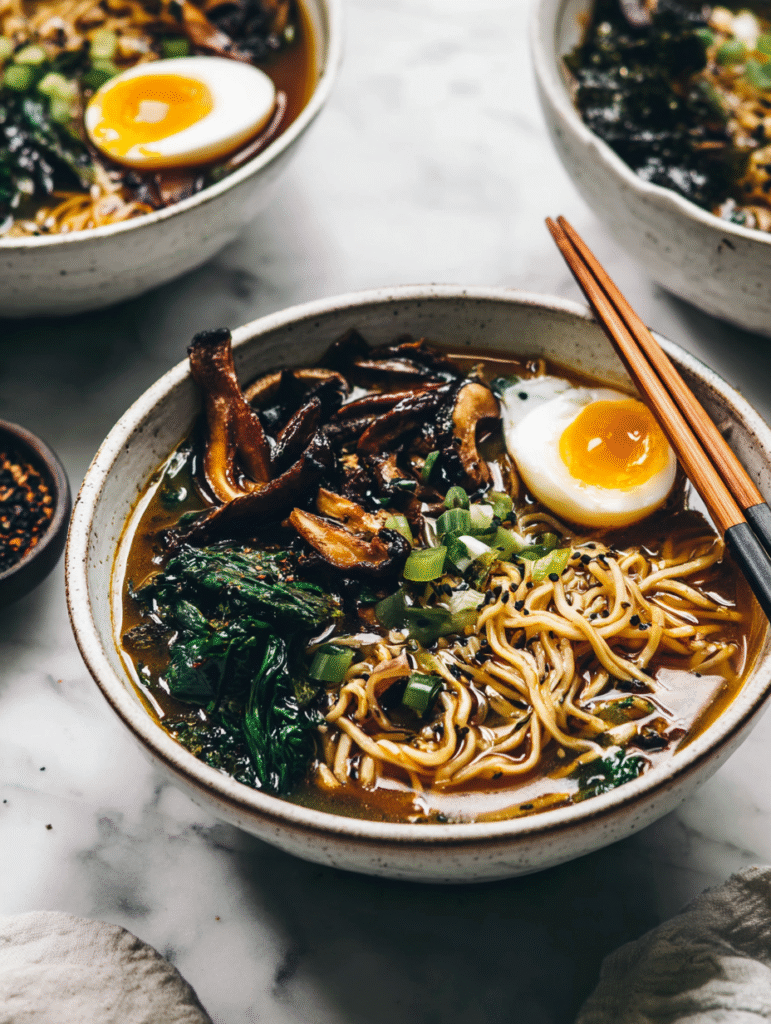
Vegan ramen often gets a bad rap for lacking that deep, savory punch you expect from its meat-based counterparts. But I’ve found it’s all about building layers of umami from simple pantry ingredients—no need for store-bought broth powders or complicated shortcuts. This recipe is my attempt to make a broth that’s rich, aromatic, and satisfying enough to fool even die-hard ramen fans.
What I love about this version is how forgiving and flexible it is. You can swap in whatever vegetables or spices you have on hand, and the broth still comes out bold and comforting. It’s a bowl I turn to when I want something warming but also crave the kind of flavor that sticks with you long after the last sip. Perfect for those chilly nights or whenever you need a little kitchen therapy.
Focusing on how to create a deeply flavorful, umami-rich broth using everyday pantry staples and a few unexpected ingredients, aiming for a comforting bowl that even non-vegans crave.
The story behind this recipe
- This recipe was born out of a late-night craving for something warm, savory, and completely meat-free. I remember the first time I tried to make vegan ramen; I was frustrated by how dull most store-bought broths tasted. So I started experimenting with pantry staples—miso, seaweed, and a splash of soy—that could layer up umami without relying on animal products.
- What kept me coming back to this dish was how forgiving it is. I can toss in leftover vegetables, swap out different noodles, and the broth still comes out rich and satisfying. It’s become my go-to for cozy evenings when I need comfort but want to keep it simple. Plus, the smell of that simmering broth—garlic, sesame, and a hint of smoky mushroom—just pulls everyone into the kitchen.
- heading
- story_type
Key Ingredients and Tips
- Nutritional yeast: I love the cheesy, umami punch it adds; you can skip or reduce if you want less of that flavor. It’s like a savory blanket for the broth.
- Kelp or seaweed: I swear the briny, oceanic aroma it releases when simmering is what makes this broth so alive. If you don’t have it, a splash of miso can boost that umami vibe.
- Miso paste: This is my secret weapon for depth—rich, slightly tangy, and full-bodied. If you’re out, a dash of soy or tamari can help, but miss the complexity.
- Toasted sesame oil: A little goes a long way. It adds a smoky nuttiness that’s almost intoxicating. Skip if you’re sensitive to strong oils, but it really pulls the flavors together.
- Mushrooms (shiitake or button): I prefer shiitake for their meaty, earthy aroma, but any mushroom works. Sauté until fragrant and slightly caramelized to maximize flavor.
- Vegetables (bok choy, spinach): Fresh greens add a bright, crisp contrast. Add just before serving so they stay vibrant and fresh—no sogginess, please.
- Noodles: I like chewy, slightly thick ramen noodles. Rinse before cooking to prevent sticking, and cook until just tender—about 2-3 minutes in boiling water. The right texture makes all the difference.
Spotlight on key ingredients
Mushrooms (shiitake or button): I prefer shiitake for their meaty, earthy aroma, but any mushroom works. Sauté until fragrant and slightly caramelized to maximize flavor.:
- Kelp or seaweed: I swear the briny, oceanic aroma it releases when simmering is what makes this broth so alive. If you don’t have it, a splash of miso can boost that umami vibe.
- Miso paste: This is my secret weapon for depth—rich, slightly tangy, and full-bodied. If you’re out, a dash of soy or tamari can help, but miss the complexity.
- Toasted sesame oil: A little goes a long way. It adds a smoky nuttiness that’s almost intoxicating. Skip if you’re sensitive to strong oils, but it really pulls the flavors together.
Notes for ingredient swaps
- Broth Base: Coconut milk can replace water for a creamy, rich texture, adding a slightly sweet, tropical note.
- Seaweed: Nori strips are a good alternative to kelp, offering a milder ocean aroma and a chewy texture.
- Miso Paste: White miso is milder and sweeter, while red miso provides a deeper, saltier flavor—swap based on your taste.
- Noodles: Rice noodles work well if you’re gluten-free, but they lack the chewiness of traditional ramen—so cook carefully.
- Vegetables: Carrots or zucchini can substitute greens, adding crunch and sweetness, just toss in a minute before serving.
- Oil: If sesame oil isn’t available, toasted peanut oil can add a nutty aroma, though it’s slightly stronger.
- Seasoning: Tamari can replace soy sauce for a gluten-free option, with a richer, slightly less salty flavor.
Equipment & Tools
- Large pot: For simmering broth and cooking noodles.
- Fine-mesh strainer: To strain out seaweed and mushroom solids for a clear broth.
- Wooden spoon: For stirring ingredients gently and evenly.
- Chef’s knife: For prepping garlic, greens, and mushrooms.
Step-by-step guide to vegan ramen
- Equipment & Tools: Gather a large pot for simmering, a fine-mesh strainer for broth clarity, a wooden spoon for stirring, and a knife for prep.
- In the pot, heat 1 tbsp sesame oil over medium. Add 2 minced garlic cloves and 1 sliced shallot. Cook until fragrant, about 2 minutes, until they smell nutty and slightly caramelized.
- Toss in 1 cup chopped mushrooms. Cook, stirring occasionally, until they release their earthy aroma and start to brown, about 5 minutes. They should look slightly shriveled and darkened.
- Pour in 8 cups water, add 2 sheets of kelp or a handful of dried seaweed. Bring to a gentle simmer over medium-low (about 85°C / 185°F). Let this steep for 20 minutes, watching for a slight shimmer on the surface and a fragrant oceanic aroma.
- Remove the kelp or seaweed, then stir in 2 tbsp miso paste, 1 tbsp soy sauce, and 1 tsp sugar. Whisk until smooth and dissolved. The broth should turn a cloudy, rich golden, with a savory smell that makes you crave a sip.
- Add 2 cups chopped greens (bok choy, spinach). Cook for 1-2 minutes until just wilted but still vibrant. They should be tender but not mushy, with a fresh aroma.
- While broth simmers, cook noodles separately in boiling water (about 2-3 minutes). Rinse under cold water to stop cooking and prevent sticking. Drain well, then set aside.
- Taste the broth and adjust seasoning—more soy for saltiness, a splash of lemon juice for brightness if needed. Keep warm over very low heat.
- Resting & Finishing: Divide cooked noodles into bowls. Ladle hot broth over, ensuring greens and mushrooms are evenly distributed. Garnish with sliced green onions or sesame seeds. Serve immediately while steaming hot.
Serve immediately while hot. For best flavor, enjoy soon after plating to preserve the fresh greens and aromatic broth. Garnish with extra scallions or sesame seeds if desired.
How to Know It’s Done
- Broth: Should be aromatic, slightly cloudy, with a deep umami smell.
- Noodles: Cooked until just tender, with a chewy bite and no sticking.
- Vegetables: Bright, crisp, and tender—no sogginess or dull color.
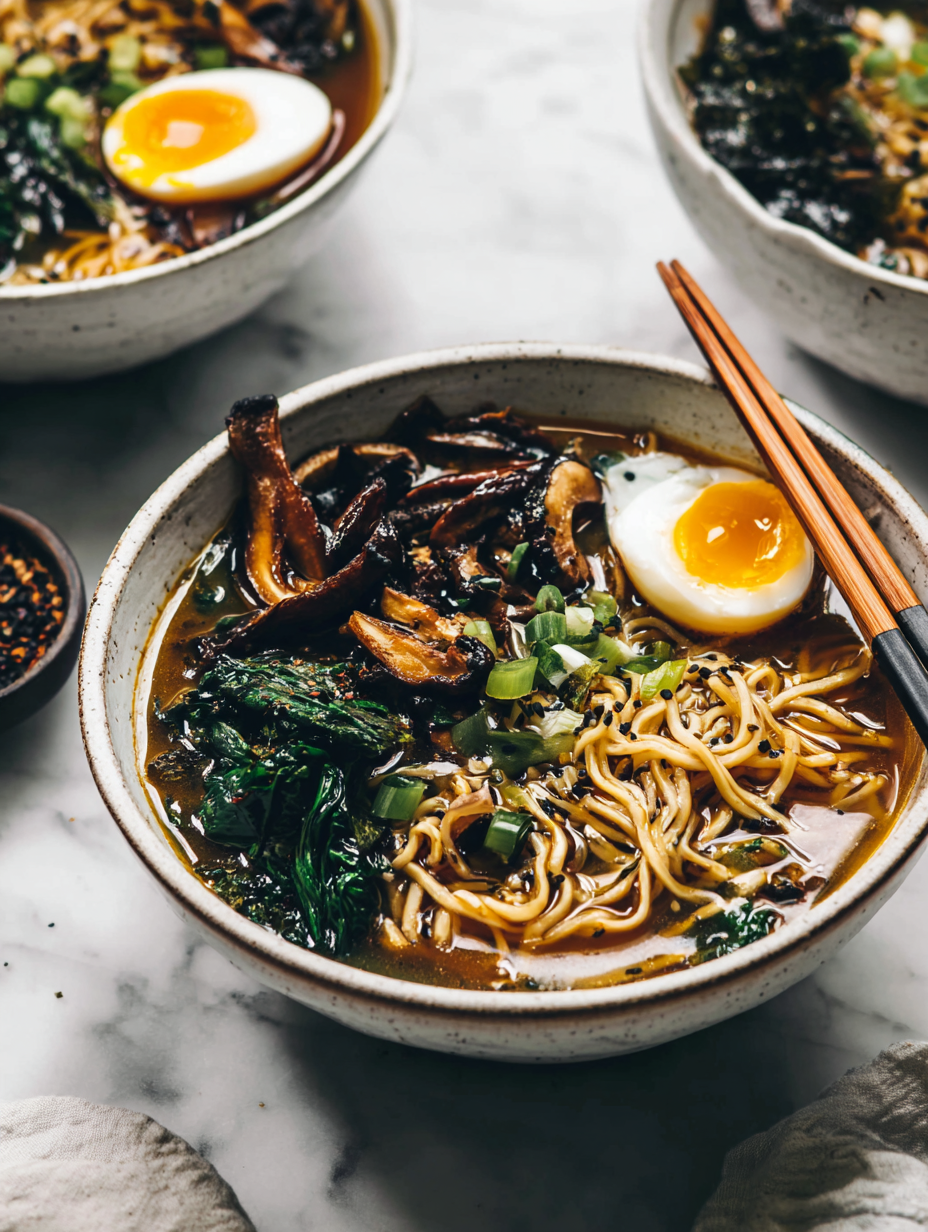
Vegan Umami-Rich Ramen
Ingredients
Equipment
Method
- Gather all your ingredients and prep the vegetables by mincing the garlic, slicing the shallot, chopping the mushrooms, and chopping the greens. Set everything aside for easy access.
- Heat a large pot over medium heat and add the toasted sesame oil. Once shimmering, toss in the minced garlic and sliced shallot, cooking until fragrant and slightly caramelized, about 2 minutes. You should smell a warm, nutty aroma.
- Add the chopped mushrooms to the pot and cook, stirring occasionally, until they release their earthy aroma and turn a rich brown, about 5 minutes. They should look shriveled and fragrant.
- Pour in water and add the dried kelp sheets. Bring the mixture to a gentle simmer over medium-low heat and let it steep for 20 minutes. You'll notice a slight shimmer on the surface and a deep oceanic scent filling the air.
- Remove the kelp from the broth using a fine-mesh strainer. Stir in the miso paste, soy sauce, and sugar, whisking until fully dissolved. The broth will turn a cloudy, rich golden color and smell deeply savory.
- Add the chopped greens to the broth and cook for 1-2 minutes until just wilted but still vibrant. They should remain crisp and bright, adding a fresh aroma to the broth.
- While the broth simmers, cook the ramen noodles separately in boiling water for 2-3 minutes until just tender. Rinse under cold water to stop the cooking process and drain well.
- Taste the broth and adjust the seasoning if needed—more soy for saltiness or a squeeze of lemon for brightness. Keep it warm over very low heat while you prepare to serve.
- Divide the cooked noodles into bowls. Ladle the hot broth over the noodles, ensuring an even distribution of greens and mushrooms. Garnish with additional sliced scallions or sesame seeds if desired.
- Serve immediately while steaming hot, enjoying the fragrant aroma, chewy noodles, and vibrant vegetables in each flavorful spoonful.
Pro tips for perfect vegan ramen
- Bolded mini-head: Toast spices and seeds beforehand to boost their aroma and deepen flavor.
- Bolded mini-head: Use a gentle simmer (around 85°C / 185°F) for the broth to extract maximum umami without bitterness.
- Bolded mini-head: Rinse noodles under cold water after cooking to stop the cooking process and prevent sticking.
- Bolded mini-head: Add greens at the last moment to keep their vibrant color and crisp texture.
- Bolded mini-head: Keep the broth warm on very low heat while assembling bowls to maintain steaming hotness.
- Bolded mini-head: Adjust seasoning gradually—taste often to balance saltiness and acidity for a well-rounded broth.
- Bolded mini-head: Use a fine-mesh strainer to clarify the broth, removing bits and ensuring a silky texture.
Common mistakes and how to fix them
- FORGOT to check broth clarity → Strain for a smooth, clean finish.
- DUMPED noodles too early → Cook until just tender for perfect chew.
- OVER-TORCHED mushrooms → Sauté on medium until fragrant and caramelized.
- ADDED too much soy → Balance with water if broth becomes too salty.
Quick fixes and pantry swaps
- If broth lacks depth, splash in a dash of soy or miso; smell should turn savory and inviting.
- When noodles stick, splash cold water and toss gently; crackle should fade, and noodles separate.
- Splash in a little lemon juice if broth tastes flat; shimmer and bright aroma will follow.
- Patch over-salted broth with a teaspoon of sugar or a splash of water; smell should soften and balance.
- Shield delicate greens with a quick stir-fry or blanch; watch for vibrant color and crisp texture.
Prep, store, and reheat tips
- You can prep the broth ingredients up to 2 days ahead. Keep it covered in the fridge, where it’ll develop a richer, more layered umami aroma overnight.
- Cook the noodles separately, then rinse and store in an airtight container for up to 24 hours. Reheat briefly in boiling water or microwave until just warm—watch for a chewy, not mushy, texture.
- Chop vegetables and prep toppings a day in advance. Store greens in a damp cloth in a sealed bag for maximum freshness, and keep sliced scallions in a small jar with water in the fridge.
- Reheat the broth gently on low heat, allowing it to shimmer and smell fragrant. Taste and adjust seasoning if needed—adding a splash of soy or lemon to refresh the flavors. The broth should be steaming and aromatic when ready to serve.
Top questions about vegan ramen
1. Can I use store-bought vegetable broth?
Yes, you can use vegetable broth instead of water, but the broth’s umami flavor will be richer with the seaweed and miso additions.
2. Can I substitute the ramen noodles?
Absolutely. Use gluten-free noodles if you prefer, but they might have a different chewy texture that you’ll notice in the bite.
3. How do I brighten the broth’s flavor?
Adding a splash of rice vinegar or lemon juice at the end brightens the broth and balances the deep savory flavors.
4. Can I add protein to this ramen?
Yes, you can add tofu or tempeh for extra protein. Fry or bake them separately for a crispy contrast.
5. Can I use different mushrooms?
If you don’t have shiitake mushrooms, button mushrooms or even chopped portobellos work—just sauté until fragrant and caramelized.
6. When should I add the greens?
To keep greens vibrant, add them just before serving and cook for 1-2 minutes until wilted but still crisp.
7. How far in advance can I make the broth?
You can prepare the broth base up to 2 days ahead; keep it refrigerated and reheat gently for best flavor.
8. How do I prevent noodles from overcooking?
Overcooking noodles makes them mushy. Rinse in cold water immediately after cooking to stop the process and keep them chewy.
9. What if the broth is bland?
If the broth tastes flat, add a splash more soy sauce or miso, then taste again to balance the flavors.
10. How do I know when the ramen is ready to serve?
Always taste the broth before serving. Adjust seasoning, acidity, and salt to your preference for the perfect bowl.
Making this vegan ramen has become a little ritual for me, especially on those nights when I need something warm and grounding. The aroma of garlic, seaweed, and toasted sesame filling the kitchen is like a gentle hug, reassuring and familiar. It’s a reminder that simple pantry staples can come together to create something deeply satisfying, no matter what’s happening outside the door.
Honestly, I find a lot of comfort in that. The process of simmering, tasting, and adjusting builds a kind of quiet satisfaction that sticks with me long after the last spoonful. It’s a dish that feels like a small act of care, both for myself and anyone lucky enough to share a bowl.

Hi, I’m Clara Sage – and welcome to my kitchen of small revelations.
I created The Language of Aha not just as a recipe blog—but as a space to celebrate the little lightbulb moments that happen in the kitchen.