
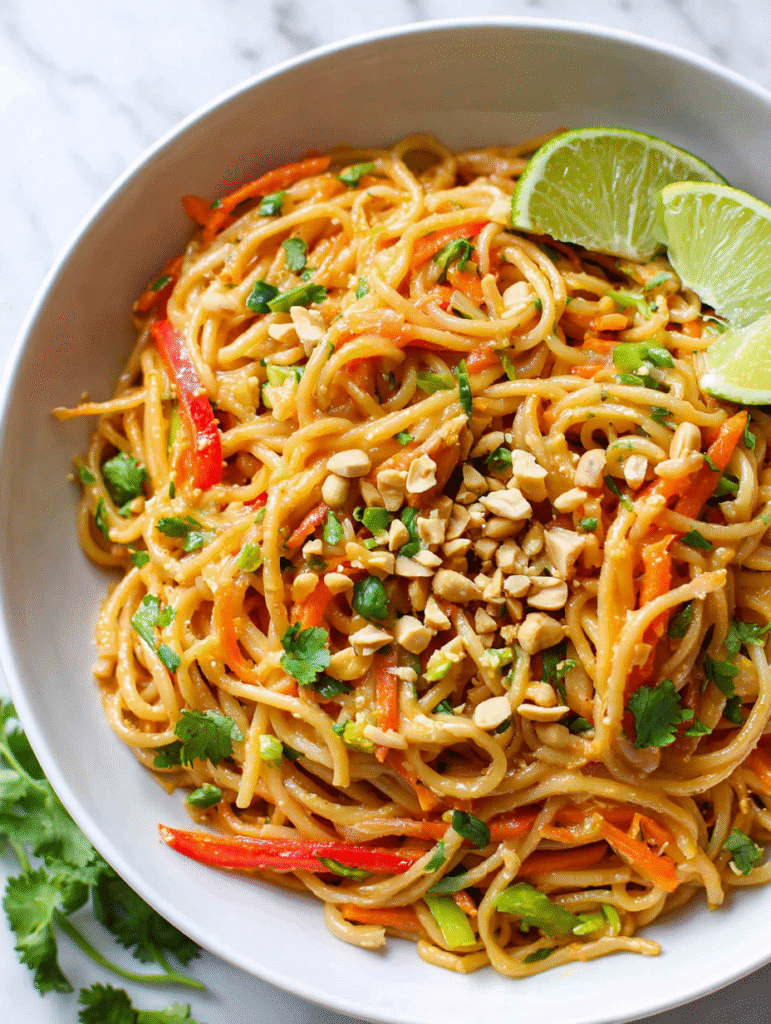
This vegan peanut noodles recipe is like a warm hug from childhood, but made over with fresh, plant-based ingredients. I remember slurping down my mom’s version after school, the rich peanut sauce dripping down my chin, and feeling totally comforted. Now, I make this dish when I need a quick, satisfying meal that hits all those nostalgic notes without the heaviness.
What I love most is how adaptable it is. You can toss in whatever crunchy veggies you have on hand or add a squeeze of lime for brightness. It’s simple, honest food that brings a little joy, especially when you’re craving something familiar but want it to fit into a mindful, modern diet. Plus, it’s a dish that’s just as good cold the next day, perfect for busy weeknights or packed lunches.
Focusing on how this dish can be a nostalgic nod to childhood comfort food, but made vibrant and plant-based for today’s mindful eating.
The story behind this recipe
- This dish came together one rainy afternoon when I was digging through my pantry, craving something quick but comforting. The idea of a creamy peanut sauce with noodles felt like a warm memory, but I wanted to make it totally plant-based and fresh. It’s become my go-to when I need a dish that’s honest, satisfying, and a little nostalgic.
- I remember a time I was traveling in Thailand and stumbled upon a street cart serving peanut noodles so vibrant and spicy, I couldn’t stop thinking about it for days. That flavor hit me deep—smoky, tangy, with a hint of sweetness. I set out to replicate that complexity at home, making it simpler but still packed with flavor.
- story_type
Ingredient breakdown: key components
- Peanut butter: I prefer chunky for some texture and richness, but if you want it smoother, go creamy. The roasted, nutty aroma in this sauce is what ties it all together.
- Soy sauce: I use tamari for a gluten-free option, but regular soy works just fine. It packs that savory umami punch that makes the sauce addictive.
- Sesame oil: Just a teaspoon adds a smoky depth, but if you’re out, a splash of toasted olive oil can give a similar warm note—though less distinctive.
- Lime juice: Freshly squeezed brightens everything up and cuts through the richness. Skip it if you’re out, but don’t skip the zest—it’s even more fragrant.
- Sweetener: A touch of maple syrup or agave balances the salty and savory; I love how it makes the sauce gently oozing and glossy, like a glazed fruit.
- Noodles: I usually go for rice noodles—they soak up the sauce beautifully and have that satisfying chew. For a whole-grain twist, try soba or buckwheat.
- Veggies: Crunchy cucumbers, shredded carrots, or bell peppers add freshness. Keep them raw for that crisp bite or quickly blanch for a tender contrast.
Spotlight on key ingredients
Peanut Butter:
- I prefer chunky for some texture and richness, but if you want it smoother, go creamy. The roasted, nutty aroma in this sauce is what ties it all together.
- Soy sauce: I use tamari for a gluten-free option, but regular soy works just fine. It packs that savory umami punch that makes the sauce addictive.
- Sesame oil: Just a teaspoon adds a smoky depth, but if you’re out, a splash of toasted olive oil can give a similar warm note—though less distinctive.
Lime & Noodles:
- Lime juice: Freshly squeezed brightens everything up and cuts through the richness. Skip it if you’re out, but don’t skip the zest—it’s even more fragrant.
- Noodles: I usually go for rice noodles—they soak up the sauce beautifully and have that satisfying chew. For a whole-grain twist, try soba or buckwheat.
Notes for ingredient swaps
- Peanut butter: I prefer chunky for some texture and richness, but if you want it smoother, go creamy. The roasted, nutty aroma in this sauce is what ties it all together.
- Soy sauce: I use tamari for a gluten-free option, but regular soy works just fine. It packs that savory umami punch that makes the sauce addictive.
- Sesame oil: Just a teaspoon adds a smoky depth, but if you’re out, a splash of toasted olive oil can give a similar warm note—though less distinctive.
- Lime juice: Freshly squeezed brightens everything up and cuts through the richness. Skip it if you’re out, but don’t skip the zest—it’s even more fragrant.
- Sweetener: A touch of maple syrup or agave balances the salty and savory; I love how it makes the sauce gently oozing and glossy, like a glazed fruit.
- Noodles: I usually go for rice noodles—they soak up the sauce beautifully and have that satisfying chew. For a whole-grain twist, try soba or buckwheat.
- Veggies: Crunchy cucumbers, shredded carrots, or bell peppers add freshness. Keep them raw for that crisp bite or quickly blanch for a tender contrast.
Equipment & Tools
- Large pot: Boil and cook the noodles
- Mixing bowl: Whisk and prepare the sauce
- Skillet or wok: Toss noodles with vegetables and sauce
- Spatula or tongs: Combine ingredients evenly
Step-by-step guide to vegan peanut noodles
- Gather your equipment: a large pot for boiling noodles, a mixing bowl for the sauce, and a skillet or wok for tossing everything together. Boil water in the pot, aiming for about 4 liters (just enough to submerge your noodles). Once boiling, add your rice noodles and cook for 8-10 minutes until just tender, stirring occasionally. Drain and rinse with cold water to stop the cooking and set aside.
- While the noodles cook, prepare the peanut sauce. In the mixing bowl, whisk together 1/3 cup peanut butter, 2 tablespoons soy sauce, 1 teaspoon toasted sesame oil, 1 tablespoon rice vinegar, 1 tablespoon maple syrup, and 2-3 tablespoons hot water. Adjust the water to get a smooth, pourable consistency. Set aside the sauce once smooth and fragrant.
- Heat your skillet or wok over medium heat (about 160°C / 320°F). Add a splash of oil and toss in any crunchy vegetables you like—shredded carrots, sliced bell peppers, or snap peas. Cook for 2-3 minutes until slightly tender but still crisp, with a bit of a sizzle and bright color.
- Add the drained noodles to the skillet with the veggies. Pour the peanut sauce over the top. Toss everything gently with tongs or a spatula for 2-3 minutes, ensuring noodles are coated and heated through. You should hear a slight crackle as they start to sear a bit around the edges—this adds flavor.
- Taste and adjust the seasoning if needed—more soy if it needs salt, lime juice if it’s too rich, or a pinch of chili flakes for heat. If the sauce thickens too much, splash in a little hot water to loosen it up. Once everything looks glossy and well mixed, turn off the heat.
- Let the noodles rest for 2 minutes in the pan to absorb flavors, then transfer to a serving dish. Garnish with chopped scallions, crushed peanuts, or a squeeze of fresh lime if desired. Serve immediately or cold for leftovers.
- For best texture, avoid overcooking the noodles—aim for a slight bite. Keep an eye on the sauce consistency; it should be silky and cling to the noodles without pooling. Resting briefly helps meld flavors, making each bite better.
Let the noodles sit for 2 minutes to absorb flavors. Garnish with fresh toppings like scallions or crushed peanuts before serving. Serve hot or cold, depending on preference.
How to Know It’s Done
- Noodles are tender yet firm when bitten (al dente).
- Sauce is smooth, glossy, and coats noodles evenly.
- Vegetables retain vibrant color and slight crunch.
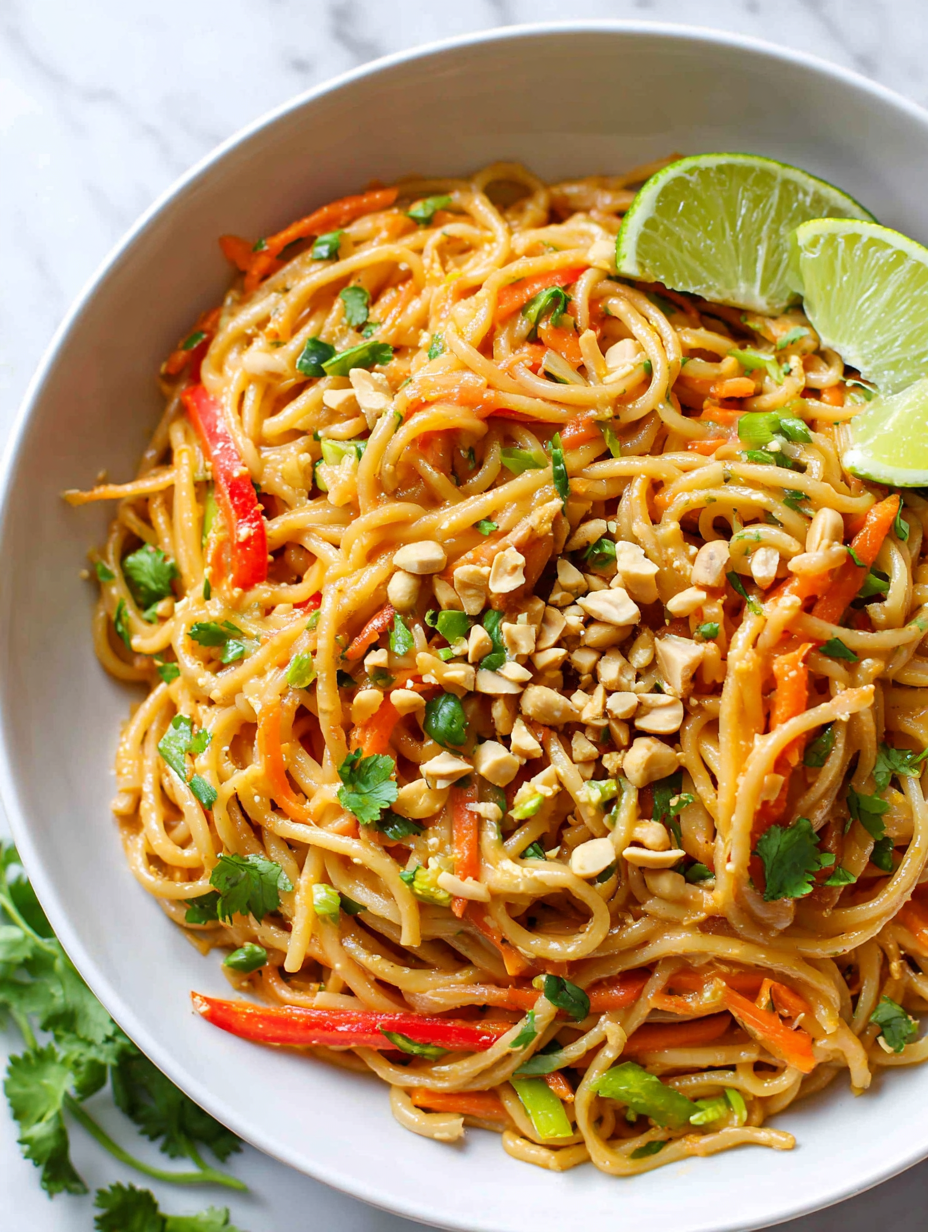
Vegan Peanut Noodles
Ingredients
Equipment
Method
- Bring a large pot of water to a boil, then add the rice noodles. Cook for 8-10 minutes until just tender, stirring occasionally. Drain and rinse with cold water to stop the cooking process, then set aside.
- In a mixing bowl, whisk together the peanut butter, soy sauce, toasted sesame oil, rice vinegar, and maple syrup. Slowly add hot water, a tablespoon at a time, whisking until the sauce becomes smooth, glossy, and pourable.
- Heat your skillet or wok over medium heat. Add a splash of oil, then toss in your crunchy vegetables. Stir-fry for 2-3 minutes until they are bright, crisp, and slightly tender, filling the kitchen with a fresh aroma.
- Add the drained noodles to the skillet with the vegetables. Pour the peanut sauce over the top and toss gently with tongs or a spatula for 2-3 minutes, ensuring the noodles are evenly coated and heated through. You should hear a slight sizzling sound as they start to sear a bit.
- Taste the noodles and adjust seasoning by adding more soy sauce or a squeeze of lime juice for brightness. If the sauce thickens too much, splash in a little hot water and whisk again until silky and smooth.
- Turn off the heat and let the noodles rest for a minute or two to absorb flavors. Transfer to a serving dish, garnishing with chopped scallions or crushed peanuts if desired. Serve immediately while warm, or chill for a refreshing cold noodle salad.
Notes
Pro Tips for Perfect Peanuts
- Use warm water to loosen thick peanut sauce for easier coating.
- Toast your sesame oil briefly before adding to enhance smoky aroma.
- Rinse noodles with cold water after cooking to stop the residual heat and prevent sticking.
- Let the sauce sit for 5 minutes before tossing to develop more depth of flavor.
- Use a non-stick pan for easier tossing and to avoid sticking when stir-frying veggies.
- Grate fresh lime zest into the sauce for an extra zing of citrus aroma.
- Adjust the hot water in the sauce gradually to get the perfect silky consistency.
Common mistakes and how to fix them
- FORGOT to check noodle doneness → Taste and test for slight bite.
- DUMPED sauce before tasting → Adjust seasoning before serving.
- OVER-TORCHED noodles → Rinse immediately and reduce heat.
- MISSED stirring while heating → Keeps sauce smooth and prevents sticking.
Quick fixes and pantry swaps
- When sauce is too thick, splash in hot water and whisk until silky.
- If noodles stick, rinse with cold water immediately after draining.
- Splash soy sauce or lime juice to rescue bland flavor.
- Patch over burnt peanut sauce with extra water and fresh lime.
- Shield delicate veggies by stir-frying over medium heat, not high.
Prep, store, and reheat tips
- Prep the sauce ahead: Whisk together the peanut butter, soy sauce, and other ingredients. It keeps in the fridge for up to 3 days, and the aroma of toasted sesame and lime makes the kitchen smell lively.
- Cook the noodles in advance: Drain, rinse with cold water, and toss with a touch of oil to prevent sticking. Store in an airtight container for 1-2 days; they retain their chew and won’t turn mushy.
- Chop vegetables ahead: Shred carrots, slice peppers, or prepare whatever crunchy toppings you like. Keep them in separate containers for 1-2 days; freshness is best within the first day.
- Reheat with care: If serving warm, toss noodles in a hot skillet or microwave for 30 seconds, adding a splash of hot water if they seem dry. The sauce may thicken overnight, so loosen it up until glossy again.
- Flavor depth: The noodles and sauce can be stored together for up to 24 hours in the fridge. The flavors meld overnight, making the dish more vibrant, but textures might soften slightly.
Top questions about vegan peanut noodles
1. Can I use different types of peanut butter?
Use natural peanut butter for richer flavor and better texture, but if you prefer a sweeter, smoother sauce, creamy works fine too.
2. Can I substitute soy sauce?
Yes, you can swap soy sauce with tamari or coconut aminos for gluten-free or different flavor profiles; expect a slight change in saltiness.
3. What can I use instead of lime juice?
Lime juice brightens the dish with a fresh, citrusy zing. If unavailable, a splash of lemon juice or a dash of vinegar can work.
4. How do I prevent the noodles from overcooking?
Overcooking noodles makes them mushy; cook just until al dente, then rinse with cold water to stop the cooking process.
5. How long should I cook the vegetables?
Stir-fry veggies quickly over medium heat until crisp-tender—about 2-3 minutes—so they keep their color and crunch.
6. Any tips for enhancing flavor?
Use fresh, fragrant lime zest for extra brightness, and toast sesame oil briefly to bring out its smoky aroma.
7. What if the sauce gets too thick?
If the sauce becomes too thick, add a tablespoon of hot water at a time and whisk until smooth and glossy again.
8. Can I make this dish in advance?
You can prepare the sauce and cook noodles ahead of time, storing both in airtight containers in the fridge for up to 2 days.
9. How do I reheat leftovers without losing texture?
When reheating, toss leftovers in a hot skillet or microwave for 30 seconds, adding a splash of hot water to loosen the sauce.
10. How do I prevent noodles from sticking?
If noodles stick together after cooking, rinse with cold water immediately and toss with a little oil to prevent clumping.
This dish isn’t just about the flavors; it’s about reconnecting with simple comfort food that feels good to make and eat. It’s a reminder that even quick, everyday meals can carry a sense of nostalgia and care. Whenever I make these noodles, I remember that cooking is a small act of kindness we can do for ourselves and others.
And in a world that’s constantly rushing, taking the time to toss together these vibrant, creamy noodles feels like a little act of slowing down. It’s satisfying to know that with a few pantry staples, you can whip up something honest, filling, and full of flavor. Sometimes, that’s enough.

Hi, I’m Clara Sage – and welcome to my kitchen of small revelations.
I created The Language of Aha not just as a recipe blog—but as a space to celebrate the little lightbulb moments that happen in the kitchen.