
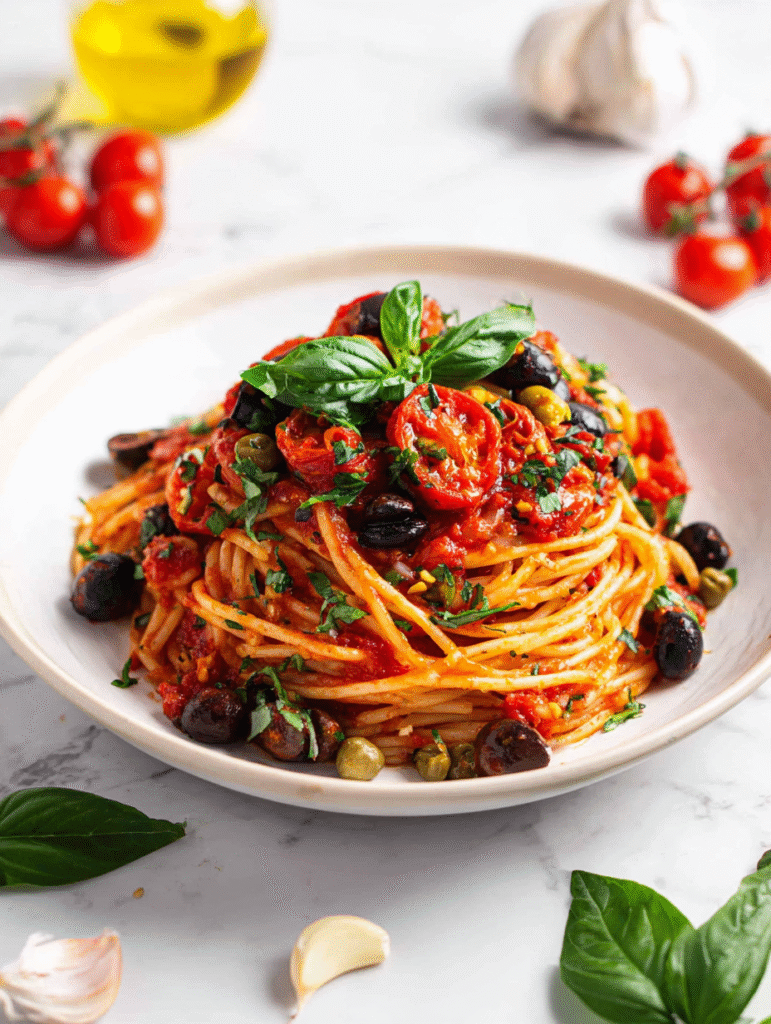
This vegan Puttanesca is the kind of dish that makes you feel clever in the kitchen, even on your busiest nights. It’s built from pantry staples—canned tomatoes, olives, capers—that come together fast, turning into something deeply satisfying without breaking a sweat. I love how it feels rich and indulgent, but it’s all plant-based and straightforward.
There’s a certain charm in pulling this together when fridge space is tight and time is short. It’s one of those recipes that proves you don’t need fancy ingredients or hours simmering to get a meal that hits all the right notes—bright, salty, a little smoky—and leaves you full enough to forget about takeout.
Focusing on how vegan Puttanesca can be a pantry staple for busy weeknights, turning simple ingredients into a quick, comforting dish that feels rich and indulgent without any fuss.
The story behind this recipe
- This dish came about during one of those chaotic weeknights when I needed something quick but flavorful—something that felt like a little treat, not just a meal. I was rummaging through my pantry, eyes landing on a jar of briny olives and a can of crushed tomatoes. The moment I threw everything together, I remembered how much I love the bold, punchy flavors of puttanesca, but wanted to keep it plant-based and simple.
- It’s become my go-to when I want comfort without fuss, especially when I’m tired but craving something vibrant and satisfying. I love how it feels like a little rebellion—turning pantry staples into a dish that’s both rustic and indulgent. Plus, it’s a reminder that good food doesn’t need complicated ingredients or hours in the kitchen.
- heading
- story_type
Ingredient breakdown
- Canned tomatoes: I rely on crushed San Marzano for that sweet, bright acidity—if you want more punch, try fire-roasted. Swap in fresh for a summer twist, but watch the cook time—fresh takes longer to break down.
- Black olives: Briny and oozy, they punch up the flavor—no need for fancy varieties. If you prefer milder, go for green olives, but keep the saltiness in check. Chop them coarsely for better distribution.
- Capers: I love their punch—salty, tangy, a little funky. Rinse thoroughly to avoid overwhelming saltiness, or toss in a few fewer if your capers are extra salty. They add a burst of zing with each bite.
- Garlic: The foundation of the sauce—roast for smoky depth or sauté for sharpness. For a milder flavor, slice thin and cook just until fragrant; for a real punch, crush and cook until golden. Smells like comfort.
- Olive oil: Extra virgin for richness—drizzle generously at the end for that silky mouthfeel. If you want a lighter finish, use less but don’t skimp on flavor. It’s the glue holding everything together.
- Red pepper flakes: A pinch brings heat—start small, taste, then build. If you like it fiery, add more at the end; if you prefer subtle warmth, sprinkle lightly. The lingering heat makes every bite exciting.
- Fresh herbs (basil/parsley): Brighten up the dish—torn fresh on top just before serving. If fresh isn’t available, dried works but loses some vibrancy. Add at the end for that herbal pop.
Spotlight on key ingredients
Canned tomatoes:
- I rely on crushed San Marzano for that sweet, bright acidity—if you want more punch, try fire-roasted. Swap in fresh for a summer twist, but watch the cook time—fresh takes longer to break down.
- Black olives: Briny and oozy, they punch up the flavor—no need for fancy varieties. If you prefer milder, go for green olives, but keep the saltiness in check. Chop them coarsely for better distribution.
- Capers: I love their punch—salty, tangy, a little funky. Rinse thoroughly to avoid overwhelming saltiness, or toss in a few fewer if your capers are extra salty. They add a burst of zing with each bite.
Black olives:
- Briny and oozy, they punch up the flavor—no need for fancy varieties. If you prefer milder, go for green olives, but keep the saltiness in check. Chop them coarsely for better distribution.
- Capers: I love their punch—salty, tangy, a little funky. Rinse thoroughly to avoid overwhelming saltiness, or toss in a few fewer if your capers are extra salty. They add a burst of zing with each bite.
Notes for ingredient swaps
- Canned tomatoes: I prefer crushed San Marzano for their bright, sweet acidity—swap for fire-roasted for smokiness, or use fresh in summer, but expect a longer simmer.
- Black olives: Briny and oozy, they make the dish pop—sub green olives for milder saltiness, but keep the flavor punch; chop coarsely for even distribution.
- Capers: Their tangy, salty punch is irreplaceable—rinse well to avoid overwhelming salt, or use fewer if your capers are extra salty. They add zing in every bite.
- Garlic: The backbone of flavor—roasted for smoky depth or sautéed for sharpness. Thin slices for milder, crushed and golden for punchy aroma. Smells like home.
- Olive oil: Extra virgin for richness—drizzle at the end for silky texture. For lighter, use less but don’t skimp on flavor. It’s the dish’s glue.
- Red pepper flakes: Add a pinch for warmth—start small, taste, then build. For fiery heat, sprinkle more at the end. Lingering spice makes it exciting.
- Fresh herbs (basil/parsley): Brighten the dish—torn fresh just before serving. Dried herbs work but lose vibrancy. Add at the end for herbal pop.
Equipment & Tools
- Medium skillet: Cook the sauce and meld flavors
- Wooden spoon: Stir ingredients and prevent sticking
- Sharp knife: Chop garlic, olives, and herbs
- Cutting board: Prep ingredients safely
- Colander: Drain cooked pasta
Step-by-step guide to vegan Puttanesca
- Gather your equipment: a medium-sized skillet (around 25-30 cm / 10-12 inch), a wooden spoon, a sharp knife, and a cutting board.
- Heat 2 tablespoons of olive oil over medium heat (about 160°C / 320°F) in your skillet. Once shimmering, add 3 minced garlic cloves. Sauté for 30 seconds until fragrant but not browned.
- Add 1 can (400g / 14 oz) crushed tomatoes to the skillet. Stir and bring to a gentle simmer. Cook for 8-10 minutes, stirring occasionally, until the sauce thickens slightly and smells rich and bright.
- While the sauce simmers, roughly chop 1/2 cup of pitted black olives and 2 tablespoons of capers. Set aside.
- Once the sauce has thickened, stir in the chopped olives and capers. Cook for another 2 minutes, allowing flavors to meld. If the sauce becomes too thick, add a splash of water or vegetable broth.
- Taste the sauce and adjust salt if needed—remember the olives and capers are salty. Add red pepper flakes (about 1/4 teaspoon) or more if you like heat. Toss in fresh basil or parsley if you have it, right before finishing.
- Cook your favorite pasta (spaghetti or linguine) in boiling salted water until al dente, about 8 minutes. Drain and set aside.
- Add the cooked pasta directly into the skillet with the sauce. Toss gently to coat each strand evenly. Cook together for 1-2 minutes to let flavors meld.
- Remove from heat. Rest the pasta for 2 minutes for sauce absorption and easier serving. Plate immediately, garnished with a drizzle of olive oil and extra herbs if desired.
Let the pasta rest for 2 minutes after mixing with the sauce. Finish with a drizzle of olive oil, fresh herbs, and serve hot, straight from the pan.
How to Know It’s Done
- Sauce should be glossy, slightly thickened, with a vibrant aroma of garlic and tomatoes.
- Olives and capers are visibly distributed, and the sauce coats the pasta without pooling.
- Pasta is cooked al dente, with a slight bite, and well-coated with the sauce.
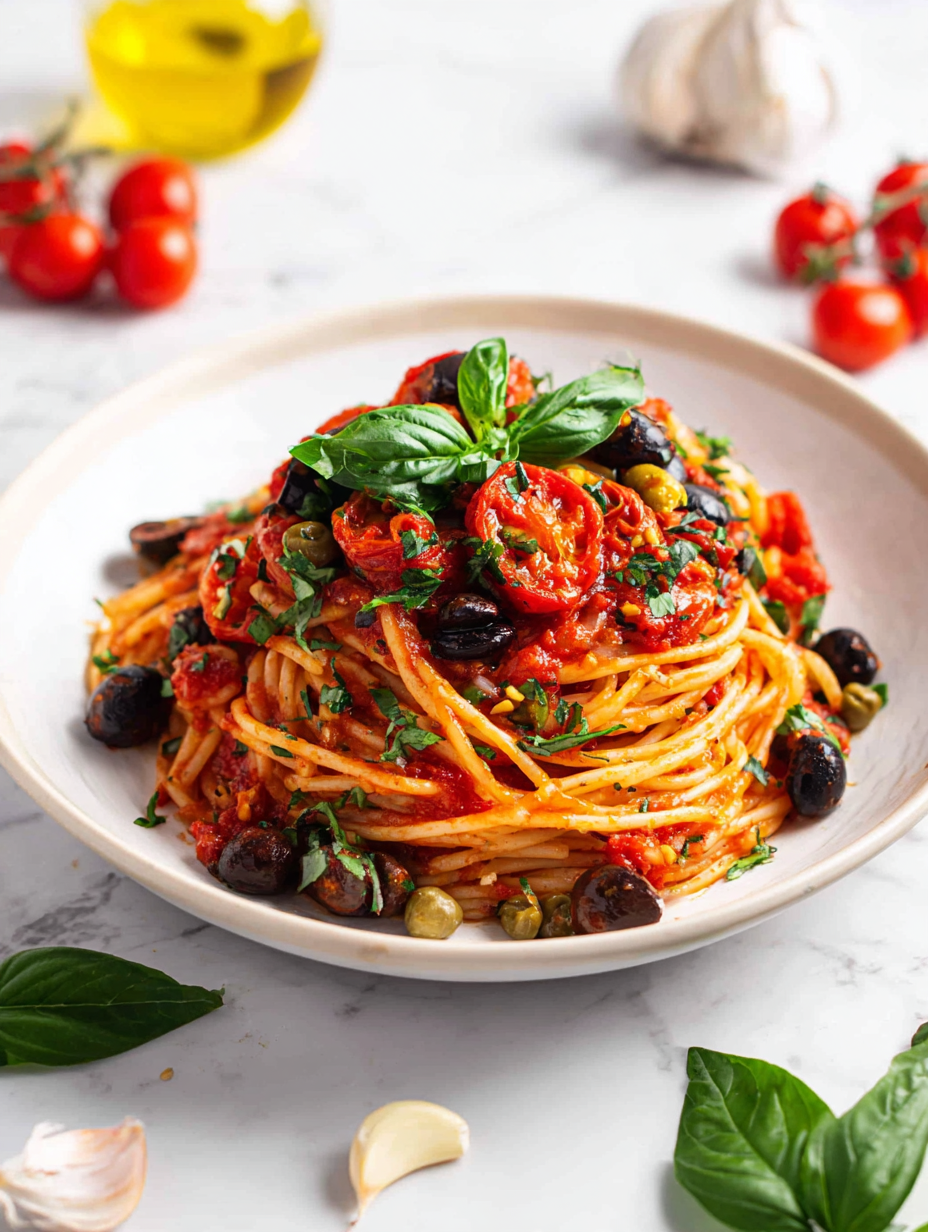
Vegan Puttanesca
Ingredients
Equipment
Method
- Heat the olive oil in a medium skillet over medium heat until shimmering and fragrant.
- Add the minced garlic and sauté for about 30 seconds, until it becomes fragrant and just begins to turn golden. Be careful not to burn it.
- Pour in the crushed tomatoes, stirring to combine. Bring the mixture to a gentle simmer and cook for 8-10 minutes, stirring occasionally, until the sauce thickens slightly and releases a vibrant aroma.
- Meanwhile, chop the black olives coarsely and rinse the capers thoroughly under cold water. Set aside.
- Once the sauce has thickened, stir in the chopped olives and capers. Cook for another 2 minutes, allowing the flavors to meld and the sauce to absorb their briny punch.
- Taste and adjust the seasoning with salt and red pepper flakes, adding more if you prefer a spicier kick.
- Meanwhile, cook your pasta in boiling salted water until al dente, about 8 minutes. Drain using a colander and set aside.
- Add the drained pasta directly into the skillet with the sauce. Toss gently to coat all the strands evenly, allowing the flavors to meld for 1-2 minutes over low heat.
- Remove from heat, then sprinkle with torn fresh basil or parsley for a bright herbal finish. Drizzle with a little extra olive oil if desired.
- Serve immediately, with extra herbs on top for a fresh, vibrant touch.
Essential tips for perfect Puttanesca
- the garlic: Sauté until fragrant and just starting to turn golden to build depth without bitterness.
- CRUSH red pepper flakes: Toast briefly with oil to release their fiery aroma before adding other ingredients.
- STIR in olives and capers at the end: Keep their briny punch lively and prevent over-softening.
- SIMMER the sauce gently: Keep it just below boiling point, about 85°C / 185°F, for vibrant flavors without bitterness.
- TASTE and adjust salt: Remember olives and capers are salty—add sparingly and adjust after everything melds.
- TOSS pasta in sauce off heat: Mix pasta into the sauce just after removing from heat, for better absorption and freshness.
- Garnish generously: Finish with fresh herbs and a drizzle of olive oil for a bright, fragrant finish.
Common mistakes and how to fix them
- FORGOT to preheat the pan → Always warm the pan before adding ingredients.
- DUMPED too much salt → Taste and adjust seasoning gradually to avoid oversalting.
- OVER-TORCHED the garlic → Cook garlic until fragrant, not browned or burnt.
- MISSED the sauce consistency check → Keep an eye on sauce thickness and adjust heat accordingly.
Quick fixes and pantry swaps
- When sauce is too thick, splash in hot water and stir until glossy.
- If olives are bland, add a splash of brine for extra punch.
- Splash lemon juice to brighten dull tomatoes during simmering.
- Patch over a burnt garlic pan with fresh garlic and more oil.
- Shield delicate herbs with a gentle stir to preserve their aroma.
Prep, store, and reheat tips
- You can prep the sauce a day in advance—store it in an airtight container in the fridge for up to 2 days. The flavors deepen overnight, making it even more savory.
- Cooked pasta can be kept in the fridge for up to 2 days. Toss it with a little olive oil to prevent sticking, and reheat gently in the microwave or on the stove, adding a splash of water if needed. Expect it to be a bit softer but still flavorful.
- Reheat the sauce slowly over low heat, stirring often. It’ll shimmer with a richer aroma, and the flavors will intensify. Add a touch of water or broth if it thickens too much during reheating.
- If you want to freeze leftovers, portion the sauce in freezer-safe containers for up to 3 months. Thaw in the fridge overnight and reheat as above. The texture may change slightly, but the flavor remains robust.
- For best sensory experience, reheat until the sauce is hot and fragrant—smell the garlic and tomatoes waking up again. Avoid boiling vigorously, which can break down the ingredients.
Top questions about vegan Puttanesca
1. Can I use dried olives instead of jarred?
Yes, you can use dried olives, but they won’t be as oozy and briny; soak them briefly first.
2. How do I fix a too-thick sauce?
Absolutely, use a splash of veggie broth or water to loosen the sauce if it thickens too much when reheating.
3. Can I skip fresh herbs?
Fresh basil or parsley makes a big difference. Add just before serving to keep their aroma bright.
4. Can I reduce the garlic amount?
Yes, if you prefer a milder garlic flavor, sauté it gently until fragrant but not browned.
5. What if I don’t have fire-roasted tomatoes?
Fire-roasted tomatoes add a smoky undertone, but plain crushed tomatoes work just fine if you prefer a cleaner taste.
6. Can I make this gluten-free?
Use gluten-free pasta if needed. The sauce pairs well with most dried pasta types, just cook until al dente.
7. Should I add lemon juice?
Adding a squeeze of lemon brightens the dish right before serving, enhancing the briny flavors.
8. How al dente should the pasta be?
It’s best to cook the pasta just until al dente, then toss it with the sauce immediately for maximum flavor and texture.
9. How long can I store leftovers?
Yes, keep leftovers in an airtight container in the fridge for up to 2 days. Reheat gently on the stove.
10. How can I make it spicier?
If you want extra heat, sprinkle more red pepper flakes at the end or during cooking for a fiery kick.
This vegan Puttanesca isn’t just quick; it’s a reminder that pantry staples can turn into something vibrant and satisfying in minutes. The aroma of garlic and olives simmering together makes the whole kitchen feel alive, even on the busiest nights.
Whenever I make this, I think about how simple ingredients can create a dish that feels indulgent and comforting without any fuss. It’s a little rebellion against complicated cooking—just honest, bold flavors that come together effortlessly.

Hi, I’m Clara Sage – and welcome to my kitchen of small revelations.
I created The Language of Aha not just as a recipe blog—but as a space to celebrate the little lightbulb moments that happen in the kitchen.