
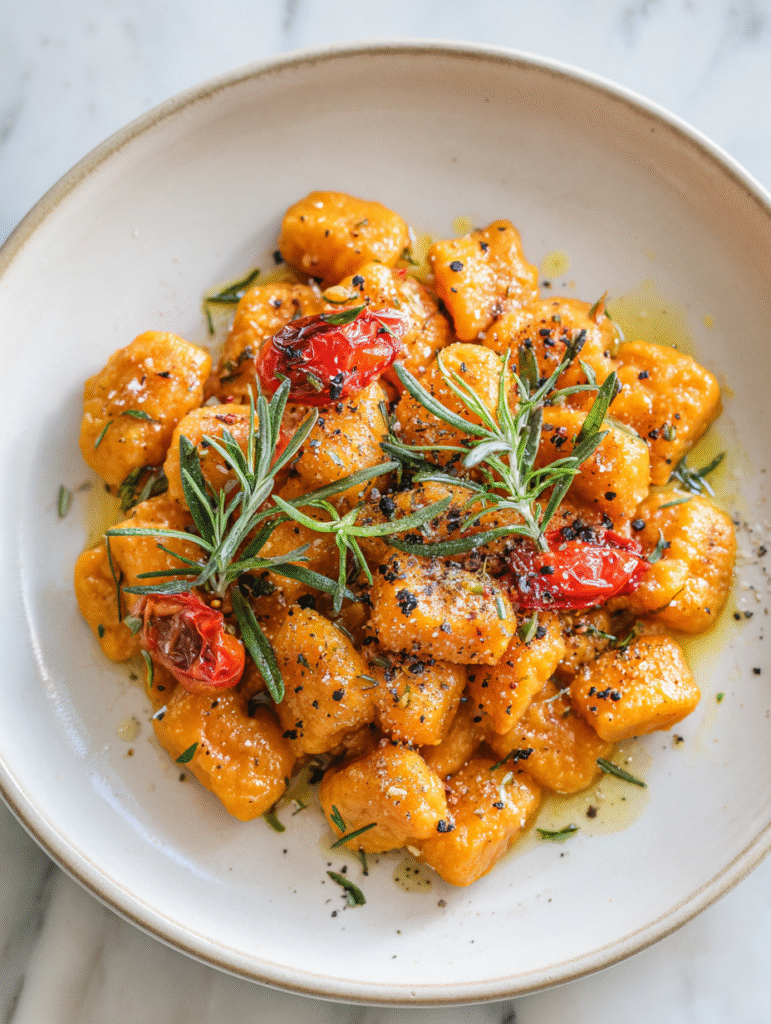
Making gnocchi by hand isn’t just about the end result; it’s a slow, grounding process that pulls you out of the rush. There’s something almost meditative about mixing, rolling, and shaping those soft dough balls, feeling their texture under your fingertips. It’s a small act of mindfulness that can turn a busy day into a quiet moment of connection.
Vegan gnocchi, in particular, invites you to slow down even more—no eggs, no dairy, just simple ingredients that let the natural flavors shine. It’s forgiving, forgiving enough to adapt to whatever’s in your pantry, and satisfying enough to make you want to savor every bite. This recipe is more than a meal; it’s a little ritual that reminds you to pause, breathe, and enjoy the process.
Focusing on how the simple act of making gnocchi from scratch can be a mindful, grounding ritual that reconnects us to comfort and slow living in a fast-paced world.
The story behind this recipe
- I first stumbled upon this vegan gnocchi recipe during a chilly autumn weekend. I was craving something comforting but wanted to keep it light and plant-based. The simplicity of the ingredients and the forgiving nature of the dough made me realize how much joy can be found in the basics, especially when you slow down enough to really feel the process.
- It became a ritual to make these gnocchi on quiet Sundays, turning cooking into a mindful act that grounded me. The way the dough feels under your fingers—soft, a little sticky, almost like play—reminds me that cooking is as much about connection as it is about eating.
- Every batch I make feels like a small victory, especially when I get it just right—the perfect pillowy texture, tender and delicate, with that faintly smoky aroma from the lightly toasted sage. It’s a reminder that simple ingredients, treated with care, can create something truly satisfying.
Ingredient breakdown
- All-purpose flour: I like to keep it simple with just plain flour, but if you want a slightly nuttier flavor, try spelt. It’s a bit more rustic under your fingertips.
- Sweet potato: This adds a subtle sweetness and natural moisture; I mash mine until smooth, but if yours feels too sticky, a light dusting of flour helps.
- Nutritional yeast: For that cheesy umami kick without dairy, I sprinkle in a little. If you’re out, a pinch of miso paste can mimic that depth.
- Olive oil: A splash in the dough makes it tender and helps prevent sticking, especially if your dough feels a bit stubborn during rolling.
- Salt: I prefer sea salt for a clean, briny punch that wakes up the whole bite—don’t be shy, it really balances the sweetness of the potato.
- Baking soda: Just a tiny pinch helps lighten the dough, giving the gnocchi a delicate lift—be careful not to overdo it, or it turns too airy.
- Water: I add just enough to bring everything together—warm water feels softer on the dough, and it helps keep the texture silky.
Spotlight on key ingredients
Sweet potato:
- I mash mine until silky, the natural sweetness infuses the dough, making each bite subtly cozy. Skip it for a more neutral flavor, but you’ll miss that gentle richness.
- The oozy, slightly fibrous texture helps the gnocchi hold together without eggs. If yours feels too sticky, dust lightly with flour to tame it.
Sweet potato:
- All-purpose flour: I prefer a soft, unbleached variety for a tender crumb. Too much makes them dense, so measure carefully. For a nuttier flavor, spelt flour adds rustic charm but slightly alters texture.
- All-purpose flour: During kneading, watch for a dough that’s soft but manageable—if it feels sticky, a light dusting of flour helps without toughening the dough.
Notes for ingredient swaps
- Flour: Whole wheat or spelt flour can replace all-purpose; expect a denser, nuttier gnocchi with a slightly coarser texture.
- Sweet Potato: Butternut squash works well for a milder, slightly sweeter flavor, but may alter the moisture content—adjust flour accordingly.
- Nutritional Yeast: Miso paste can mimic the cheesy umami if you’re out; use a small amount to avoid overpowering the delicate flavor.
- Olive Oil: Avocado oil offers a milder taste and similar tenderness, but traditional olive oil adds a subtle fruity note.
- Salt: Sea salt or Himalayan pink salt provides a cleaner, more nuanced brine—table salt can be too sharp or overpowering.
- Baking Soda: Baking powder can sometimes be used in a pinch; it’s a bit more potent, so reduce the quantity to prevent a soapy taste.
- Water: Warm vegetable broth can add extra flavor, making the gnocchi more savory—just reduce the water slightly to keep dough manageable.
Equipment & Tools
- Large pot: To simmer the gnocchi in water.
- Baking sheet: For boiling or finishing the gnocchi if baking.
- Fork or gnocchi paddle: To shape and create ridges on gnocchi.
- Slotted spoon: To lift gnocchi out of water gently.
- Knife: To cut dough into pieces.
Step-by-step guide to vegan gnocchi
- Gather your equipment: a large pot, a baking sheet, a fork or gnocchi paddle, and a slotted spoon. Fill the pot with water and bring to a gentle simmer at 90°C (194°F).
- Peel and mash your sweet potato until completely smooth. Measure out 1 cup (240g) of mash. Set aside.
- In a large mixing bowl, combine 1 cup (125g) all-purpose flour, 1/2 teaspoon baking soda, a pinch of salt, and 2 tablespoons (30ml) olive oil. Mix well.
- Add the sweet potato mash to the flour mixture. Gradually pour in 1/4 cup (60ml) warm water while mixing, until the dough just comes together. It should be soft but manageable.
- Turn the dough onto a lightly floured surface. Divide into four portions. Roll each portion into a long rope about 1 inch (2.5cm) thick. Use a sharp knife to cut into 1-inch pieces.
- To shape the gnocchi, gently press each piece with a fork or gnocchi paddle to create ridges. This helps sauce cling and adds texture.
- Drop the gnocchi into the simmering water in batches. Stir gently to prevent sticking. Cook for 2-3 minutes, or until they float to the surface and are tender.
- Remove with a slotted spoon. Check for doneness: they should be firm yet tender, with a slight bounce when pressed.
- In a large skillet, heat a tablespoon of olive oil over medium heat. Add the cooked gnocchi and sauté until lightly golden, about 2-3 minutes per side. Add herbs or spices if desired.
- Finish with a sprinkle of nutritional yeast or fresh herbs. Serve immediately while hot and fragrant.
Let the cooked gnocchi rest for a minute on a warm plate before sautéing or serving. Finish with herbs, a drizzle of olive oil, or your favorite sauce. Serve immediately for best texture and flavor.
How to Know It’s Done
- Gnocchi float to the surface when cooked through.
- Dough should be soft but hold together when rolled.
- Gnocchi are tender but not mushy; they should have a slight bounce.
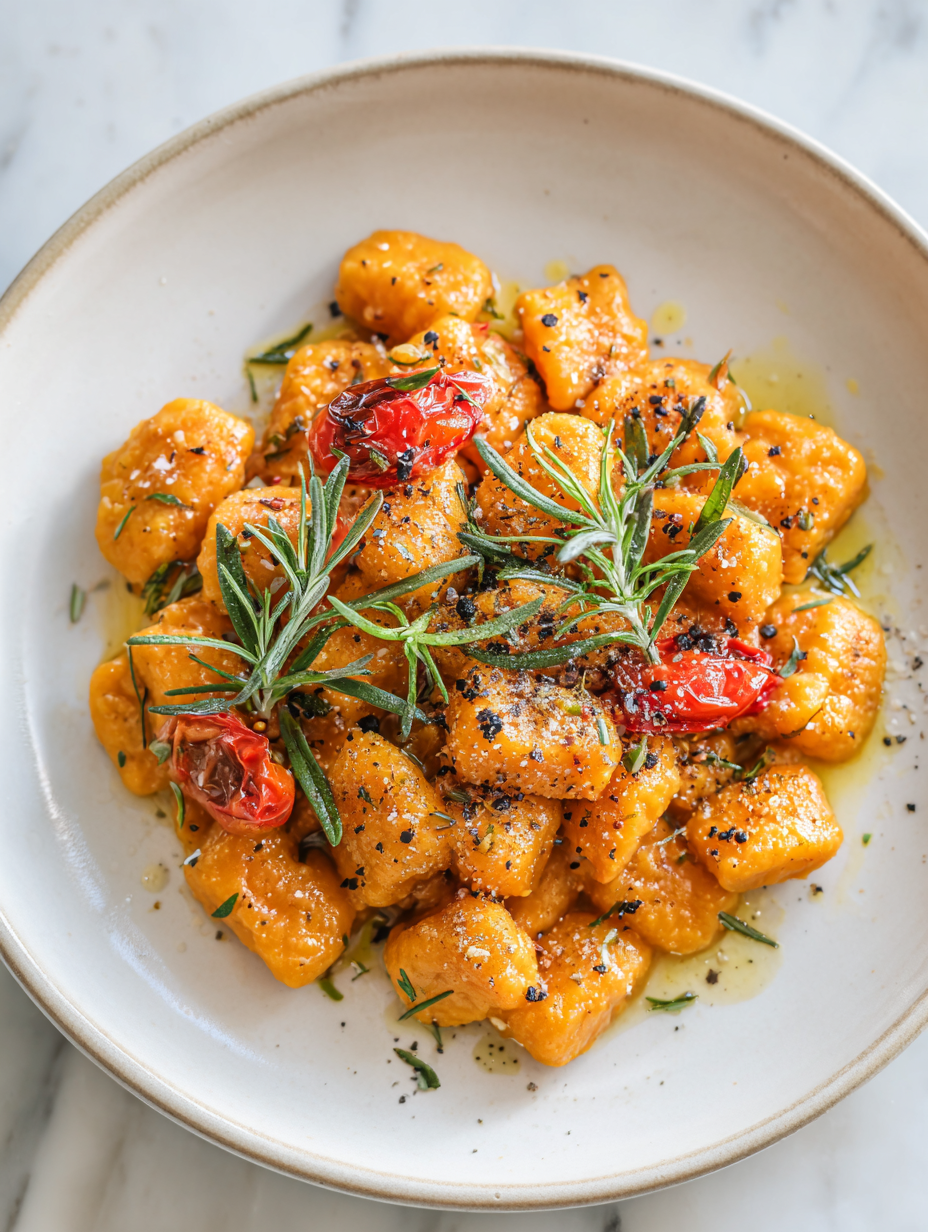
Vegan Sweet Potato Gnocchi
Ingredients
Equipment
Method
- Start by peeling and mashing your sweet potato until silky smooth; measure out about one cup of mash. This creates a moist, naturally sweet base for your gnocchi.
- In a large mixing bowl, whisk together the flour, baking soda, and sea salt. Drizzle in the olive oil and stir to combine, creating a crumbly mixture.
- Add the sweet potato mash to the flour mixture, then slowly pour in warm water while gently mixing with a spoon or your hands. Continue until the dough just comes together, soft but manageable.
- Turn the dough onto a lightly floured surface and knead gently just until smooth, about 1-2 minutes. Be careful not to overwork it to keep the gnocchi tender.
- Divide the dough into four equal parts. Roll each portion into a long rope about 1 inch thick, pressing gently to shape.
- Using a sharp knife, cut each rope into 1-inch pieces, creating small rounds ready for shaping.
- Gently press each piece with a fork or gnocchi paddle to create ridges; this helps sauce cling and adds texture. Place the shaped gnocchi on a floured baking sheet.
- Bring a large pot of water to a gentle simmer—about 90°C (194°F). Carefully drop the gnocchi into the water in batches, stirring gently to prevent sticking.
- Cook the gnocchi until they float to the surface, about 2-3 minutes; they should be tender with a slight bounce when pressed.
- Use a slotted spoon to lift the cooked gnocchi out of the water. In a skillet, heat a tablespoon of olive oil over medium heat, then sauté the gnocchi until lightly golden on all sides, about 2-3 minutes.
- Finish with a sprinkle of nutritional yeast or fresh herbs, and serve immediately while hot and fragrant. Enjoy the tender, slightly crispy, and flavorful bites!
Pro tips for perfect gnocchi
- Bolded texture: Use a fork to gently press each gnocchi; it creates ridges that hold sauce beautifully.
- Bolded moisture: When boiling, keep water at a gentle simmer; boiling too hard can break delicate gnocchi.
- Bolded aroma: Toast the sage leaves until fragrant but not burnt, releasing a smoky, herbal scent.
- Bolded timing: Watch for gnocchi to float—this is your cue that they’re tender and ready to drain.
- Bolded finishing: Sauté cooked gnocchi in a hot pan with a splash of olive oil; listen for a gentle crackle and golden edges.
- Bolded consistency: If dough feels sticky, dust lightly with extra flour to keep shaping manageable.
- Bolded storage: If making ahead, freeze uncooked gnocchi on a tray, then transfer to a bag; they’ll keep for a month.
Common mistakes and how to fix them
- FORGOT to measure flour precisely → Use a scale for consistent dough texture.
- DUMPED in all water at once → Add water gradually until dough is manageable.
- OVER-TORCHED the gnocchi → Cook just until they float and are tender, not mushy.
- FAILED to check for doneness → Gnocchi should be tender with a slight bounce when pressed.
Fast fixes for gnocchi mishaps
- If gnocchi are sticky, sprinkle with a pinch of flour and gently knead again.
- When water isn’t boiling fast enough, turn up heat to prevent sticking or clumping.
- Splash a little olive oil in the pan if gnocchi stick during sautéing.
- Patch over undercooked gnocchi by cooking a minute longer, then test for tenderness.
- Shield over-salted gnocchi by adding a squeeze of lemon juice or a dollop of dairy-free cream.
Prep, store, and reheat tips
- Prepare the dough up to 24 hours ahead; wrap tightly and store in the fridge to keep it fresh and pliable.
- Uncooked gnocchi can be frozen on a baking sheet for about 1-2 hours until firm, then transferred to a sealed bag for up to a month. Add directly to boiling water from frozen—no thaw needed.
- Cooked gnocchi keep well in the fridge for up to 2 days. Reheat gently in a hot skillet with a touch of olive oil until golden and fragrant, watching for a slight shimmer and a crispy edge.
- Reheating may soften the gnocchi slightly; a quick sauté restores their tender texture and adds a satisfying crunch. Avoid microwaving as it makes them soggy and dulls the flavor.
Top questions about vegan gnocchi
1. Can I use regular potatoes instead of sweet potato?
Use boiled and mashed sweet potato for a tender, naturally sweet base that binds well without eggs.
2. What type of flour works best for vegan gnocchi?
Yes, but expect a slightly different texture and flavor. Russets give a fluffier, more neutral gnocchi.
3. How do I prevent the gnocchi from sticking during shaping?
Lightly dust your surface and dough with flour to prevent sticking, especially if dough feels sticky.
4. How do I know when the gnocchi are done cooking?
Cook until they float to the surface, which usually takes 2-3 minutes, then check for tenderness.
5. Can I make vegan gnocchi ahead and freeze it?
Freeze uncooked gnocchi on a baking sheet for an hour, then transfer to a bag; cook directly from frozen.
6. How should I reheat leftover gnocchi?
Gnocchi can be stored in the fridge for up to 2 days; reheat in a hot skillet until crispy and hot.
7. My dough is too sticky or too dry, what do I do?
If the dough feels too sticky, dust with a bit more flour; if too dry, add a splash of water.
8. How can I add more flavor to the gnocchi?
Sauté in a hot pan with olive oil until lightly golden and crispy on the edges for extra flavor.
9. Why do I shape the gnocchi with a fork?
Use a fork to create ridges on each piece; it helps sauce cling and adds texture.
10. What if my gnocchi turn out too dense or flat?
Adjust baking soda carefully; too much can make the gnocchi taste soapy, so use sparingly.
This vegan gnocchi isn’t just a quick meal; it’s a gentle reminder to slow down and enjoy the simple act of cooking. The soft, pillowy texture paired with the comforting aroma makes it a dish I return to when I need grounding. It’s a perfect way to reconnect with the process, especially on busy days.
Sharing this recipe feels like passing along a little secret—how a handful of humble ingredients can create something that feels both nourishing and satisfying. Every bite offers a moment of quiet, a small pause in the chaos, reminding us that good things often come from patience and care.

Hi, I’m Clara Sage – and welcome to my kitchen of small revelations.
I created The Language of Aha not just as a recipe blog—but as a space to celebrate the little lightbulb moments that happen in the kitchen.