
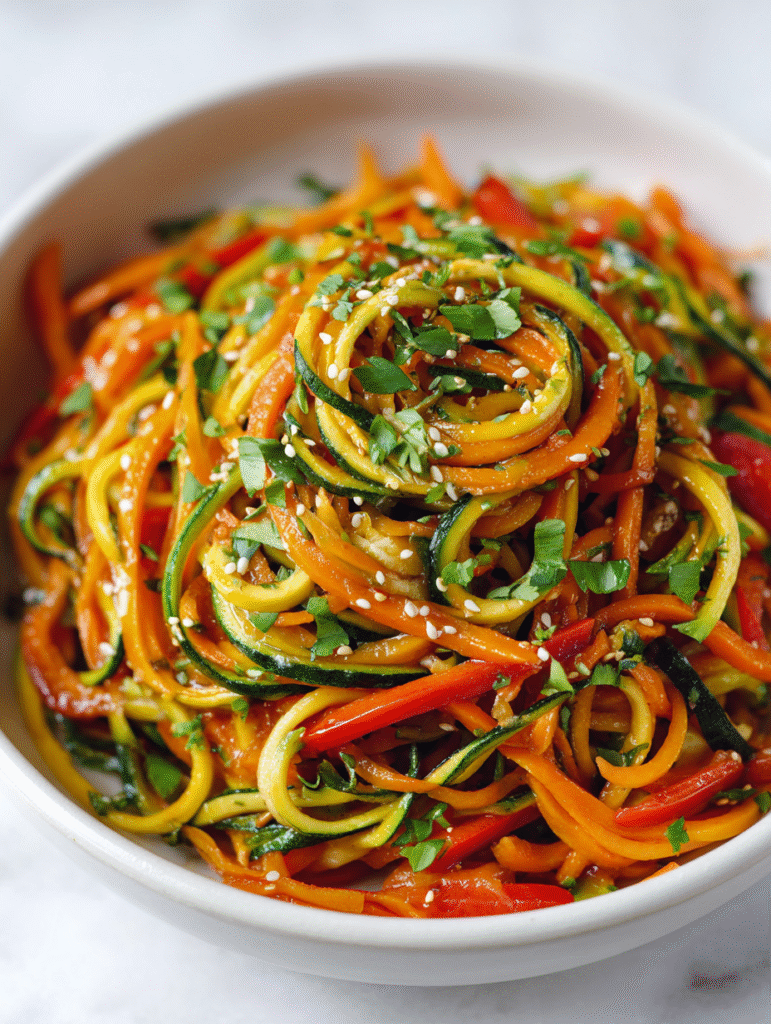
This vegan vegetable noodles recipe started as a way to make vegetables feel less like a side and more like a main event. I was tired of the usual stir-fry routine and wanted something that felt fresh, satisfying, and a little bit fun to eat. Turning raw veggies into noodles is surprisingly easy and a bit of a revelation—suddenly, those crisp carrots, zucchini, and bell peppers become a playful, textured bite that makes dinner feel special.
What I love most about this dish is how it transforms simple ingredients into something vibrant and colorful. No fancy gadgets needed—just a vegetable peeler and a bit of patience. It’s perfect for using up odds and ends in the fridge, and it encourages a bit of creative chopping. Plus, the fresh herbs and tangy dressing elevate those everyday vegetables into a treat that’s both nourishing and a little bit unexpected—like a little celebration on a plate.
Focusing on how to turn simple, everyday vegetables into a vibrant, satisfying noodle dish that surprises with texture and flavor, making it feel like a treat rather than a quick meal.
The story behind this recipe
- This dish came together one busy weeknight when I had a drawer full of root vegetables and a craving for something light yet satisfying. I wanted to prove that you don’t need fancy tools or long prep—just a bit of patience and some fresh produce. The idea of turning veggies into noodles felt like a small act of rebellion against the usual takeout routine, a way to keep it simple but still feel indulgent.
- What started as a practical solution turned into a little ritual for me—zipping through carrots, zucchinis, and peppers, feeling the crunch and bright colors come alive under my fingertips. It’s a reminder that sometimes, the best meals are born from just using what’s at hand and trusting the process. Each time I make this, I feel a little proud of turning everyday ingredients into something vibrant and full of texture.
- heading
- story_type
Key Ingredient Insights
- Zucchini: I love how zucchini becomes silky and almost translucent when spiralized, offering a fresh, mild flavor. Swap it for yellow squash if you prefer a slightly sweeter note that still cooks quickly.
- Carrots: Crisp and sweet, they add a perfect snap and a pop of color. If you want less crunch, blanch them for 30 seconds; for more bite, keep them raw.
- Bell Peppers: Their smoky, bright aroma lifts the dish. Use red or orange for sweetness, or green for a sharper contrast. Sauté lightly to keep their crunch and vibrancy.
- Sesame Oil: It’s the secret to that nutty, toasted aroma I crave. Skip or reduce if you’re sensitive to oil, but the flavor will suffer a bit—consider a splash of toasted sesame seeds instead.
- Fresh Herbs: I prefer cilantro or Thai basil—those fragrant, slightly spicy notes really brighten the dish. Dried herbs won’t give the same lively aroma, so add fresh at the end for maximum impact.
- Lemon or Lime: Brightens everything with a zesty, tangy punch. If you don’t have citrus, a splash of rice vinegar can mimic that fresh acidity, just add at the end and taste.
- Vegan Soy Sauce or Tamari: Adds salty umami that ties everything together. For a richer flavor, a dash of miso paste dissolved in a little water works wonders—just keep an eye on the salt level.
Spotlight on key ingredients
Zucchini:
- I love how zucchini becomes silky and almost translucent when spiralized, offering a fresh, mild flavor. Swap it for yellow squash if you prefer a slightly sweeter note that still cooks quickly.
- Carrots: Crisp and sweet, they add a perfect snap and a pop of color. If you want less crunch, blanch them for 30 seconds; for more bite, keep them raw.
- Bell Peppers: Their smoky, bright aroma lifts the dish. Use red or orange for sweetness, or green for a sharper contrast. Sauté lightly to keep their crunch and vibrancy.
Vegan Soy Sauce or Tamari:
- Sesame Oil: It’s the secret to that nutty, toasted aroma I crave. Skip or reduce if you’re sensitive to oil, but the flavor will suffer a bit—consider a splash of toasted sesame seeds instead.
- Fresh Herbs: I prefer cilantro or Thai basil—those fragrant, slightly spicy notes really brighten the dish. Dried herbs won’t give the same lively aroma, so add fresh at the end for maximum impact.
- Lemon or Lime: Brightens everything with a zesty, tangy punch. If you don’t have citrus, a splash of rice vinegar can mimic that fresh acidity, just add at the end and taste.
Notes for ingredient swaps
- Zucchini: I love how zucchini becomes silky and almost translucent when spiralized, offering a fresh, mild flavor. Swap it for yellow squash if you prefer a slightly sweeter note that still cooks quickly.
- Carrots: Crisp and sweet, they add a perfect snap and a pop of color. If you want less crunch, blanch them for 30 seconds; for more bite, keep them raw.
- Bell Peppers: Their smoky, bright aroma lifts the dish. Use red or orange for sweetness, or green for a sharper contrast. Sauté lightly to keep their crunch and vibrancy.
- Sesame Oil: It’s the secret to that nutty, toasted aroma I crave. Skip or reduce if you’re sensitive to oil, but the flavor will suffer a bit—consider a splash of toasted sesame seeds instead.
- Fresh Herbs: I prefer cilantro or Thai basil—those fragrant, slightly spicy notes really brighten the dish. Dried herbs won’t give the same lively aroma, so add fresh at the end for maximum impact.
- Lemon or Lime: Brightens everything with a zesty, tangy punch. If you don’t have citrus, a splash of rice vinegar can mimic that fresh acidity, just add at the end and taste.
- Vegan Soy Sauce or Tamari: Adds salty umami that ties everything together. For a richer flavor, a dash of miso paste dissolved in a little water works wonders—just keep an eye on the salt level.
Equipment & Tools
- Vegetable peeler: Turn vegetables into noodle-like strips.
- Large frying pan: Cook and sauté the veggies evenly.
- Silicone spatula: Stir and turn the noodles without scratching the pan.
- Measuring spoons: Accurately add soy sauce, oil, and seasonings.
Step-by-step guide to noodle prep
- Equipment & Tools: Gather a sharp vegetable peeler, a large mixing bowl, a frying pan (about 25cm/10in), and a silicone spatula. The peeler is your best friend for turning veggies into noodles, while the pan will handle the sautéing.
- Peel zucchini, carrots, and bell peppers into long strips, aiming for about 8-10 inches in length. Keep the peels consistent for even cooking and a uniform look.
- Heat the pan over medium heat (around 160°C/320°F). When hot, add a teaspoon of sesame oil and swirl to coat. You should hear a gentle crackle—this means it’s ready.
- Toss the vegetable noodles into the pan. Cook for 2-3 minutes, stirring frequently with the spatula. Keep an eye on color—zucchini should turn slightly translucent, carrots retain some crunch, peppers stay vibrant.
- If the veggies start to stick or cook unevenly, add a splash of water or vegetable broth. For even cooking, spread veggies in a single layer in the pan and give a gentle shake.
- Add a splash of soy sauce or tamari (about 1-2 teaspoons), then stir well. Cook for another minute until the aroma is nutty and fragrant, but avoid over-sautéing to keep crunch.
- Remove from heat. Check texture—zucchini should be tender but not mushy, carrots should still have bite, and peppers should be lively and crisp. Adjust seasoning if needed.
- Rest the noodles in the pan for a minute to let flavors meld. Then, transfer to a plate or bowl, garnish with chopped herbs and a squeeze of lemon or lime.
- Finishing & Plating: Serve immediately while warm, with extra herbs or sesame seeds if you like. The noodles will keep their texture best if eaten fresh but can be stored for later use.
Serve immediately in bowls, garnished with fresh herbs and a squeeze of citrus. Let the noodles sit for a minute post-cook to settle flavors before plating. For best texture, eat while warm—if reheating, warm gently in the pan, checking for crispness and aroma.
How to Know It’s Done
- Color: Zucchini should be translucent, peppers vibrant.
- Smell: Fragrant, toasted aroma from sesame oil and soy sauce.
- Texture: Veggies should be crisp-tender, not mushy or raw.
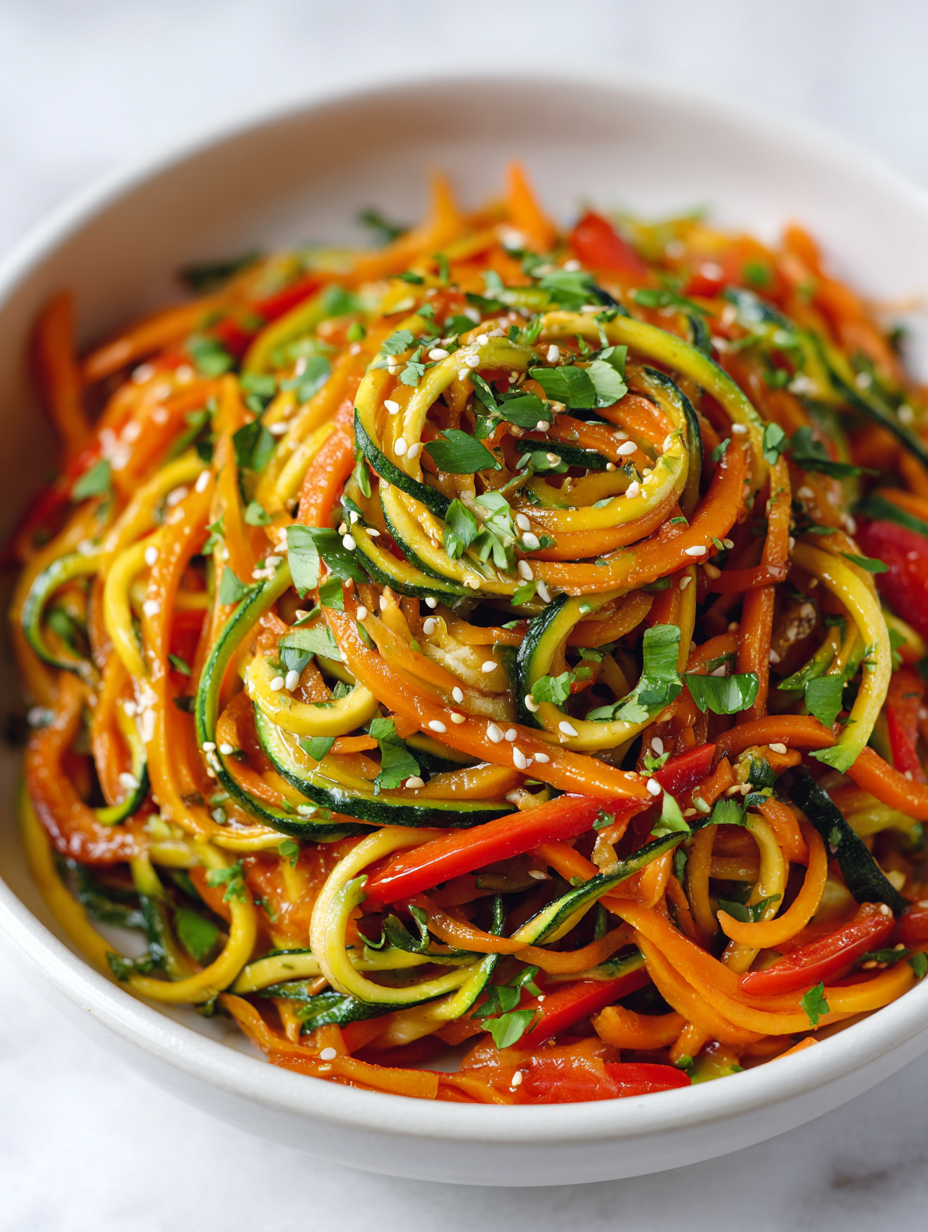
Vegan Vegetable Noodles
Ingredients
Equipment
Method
- Start by peeling the zucchini, carrots, and bell pepper into long, thin strips using a vegetable peeler—aim for strips that are about 8-10 inches long. Keep the strips consistent for even cooking and a beautiful presentation.
- Heat your large frying pan over medium heat until it’s hot and shimmering slightly. Add a teaspoon of sesame oil, swirling to coat the bottom of the pan and release a toasted aroma.
- Add the vegetable noodles to the pan in an even layer. Cook for about 2-3 minutes, stirring gently with a silicone spatula, until the zucchini turns translucent, the carrots stay crisp but tender, and the peppers remain vibrant and slightly softened.
- Pour in the soy sauce or tamari, stirring quickly to evenly distribute the salty, umami flavor. Cook for another minute, allowing the aroma to deepen and the noodles to absorb the sauce.
- Remove the pan from heat and squeeze fresh lemon or lime juice over the noodles for a bright, tangy kick. Toss gently to combine all the flavors evenly.
- Transfer the veggie noodles to a serving dish, garnish generously with chopped fresh herbs, and serve immediately while warm. Enjoy the vibrant colors and crisp-tender texture of this fun, nourishing dish.
Pro tips for perfect veggie noodles
- Bolded Mini-Head: Use a sharp peeler → A sharp peeler creates thin, even noodles that cook quickly and look beautiful.
- Bolded Mini-Head: Keep veggies dry → Pat vegetables dry before cooking to prevent splatters and ensure crisp-tender results.
- Bolded Mini-Head: Don’t overcrowd the pan → Cook in batches if needed; overcrowding causes steaming, not sautéing, which softens texture.
- Bolded Mini-Head: Add oil at the right time → Heat the pan first, then add sesame oil to boost nuttiness without burning.
- Bolded Mini-Head: Taste as you go → Adjust soy sauce and lemon at the end for a balanced, bright flavor that’s just right.
- Bolded Mini-Head: Rest briefly after cooking → Let noodles sit for a minute after removing from heat to enhance flavor absorption.
- Bolded Mini-Head: Use fresh herbs last → Add chopped herbs after cooking to preserve their vibrant aroma and flavor.
Common mistakes and how to fix them
- FORGOT to test noodle tenderness—overcooked noodles turn mushy quickly.
- DUMPED all sauce at once—add gradually to control flavor and avoid overpowering.
- OVER-TORCHED veggies—stir constantly to prevent burning and ensure even cooking.
- MISSED resting time—let noodles sit a minute after cooking to settle flavors and texture.
Quick kitchen fixes
- When noodles stick, splash a little water and stir quickly to loosen them.
- If sauce is too thin, simmer a minute longer or add a tiny cornstarch slurry.
- Splash some rice vinegar if vegetables lose brightness after sitting.
- Patch overcooked veggies with a squeeze of lemon for freshness.
- Shield from burning by reducing heat and stirring constantly when sautéing.
Prep, store, and reheat tips
- Peel and spiralize the vegetables ahead of time; store in airtight containers in the fridge for up to 24 hours. The veggies stay crisp and fresh, just give them a quick toss before cooking.
- The cooked noodles can be refrigerated for 1-2 days in a sealed container. Reheat gently in a pan over low heat, adding a splash of water to revive their crunch and aroma.
- Prepare the dressing and herb garnishes in advance. Keep them separately in the fridge for up to 2 days; the bright flavors will mellow slightly but still taste fresh.
- To reheat, warm the noodles in a pan over medium-low until just heated through—avoid overcooking to prevent sogginess. Expect the aroma of toasted sesame and citrus to be most vibrant when fresh, but it still holds well for a day.
- Vegetables can be blanched and stored for up to 2 days if you prefer slightly softer noodles. Once reheated, they will lose some of their raw snap but will still be flavorful and colorful.
Top questions about vegan vegetable noodles
1. How do I turn vegetables into noodles without a spiralizer?
Use a vegetable peeler to create long, thin strips of zucchini, carrots, and peppers. Spiralizing tools work great too, but a good peeler is enough if you’re careful.
2. How long should I cook the veggie noodles?
Cook the noodles just until they turn translucent and tender, about 2-3 minutes on medium heat. Overcooking makes them mushy.
3. Can I make this ahead and reheat later?
The dish is best served immediately while warm, but you can store leftovers in the fridge for up to 2 days. Reheat gently in a pan to maintain crunch.
4. Can I substitute ingredients in the recipe?
Yes, you can swap zucchini with yellow squash or cucumber for different textures and flavors. Carrots and bell peppers work well as is.
5. How do I brighten the flavor of the dish?
Add a splash of rice vinegar or lemon juice at the end for brightness. If you prefer a richer flavor, a small drop of toasted sesame oil works too.
6. Which herbs are best for this recipe?
Use fresh herbs like cilantro or Thai basil right before serving. They add a fragrant, spicy note that lifts the dish’s freshness.
7. What if my noodles stick or the sauce is too salty?
If noodles stick together, splash a little water and toss quickly. To fix over-salted sauce, add a squeeze of lemon or a pinch of sugar.
8. What tools are essential for this recipe?
Use a sharp vegetable peeler for thin, even noodles. Keep your pan hot enough (around 160°C/320°F) for quick, flavorful sautéing.
9. How far in advance can I prepare parts of this dish?
Vegetables can be peeled and stored in the fridge for up to a day before cooking. Cooked noodles are best eaten within 2 days.
10. How do I fix common cooking mistakes?
When vegetables start to brown or smell burnt, reduce heat and add a splash of water or oil. Keep stirring to prevent sticking and burning.
This dish is a reminder that simple vegetables can turn into something lively and satisfying, especially when you give them a little attention and care. It’s a meal that feels fresh, bright, and just a bit playful, perfect for busy nights or when you want to make something nourishing without fuss.
Cooking these noodles can be a small act of mindfulness—paying attention to textures, aromas, and flavors as they come together. It’s a humble dish, but one that keeps me coming back because it’s honest and deeply satisfying, right in the moment I need it most.

Hi, I’m Clara Sage – and welcome to my kitchen of small revelations.
I created The Language of Aha not just as a recipe blog—but as a space to celebrate the little lightbulb moments that happen in the kitchen.