
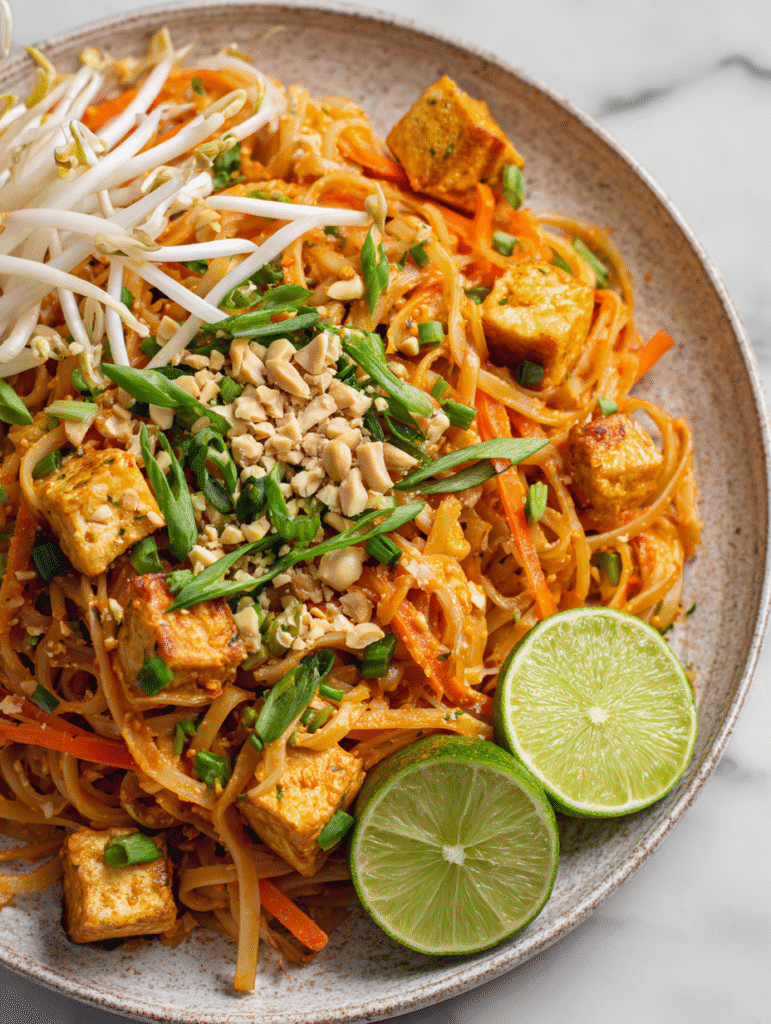
Crafting a vegan Pad Thai that hits all the right notes is about more than just substituting ingredients. It’s about balancing bold, punchy flavors with textures that make each bite interesting—crunchy, chewy, silky all at once. I’ve learned that a little patience with the sauce and a quick, high-heat stir can turn humble ingredients into something truly satisfying.
This dish is my go-to when I want something comforting but still fresh and lively. It’s quick enough to whip up after a busy day, but it packs a flavor punch that feels indulgent, even without animal products. The trick is in the layering—building flavor in the sauce, then tossing everything together just right.
Focusing on the art of balancing bold flavors and textures to create a satisfying vegan Pad Thai that feels indulgent yet wholesome.
The story behind this recipe
- I first stumbled upon a street vendor’s stall in Bangkok, where the smell of roasted peanuts and lime hit me before I even saw the dish. That moment, standing there with a paper plate in hand, made me realize how much flavor can come from simple, unassuming ingredients cooked just right.
- Years later, I’ve been tweaking that memory into a vegan version that balances the smoky, tangy, and sweet notes I love. The trick was always about respecting the essence of the dish—keeping it bright and lively, even with plant-based ingredients.
- This recipe is a nod to those vibrant street stalls, but adapted for home, where you can control the flavors and make it just a little more forgiving if you’re still learning the rhythm of stir-frying.
Ingredient breakdown: key components
- Tamarind paste: I love the tangy, slightly sweet depth it adds; if you can’t find it, a squeeze of lemon with a touch of brown sugar works well.
- Tofu: Firm, pressed tofu absorbs flavors beautifully; for a crispier bite, toss it in cornstarch before frying, and listen for that satisfying crackle.
- Rice noodles: I prefer flat rice noodles—they soak up sauce better and have that chewy, satisfying bite; soak until just tender to avoid mush.
- Peanuts: Roasted peanuts bring a smoky, oily richness; chop them just before serving to keep their crunch and aroma sharp.
- Vegetables: I like a mix of bean sprouts and shredded carrots—they add freshness and crunch, but feel free to toss in thinly sliced bell peppers or zucchini for color.
- Pad Thai sauce: The magic is in balancing sweet, sour, salty, and smoky—taste as you go, and don’t be shy with lime juice for that zing.
- Green onions: Fresh and crisp, they add a mild onion hit that brightens the dish—slice thinly right before serving for the best crunch.
Spotlight on key ingredients
Tamarind paste:
- I love the tangy, slightly sweet depth it adds; if you can’t find it, a squeeze of lemon with a touch of brown sugar works well.
- Tofu: Firm, pressed tofu absorbs flavors beautifully; for a crispier bite, toss it in cornstarch before frying, and listen for that satisfying crackle.
- Rice noodles: I prefer flat rice noodles—they soak up sauce better and have that chewy, satisfying bite; soak until just tender to avoid mush.
Peanuts:
- Roasted peanuts bring a smoky, oily richness; chop them just before serving to keep their crunch and aroma sharp.
- Vegetables: I like a mix of bean sprouts and shredded carrots—they add freshness and crunch, but feel free to toss in thinly sliced bell peppers or zucchini for color.
Notes for ingredient swaps
- Vegan Fish Sauce: Soy sauce with a splash of seaweed or mushroom extract mimics that umami hit—skip it for a more neutral base.
- Rice Noodles: If you can’t find flat rice noodles, try soba or even thin zucchini strips—just adjust cooking time to avoid mush.
- Tofu: Silken tofu is tempting, but firm or extra-firm holds up better and absorbs flavors better—press out excess moisture first.
- Peanuts: Raw or roasted, both work, but roasted peanuts really boost that smoky, oily richness—chop just before serving for crunch.
- Sweetener: Maple syrup works perfectly, but agave or coconut sugar can sub in—each brings a slightly different sweetness and depth.
- Lime Juice: Fresh squeezed is best; bottled lime juice can be a bit dull, but works in a pinch if you want that bright acidity.
- Vegetables: Feel free to swap in thinly sliced bell peppers or zucchini for more color and crunch—just keep them thin for quick stir-fry.
Equipment & Tools
- Wok or large skillet: High heat cooking, tossing ingredients.
- Tongs: Tossing and turning noodles and veggies.
- Small bowl: Mixing the sauce ingredients.
- Spatula: Scraping and stirring during stir-fry.
- Colander: Draining noodles.
Step-by-step guide to vegan Pad Thai
- Equipment & Tools: Gather a wok or large skillet, tongs, a small bowl for sauce, a spatula, and a colander. Wok heats evenly, tongs for tossing, bowl for mixing sauce.
- Cook noodles: Boil water, add rice noodles, cook for 4-6 minutes until just tender (they’ll cook more in stir-fry). Drain and set aside.
- Prepare tofu: Cut firm tofu into small cubes. Heat wok over high heat (around 200°C/392°F). Add a splash of oil, fry tofu until golden and crispy (about 5 minutes). Remove and set aside.
- Stir-fry aromatics: In the same wok, add a little more oil. Toss in minced garlic and chopped green onions. Sauté until fragrant, about 30 seconds. You should smell roasted garlic and fresh onion.
- Cook vegetables: Add shredded carrots and bean sprouts. Stir-fry for 1-2 minutes until just tender but still crisp. Look for vibrant color and a slight crackle.
- Make sauce: In a small bowl, whisk tamarind paste, soy sauce, maple syrup, lime juice, and a pinch of chili flakes. Taste and adjust to balance sweet, sour, salty, smoky. It should smell bright and tangy.
- Combine ingredients: Turn heat to high. Add noodles, tofu, and sauce to the wok. Toss vigorously for 2-3 minutes, until everything is coated and heated through. The noodles should be shiny and slightly sticky.
- Final touches: Toss in chopped peanuts and sliced green onions. Give one last toss. Check for even coverage and aroma of roasted peanuts.
- Rest & plate: Serve immediately. Garnish with extra peanuts and lime wedges. Rest for 1 minute to let flavors settle before serving.
Serve immediately with garnishes. Rest for 1 minute to let flavors meld. Plate with a sprinkle of peanuts and a squeeze of lime for bright contrast.
How to Know It’s Done
- Noodles: Slightly firm but cooked through, not mushy.
- Tofu: Golden brown with a crispy exterior.
- Sauce: Balanced flavor, tangy and slightly thick, coats noodles evenly.
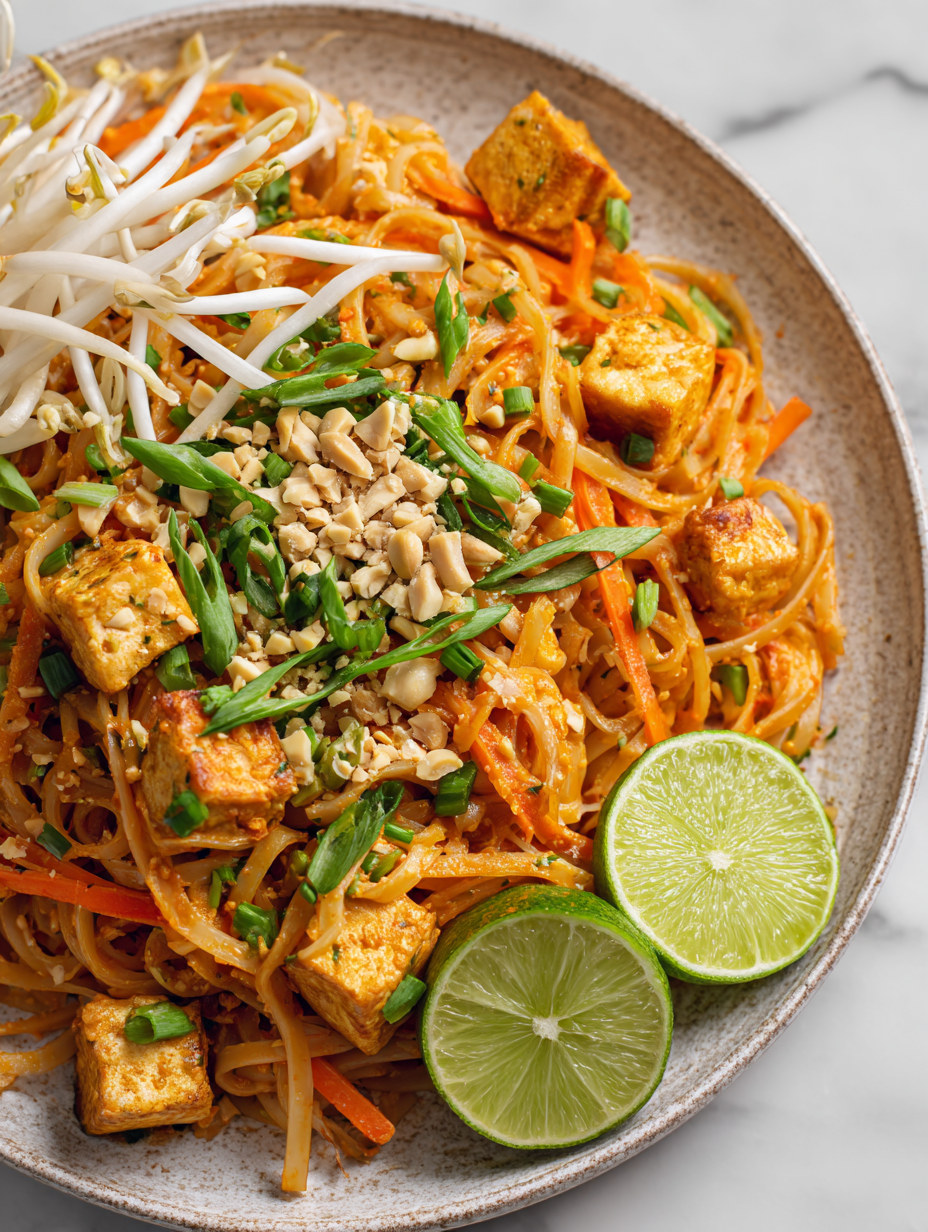
Vegan Pad Thai
Ingredients
Equipment
Method
- Drain the soaked rice noodles using a colander and set aside. Cut the tofu into small cubes and press out excess moisture. Mince the garlic and slice the green onions thinly. Chop the roasted peanuts just before serving to keep them crunchy.
- Heat a tablespoon of oil in a wok or large skillet over high heat until shimmering. Add the tofu cubes and fry, stirring occasionally, until golden and crispy around the edges, about 5 minutes. Remove and set aside.
- In the same wok, add another tablespoon of oil. Toss in the minced garlic and cook until fragrant, about 30 seconds, with a nutty aroma filling the air. Add the shredded carrots and bean sprouts, stir-frying for 1-2 minutes until just tender but still crisp.
- Meanwhile, whisk together tamarind paste, soy sauce, maple syrup, and the juice of half the lime in a small bowl to create the sauce. Taste and adjust, adding more lime or soy as needed for a balanced, tangy flavor.
- Push the vegetables to one side of the wok and add the drained noodles, along with the crispy tofu. Pour the sauce over everything and toss vigorously using tongs or a spatula, ensuring the noodles are well coated and heated through, about 2-3 minutes. The noodles should be shiny and slightly sticky.
- Remove the wok from heat. Add the sliced green onions and chopped peanuts, tossing gently to distribute evenly. Squeeze the remaining lime juice over the dish for bright acidity.
- Serve immediately, garnished with extra chopped peanuts and lime wedges on the side. Enjoy the vibrant textures and bold flavors of your homemade vegan Pad Thai!
Tips & Tricks for Perfect Pad Thai
- heat: Use high heat (around 200°C/392°F) to quickly sear tofu and veggies, preserving crunch and color.
- Quick toss: Keep ingredients moving with tongs or spatula to prevent sticking and achieve even cooking.
- Taste often: Adjust sauce seasoning as you go—balance sweet, sour, salty, smoky for vibrant flavor.
- Layer flavors: Add garlic and green onions at the right moment—just until fragrant—to avoid bitterness.
- Noodle al dente: Soak rice noodles until just tender—overcooking makes them mushy, undercooking leaves them tough.
- Chop peanuts last: Add roasted peanuts right before serving to preserve their crunch and aroma.
- Rest briefly: Let finished dish sit for a minute before serving—flavors meld and sauce thickens slightly.
Common mistakes and how to fix them
- FORGOT to measure oil → Use enough to prevent sticking and add flavor.
- DUMPED sauce too early → Wait until noodles are just coated and hot for best flavor.
- OVER-TORCHED tofu → Keep heat high, stir constantly, and remove once crispy to avoid bitterness.
- MISSED salt balance → Taste sauce before adding and adjust salt or acid accordingly.
Quick Fixes and Pantry Swaps
- When sauce is too thick, splash in warm water and stir gently to loosen.
- If noodles stick together, rinse with hot water and toss with a little oil.
- Splash soy sauce on tofu if it’s bland—quick boost of umami and color.
- Patch a dry stir-fry by adding a dash of soy or lime juice to brighten flavors.
- Shield delicate vegetables with a quick stir—don’t overcook, keep vibrant and crisp.
Prep, store, and reheat tips
- Prep the sauce and chop vegetables a day ahead; store in airtight containers in the fridge for up to 2 days. The flavors deepen overnight, making for a more punchy dish.
- Cook and drain rice noodles ahead of time—keep them in a sealed container in the fridge for up to 24 hours. They may absorb moisture, so toss with a splash of water before reheating.
- Fry tofu until crispy and store separately in an airtight container for up to 2 days; reheat in a hot skillet to regain crunch, smell of roasted soy and sesame.
- Assemble toppings like chopped peanuts and sliced green onions in advance; keep separate to maintain crunch and freshness until serving.
- Reheat leftovers on the stove over medium heat, stirring gently. The noodles may thicken slightly—add a splash of hot water or broth to loosen them up. Expect the aroma of toasted peanuts and lime to reignite.
Top questions about vegan Pad Thai
1. Can I substitute tamarind paste?
Look for tamarind paste in Asian markets or online. If unavailable, lemon juice mixed with a bit of brown sugar mimics the tang.
2. What tofu works best for this dish?
Use firm or extra-firm tofu that’s been pressed well. For extra crunch, toss it in cornstarch before frying.
3. How do I cook rice noodles perfectly?
Soak rice noodles in hot water for about 10 minutes until just tender. Avoid overcooking to prevent mushiness.
4. When should I add the peanuts?
Add chopped roasted peanuts just before serving to keep their crunch and aroma sharp.
5. What’s the best heat level for stir-frying?
Use high heat (around 200°C/392°F) when stir-frying to sear ingredients quickly and preserve texture.
6. How do I get the sauce right?
Taste the sauce as you go, balancing sweet, sour, salty, and smoky flavors. Lime juice adds brightness.
7. Can I prepare parts of this dish in advance?
You can prep the sauce and chop vegetables a day ahead. Keep in the fridge for fresh, punchy flavors.
8. How should I reheat Pad Thai?
Reheat leftovers in a hot skillet, adding a splash of water if noodles seem dry or thickened.
9. My noodles are clumped—what now?
If noodles stick together, rinse with hot water and toss with a little oil before stir-frying again.
10. How do I make tofu crispier?
If the tofu is not crispy enough, increase heat and fry longer, flipping occasionally for even browning.
This vegan Pad Thai is more than just a quick dinner—it’s a reminder of how simple ingredients can come alive with the right touch of heat and balance. Every time I make it, I’m struck by how satisfying it is to recreate those street-food flavors at home, especially when topped with a handful of peanuts and a squeeze of lime.
In a way, this dish captures the chaos and joy of cooking—measuring, tasting, adjusting until it’s just right. It’s imperfect but honest, a little messy, and totally worth every stir and splash. Sometimes, that’s all I need to feel grounded after a long day.

Hi, I’m Clara Sage – and welcome to my kitchen of small revelations.
I created The Language of Aha not just as a recipe blog—but as a space to celebrate the little lightbulb moments that happen in the kitchen.