
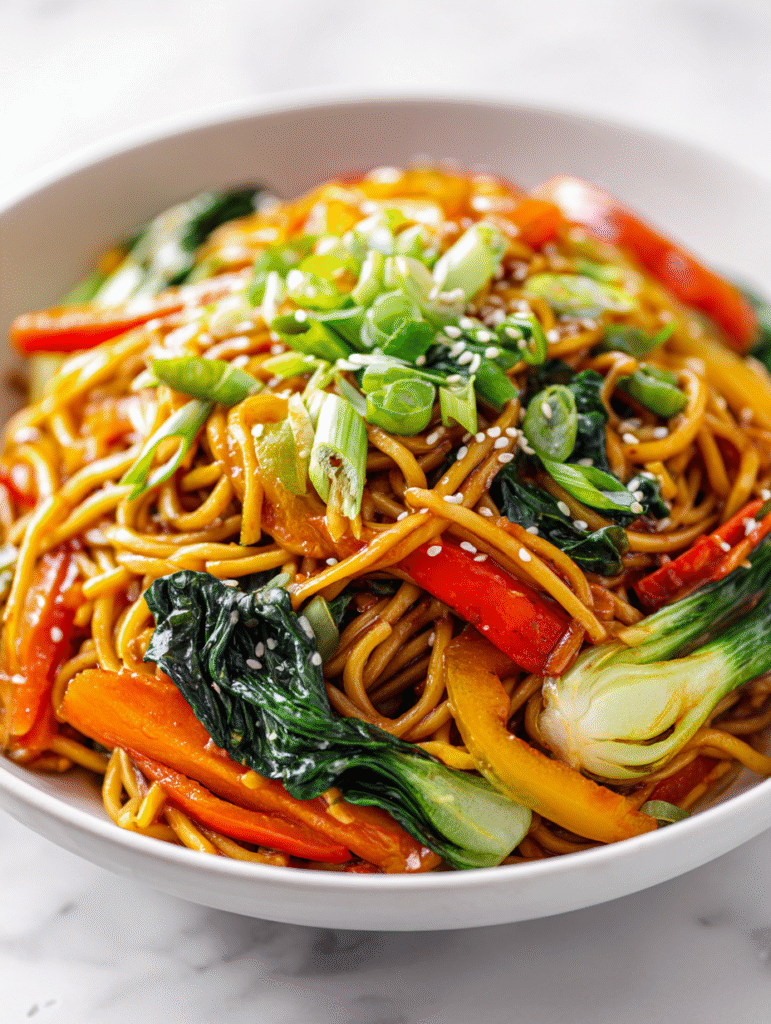
Vegan chow mein often gets a bad rap for being just another quick stir-fry, but I’ve found a way to make it sing with smoky depth and a punch of umami. This isn’t your run-of-the-mill takeout clone—it’s a layered dish that celebrates the art of balancing flavors and textures. I like adding a touch of char here and there, letting the vegetables caramelize just enough to bring out their natural sweetness.
What really makes this recipe stand out is how I focus on the interplay between crispy, fresh vegetables and noodles that have soaked up every smoky, savory note. I’ve always loved how the ingredients come together in that moment when the wok crackles and the aroma of toasted sesame and soy fills the kitchen. It’s a messy, satisfying process, but one worth every minute of attention, especially when you can tweak it to suit your taste.
Focusing on the art of balancing bold, smoky flavors with crisp, fresh vegetables, this recipe emphasizes a less typical, more layered approach to vegan chow mein that celebrates the complexity of umami and the satisfying crunch of perfectly stir-fried noodles.
The story behind this recipe
- This recipe was born out of a lazy Sunday craving for something smoky and satisfying, but still fresh and vibrant. I had a bag of noodles and a handful of vegetables that needed using up, and I wanted to avoid the usual soy-and-veg routine. The idea of adding a touch of char and layering smoky depth came from late-night wok sessions in tiny kitchens, where every ingredient gets a little extra love.
- I remember the first time I tossed in a splash of smoked paprika and let the noodles sear until slightly blistered—everything changed. That moment when the edges get crispy and the aroma shifts into something deeply savory, that’s what keeps me coming back to this dish. It’s imperfect, a little chaotic, but honestly the kind of meal that makes you smile as you cook it.
- heading
- story_type
Key ingredients and tips
- Wheat noodles: I prefer using fresh, slightly chewy noodles that soak up the sauce and give a satisfying bite. Skip the soggy ones; they won’t hold up to stir-frying.
- Soy sauce: I lean towards a good-quality, naturally brewed soy for that rich umami hit. If you want less salt, dilute it slightly or try coconut aminos for a sweeter, milder flavor.
- Sesame oil: Just a teaspoon adds a nutty, toasted aroma that ties everything together. Don’t overdo it—its flavor is potent and can overpower if used excessively.
- Vegetables: Bright bell peppers, crisp bok choy, and tender snap peas are my go-tos. For a smoky twist, char them a bit longer, till they blister and their natural sugars caramelize.
- Tofu or tempeh: I like firm tofu, pressed and pan-fried until golden and crispy. It adds a hearty texture—skip it if you prefer a lighter, vegetable-only version.
- Garlic & ginger: Freshly minced, these aromatics bring that punch of flavor. Sauté until fragrant but not burnt, or they’ll turn bitter and muddy the dish.
- Oyster mushrooms (optional): They add a meaty, umami depth and a tender bite. If unavailable, shiitake mushrooms work beautifully, just slice thin and cook until fragrant.
Spotlight on key ingredients
Wheat noodles:
- I prefer using fresh, slightly chewy noodles that soak up the sauce and give a satisfying bite. Skip the soggy ones; they won’t hold up to stir-frying.
- Soy sauce: I lean towards a good-quality, naturally brewed soy for that rich umami hit. If you want less salt, dilute it slightly or try coconut aminos for a sweeter, milder flavor.
- Sesame oil: Just a teaspoon adds a nutty, toasted aroma that ties everything together. Don’t overdo it—its flavor is potent and can overpower if used excessively.
Vegetables:
- Bright bell peppers, crisp bok choy, and tender snap peas are my go-tos. For a smoky twist, char them a bit longer, till they blister and their natural sugars caramelize.
- Garlic & ginger: Freshly minced, these aromatics bring that punch of flavor. Sauté until fragrant but not burnt, or they’ll turn bitter and muddy the dish.
Ingredient Swap Tips
- Gluten-Free Noodles: Use rice or soba noodles for a gluten-free version that still absorbs sauces well.
- Soy Sauce: Swap with coconut aminos if you want a milder, sweeter umami without the salt punch.
- Sesame Oil: Substitute with toasted walnut oil for a different nutty aroma, but reduce the quantity since it’s less intense.
- Vegetables: Carrots or zucchini can replace or add to the mix—just slice thin so they cook quickly and evenly.
- Tofu: Try tempeh for a denser bite or chickpeas for added protein and a different texture contrast.
- Garlic & Ginger: Use garlic powder and ground ginger in a pinch—less vibrant but still flavorful.
- Oyster Mushrooms: Shiitake or portobello mushrooms work well, offering umami and meaty texture, just slice thin.
Equipment & Tools
- Wok or large skillet: For high-heat stir-frying vegetables and noodles.
- Spatula: To toss and stir ingredients quickly.
- Small bowl: To mix and hold the sauce ingredients.
- Pot: To boil and drain noodles.
Step-by-step guide to vegan chow mein
- Equipment & Tools: Gather a wok or large skillet, a spatula, a small bowl for sauce, and a pot for boiling noodles.
- Boil noodles: Cook the noodles in boiling water for 2-3 minutes less than package instructions. Drain, rinse with cold water, and set aside.
- Prep vegetables: Slice bell peppers, chop bok choy, trim snap peas, and mince garlic and ginger. Keep ingredients ready for quick stir-fry.
- Heat the wok: Place over high heat until shimmering—around 200°C/392°F. Add a teaspoon of oil and swirl to coat.
- Stir-fry vegetables: Add harder vegetables first (bell peppers, snap peas). Cook for 2 minutes, then add bok choy. Cook until slightly blistered and fragrant, about 2 more minutes.
- Create sauce: Mix soy sauce, a dash of sesame oil, a teaspoon of smoked paprika, and a teaspoon of maple syrup in the small bowl.
- Cook noodles: Push vegetables to the side, add a bit more oil, and toss in noodles. Stir-fry for 2-3 minutes, allowing edges to blister and develop slight char.
- Combine: Pour sauce over noodles and vegetables. Toss quickly to coat everything evenly. Cook for another 1-2 minutes until heated through and fragrant.
- Final touch: Add a splash of water if noodles stick, and stir to loosen. Adjust seasoning with soy or sesame oil if needed.
- Rest & serve: Transfer to a plate, let sit for 2 minutes to settle flavors. Serve hot with a sprinkle of sesame seeds or chopped scallions if desired.
Serve immediately after tossing. Rest for 2 minutes to let flavors meld. Garnish with sesame seeds or scallions for extra aroma and texture.
How to Know It’s Done
- Noodles: Edges are slightly blistered and golden.
- Vegetables: Crisp-tender with some charred bits for smoky flavor.
- Sauce: Rich, coats noodles evenly, aroma is fragrant and savory.
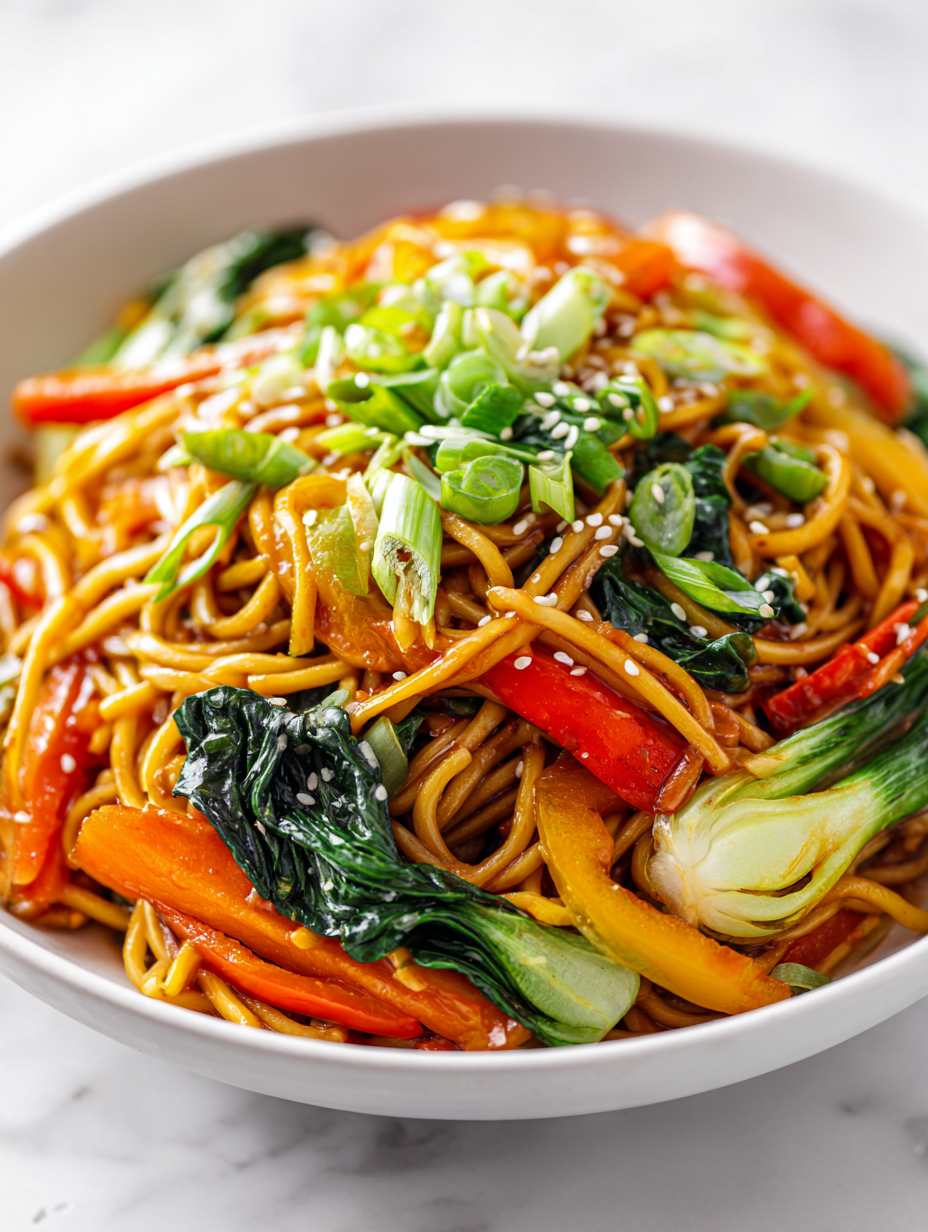
Smoky Vegan Chow Mein
Ingredients
Equipment
Method
- Bring a pot of water to a boil, then cook the noodles for 2-3 minutes less than package instructions. Drain and rinse with cold water to stop the cooking process. Toss with a little oil to prevent sticking and set aside.
- Slice the red bell pepper thin, chop the bok choy, trim the snap peas, and mince the garlic and ginger so everything is ready for quick stir-frying.
- Heat your wok or skillet over high heat until shimmering, then add a teaspoon of oil. Once hot, add the cubed tofu and cook, stirring frequently, until golden and crispy, about 5 minutes. Remove and set aside.8 oz wheat chow mein noodles
- Add the sliced bell peppers and snap peas to the hot wok. Stir-fry for about 2 minutes until they start blistering and caramelizing, releasing a sweet aroma.8 oz wheat chow mein noodles
- Next, add the chopped bok choy along with the minced garlic and ginger. Continue stir-frying for another 2 minutes until the greens are wilted and fragrant, with some charred spots for smoky flavor.8 oz wheat chow mein noodles
- Mix the soy sauce, smoked paprika, and a teaspoon of sesame oil in a small bowl to create the sauce. Pour this over the vegetables and tofu in the wok, tossing to coat everything evenly.8 oz wheat chow mein noodles
- Add the cooked noodles to the wok, tossing briskly to combine with the vegetables and sauce. Let the noodles blister and develop slight char at the edges, about 2-3 minutes.8 oz wheat chow mein noodles
- Continue tossing and stir-frying for another minute, allowing the flavors to meld and the noodles to soak up the smoky, savory sauce. Adjust seasoning if needed.
- Transfer the finished chow mein to a serving platter. Garnish with optional chopped scallions or sesame seeds if desired. Serve hot, enjoying the crispy noodles and charred vegetables.
Notes
Pro tips for perfect vegan chow mein
- Bolded: Use high heat to quickly sear vegetables, locking in flavor and creating a smoky char.
- Bolded: Toss noodles continuously during stir-fry to prevent sticking and ensure even coating with sauce.
- Bolded: Add sesame oil at the end of cooking for a nutty aroma without losing its delicate flavor.
- Bolded: Use a wide, flat wok or skillet for maximum surface contact and faster cooking.
- Bolded: Incorporate a splash of water or broth during stir-fry to create steam and tenderize vegetables without overcooking.
- Bolded: Always taste and adjust soy or seasoning at the end—flavors intensify as the dish cools slightly.
- Bolded: For extra crispness, let vegetables sit in the hot pan until edges lightly blister before removing.
Common mistakes and how to fix them
- FORGOT to preheat wok → Always heat until shimmering before adding ingredients.
- DUMPED too much oil → Use just enough to coat the pan; excess causes sogginess.
- OVER-TORCHED vegetables → Sear quickly over high heat, remove if edges burn or smell smoky.
- FAILED to stir frequently → Constant movement prevents sticking and uneven cooking.
Quick Fixes for Smooth Stir-Frying
- When noodles stick, splash a little water and toss to loosen.
- If vegetables burn or char too much, reduce heat and stir faster.
- DUMPED too much oil? Wipe excess with a paper towel before cooking further.
- Splash soy sauce on dry noodles to revive flavor if it lacks umami.
- PATCH over-salted sauce with a squeeze of lemon or a dash of sugar for balance.
Prep, store, and reheat tips
- Pre-chop vegetables: Slice peppers, bok choy, and snap peas ahead of time. Keep in airtight containers in the fridge for up to 2 days; they stay crisp and fresh.
- Cook noodles in advance: Boil, rinse, and toss with a little oil to prevent sticking. Store in a sealed container for up to 1 day; reheat with a splash of water to loosen.
- Make sauce ahead: Mix soy, sesame oil, smoked paprika, and syrup. Keep in a jar in the fridge for up to 3 days. The flavors meld and intensify overnight.
- Reheating tips: Warm in a hot skillet or wok, tossing with a splash of water or broth. Expect the veggies to crisp up again and noodles to regain some chew. Smell should be savory and inviting.
Top questions about vegan chow mein
1. What kind of noodles work best?
Look for noodles labeled ‘wheat’ or ‘chow mein’ for the best texture. Cook until al dente; they should be tender but still have a slight chew.
2. How hot should my pan be?
Use a hot wok or skillet, around 200°C/392°F, to get that quick sear and smoky flavor. Preheat well before adding ingredients.
3. When are vegetables done?
Stir-fry vegetables until they’re crisp-tender, about 4-5 minutes, until they develop some char and release a sweet, roasted aroma.
4. When do I add the soy sauce?
Soy sauce should be added at the end, just before serving, to keep the flavor fresh and to avoid burning the saltiness.
5. How do I get more smoky flavor?
For extra smoky flavor, toss the vegetables longer on high heat until they blister and caramelize, but avoid burning. Adjust heat as needed.
6. How to prevent noodles from sticking?
If noodles stick together after boiling, rinse with cold water and toss with a little oil. Store in an airtight container to keep from clumping.
7. Can I skip tofu?
Use firm tofu, pressed and pan-fried until golden and crispy. If you prefer a lighter dish, skip the tofu or swap with chickpeas for protein.
8. How to reheat leftovers?
Reheat in a hot skillet with a splash of water or broth to revive the crispy texture and bring back the aroma. Expect a quick crackle and steam.
9. Can I make it with less oil?
Reduce the amount of oil if you want a lighter dish. Use a non-stick pan to prevent sticking and allow for less oil use.
10. How do I fix bland chow mein?
Adjust seasoning by tasting and adding more soy sauce or a squeeze of lemon if it seems dull. The flavors should be bold and inviting.
This vegan chow mein is more than just a quick meal; it’s a celebration of smoky, layered flavors that come together in a busy kitchen. Making it reminds me how simple ingredients, treated with attention, can surprise your senses with every bite.
Whenever I cook this dish, I think about the chaos of stir-frying, the crackle of the wok, and that satisfying aroma of toasted sesame and soy. It’s a reminder that good food doesn’t need to be complicated—just honest, well-loved, and shared.

Hi, I’m Clara Sage – and welcome to my kitchen of small revelations.
I created The Language of Aha not just as a recipe blog—but as a space to celebrate the little lightbulb moments that happen in the kitchen.