
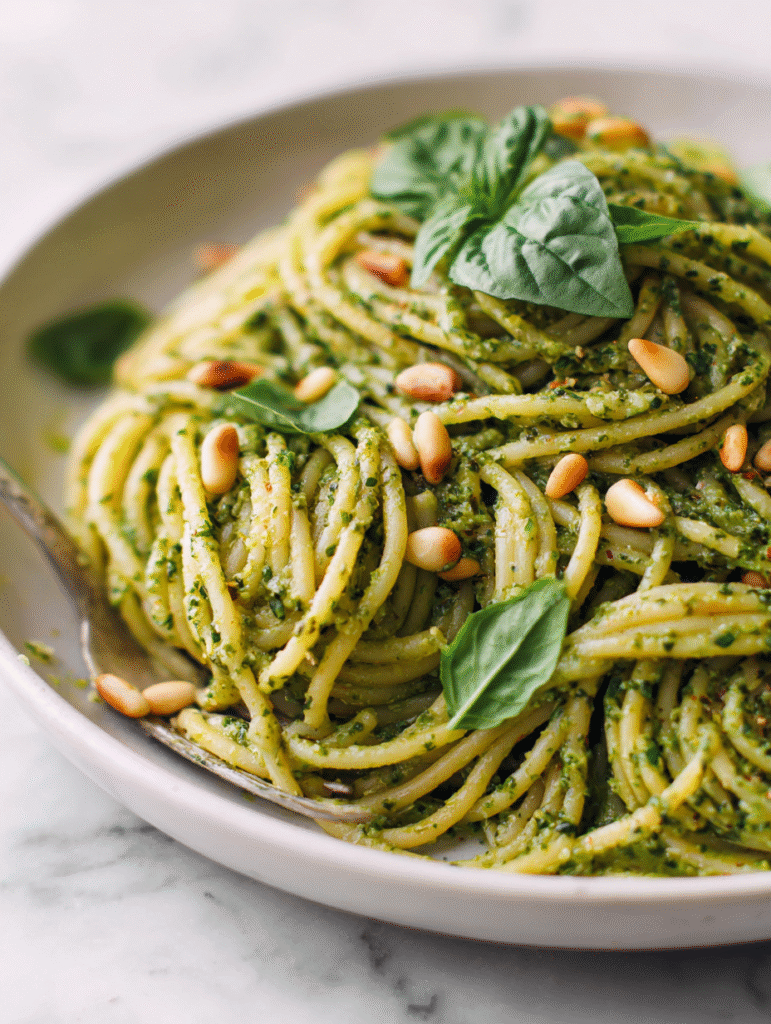
This vegan pesto pasta is like a blank slate, waiting to be filled with whatever fresh herbs and seasonal veggies you have on hand. It’s perfect for making the most of peak produce, whether that’s basil, parsley, or even a handful of tender arugula. Honestly, it’s the kind of dish that feels both spontaneous and comforting, a little bit like a garden in every bite.
What I love most is how adaptable it is. You can toss in roasted cherry tomatoes, sautéed zucchini, or a handful of fresh peas—whatever’s freshest and brightest. It’s a reminder that good food doesn’t need to be complicated; sometimes, the best meals are the simplest, especially when they celebrate what’s in season.
Focusing on how this vegan pesto pasta serves as a blank canvas for seasonal herbs and vegetables, making it adaptable and vibrant for whatever produce is at its peak.
The story behind this recipe
- This recipe was born out of a chaotic kitchen moment—trying to use up a bunch of wilted basil and a handful of toasted pine nuts before they went bad. I remember the scent of garlic and fresh herbs filling the air, feeling like a small victory in the middle of a busy weeknight. It’s funny how improvising like that can turn into something you keep coming back to.
- Once, I made this pesto on a rainy Sunday, craving something vibrant and fresh to lift the gloom. The aroma of toasted nuts mingling with bright basil and lemon was almost like a secret weapon against the gray sky. It’s become a go-to for me when I want something quick, honest, and deeply satisfying.
- heading
- story_type
Ingredient breakdown: key components
- Basil: I love how fresh basil smells—sweet, slightly spicy, with a hint of pepper. Use the brightest green leaves, and if some are a bit wilted, give them a quick blanch to revive their vibrancy.
- Olive oil: The key to that silky pesto texture. I prefer extra virgin for its fruity aroma, but if you want a lighter version, try a neutral oil like sunflower—just know it won’t have that rich, peppery punch.
- Pine nuts: Toasted lightly in the pan until golden—this brings out their nutty aroma and adds depth. If you’re allergic or out of pine nuts, walnuts or sunflower seeds work fine, just toast them a little longer.
- Lemon juice: Brightens everything up, making the herbs pop. Squeeze fresh lemon right before blending—avoid bottled juice, which can dull the flavor and add unnecessary acidity.
- Garlic: This is the flavor backbone—peel and mince finely, or blitz it raw with the herbs for a more pungent kick. If you’re sensitive, roast the garlic first for a mellow sweetness.
- Nutritional yeast: It adds a cheesy, umami note without dairy. Sprinkle in more if you want a richer flavor, or skip it for a purer herb profile—just taste as you go.
- Salt: I prefer flaky sea salt for a clean finish. Add gradually, tasting often, because salt can make or break that pesto vibrancy—don’t overdo it at first.
Spotlight on key ingredients
Basil:
- I love how fresh basil smells—sweet, slightly spicy, with a hint of pepper. Use the brightest green leaves, and if some are a bit wilted, give them a quick blanch to revive their vibrancy.
- Olive oil: The key to that silky pesto texture. I prefer extra virgin for its fruity aroma, but if you want a lighter version, try a neutral oil like sunflower—just know it won’t have that rich, peppery punch.
- Pine nuts: Toasted lightly in the pan until golden—this brings out their nutty aroma and adds depth. If you’re allergic or out of pine nuts, walnuts or sunflower seeds work fine, just toast them a little longer.
Lemon & Garlic:
- Lemon juice: Brightens everything up, making the herbs pop. Squeeze fresh lemon right before blending—avoid bottled juice, which can dull the flavor and add unnecessary acidity.
- Garlic: This is the flavor backbone—peel and mince finely, or blitz it raw with the herbs for a more pungent kick. If you’re sensitive, roast the garlic first for a mellow sweetness.
Notes for ingredient swaps
- Dairy-Free: Nut-based cheeses like cashew cheese can replace nutritional yeast for a cheesy flavor, but may alter the creaminess slightly.
- Herb Variations: Arugula or spinach can substitute basil for a milder, more peppery or neutral pesto flavor.
- Nuts & Seeds: Walnuts or sunflower seeds can swap pine nuts; toast them well to bring out their nutty aroma, similar to pine nuts.
- Oil Choices: Light olive oil or avocado oil can replace extra virgin olive oil; expect a slightly different fruitiness or richness.
- Citrus: Lemon juice can be swapped for lime or a splash of white vinegar for a different bright note; avoid using too much vinegar to prevent overpowering.
- Salt: Sea salt or Himalayan salt can be used, but adjust to taste as their mineral profiles differ and can influence overall flavor.
- Pasta: Gluten-free or legume-based pasta can work, but watch cooking times and texture—aim for al dente, not mush.
Equipment & Tools
- Large pot: Boils the pasta to al dente texture.
- Blender or food processor: Purees herbs, nuts, and other pesto ingredients into a smooth sauce.
- Skillet: To toast nuts for extra aroma and flavor.
- Measuring cups and spoons: Ensure accurate ingredient measurements.
- Large mixing bowl: Toss and serve the pasta with pesto.
Step-by-step guide to vegan pesto pasta
- Gather your equipment: a large pot for boiling pasta, a blender or food processor for pesto, and a skillet for toasting nuts.
- Cook pasta: Bring a large pot of salted water to boil at 100°C (212°F). Add your pasta and cook until just al dente, about 8-10 minutes. Drain and set aside, saving a cup of pasta water.
- Prepare the pesto: In your blender, combine fresh basil, garlic, toasted pine nuts, lemon juice, nutritional yeast, and a pinch of salt. Blend while drizzling in olive oil until smooth. Taste and adjust salt or lemon if needed.
- Adjust consistency: If pesto is too thick, add a splash of reserved pasta water, a little at a time, until it coats the pasta smoothly. It should be silky and vibrant green.
- Combine pasta and pesto: Toss the hot, drained pasta with the freshly made pesto in a large bowl. Mix well to coat evenly, adding more pasta water if necessary for creaminess.
- Finish and plate: Serve immediately, garnished with extra pine nuts or fresh herbs if desired. Drizzle with a touch of olive oil for extra shine and flavor.
- Optional: Add a handful of sautéed vegetables or a sprinkle of nutritional yeast on top for extra texture and flavor.
Serve immediately for best flavor and texture. Garnish with extra herbs or nuts if desired. If making ahead, store in an airtight container in the fridge, but consume within 2 days for freshness. Reheat gently, mixing in a splash of warm water or oil to restore creaminess.
How to Know It’s Done
- Pasta should be al dente, with a slight bite when bitten.
- Pesto should be bright green, fragrant with basil and garlic, with a silky texture.
- Pasta and pesto are well combined, with a glossy, even coating.
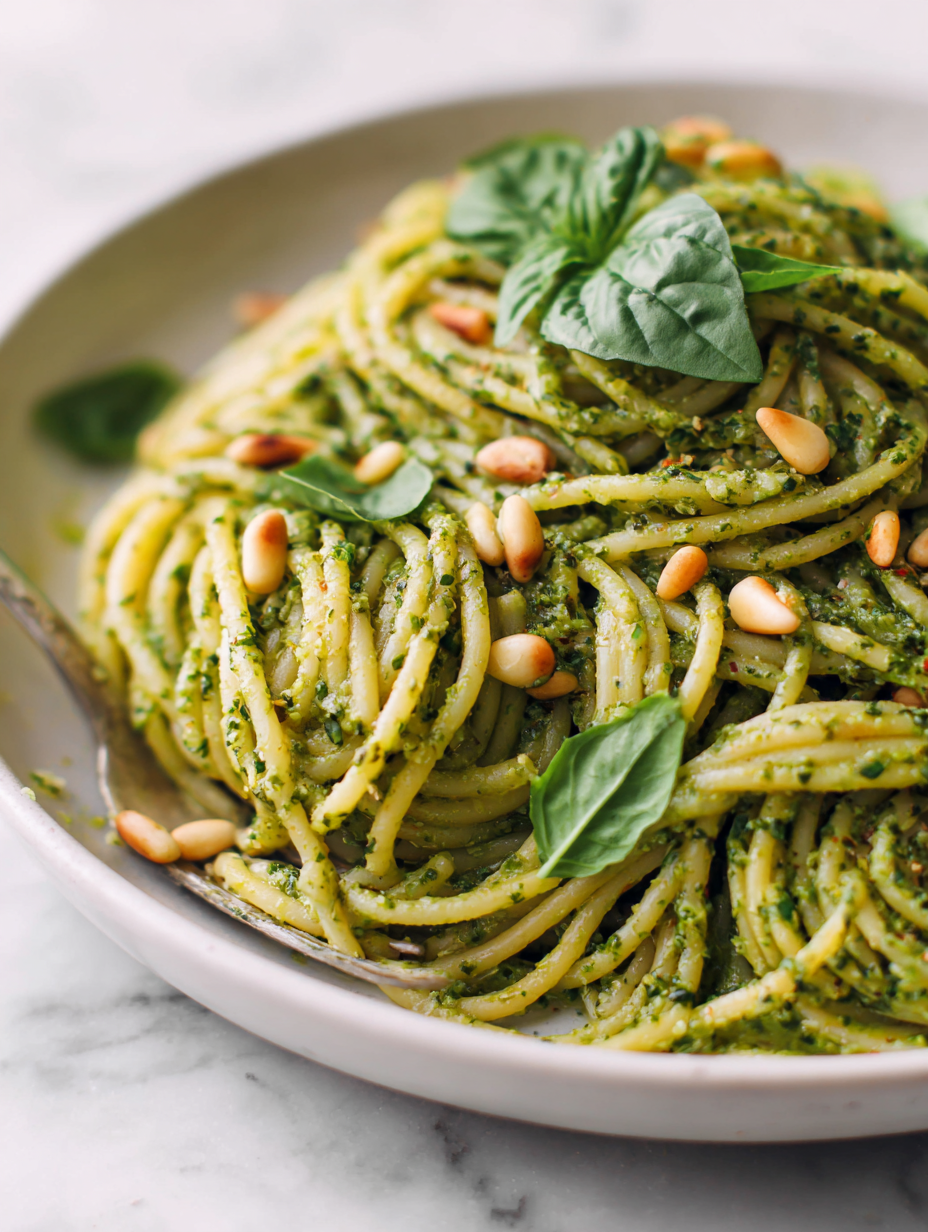
Vegan Pesto Pasta
Ingredients
Equipment
Method
- Bring a large pot of salted water to a rolling boil, then add your pasta and cook until just al dente, about 8-10 minutes. Drain and set aside, reserving a cup of pasta water.
- While the pasta cooks, toast the pine nuts in a dry skillet over medium heat until golden and fragrant, about 2-3 minutes. Shake the skillet occasionally to prevent burning.
- In your blender or food processor, combine the basil leaves, minced garlic, toasted pine nuts, lemon juice, nutritional yeast, and salt. Pulse a few times to start breaking down the herbs.
- While blending, slowly drizzle in the olive oil until the pesto becomes smooth and silky, scraping down the sides as needed. Taste and adjust salt or lemon if desired.
- If the pesto feels too thick to coat the pasta evenly, add a splash of the reserved pasta water, a little at a time, blending until you reach a creamy, coatable consistency.
- Transfer the drained pasta to a large mixing bowl. Pour the fresh pesto over the hot pasta and toss gently to coat each strand evenly. Add more pasta water if needed to loosen the sauce.
- Serve the pesto pasta immediately, garnished with extra nuts or fresh herbs if desired. Drizzle with a little olive oil for extra shine and flavor.
Notes
Tips and tricks for perfect pesto
- FLAVOR: Toast your nuts until just golden, releasing their nutty aroma without risking bitterness.
- BRIGHTEN UP: Add lemon juice gradually, tasting as you go, to keep the pesto vibrant and fresh.
- SMOOTH OPERATION: Blend ingredients in short bursts, stopping to scrape down sides for an even, silky pesto.
- SEASON WITH CARE: Taste the pesto before adding salt—pesto can become overly salty quickly, so go slow.
- Pasta WATER MAGIC: Use reserved hot pasta water to loosen the pesto, creating a glossy, cohesive sauce.
- FRESHNESS CHECK: Use the brightest green basil leaves and avoid wilted ones to keep pesto lively in color and flavor.
- MAKE IT YOURS: Adjust garlic and herbs to match your taste—more garlic for pungency, extra herbs for brightness.
Common mistakes and how to fix them
- FORGOT to taste and adjust salt—your pesto needs that bright, balanced punch.
- DUMPED in too much oil—start small and add more until silky and vibrant.
- OVER-TORCHED nuts—toast them gently, just until golden, to avoid bitterness.
- MISSED blending herbs thoroughly—ensure pesto is smooth, not grainy, for even flavor.
Quick fixes and pantry swaps
- When sauce separates, splash in cold water and whisk vigorously to restore emulsion.
- If pesto tastes flat, add a squeeze of lemon or a pinch more salt for brightness.
- Splash some hot pasta water if the pesto is too thick and clings unevenly.
- Patch over burnt nuts with fresh, lightly toasted ones to salvage flavor.
- Shield delicate herbs with gentle heat and add last for a fresher burst of flavor.
Prep, store, and reheat tips
- Prepare the pesto in advance: blend the herbs, nuts, and lemon, then store in an airtight container. It keeps fresh for up to 2 days in the fridge, developing a deeper flavor over time.
- Cook the pasta ahead: boil until al dente, drain, then toss with a little olive oil to prevent sticking. Refrigerate covered for up to 1 day—reheat in hot water or microwave, adding a splash of water to restore moisture.
- Store leftovers in an airtight container: pesto and pasta separately, for best texture. Consume within 2 days; the pesto may darken slightly but will retain flavor.
- Reheating tip: warm pasta gently in the microwave or on the stove with a splash of hot water or olive oil, until steaming and coated with pesto. The texture may soften, but the flavor stays bright and fresh.
Top questions about vegan pesto pasta
1. How do I keep the basil fresh and vibrant?
Use fresh basil leaves for the brightest flavor and aroma. Wilted herbs can be blanched quickly to revive their vibrancy.
2. My pesto is grainy, what can I do?
Blending the pesto until smooth is key, but if it’s grainy, scrape down the sides and blend longer.
3. Why is my pesto too thick or separate?
Adding pasta water gradually helps create a silky, cohesive sauce that coats the noodles well.
4. How do I toast nuts properly for pesto?
Toast nuts lightly until golden to bring out their nutty aroma without risking bitterness.
5. Can I use bottled lemon juice?
Use freshly squeezed lemon juice right before blending for maximum brightness and freshness.
6. How long can I keep pesto in the fridge?
Store pesto in an airtight container in the fridge for up to 2 days. It darkens slightly but remains flavorful.
7. How do I reheat leftover pasta without drying it out?
Reheat cooked pasta gently with a splash of water or olive oil to revive its texture and flavor.
8. My pesto is separating, what now?
If the pesto separates, splash in cold water and whisk vigorously to re-emulsify.
9. How can I tone down the garlic flavor?
For a milder flavor, roast garlic first or use less raw garlic if you find it too pungent.
10. Can I substitute olive oil in pesto?
Use a neutral oil like sunflower or light olive oil if you prefer a less intense flavor than extra virgin.
This dish is more than just a quick weeknight fix; it’s a reminder to lean into simplicity and fresh, seasonal ingredients. Every bite offers a burst of herbal brightness that lifts even the gloomiest days.
In the end, it’s about those small moments—stirring the pasta, tasting the pesto, adjusting the lemon—that make cooking feel honest and real. No matter how often I make it, it feels like a little celebration in every bowl.

Hi, I’m Clara Sage – and welcome to my kitchen of small revelations.
I created The Language of Aha not just as a recipe blog—but as a space to celebrate the little lightbulb moments that happen in the kitchen.