
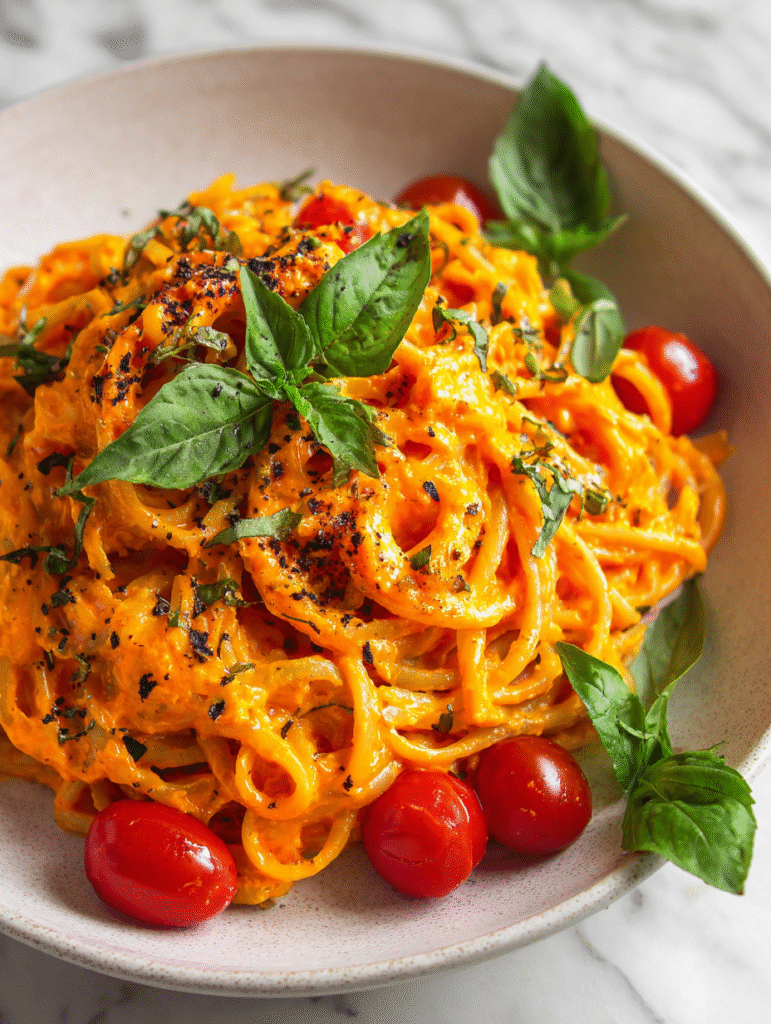
This vegan creamy tomato pasta isn’t about fancy ingredients or complicated techniques. It’s about taking those pantry staples—canned tomatoes, coconut milk, a splash of olive oil—and turning them into something that feels like a warm, familiar hug. It’s perfect for busy nights when you need comfort fast, but still want something nourishing and satisfying.
I discovered this recipe during a chaotic week when I was craving something hearty but didn’t want to spend hours in the kitchen. The richness of the sauce, combined with the tang of ripe tomatoes, hits just right with minimal fuss. It’s become my go-to for those evenings when I need comfort food that’s also kind to the clock—and to my wallet.
There’s something about the simplicity of this dish that makes it feel special, even in its rustic, unpolished glory. It’s a reminder that good food doesn’t have to be complicated or gourmet to warm your soul, especially when it’s made with love and a handful of pantry treasures.
Focusing on how this vegan creamy tomato pasta offers a comforting, nostalgic meal that’s quick to throw together after busy days, using pantry staples and a few fresh touches for a dish that feels like a warm hug amidst hectic schedules.
The story behind this recipe
- This recipe came about during a week when I was craving comfort but had zero energy for complex cooking. I wanted something creamy, tangy, and filling, but all I had were pantry staples and a handful of ripe tomatoes. It’s funny how a simple idea like blending canned tomatoes with coconut milk can turn into a go-to dish.
- One night, I threw everything together without much thought — just a pinch of this, a splash of that. The familiar smell of simmering tomatoes and garlic filled the kitchen, instantly making the space feel cozy and inviting. That moment of accidental perfection made me realize how much joy can come from keeping things simple.
- Now, whenever I need a quick, satisfying meal, this pasta is my first pick. It’s a reminder that you don’t need fancy ingredients to create something warming and nourishing—just a little improvisation and a lot of love.
Ingredient breakdown: key components
- Canned tomatoes: I love the bright, tangy flavor they bring, almost like sunshine in a jar. You can swap in fire-roasted for a smoky edge if you like a deeper flavor.
- Coconut milk: I use full-fat for creaminess, but light coconut milk keeps it lighter. If you want more coconut aroma, add a splash of coconut cream on top before serving.
- Garlic: Fresh garlic gives that pungent punch, especially when it crisps slightly at the edges. For milder flavor, toss in a little garlic powder later.
- Olive oil: It starts the sauce with a fruity richness. If you prefer a nuttier note, toasted sesame oil is a good substitute—just a drizzle to finish.
- Fresh basil: I love the aromatic, peppery freshness it adds. Dried basil works in a pinch but won’t be as vibrant—add it earlier to rehydrate.
- Pasta: I opt for a sturdy shape like penne or rigatoni that holds onto the sauce. Whole wheat or gluten-free options work well if you’re avoiding refined grains.
- Salt & pepper: Essential for balancing the acidity and brightening all the flavors. Taste as you go—sometimes a pinch of sugar helps tame the acidity.
Spotlight on key ingredients
Canned tomatoes:
- I love their bright, tangy burst, almost like sunshine in a jar. Swap in fire-roasted for a smoky depth if needed.
- Coconut milk: Full-fat makes the sauce luxuriously creamy, but light works if you want a lighter touch. Watch out for a thinner consistency—adjust with a splash of pasta water.
Fresh basil and garlic:
- Fresh basil: Its aromatic, peppery scent really shines in this dish, especially when added at the end. Dried basil can work, but it’s less vibrant—rehydrate early for better flavor.
- Garlic: Its pungent punch and fragrant aroma make all the difference. When it crisps slightly, it signals perfect flavor—avoid burning it to keep that sweet, nutty smell.
Notes for ingredient swaps
- Canned tomatoes: I prefer the bright acidity of ripe, crushed canned tomatoes, but fire-roasted variants add a smoky depth if that’s your thing.
- Coconut milk: Full-fat gives a rich, silky texture, while light coconut milk keeps it lighter—just watch for a thinner sauce. For extra creaminess, a spoonful of coconut cream works wonders.
- Garlic: Fresh cloves provide punch and aroma, but garlic powder can stand in if you’re in a pinch—just halve the amount and add earlier to develop flavor.
- Olive oil: Classic for sautéing, but toasted sesame oil offers a nutty twist—use sparingly to avoid overpowering the tomato base.
- Fresh basil: Bright, peppery, and fragrant. Dried basil can be used if you rehydrate it early enough, but it won’t have the same vibrant punch.
- Pasta: Sturdy shapes like penne or rigatoni hold sauce well. Swap for gluten-free options or spiralized zucchini for a lighter, veggie-packed version.
- Salt & pepper: Essential for balancing acidity. If your sauce tastes flat, a pinch of sugar can brighten it—taste and tweak accordingly.
Equipment & Tools
- Large pot: To boil and cook pasta efficiently.
- Skillet or saucepan: To cook and blend the tomato sauce.
- Wooden spoon: For stirring the sauce without scratching the pan.
- Blender or immersion blender: To achieve a smooth, creamy sauce texture.
- Measuring jug: To measure coconut milk and pasta water accurately.
Step-by-step guide to vegan creamy tomato pasta
- Gather all equipment: a large skillet or saucepan, a wooden spoon, a blender or immersion blender, and a measuring jug. Preheat your stove to medium (about 160°C/320°F).
- Cook the pasta: Bring a large pot of salted water to a boil. Add your pasta and cook until al dente, about 8-10 minutes. Drain and set aside, reserving a cup of pasta water.
- Sauté garlic: While pasta cooks, heat 2 tablespoons olive oil in the skillet over medium heat. Add 3 minced garlic cloves. Cook until fragrant, about 30 seconds, just until it starts to smell golden.
- Prepare tomato base: Add 1 can (400g) of crushed tomatoes to the skillet. Stir and cook for 5 minutes, until the mixture thickens slightly and you notice a rich aroma. If it splatters, turn down the heat.
- Blend the sauce: Transfer the cooked tomato mixture to a blender or use an immersion blender directly in the pan. Add 1 cup coconut milk, a pinch of salt, and pepper. Blend until smooth and creamy, about 30 seconds. Return to heat and simmer gently for 2 minutes.
- Combine pasta and sauce: Add the drained pasta to the sauce, tossing well to coat evenly. If the sauce feels too thick, drizzle in reserved pasta water a tablespoon at a time until it reaches your desired consistency. Cook together for 1-2 minutes, allowing flavors to meld.
- Finish and taste: Stir in a handful of chopped fresh basil. Taste and adjust salt and pepper. For a brighter flavor, squeeze a lemon wedge directly into the pasta and toss.
- Serve hot: Plate the pasta immediately, garnished with extra basil or a drizzle of olive oil if desired. Enjoy the creamy, tangy warmth with a side of crusty bread.
Toss the pasta with fresh basil, taste, and adjust seasoning. Serve immediately garnished with extra basil or a drizzle of olive oil. Rest for a minute or two to let flavors settle before plating.
How to Know It’s Done
- Sauce is smooth, vibrant, and fragrant after blending.
- Pasta is al dente, with a slight bite, not mushy.
- Sauce coats the pasta evenly, with a creamy, velvety texture.
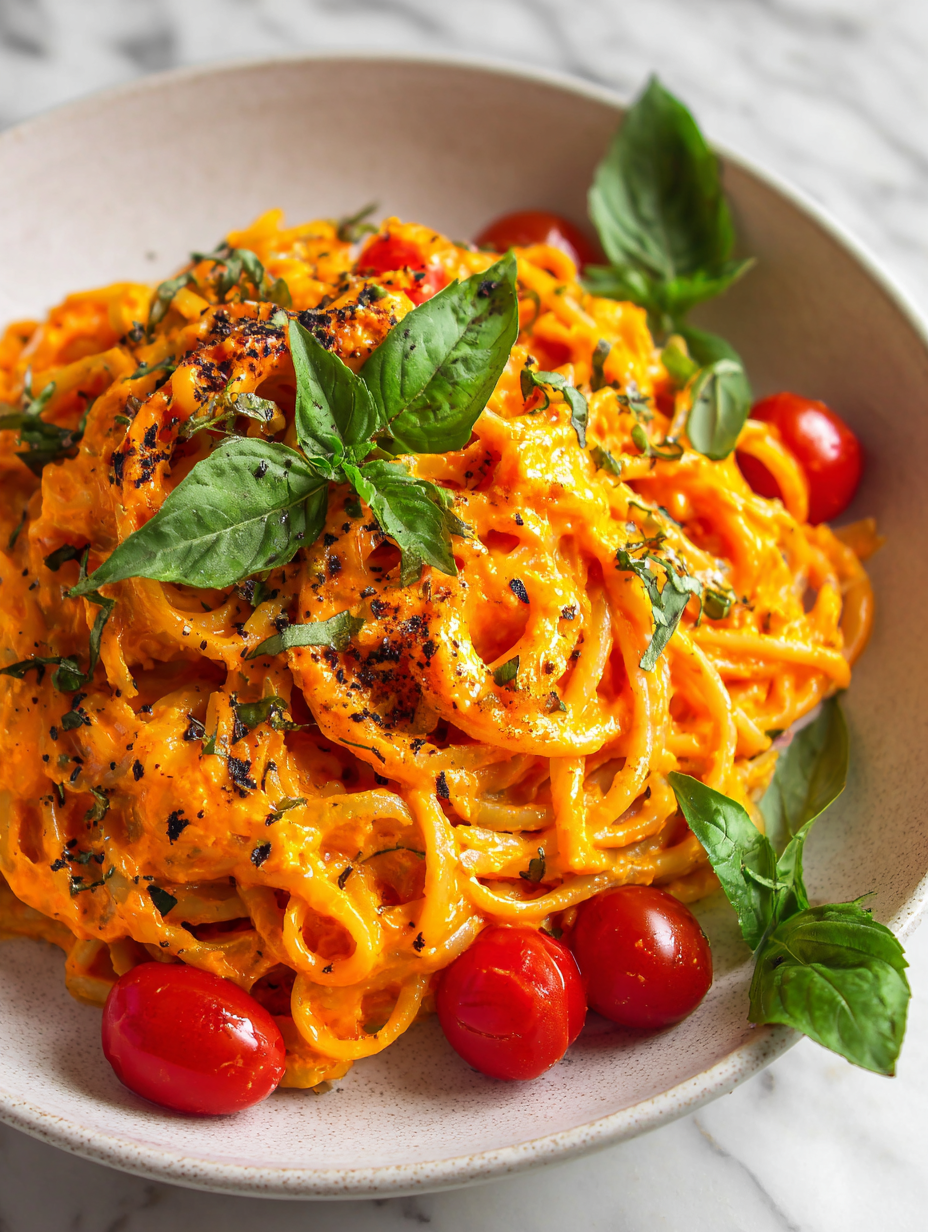
Vegan Creamy Tomato Pasta
Ingredients
Equipment
Method
- Bring a large pot of salted water to a boil and cook the pasta until al dente, about 8-10 minutes. Drain and set aside, reserving a splash of pasta water.
- While the pasta cooks, heat olive oil in a skillet over medium heat. Add the minced garlic and sauté until fragrant, about 30 seconds, until it just begins to turn golden and releases a savory aroma.
- Add the crushed tomatoes to the skillet, stirring to combine with the garlic. Let the mixture simmer gently for about 5 minutes, until it thickens slightly and the kitchen fills with a rich, tangy aroma.
- Transfer the tomato mixture to a blender or use an immersion blender directly in the pan. Pour in the coconut milk, add a pinch of salt and pepper, and blend until smooth and creamy, about 30 seconds. Return the sauce to the skillet and simmer gently for another 2 minutes.
- Pour the drained pasta into the skillet with the sauce, tossing well to coat all the noodles evenly. If the sauce feels too thick, add a splash of the reserved pasta water to loosen it up and help it cling to the pasta.
- Stir in the chopped fresh basil, then taste and adjust the seasoning with more salt and pepper if needed. For an extra burst of freshness, squeeze a little lemon juice over the pasta and toss again.
- Serve immediately while hot, garnished with additional basil leaves or a drizzle of olive oil if desired. Enjoy the creamy, vibrant flavors that come together in this comforting dish.
Pro tips for perfect sauce
- Use high-quality canned tomatoes for a brighter, more vibrant sauce. Cheaper brands can be watery and dull.
- When blending, pulse the sauce to avoid over-processing, which can make it too thin or frothy.
- Sauté garlic gently over medium heat until fragrant, not browned, to prevent bitterness and preserve aroma.
- Reserve some pasta water before draining; it’s the perfect natural thickener to loosen the sauce if needed.
- Add basil at the end to retain its fresh, peppery aroma; cooking too long dulls its brightness.
- For a smoother sauce, strain out any tomato seeds or skins after blending—preferably while hot to prevent clumping.
- Taste and adjust seasoning at the very end; a pinch of salt or squeeze of lemon brightens all the flavors just right.
Common mistakes and how to fix them
- FORGOT to adjust heat → pan burns or sauce undercooked; lower heat immediately.
- DUMPED oil too quickly → sauce separates; add gradually and stir constantly.
- OVER-TORCHED sauce → bitterness; remove from heat, add a splash of water, and stir.
- UNDERSALTED pasta → bland flavor; taste and add salt during final toss.
Quick fixes and pantry swaps
- When sauce looks grainy → splash in a little warm water and blend again gently.
- If pasta clumps together → toss with hot water to loosen before mixing with sauce.
- Splash extra olive oil if sauce cracks or separates during simmering.
- Patch over-salted sauce with a squeeze of lemon or a pinch of sugar to balance flavors.
- Shield burnt sauce by removing from heat immediately and stirring in a splash of water or coconut milk.
Prep, store, and reheat tips
- Prep the sauce ingredients: blend the tomato mixture and measure coconut milk a day in advance. Keeps the flavors vibrant and fresh, with a slightly more concentrated aroma after refrigeration.
- Cook the pasta ahead: boil until al dente, then toss with a little olive oil to prevent sticking. Store in an airtight container for up to 24 hours—reheat gently to avoid over-softening.
- Refrigerate leftovers in an airtight container for up to 3 days. The sauce might thicken slightly; stir in a splash of warm water or reserved pasta water to restore creaminess.
- Reheat gently on the stove over low heat, stirring often. Expect the sauce to shimmer and smell rich with garlic and tomato, with the basil aroma fading if stored too long.
- For freezer storage, freeze the sauce separately in a freezer-safe container for up to 2 months. Thaw overnight in the fridge, then reheat with a splash of water to loosen.
Top questions about vegan creamy tomato pasta
1. Can I use fresh tomatoes instead of canned?
Use canned crushed tomatoes for a bright, tangy base that cooks down quickly. Fresh tomatoes can be used, but they need longer simmering and may alter the sauce’s consistency.
2. Can I substitute coconut milk?
Coconut milk makes the sauce rich and velvety. If you want a lighter version, try almond milk or cashew cream—though the flavor will change slightly.
3. Can I use dried basil instead of fresh?
Yes, dried basil can be added early to rehydrate and soften, but it won’t have the same fresh aroma. Use about half the amount called for fresh, and add it early in cooking.
4. How do I know when the pasta is done?
Cook the pasta until just al dente, about 8-10 minutes. Overcooking makes it mushy; undercooking leaves it too firm to soak up the sauce.
5. Should I blend the sauce smooth or chunky?
Blend the sauce until smooth for a creamy texture, but pulse if you want some texture and bits of tomato to stay intact.
6. When should I add basil and lemon?
Add chopped fresh basil and a squeeze of lemon at the end to brighten flavors. Reheating may mellow these aromatics, so add more fresh basil during serving if desired.
7. What if the sauce separates?
If the sauce separates or looks oily, remove from heat and stir in a splash of warm water or more coconut milk to restore creaminess.
8. How do I prevent pasta from sticking?
To prevent sticking, toss cooked pasta with a little olive oil before storing or mixing it with the sauce. Use warm pasta water to loosen if needed.
9. How long can I keep leftovers?
Store leftovers in an airtight container in the fridge for up to 3 days. Reheat gently over low heat, stirring often to preserve creaminess.
10. Can I freeze this pasta?
Yes, this dish can be frozen in an airtight container for up to 2 months. Thaw overnight in the fridge and reheat gently, adding a splash of water if needed.
This dish has become a staple on my weeknight rotation, offering instant comfort with minimal fuss. It’s the kind of meal that feels like a warm hug after a long day, especially when topped with fresh basil and a squeeze of lemon.
In a world of busy schedules and fleeting moments, this pasta reminds me that simple, honest food can still be deeply satisfying. It’s a small act of kindness for my taste buds and my soul, every single time.

Hi, I’m Clara Sage – and welcome to my kitchen of small revelations.
I created The Language of Aha not just as a recipe blog—but as a space to celebrate the little lightbulb moments that happen in the kitchen.