
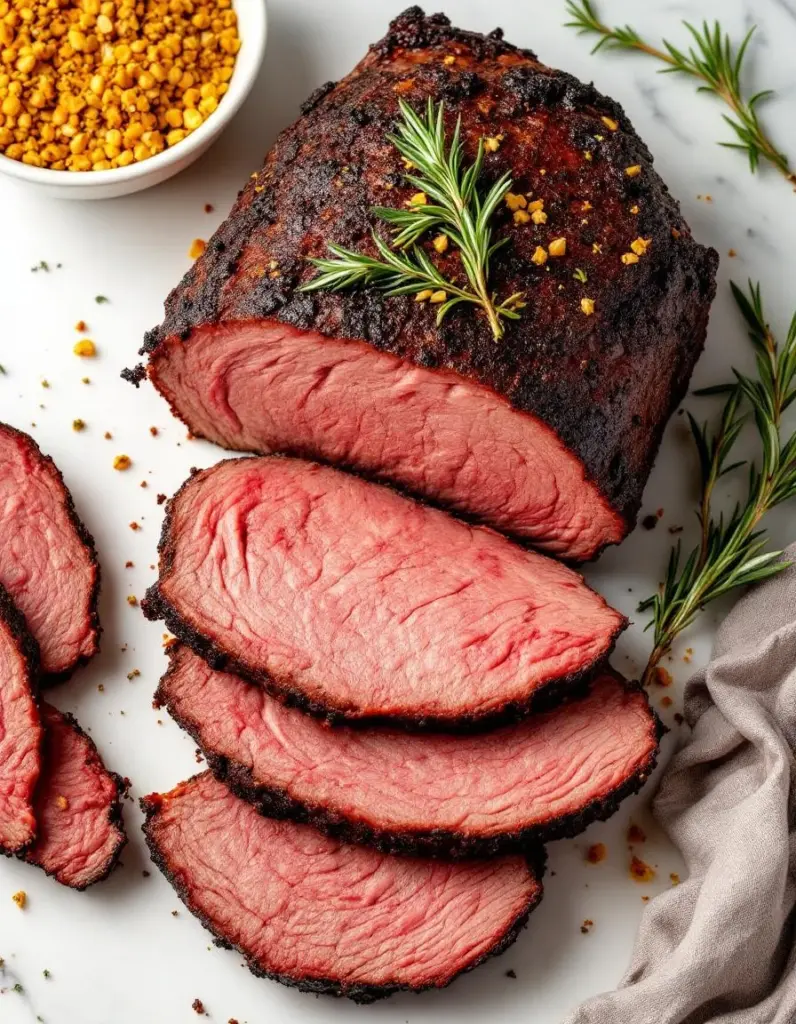
Getting this brisket smoked is a messy affair—rub it down, then wrestle the meat onto the rack, trying not to knock over the tray of drippings. The smell of smoky paprika and salt fills the kitchen, sticking to your hands and nose.
Once it’s in the smoker, you’ll be checking the temp, tending the fire, and waiting for that perfect bark to crack as you carve. It’s a slow process, but watching the fat render and the bark set is satisfying in a way that’ll stick with you.
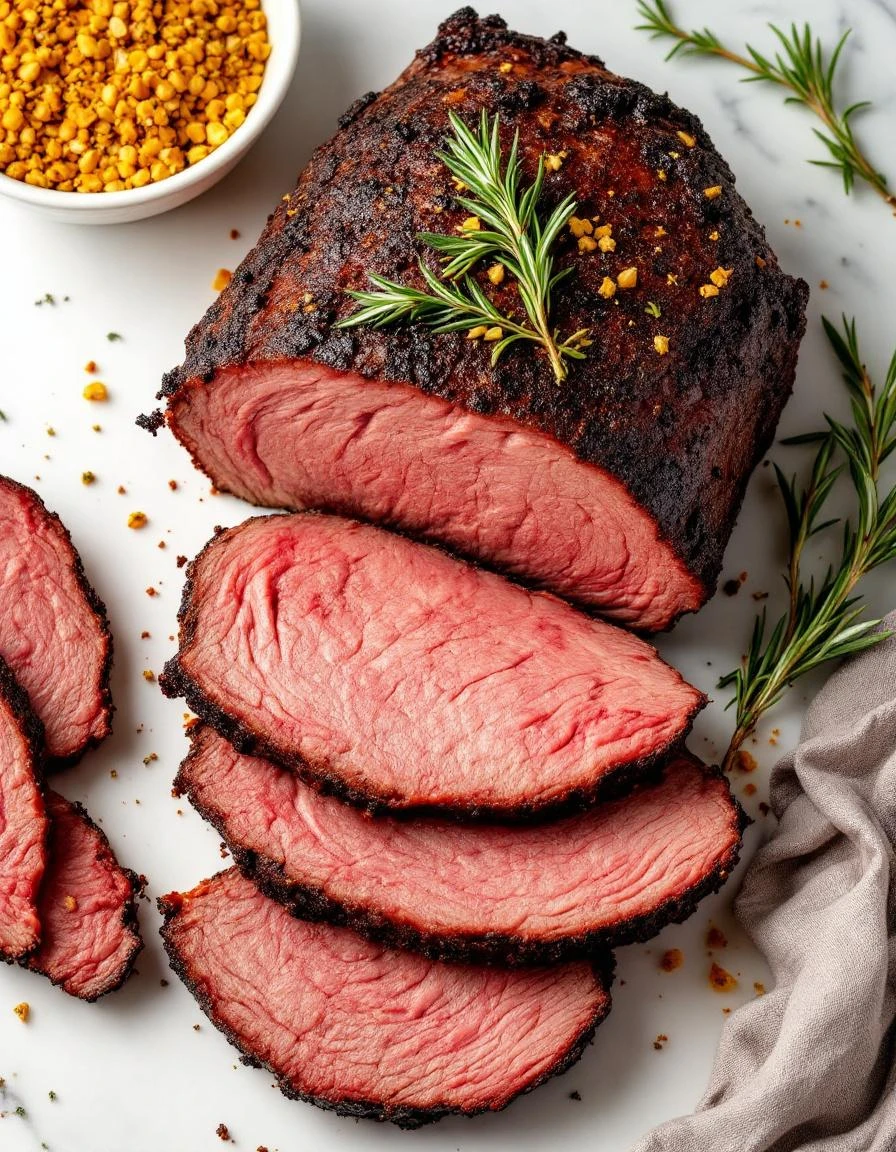
The crackle of the bark as you carve into the brisket, each slice revealing layers of smoky, tender meat.
What goes into this dish
- Brisket: I pick a well-marbled cut, the fat marbling melts into the meat as it smokes, creating that rich, juicy bite. If you prefer leaner, look for a flat, but expect a drier finish.
- Salt and pepper rub: I use coarse kosher salt and cracked black pepper, giving that classic bark. Swap in smoked paprika or garlic powder if you want extra smoky depth or a garlicky punch.
- Wood chips: I prefer mesquite or hickory for a bold, smoky aroma that sticks to your clothes. You can try apple or cherry for a sweeter, fruitier smoke that’s less intense.
- Apple cider vinegar: I spritz the brisket with it during smoking to keep the meat moist and add a tangy brightness. Skip it if you don’t have it, but be prepared for a slightly drier bark.
- Beef stock or broth: I keep the cooking moist and flavorful, especially if your brisket is on the lean side. Use water or beer if you want a simpler, less beefy flavor.
- Aluminum foil: I wrap the brisket at a certain point to lock in moisture and speed up the tenderizing. Without it, the bark might get too hard or dry out; with it, you’ll get that fall-apart texture.
- Optional spices: I add a touch of cumin or smoked paprika to the rub for extra complexity. Feel free to skip if you want pure beef flavor—sometimes simple is better.
Smoked Beef Brisket
Ingredients
Equipment
Method
- Start by trimming excess fat from the brisket, leaving a nice layer to keep the meat moist during smoking. Mix the salt, black pepper, and smoked paprika to create your rub, then generously coat the entire surface of the brisket with this mixture, pressing it into the meat.
- Prepare your smoker by adding wood chips to the firebox, aiming for a steady low temperature around 225°F. Place the brisket on the smoker rack fat-side up, ensuring good air circulation around the meat.
- Close the lid and maintain a steady temperature, adding more wood chips gradually to create a consistent smoky environment. Use a meat thermometer to monitor internal temperature, aiming for about 165°F.
- Every hour or so, spritz the brisket with apple cider vinegar using a basting brush or spray bottle to keep the meat moist and enhance flavor. Continue this process for the first several hours of smoking.
- Once the brisket reaches around 165°F and develops a deep, crackly bark, wrap it tightly in aluminum foil along with a splash of beef broth or stock if desired. This helps tenderize the meat further while preserving moisture.
- Return the wrapped brisket to the smoker and continue cooking until the internal temperature reaches about 195°F to 205°F. This slow process allows the connective tissue to break down, resulting in tender, juicy slices.
- Remove the brisket from the smoker and let it rest, still wrapped, for at least 20 minutes. This resting period helps the juices redistribute throughout the meat, ensuring maximum tenderness.
- Unwrap the brisket carefully and place it on a carving board. Slice against the grain into thin, even slices, revealing the smoky, juicy layers inside and the crackly bark on the outside.
- Serve the slices hot, showcasing the deep mahogany bark and tender meat. Enjoy the smoky aroma and rich flavor as you dig in.
Common mistakes and how to fix them
- FORGOT to monitor the smoker temperature, resulting in uneven cooking. Use a reliable thermometer.
- DUMPED too much wood at once, causing bitter smoke. Add wood gradually for a smooth, smoky flavor.
- OVER-TORCHED the bark initially, making it hard and bitter. Keep the heat steady and low.
- FAILED to rest the brisket, losing juices and flavor. Let it sit for at least 20 minutes before slicing.
Make-Ahead and Storage Tips
- You can prep the brisket rub and apply it a day ahead; keeps flavors deep and ready to go.
- Wrap the smoked brisket tightly in foil or plastic and store in the fridge for up to 3 days.
- For longer storage, freeze the brisket for up to 2 months, then thaw slowly in the fridge overnight.
- Flavors mellow and meld if left overnight; reheating might soften the bark slightly but still tasty.
- Reheat gently in the oven at 250°F, covered, until warmed through—check for juicy, smoky aroma and tender texture.
FAQs
1. How should smoked brisket smell and feel?
Smoked brisket develops a smoky aroma and a tender, juicy texture. The bark crackles slightly when sliced, and the meat melts in your mouth with a rich beefy flavor.
2. What is the right texture for smoked brisket?
Look for a deep mahogany bark with a slight crunch. The meat should be moist and pull apart easily, with juices running clear when pierced.
3. How do I slice smoked brisket properly?
Use a sharp carving knife to slice against the grain, revealing tender, thin slices. The smoke ring and bark add complexity to each bite.
4. How do I reheat smoked brisket without drying it out?
Reheat in a low oven or covered in foil until it’s warm and juicy. Expect a gentle release of smoky steam and a slight softening of the bark.
5. How long can I keep smoked brisket?
Store leftovers tightly wrapped in foil or plastic in the fridge for up to 3 days. Freeze for longer storage, then thaw slowly to preserve moisture.

Hi, I’m Clara Sage – and welcome to my kitchen of small revelations.
I created The Language of Aha not just as a recipe blog—but as a space to celebrate the little lightbulb moments that happen in the kitchen.