
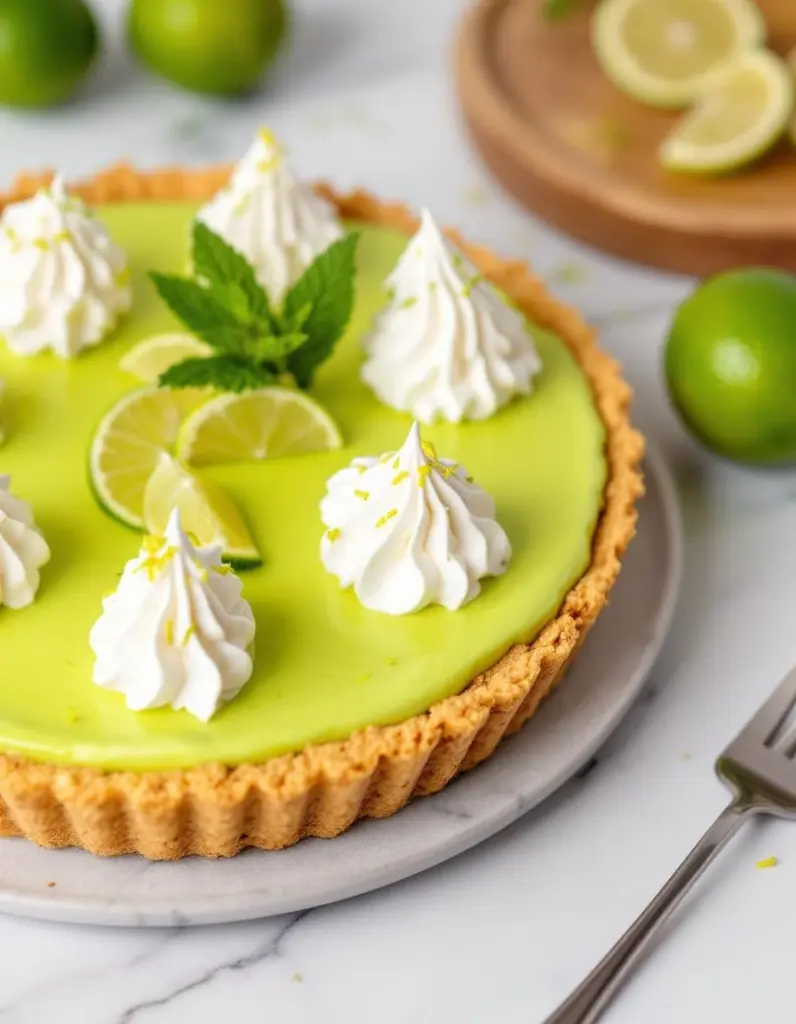
Making a key lime pie starts with crushing graham crackers, which can be noisy and messy, then pressing that crumb mix into the pie pan—sometimes it sticks to your fingers more than you’d like. The filling is a quick whisk of sweetened condensed milk, fresh lime juice, and egg yolks, which splashes a bit when you crack the eggs, so be ready for that splash zone.
Baking the pie involves a delicate oven dance—watching for that slight puff and set around the edges, but not overbaking. Once out, the filling is silky and a bit jiggly, and the crust stays crisp despite the filling’s oozy brightness.
the satisfying crunch of a perfectly baked graham cracker crust as I cut into the pie, the crisp edge giving way to that smooth, tangy filling underneath
What goes into this dish
- Graham cracker crumbs: I pound these up fine, aiming for a sandy texture—skip the store-bought crumbs if you can. Using digestive biscuits works too, just grind them a bit more to avoid clumps.
- Sweetened condensed milk: It’s the creamy backbone here—don’t skimp, or the filling loses its silky richness. If you’re out, try evaporated milk thickened with a touch of sugar, but it won’t be quite the same.
- Lime juice: Freshly squeezed is a must—bright, zesty, with that sharp citrus punch. Bottled lime juice can work in a pinch, but it’s dull and flat compared to fresh.
- Egg yolks: The velvety, rich core—whisk them well and strain if you want to avoid any stringiness. Egg substitute? A splash of coconut milk might add creaminess, but expect a different flavor profile.
- Butter: Melts into the crust, adds richness—use unsalted, but salted butter works if you want a touch of seasoning. Melt it thoroughly before mixing with crumbs for even coating.
- Optional toppings: Whipped cream or meringue—go for fresh, airy, and slightly sweet. Skip if you prefer the pure tartness of the pie, but a dollop makes the bites more indulgent.
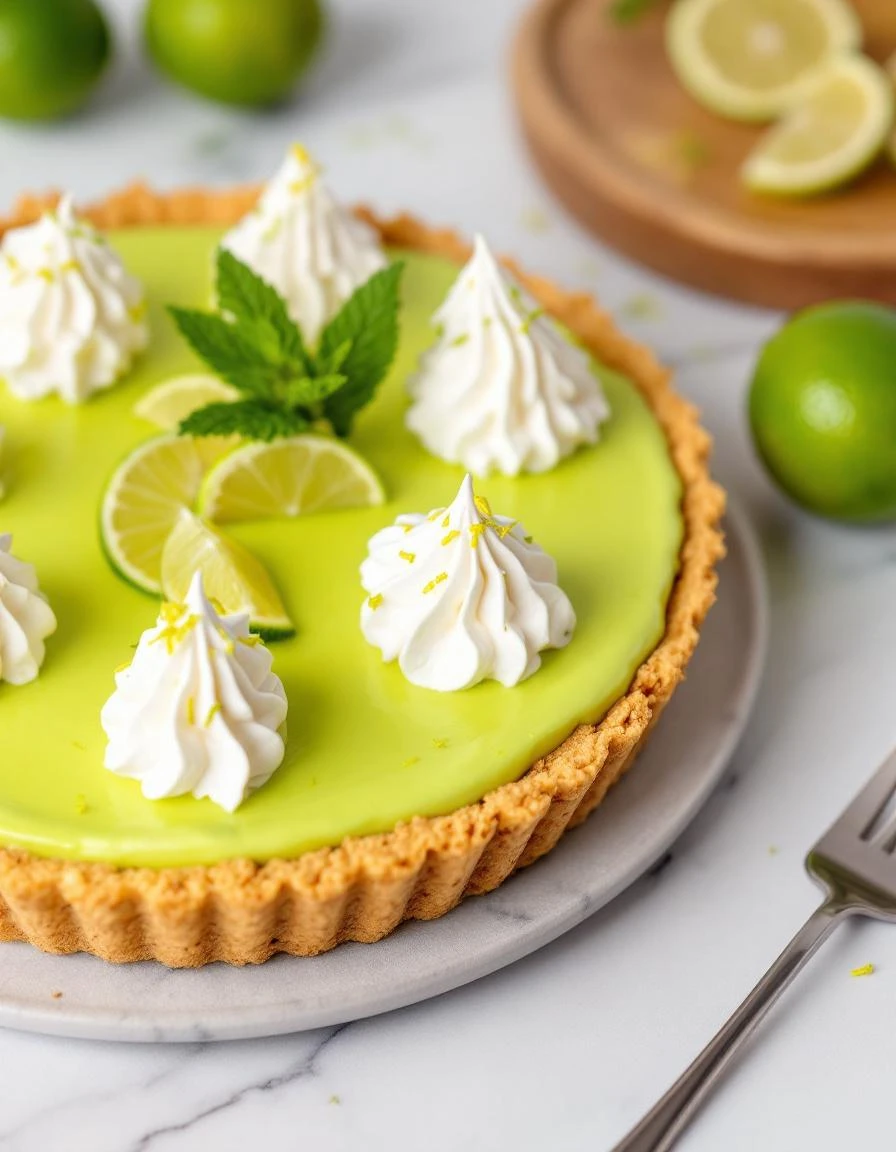
Key Lime Pie
Ingredients
Equipment
Method
- Combine graham cracker crumbs with melted butter in a mixing bowl, and stir until the crumbs are evenly coated and resemble wet sand.
- Press the crumb mixture firmly into the bottom and up the sides of a 9-inch pie pan, creating an even crust. Chill in the refrigerator for at least 15 minutes to firm up.
- In a separate bowl, whisk the egg yolks until smooth and slightly pale, then strain if desired for extra silky texture.
- Slowly pour the sweetened condensed milk into the yolks while whisking continuously, until fully combined and smooth.
- Stir in the freshly squeezed lime juice gradually, tasting as you go to achieve the desired tartness. The mixture will thicken slightly and become silky.
- Pour the lime filling into the chilled crust, spreading it evenly with a spatula. Smooth the top for a neat appearance.
- Bake the pie in a preheated 350°F (175°C) oven for about 15 minutes, or until the filling is just set around the edges but still slightly jiggly in the center.
- Remove the pie from the oven and let it cool to room temperature, then refrigerate for at least 2 hours or until fully chilled and set.
- If desired, top with whipped cream before serving to add a light, fluffy finish.
- Slice the pie with a sharp knife, and enjoy the satisfying crunch of the crust combined with the bright, tangy filling.
Common mistakes and how to fix them
- FORGOT to chill the crust before adding filling—chilling firms it up, fixing a soggy bottom.
- DUMPED the lime juice all at once—add slowly, tasting for tartness and avoiding bitterness.
- OVER-TORCHED the crust—watch closely near the end, so it stays golden and crisp, not burnt.
- MISTAKENLY used bottled lime juice—freshly squeezed brightens the filling with zesty sharpness.
Make-Ahead and Storage Tips
- Prepare the crust mixture and press into the pie pan a day ahead; keep chilled for a firm base.
- The filling can be made up to 24 hours in advance, then kept covered in the fridge to meld flavors.
- Pie tastes best within 2 days; after that, the lime brightness dulls and the crust softens.
- Refrigerate the assembled pie; avoid freezing as texture and flavor can change, making the crust soggy.
- To reheat, let the pie sit at room temp for 15 minutes—crust stays crisp if not overheated.
FAQs
1. Why is fresh lime juice better?
Use fresh lime juice for that sharp, zesty aroma—bottled can be dull and flat, losing the punch of bright citrus on your tongue.
2. How do I keep the crust crisp?
If your crust is soggy, it’s probably because it wasn’t chilled enough before adding the filling or baked too long—try chilling first and bake just until golden.
3. Why is my filling runny?
To avoid a watery filling, make sure your egg yolks are well whisked and strain the filling if needed—this keeps the texture silky and smooth, no stringy bits.
4. How do I prevent cracks?
If the pie cracks on top, it might be overbaked or cooled too quickly—try pulling it out just as it sets and let it cool slowly in the pan.
5. Can I make it ahead?
For the best flavor, make the pie a day ahead and keep it refrigerated—this lets the tartness deepen and the crust firm up, but don’t forget to cover it tightly.

Hi, I’m Clara Sage – and welcome to my kitchen of small revelations.
I created The Language of Aha not just as a recipe blog—but as a space to celebrate the little lightbulb moments that happen in the kitchen.