
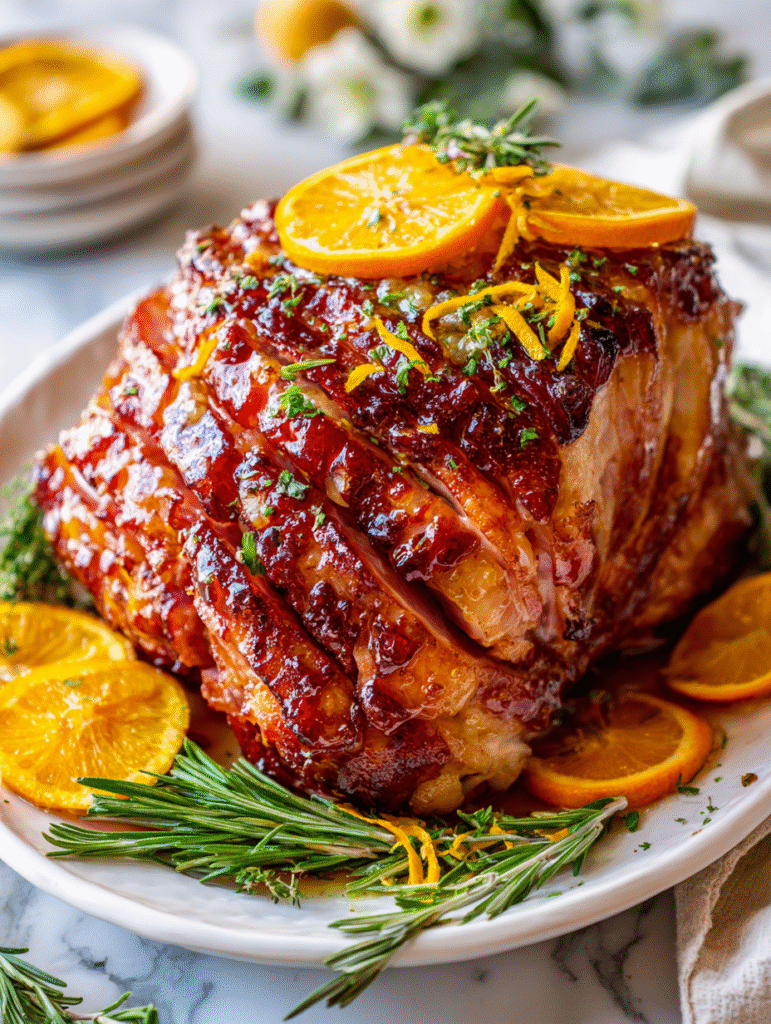
There’s a certain thrill in turning a humble ham into something striking with just a few ingredients and a good splash of citrus. This glaze is my secret weapon for that—bright, slightly smoky, with a hint of spice. It’s a recipe born from the chaos of holiday prep, where simplicity and flavor need to shine side by side.
Why I Keep Coming Back to This Glaze
Its balance of sweet, tangy, and smoky flavors elevates the holiday meal. The zing of citrus cuts through the richness of the ham, making every bite feel fresh and lively. Plus, it’s forgiving—tweak the ingredients easily to suit your mood or what’s in the pantry. It’s become a tradition to make this glaze, a small act of joy that signals Christmas is truly here.
Breaking Down the Glaze Ingredients
- Brown sugar: Adds a rich, molasses-like sweetness that balances the tang.
- Orange juice: Brightens the glaze with citrus zest, almost like a fresh burst.
- Dijon mustard: Gives a subtle heat and tang, not overpowering but noticeable.
- Cloves: Aromatic and warm, they add depth, especially when infused during simmering.
- Lemon zest: Provides a zesty, aromatic punch that keeps the glaze lively.
- Smoked paprika: Gives a hint of smoky undertone, optional but adds complexity.
- Honey: Sweetens and helps the glaze caramelize, making it glossy.
Tools You’ll Need for the Perfect Glazing
- Sharp knife: To score the ham surface in a diamond pattern.
- Small saucepan: To simmer and thicken the glaze.
- Basting brush: To apply the glaze evenly over the ham.
- Roasting pan: To hold the ham during baking.
- Meat thermometer: To check the ham’s internal temperature.
Step-by-Step for a Perfectly Glazed Christmas Ham
Step 1: Preheat your oven to 160°C (320°F).
Step 2: Score the ham’s surface in a diamond pattern, about 1 inch apart.
Step 3: Mix the glaze ingredients in a small saucepan and simmer until thickened, about 10 minutes.
Step 4: Brush the glaze generously over the ham, especially into the scored lines.
Step 5: Bake the ham uncovered for 1.5 to 2 hours, basting every 30 minutes with more glaze.
Step 6: Increase oven temp to 200°C (390°F) in the last 15 minutes to caramelize.
Step 7: Let the ham rest for 15 minutes before carving to keep it juicy.
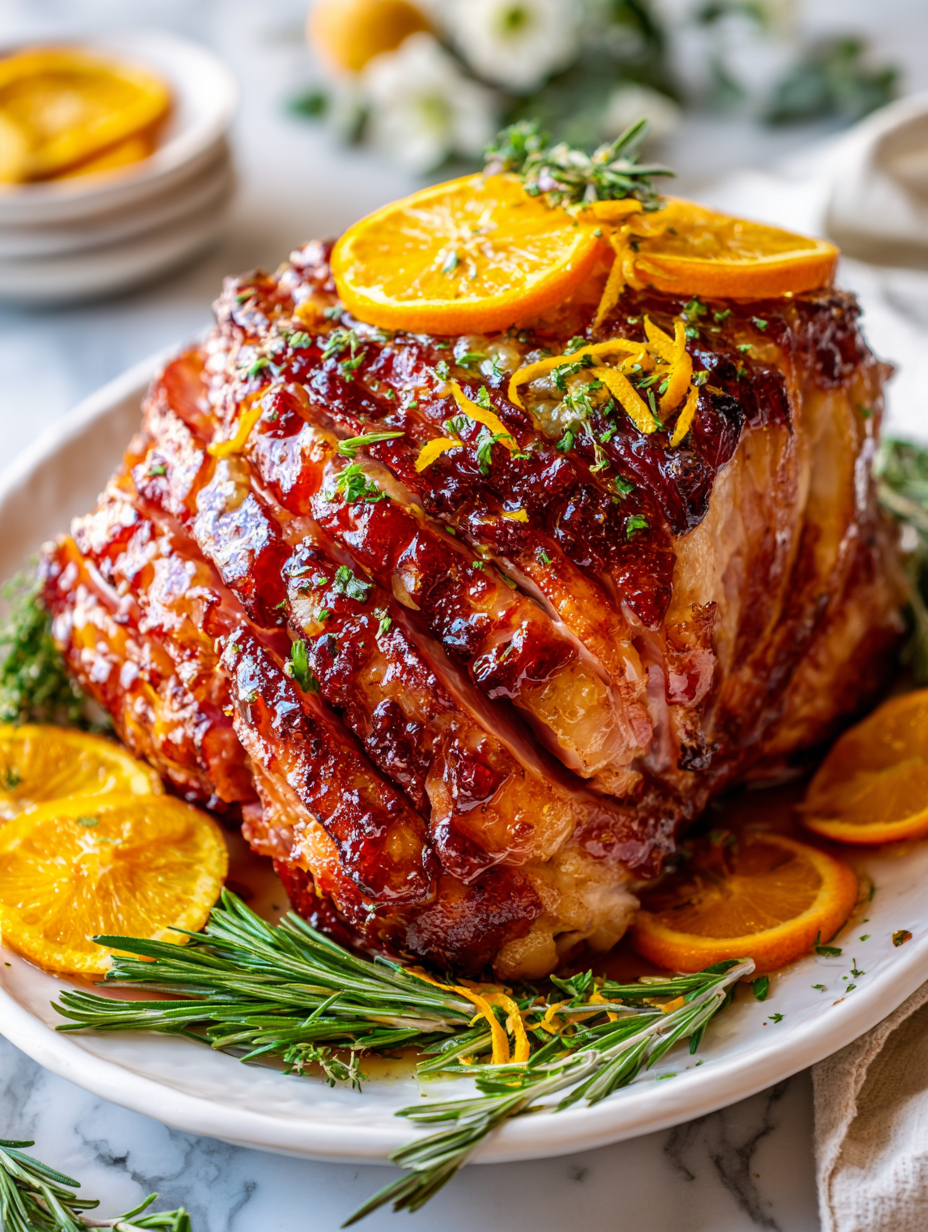
Citrus-Glazed Holiday Ham
Ingredients
Equipment
Method
- Preheat your oven to 160°C (320°F). Place the ham on a cutting board and score its surface in a diamond pattern, making shallow cuts about 1 inch apart—this allows the glaze to seep into the meat.
- In a small saucepan, combine brown sugar, orange juice, Dijon mustard, whole cloves, lemon zest, smoked paprika, and honey. Bring the mixture to a gentle simmer over medium heat, stirring occasionally. Let it simmer until the glaze thickens slightly and becomes glossy, about 10 minutes.
- Remove the glaze from heat and strain out the cloves if desired. Using a basting brush, generously coat the scored surface of the ham with the warm glaze, pressing it into the cuts for flavor.
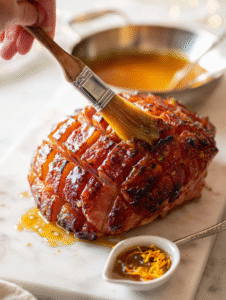
- Place the ham in a roasting pan and bake uncovered at 160°C (320°F). After 30 minutes, baste it again with the glaze. Continue baking, basting every 30 minutes, until the ham is heated through and the surface begins to caramelize, about 1.5 to 2 hours in total.
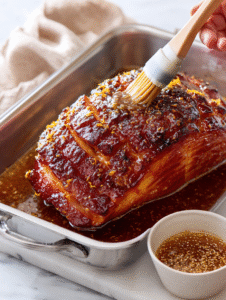
- Increase the oven temperature to 200°C (390°F) during the last 15 minutes to enhance caramelization, watching carefully so it doesn’t burn. The glaze should turn deep amber and glossy.
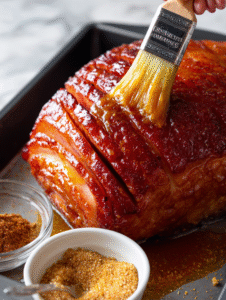
- Once done, remove the ham from the oven and let it rest on a cutting board for 15 minutes. This helps the juices redistribute and keeps the meat juicy.
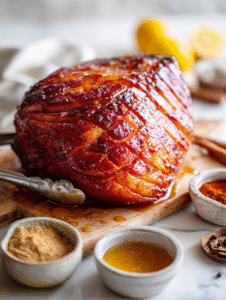
- Slice the ham in thick, juicy cuts and serve with extra glaze on the side for drizzling. Enjoy the bright, smoky, and tender flavors of this festive centerpiece!
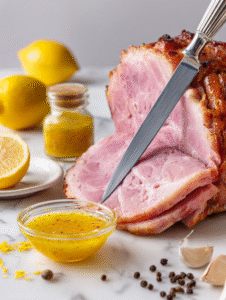
Cooking Checkpoints & Tips to Nail the Glaze
- The glaze should be thick enough to coat the back of a spoon before application.
- The ham’s surface should look glossy and slightly caramelized after baking.
- Juices will run clear when the ham is properly cooked, not pink or bloody.
- The internal temperature of the ham should reach 60°C (140°F) for warm servings or 65°C (149°F) if serving cold.
Common Mistakes & How to Fix Them
- The glaze turned black before the ham was done.? Reduce the heat if the glaze burns too quickly.
- The glaze is too sticky or thick to apply smoothly.? Add a splash of water or orange juice if the glaze is too thick to brush.
- The surface darkens too fast and risks burning.? Tent the ham with foil if it’s over-browning.
- Guessing when the ham is cooked can lead to dryness.? Use a probe thermometer for accuracy.
This glaze isn’t just a sweet topping; it’s a lively burst of citrus and spice that cuts through the richness of the ham. The trick is balancing the tang with enough sweetness to enhance, not overpower. Once you’ve got the method down, it’s easy to tweak—add more lemon for brightness or a splash of bourbon for depth. Every year, I come back to this recipe because it feels like a little celebration in every bite, a reminder that simple ingredients can turn festive.

Hi, I’m Clara Sage – and welcome to my kitchen of small revelations.
I created The Language of Aha not just as a recipe blog—but as a space to celebrate the little lightbulb moments that happen in the kitchen.