
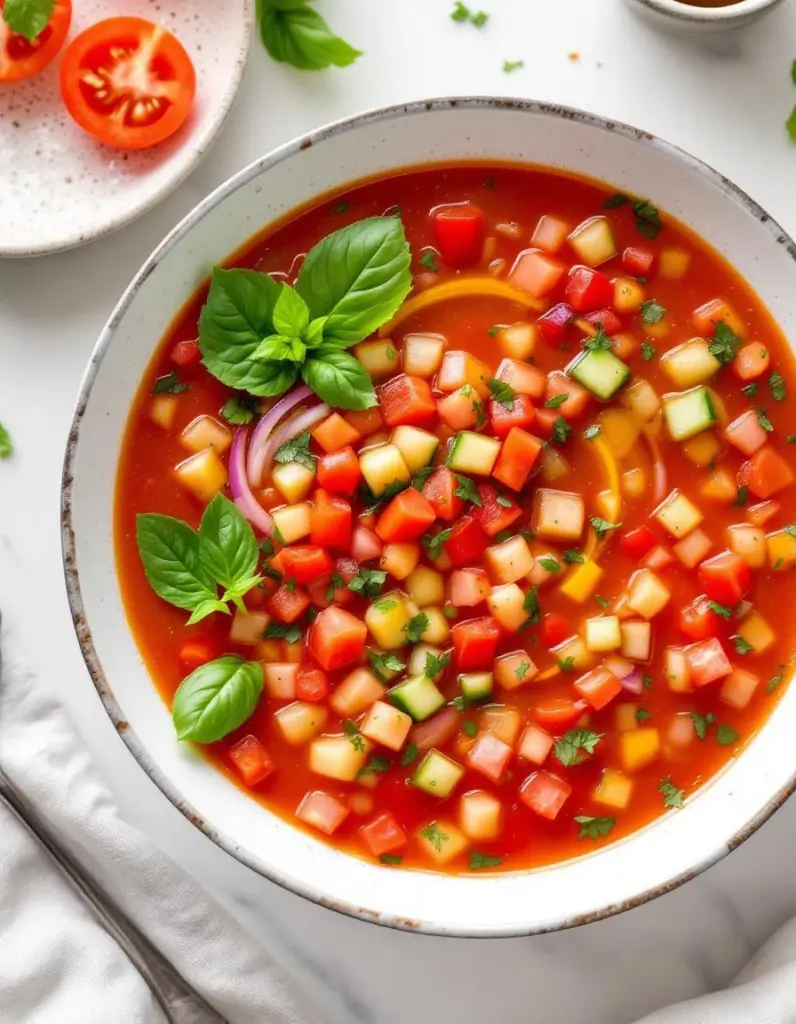
Peeling tomatoes is a messy affair—slippery skins come off with a quick score and dunk in boiling water, then a rinse. The sound of skins slipping off, almost like peeling a sun-warmed apple, is oddly satisfying.
Blending everything in a blender is loud and splashy, with chunks turning into a smooth, slightly textured liquid that coats your spoon. It’s a hands-on process, with plenty of tasting and adjusting before it hits the fridge.
The gritty scrape of the knife as you peel ripe tomatoes, the splash of cold water on your hands, and the satisfying thud of vegetables hitting the chopping board—making gazpacho is all about tactile, messy prep that awakens your senses before the chill of the bowl.
Key Ingredients and Substitutions
- Ripe tomatoes: I squeeze and peel them, feeling the soft, slightly sticky flesh—if they’re too firm, skip peeling and just chop. For a different flavor, try heirloom varieties for extra depth and color.
- Cucumber: I peel and seed, then chop—crisp and cool, it adds that refreshing crunch. Use zucchini if you want a milder, softer texture, but skip the seeds for less wateriness.
- Red bell pepper: Rinse, core, and chop—its sweet, smoky aroma wakes up the mix. Roasted peppers give a richer flavor, but raw works fine if you’re short on time.
- Garlic: Smash and mince, releasing that pungent, spicy scent. If you’re sensitive, halve the cloves; if you want more punch, toss in a whole clove or two.
- Vinegar: I splash in sherry or red wine vinegar, brightening everything with a sharp tang—skip if you prefer a milder, less acidic soup. Lemon juice can also boost the freshness if you don’t have vinegar.
- Good olive oil: Drizzle in as I blend, adding a silky mouthfeel and richness—use a robust, fruity oil or skip for a leaner soup, but don’t forget the oil for body.
- Salt and pepper: Taste as you go, adjusting the seasoning—remember, a pinch of salt really pulls the flavors out. If you want a bit of heat, a dash of Tabasco or cayenne can wake things up.
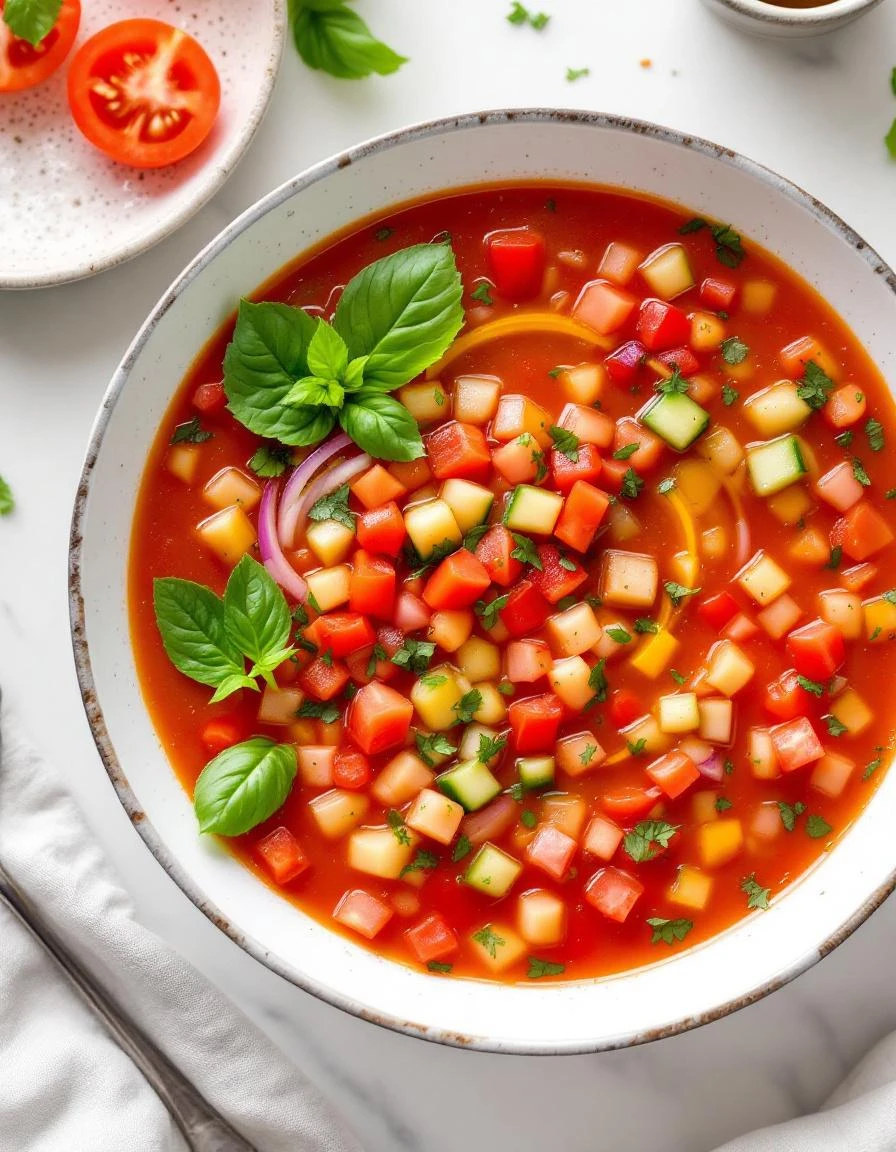
Classic Gazpacho
Ingredients
Equipment
Method
- Start by roughly chopping the tomatoes and placing them in a large bowl. This helps ease peeling later and keeps your workspace tidy.
- Use a sharp knife to score an 'X' on the bottom of each tomato, then dunk them in boiling water for about 30 seconds until the skins start to loosen.
- Remove the tomatoes from the water with a slotted spoon, then transfer them to a bowl of cold water to stop the cooking process. Once cool enough to handle, peel off the skins gently—they should slip off easily, almost like peeling a sun-warmed apple.
- Chop the peeled tomatoes into chunks, then add them to your blender along with the chopped cucumber and bell pepper.
- Next, add the minced garlic, sherry vinegar, and a splash of olive oil to the blender. These ingredients will give the soup depth and brightness.
- Blend everything on high until the mixture is smooth with a slight texture—stop and scrape down the sides if needed to make sure everything is incorporated evenly.
- Taste the soup and season with salt and pepper, adjusting until the flavors are balanced—aim for a bright, savory profile.
- Transfer the gazpacho to a bowl, cover it, and refrigerate for at least 2 hours to let the flavors meld and the soup chill thoroughly.
- Before serving, give the soup a quick stir, then pour it into bowls. Garnish with fresh herbs or a drizzle of olive oil if desired, and enjoy this refreshing, silky cold soup.
Common Gazpacho Mistakes and Fixes
- FORGOT to chill the soup—serve cold for the best flavor and texture.
- DUMPED in all the tomatoes at once—add gradually, tasting as you blend.
- OVER-TORCHED the garlic—burnt garlic adds bitterness, so add it later or cook gently.
- MISSED tasting during seasoning—adjust salt and acid slowly, tasting after each addition.
Make-Ahead and Storage Tips
- Chop and peel all vegetables a day ahead—keeps the prep mess contained and speeds up service.
- Gazpacho can sit covered in the fridge for up to 24 hours—flavors meld and deepen overnight.
- For a more intense, roasted flavor, add roasted peppers or garlic a few hours before serving.
- Refrigerated gazpacho may thicken slightly—stir in a splash of cold water or more olive oil to loosen before serving.
- Do not freeze—texture changes become noticeable and fresh flavor diminishes after thawing.
- Reheat gently if needed, but best served cold—check for bright, chilled freshness and a clean, crisp finish.
FAQs
1. Should gazpacho be served cold?
Chill the gazpacho thoroughly—about 2 hours in the fridge makes it refreshing and bright, not flat or tepid on your tongue.
2. Is gazpacho meant to be hot or cold?
Yes, always. The cold temperature keeps the flavors crisp and the texture silky, especially after blending and refrigerating.
3. What kind of tomatoes are best?
Use ripe, fragrant tomatoes—they should smell sweet and slightly earthy, with a plump, juicy feel when squeezed gently.
4. How do I know when it’s seasoned right?
Adjust the seasoning by tasting—salty, tangy, and a little spicy—until it hits that perfect balance of bright, savory, and a touch smoky.
5. Can I make gazpacho ahead?
Refrigerate in an airtight container up to 24 hours. Flavors deepen overnight, but avoid freezing, as texture suffers when thawed.

Hi, I’m Clara Sage – and welcome to my kitchen of small revelations.
I created The Language of Aha not just as a recipe blog—but as a space to celebrate the little lightbulb moments that happen in the kitchen.