
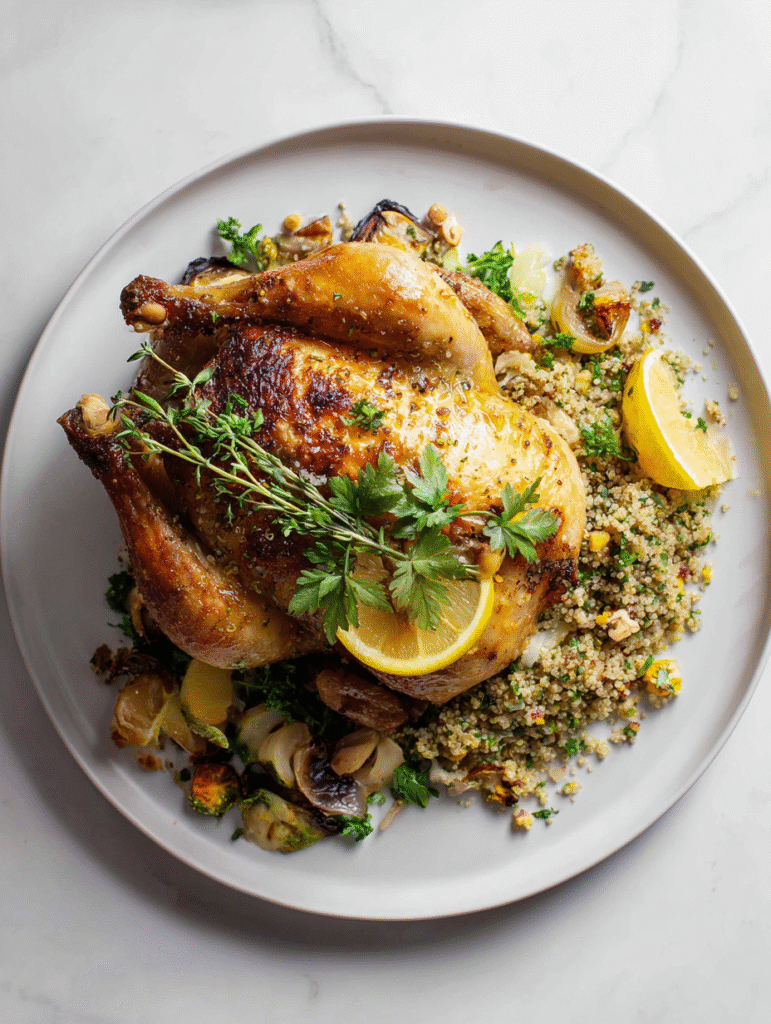
This roast game hen is my go-to for small holiday gatherings when I want something special but not overwhelming. It’s a recipe that’s rooted in simplicity but feels fancy. I love the way the herbs and lemon brighten the rich, tender meat, making every bite a little celebration.
Why I keep coming back to this recipe
It’s simple enough to prepare without fuss but delivers a punch of flavor. The combination of herbs, lemon, and crispy skin is addictive. Plus, it adapts easily with different herbs or stuffing tweaks, making it my holiday staple.
Ingredients and their roles
- Game hen: Small, tender, perfect for intimate holiday meals.
- Fresh herbs (rosemary, thyme): Provide aromatic, earthy notes that brighten the meat.
- Lemon wedges: Add bright, tangy zest that cuts through richness.
- Garlic cloves: Infuse the meat with savory warmth.
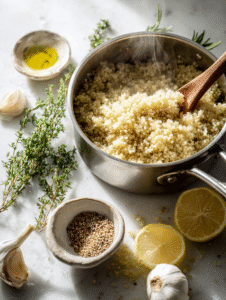
- Quinoa: Light, fluffy base for stuffing, holds herbs well.
- Olive oil: Helps crisp the skin and keeps the meat moist.
- Salt and pepper: Basic seasonings to enhance all flavors.
Tools and equipment you’ll need
- Roasting pan: For steady heat and even cooking.
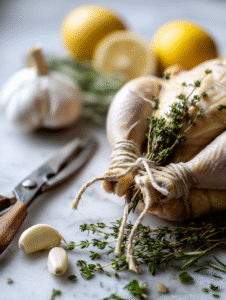
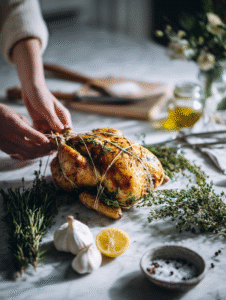
- Kitchen twine: To truss the hen for even roasting.
- Meat thermometer: To check doneness without guessing.
- Small saucepan: For preparing the quinoa stuffing.
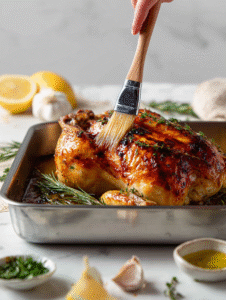
- Basting brush: To baste the hen and keep the skin crispy.
Step-by-step guide to roasting your game hen
Step 1: Preheat your oven to 180°C (355°F).
Step 2: Pat the game hen dry with paper towels. Rub generously with salt, pepper, and a splash of olive oil.
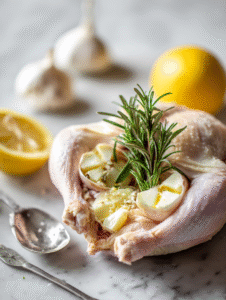
Step 3: Stuff the cavity with halved garlic cloves, lemon wedges, and a sprig of rosemary.
Step 4: Place in a roasting pan and roast for 1 hour 15 minutes, basting every 20 minutes.
Step 5: Check for a golden, crispy skin and an internal temperature of 74°C (165°F).
Step 6: Let rest for at least 15 minutes before carving.
Step 7: Meanwhile, prepare the herb-infused quinoa stuffing: sauté chopped herbs and garlic, then fold into cooked quinoa.
Cooking checkpoints and tips
- Skin should be crisp and golden, not pale.
- Meat temperature at 74°C (165°F) confirms doneness.
- Juices run clear when pierced, no pink in the meat.
- Herb and lemon aroma should fill your kitchen during roasting.
Common mistakes and how to fix them
- Uneven cooking or dry patches.? FORGOT to truss the hen — it cooks unevenly. Fix: Tie legs together for better heat distribution.
- Herb overpowering or bland.? DUMPED all the herbs in at once — flavor was muddled. Fix: Add herbs gradually, building aroma.
- Burnt skin.? OVER-TORCHED skin — burnt and bitter. Fix: Cover with foil if browning too fast.
- Dry, tough meat.? Didn’t rest the meat — juices ran out. Fix: Rest for 15 minutes before carving.
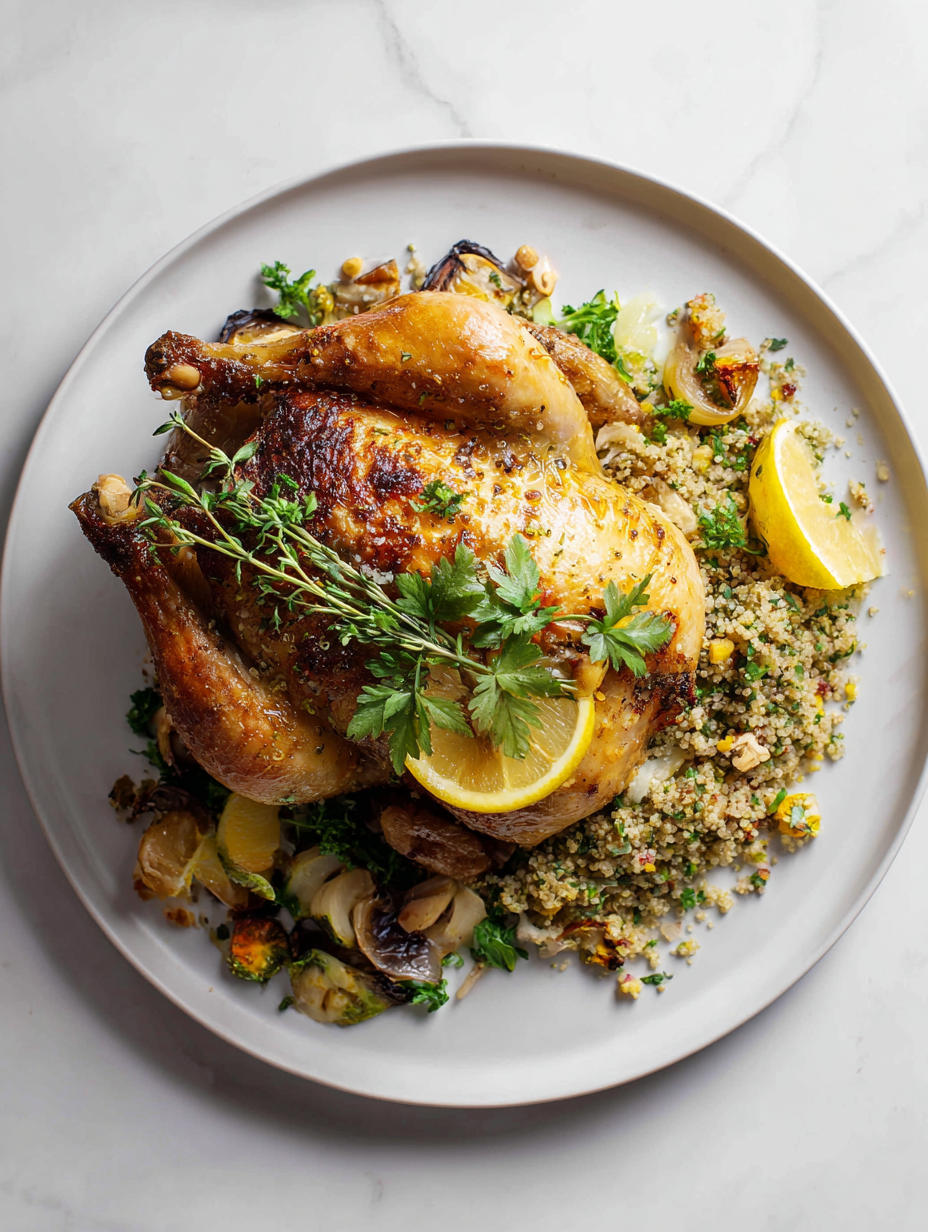
Herb-Lemon Roast Game Hen with Quinoa Stuffing
Ingredients
Equipment
Method
- Preheat your oven to 180°C (355°F).
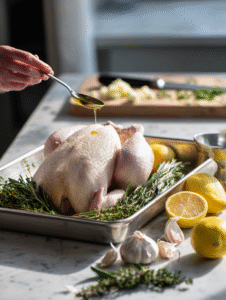
- Pat the game hen dry with paper towels, ensuring the skin is dry and ready for crisping.
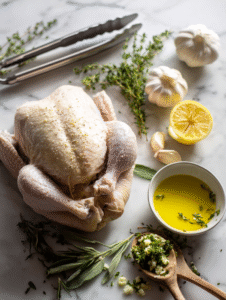
- Rub the entire hen generously with salt, pepper, and 1 tablespoon of olive oil, massaging the skin to help crisp it up.
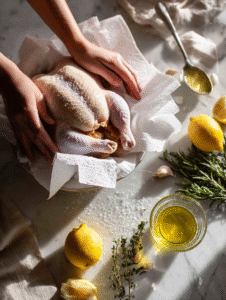
- Stuff the cavity with halved garlic cloves, lemon wedges, and a sprig of rosemary for aromatic flavor.
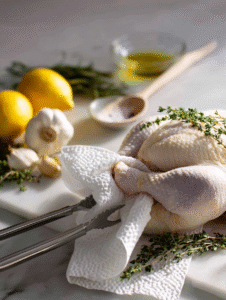
- Truss the hen by tying the legs together with kitchen twine for even cooking and a tidy appearance.
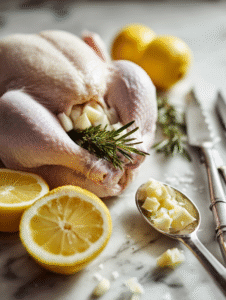
- Place the hen in a roasting pan and roast for about 1 hour 15 minutes, basting with the pan juices every 20 minutes for a crispy skin.
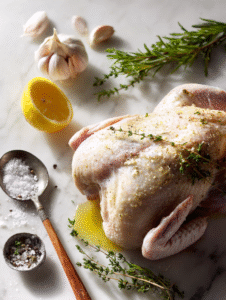
- Check the internal temperature with a meat thermometer; it should reach 74°C (165°F) with clear juices when pierced.
- Once cooked, allow the hen to rest for at least 15 minutes to let the juices redistribute.
- Meanwhile, prepare the quinoa stuffing: In a small saucepan, sauté chopped herbs and minced garlic in 1 tablespoon of olive oil until fragrant and slightly wilted.
- Cook the quinoa according to package instructions until fluffy, then fold it into the sautéed herbs and garlic, seasoning with salt and pepper to taste.
- Carve the rested hen, serving it topped with fresh lemon wedges and alongside the herb-infused quinoa stuffing for a vibrant, flavorful presentation.
Notes

Hi, I’m Clara Sage – and welcome to my kitchen of small revelations.
I created The Language of Aha not just as a recipe blog—but as a space to celebrate the little lightbulb moments that happen in the kitchen.