

This lentil vegetable stew is my go-to when I want something nourishing but flexible, adaptable to whatever vegetables I have hanging around. I love how it transforms humble ingredients into something bright and satisfying, especially when I toss in seasonal produce that’s at its peak. It feels like a blank canvas, where each batch can be a little different, a little more colorful, depending on what’s fresh.
Cooking this stew is like a slow, cozy ritual. I start by sautéing onions and garlic until they smell sweet and inviting. Then I add the lentils and stock, letting everything simmer gently while I chop up whatever veggies I’ve got—carrots, zucchini, maybe a handful of greens—whatever makes me smile. It’s honest, unpolished cooking, but every spoonful reminds me that simplicity can be wildly satisfying.
Focusing on how this humble stew can be a canvas for seasonal vegetables, turning simple ingredients into a vibrant, comforting dish that evolves with what’s fresh and available, making each batch uniquely expressive.
Seasonal canvas for humble ingredients
- This stew reminds me of lazy Sunday afternoons, the kitchen filled with the aroma of herbs and simmering vegetables, comforting and familiar.
- Cooking this dish is my little act of rebellion against fancy, complicated meals—simple ingredients, honest flavors, no fuss.
- I love how each batch turns out a bit different, reflecting the seasonal bounty and my mood that day.
- Sharing this stew with friends always sparks stories about childhood favorites and nostalgic memories.
- There’s a quiet pride in turning humble pantry staples into something so hearty and vibrant, especially after a long day.
The story behind this recipe
- This stew came together on a rainy afternoon when I realized I had a handful of lentils and a bunch of root vegetables that needed using up. It’s funny how simplicity can lead to comfort—something about the earthy flavors and the way the lentils soak up all those smoky, herb-infused broths feels like a warm hug after a long day.
- I remember the first time I cooked this for friends. The smell of garlic and cumin filled the kitchen, and everyone kept going back for seconds. It’s become a favorite because it’s so forgiving—whatever vegetables you have, whatever lentils are in the cupboard, it works. Plus, it’s a dish that tastes better the next day, so I often make a big batch to keep in the fridge.
- heading: ‘The story behind this recipe
Historical and Cultural Roots
- Lentil stews date back thousands of years, with roots in Middle Eastern and Mediterranean cuisines, where legumes were a vital protein source.
- Historically, this type of dish was a practical, hearty meal for peasants and farmers, using ingredients that could be stored long-term and cooked simply.
- The use of seasonal vegetables in such stews reflects a traditional approach to making the most of what’s fresh and available, turning humble ingredients into nourishment.
- In many cultures, lentil stews are considered comfort food—slow-cooked, slow-sipped, and often shared among family and community.
Ingredient breakdown: key components
- Lentils: I love how they turn creamy and tender with a gentle simmer, soaking up all the smoky broth—try green or brown for heartiness.
- Carrots: Their sweet, earthy aroma when sautéed makes the whole kitchen feel cozy—if you’re out, parsnips work as a slightly sweeter swap.
- Onions: They melt into the base, releasing a sweet aroma that forms the stew’s backbone—shallots can replace for a milder flavor.
- Garlic: Adds a pungent, fragrant punch—if you’re sensitive, use a little less or try roasted garlic for a sweeter, milder note.
- Vegetable broth: The smoky, vegetal scent when simmering fills the air—homemade broth deepens flavor but good store-bought works fine.
- Seasonings: Cumin and thyme bring warmth and complexity—paprika adds a smoky kick, but a dash of smoked paprika can amplify that effect.
- Seasonal vegetables: I toss in zucchini, greens, or whatever’s fresh—these vegetables soften quickly, adding vibrant color and a fresh bite.
Spotlight on key ingredients
Lentils:
- They break down slightly as they cook, turning creamy and absorbing flavors—choose green or brown for heartiness.
- They soak up broth like a sponge, so be generous with liquid and patience during simmering. Watch for them to soften but hold their shape.
Carrots:
- Their sweet aroma intensifies when sautéed, adding a cozy, earthy scent that fills the kitchen—if out, parsnips work as a sweeter alternative.
- They soften quickly, releasing a gentle sweetness and vibrant orange color, balancing the savory spices and broth.
Notes for ingredient swaps
- Dairy-Free: Use coconut milk instead of cream for a rich, slightly sweet flavor that complements the earthy lentils.
- Vegetarian/Vegan: Swap vegetable broth for mushroom or smoked tomato broth to add depth and umami without animal products.
- Gluten-Free: Ensure your spices and broth are gluten-free; most are, but it’s good to double-check for a clear conscience.
- Spicy Kick: Add a pinch of cayenne or red pepper flakes if you like heat, balancing well with the natural sweetness of carrots.
- Herb Variations: Fresh parsley or cilantro can brighten the stew at the end, or swap in thyme or rosemary for a different herbal note.
- Root Vegetables: Swap parsnips or sweet potatoes for carrots to introduce new sweetness and texture variations.
- Grain Addition: Serve over rice or quinoa instead of bread for a more filling meal, especially if you want to stretch leftovers.
Equipment & Tools
- Large pot or Dutch oven: To cook the stew evenly and hold all ingredients.
- Wooden spoon or spatula: For stirring and preventing sticking.
- Sharp knife: To chop vegetables precisely.
- Chopping board: To prepare ingredients safely.
Step-by-step guide to making the stew
- Gather your equipment: a large heavy-bottomed pot or Dutch oven, a wooden spoon or spatula, a sharp knife, and a chopping board.
- Heat the pot over medium heat (~160°C / 320°F). Add a splash of oil and sauté diced onions and minced garlic until fragrant, about 3-4 minutes. They should turn translucent and smell sweet.
- Add chopped carrots (or other root vegetables). Cook for another 5 minutes, stirring occasionally, until they soften slightly and release a sweet aroma.
- Stir in rinsed lentils, cumin, thyme, and smoked paprika. Toast for about 1 minute until spices release their fragrance, stirring constantly to prevent burning.
- Pour in vegetable broth (around 1.5 liters / 6 cups). Bring to a gentle simmer over medium heat (~180°C / 356°F). Skim off any foam if it appears.
- Reduce heat to low (~85°C / 185°F). Cover partially and let simmer for 25-30 minutes, stirring occasionally. Check for tenderness by pressing lentils—they should be soft but not mushy.
- Add seasonal vegetables like zucchini or greens in the last 5-10 minutes of cooking. They should soften but retain some bite, and the stew will develop a vibrant color and aroma.
- Taste and adjust seasoning with salt, pepper, or a squeeze of lemon if desired. The stew should smell smoky, earthy, and feel hearty but fresh.
- Remove from heat and let rest for 5 minutes. This allows flavors to meld and the stew to thicken slightly. Serve hot, ideally with crusty bread.
- For serving, ladle into bowls, garnish with a drizzle of olive oil or chopped herbs if you like, and enjoy the comforting aroma of your homemade stew.
Let the stew rest for 5 minutes off heat. Serve in deep bowls, garnished simply with herbs or a drizzle of olive oil. Enjoy the warmth and comforting aroma in every spoonful.
How to Know It’s Done
- Lentils are tender and break apart slightly when pressed.
- Vegetables are soft but not mushy, with vibrant color.
- Stew smells smoky and earthy, with a balanced seasoning.
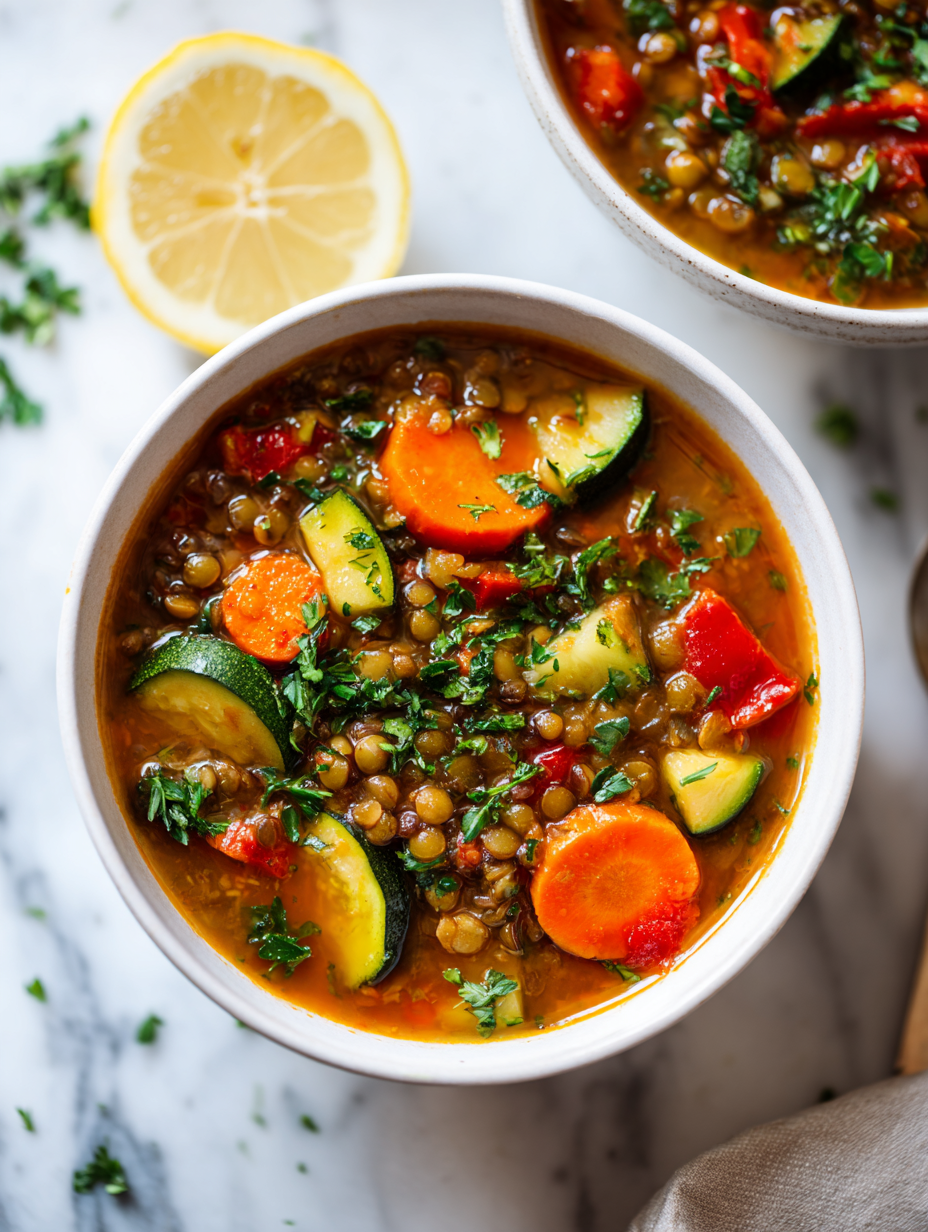
Seasonal Lentil Vegetable Stew
Ingredients
Equipment
Method
- Heat a large pot over medium heat and add a tablespoon of olive oil. Once shimmering, add the diced onion and cook until translucent and fragrant, about 3-4 minutes.
- Add the minced garlic and cook for another minute, stirring continuously until fragrant and slightly golden.
- Stir in the chopped carrots and cook for 5 minutes, allowing them to soften slightly and release their sweet aroma.
- Add the rinsed lentils to the pot along with the cumin, thyme, and smoked paprika. Toast the spices with the vegetables for about 1 minute, stirring constantly to release their fragrance.
- Pour in the vegetable broth and bring everything to a gentle simmer. Once bubbling, reduce the heat to low and partially cover the pot.
- Let the stew simmer for 25-30 minutes, stirring occasionally, until the lentils are tender and slightly breaking apart.
- Add the sliced zucchini and chopped greens in the last 10 minutes of cooking, stirring gently to incorporate and allow them to soften without losing their color.
- Taste the stew and season with salt and pepper as needed, adjusting the seasoning to your preference.
- Remove from heat and let the stew rest for 5 minutes, allowing flavors to meld and the consistency to thicken slightly.
- Serve the stew hot, spooned into bowls, with a drizzle of olive oil or sprinkled herbs if desired, and enjoy the comforting, vibrant flavors.
Pro tips for perfect stew
- Bolded Mini-Head: Sauté aromatics over medium heat → Releases sweet, fragrant oils that form the stew’s base.
- Bolded Mini-Head: Rinse lentils thoroughly → Prevents excess starch and helps them cook evenly.
- Bolded Mini-Head: Use a gentle simmer (~85°C / 185°F) → Keeps ingredients tender without breaking apart.
- Bolded Mini-Head: Add seasonal vegetables late → Keeps their color vibrant and texture just right.
- Bolded Mini-Head: Taste and adjust seasoning at the end → Balances salt, acidity, and enhances flavor complexity.
- Bolded Mini-Head: Let stew rest 5 minutes off heat → Allows flavors to meld and stew to thicken slightly.
Common mistakes and how to fix them
- FORGOT to adjust heat, stew may burn—reduce immediately and add more broth.
- DUMPED in all ingredients at once—sauté veggies first for better flavor development.
- OVER-TORCHED the garlic—use low heat and add later if burnt smell appears.
- NEVER let lentils simmer too hard—keep at gentle simmer to prevent mushiness.
Quick fixes and pantry swaps
- When stew looks too thick, splash in a bit more broth and stir gently.
- If flavors are dull, punch up with a squeeze of lemon or a dash of vinegar.
- Patch over over-salted stew by adding a raw potato for 10 minutes, then remove.
- Splash a little water if the stew crackles or sticks to the bottom—gentle heat prevents burning.
- When lentils aren’t tender enough, simmer a few extra minutes, stirring to prevent sticking.
Prep, store, and reheat tips
- Prep ingredients: chop vegetables and rinse lentils the night before; they keep well in the fridge, ready to go, and save time when cooking.
- Store leftovers in an airtight container for up to 4 days in the fridge. The stew develops deeper, richer flavors overnight, with a slightly thicker texture.
- Freeze in portions for up to 3 months; the flavors soften slightly upon thawing, but the hearty essence remains intact. Thaw overnight in the fridge for best results.
- Reheat gently on the stovetop over medium-low heat (~85°C / 185°F), stirring occasionally. The aroma will deepen, and the stew will regain its comforting warmth and thickened consistency.
Top questions about lentil stew
1. What type of lentils work best for this stew?
Use green or brown lentils for a hearty, earthy flavor, and they hold their shape well during simmering.
2. How can I make the stew taste brighter?
Add a splash of lemon juice or vinegar at the end to brighten up the flavors and add a fresh zing.
3. How do I know when the lentils are done?
Cook the lentils until they are tender and slightly breaking apart, about 25-30 minutes simmering.
4. Can I use any vegetables I have on hand?
Use seasonal vegetables like zucchini, spinach, or kale to keep the stew vibrant and fresh. Adjust cooking time accordingly.
5. What if my stew is too thick or sticky?
If the stew gets too thick, add a bit more broth or water and stir gently until it loosens up.
6. When should I add herbs for the best flavor?
Stir in fresh herbs like parsley or cilantro just before serving to add brightness and freshness.
7. How should I store and reheat leftovers?
Store leftovers in an airtight container for up to 4 days in the fridge. Reheat gently on the stove, stirring occasionally.
8. Can I freeze this stew?
You can freeze the stew in portions for up to 3 months. Thaw overnight in the fridge before reheating.
9. What’s the best temperature to simmer the stew?
Use a gentle simmer (~85°C / 185°F) to prevent overcooking the vegetables and keep the lentils tender.
10. How do I fix bland stew?
Adjust seasoning with salt and pepper as needed. A squeeze of lemon or a dash of vinegar at the end enhances flavor.
This humble stew has become a staple in my kitchen, especially when I need something cozy and reliable. The aromas of garlic, cumin, and simmering vegetables fill the air, making the whole house feel warm and inviting. It’s a dish that reminds me that good, honest food doesn’t have to be complicated or fancy.
Whenever I make this, I’m reminded of the beauty in simple ingredients and the stories they carry. It’s perfect for leftovers, and I love how the flavors deepen overnight. This stew is more than just a meal; it’s a small ritual of comfort that I keep coming back to.

Hi, I’m Clara Sage – and welcome to my kitchen of small revelations.
I created The Language of Aha not just as a recipe blog—but as a space to celebrate the little lightbulb moments that happen in the kitchen.