
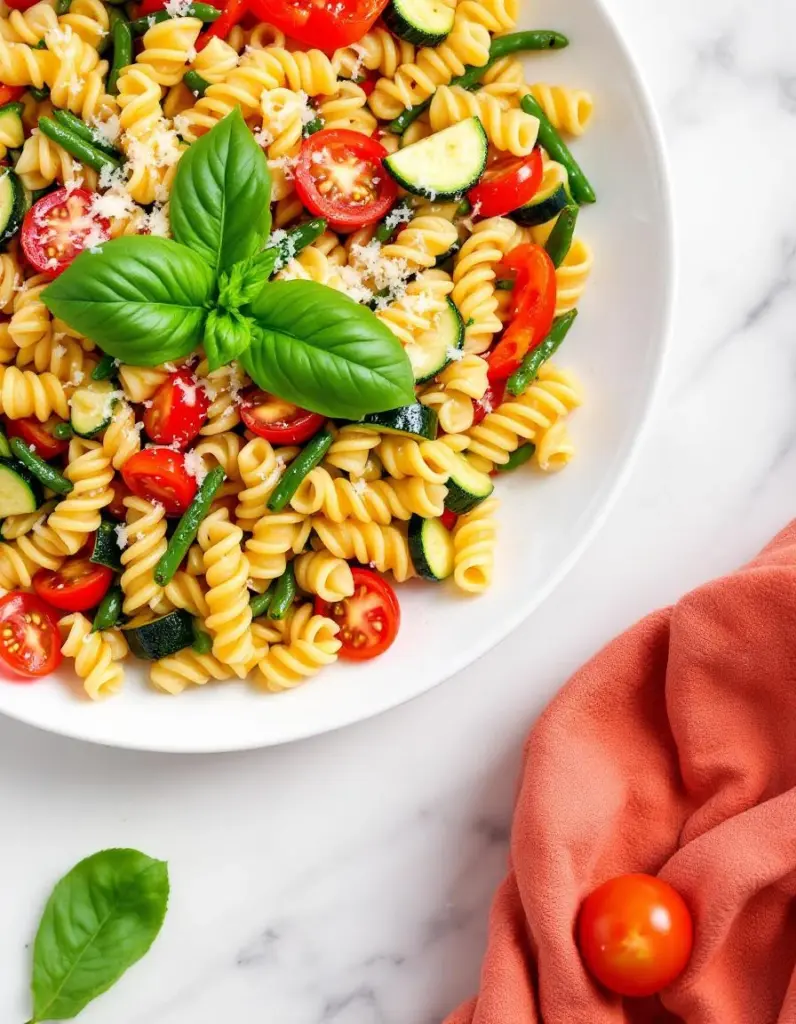
Chopping all the vegetables takes a bit of time, but the sound of the knife hitting the cutting board and the vibrant colors stacking up make it worth it. I like to keep everything in rough, rustic pieces—no perfect dice here, just enough to get a good bite.
Boiling pasta is the easy part, but watching that water foam up and spill over is a familiar dance. Once it’s al dente, I toss it straight into the pan with the veggies, ready to soak up the flavors as I toss everything together.
The gentle sizzle of vegetables hitting hot oil, releasing a burst of garden-fresh aroma and the satisfying crackle that signals everything is coming together just right.
What goes into this dish
- Bell peppers: I like to use a mix of red and yellow for color and sweetness, but green works too. Sauté until just tender and slightly caramelized, adding a smoky note to the dish.
- Zucchini: Slice thin so it cooks quickly and stays tender. It’s mild but adds a nice bite, and you can swap in yellow squash if you prefer a sweeter flavor.
- Cherry tomatoes: The burst of acidity and juice in each bite is essential. If out of season, a good canned San Marzano can add that punch without the fuss.
- Garlic: Don’t skimp—crush and chop it fine. It releases that fragrant, slightly nutty aroma that ties everything together. Skip if you’re sensitive to garlic’s punch.
- Pasta: Use whatever shape you like—penne, spaghetti, or farfalle. Cook until just al dente; overcooked pasta turns mushy fast and loses its bite.
- Olive oil: Go for a good extra virgin; it’s the base for sautéing and lends a fruity, slightly peppery note. Skip or cut back if you’re watching calories.
- Fresh basil: Add at the end for that bright, aromatic hit. If fresh isn’t available, a pinch of dried basil can work, but it won’t be quite the same.
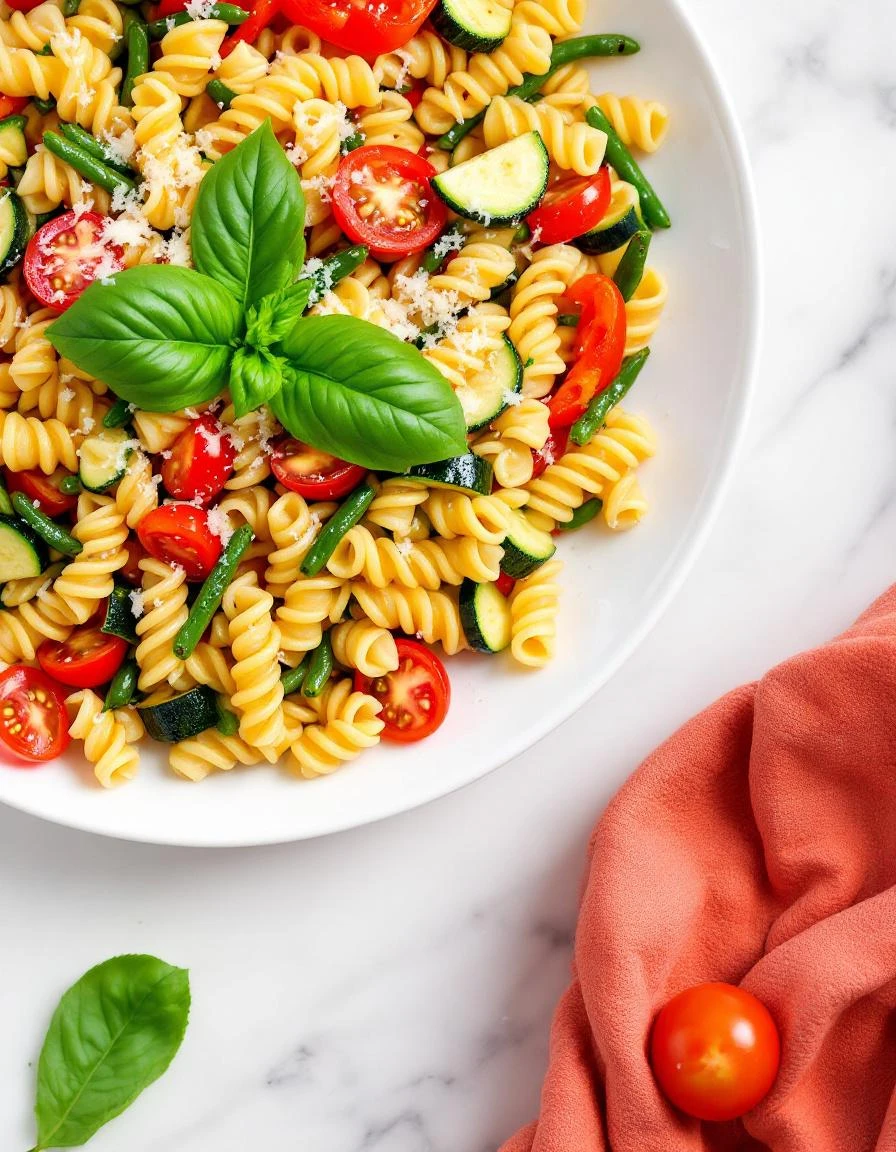
Vegetable Pasta Primavera
Ingredients
Equipment
Method
- Bring a large pot of salted water to a boil. Add the pasta and cook until just al dente, then drain and set aside.
- While the pasta cooks, chop the bell peppers into rustic pieces, slice the zucchini thin, and halve the cherry tomatoes. Keep everything ready for sautéing.
- Heat the olive oil in a large skillet over medium heat until shimmering. Add the chopped garlic and sauté until fragrant, about 30 seconds, until it releases a nutty aroma and turns golden.
- Add the bell peppers and zucchini to the skillet. Sauté for about 5-7 minutes, stirring occasionally, until they are tender and slightly caramelized with a bit of browning on the edges.
- Add the cherry tomatoes to the skillet and cook for another 2-3 minutes, just until they soften and release their juice, creating a vibrant, bubbling sauce.
- Stir in the cooked pasta, tossing everything together to coat the noodles evenly with the vegetable mixture. Cook for another minute to let the flavors meld.
- Remove from heat and sprinkle the chopped fresh basil over the pasta. Toss gently to distribute the aromatic herbs evenly throughout the dish.
- Serve immediately, garnished with extra basil if desired, and enjoy the colorful, satisfying texture of this vegetable-packed pasta.
Common mistakes and how to fix them
- FORGOT to salt the pasta water, resulting in bland noodles. Always salt generously from the start.
- DUMPED in cold vegetables after roasting, making them soggy. Wait until the pasta is ready before mixing.
- OVER-TORCHED the garlic, causing bitterness. Sauté on medium-low and watch closely for golden color.
- MISSED the timing on adding basil, losing its bright flavor. Add at the very end for maximum freshness.
Make-Ahead and Storage Tips
- Prep all vegetables—chopping bell peppers, zucchini, and cherry tomatoes—can be done a day ahead; store in airtight containers in the fridge for up to 24 hours.
- Cook pasta until just al dente, drain, then toss with a teaspoon of olive oil to prevent sticking. Keep in the fridge for up to 24 hours, reheating later.
- Vegetables can be sautéed a couple of hours before serving; reheat in a hot skillet to revive their freshness and crunch.
- Flavor of the dish intensifies as it sits; consider adding a splash of lemon juice or fresh basil just before serving to brighten the flavors.
- Reheat leftovers in a skillet over medium heat, stirring gently until warmed through. Check for doneness and adjust seasoning if needed.
FAQs
1. How should I smell the vegetables cooking?
The aroma of garlic and fresh vegetables hitting hot oil is sharp and fragrant, making your nose tingle slightly. It’s the first sign the dish is coming together well.
2. What texture should the finished pasta have?
The pasta should be firm to the bite, with a slight resistance when you chew, and the vegetables should be tender but not mushy, offering a satisfying crunch.
3. How do I know when to add basil?
The basil should smell bright and aromatic, not dull or burnt, and the cherry tomatoes should burst with juice when pressed.
4. How do I reheat Pasta Primavera?
Reheat leftovers in a hot skillet, stirring often, until the dish is steaming and the vegetables regain a slight crispness. A splash of water helps if it’s drying out.
5. Should I undercook the pasta?
Using undercooked pasta makes it mushy when reheated. Cook it just shy of al dente, so it can finish cooking during reheating without turning soggy.

Hi, I’m Clara Sage – and welcome to my kitchen of small revelations.
I created The Language of Aha not just as a recipe blog—but as a space to celebrate the little lightbulb moments that happen in the kitchen.