

Vegan gumbo might sound like a contradiction at first, but it’s really about harnessing bold, smoky flavors that can stand in for traditional meat and seafood. I’ve always loved the deep, complex taste of a good gumbo, and figuring out how to get that richness without animal products was a fun challenge—one that’s become a staple in my kitchen.
What excites me about this version is how accessible it is—no fancy ingredients, just honest, everyday vegetables and spices simmered into something soulful. It’s perfect for chilly nights when you want comfort, but also want to keep it light and plant-based. Plus, the aroma of paprika, thyme, and simmering okra just fills the house with nostalgia and warmth.
Focusing on a Southern comfort food classic, but reimagined entirely plant-based, this gumbo celebrates bold flavors and nostalgic warmth without relying on traditional meats or seafood, proving that vegan cooking can be hearty, soulful, and deeply satisfying.
A Soulful Plant-Based Classic
- Making this gumbo feels like capturing a piece of my childhood, the smells of smoky paprika and simmering okra remind me of family Sundays.
- I love how this dish turns humble vegetables into something deeply satisfying, it’s like a warm hug from the inside out.
- There’s a quiet pride I feel when I serve this—knowing I’ve created something hearty and flavorful without any animal products.
- Sometimes, I get overwhelmed by how simple ingredients can build such complex, layered flavors—every spoonful surprises me.
- Cooking this recipe is a bit chaotic, but the aroma alone makes all the mess worth it—rich, smoky, with a hint of lemon-bright freshness.
The story behind this recipe
- This vegan gumbo was born out of a need to recreate the smoky, hearty essence of traditional gumbo using only plant-based ingredients. I remember the first time I tasted a real gumbo—rich, thick, with that smoky depth from smoked paprika and a complex spice blend. I wanted to see if I could capture that same warmth and soul without relying on seafood or meats, which are staples in classic recipes.
- It started as a kitchen experiment, a way to make comfort food accessible to everyone, whether you’re vegan or just looking to eat lighter but still crave flavor. The process of layering spices, sautéing vegetables until they’re caramelized just right, and simmering until everything melds—these steps remind me how simple ingredients can turn into something unforgettable. Now, this dish feels like a personal tradition, a cozy bowl of memories in every spoonful.
- heading: ‘The inspiration behind this dish’
Gumbo’s Rich Cultural Roots
- Gumbo originates from Louisiana, blending French, Spanish, African, and Native American culinary influences into one hearty dish.
- Traditionally, gumbo was a way to use leftover ingredients, which is why it’s so adaptable and rich in flavor.
- The dish’s name likely comes from West African languages, with some theories suggesting it means ‘okra’ or ‘small bag’—a nod to its thickening ingredients.
Key ingredients and tips
- Okra: I love how okra gets slimy and tender when cooked, adding natural thickening. If you dislike sliminess, sauté it longer or add a splash of vinegar to cut through the texture.
- Smoked paprika: It gives that essential smoky depth I crave. Use a good quality one, or try chipotle powder for an extra kick of heat and smoky aroma.
- Bell peppers: I prefer red or yellow for sweetness and color, but green works too if you want a more vegetal, slightly bitter note—just chop and sauté until fragrant.
- Vegetable broth: I use homemade or store-bought—either way, it should be rich and well-seasoned. Boost flavor by simmering with herbs before adding to the gumbo.
- Filé powder: It’s the magic thickener and flavor enhancer. If you can’t find it, a little xanthan gum or extra okra can help thicken, but the flavor will be different.
- Onions and garlic: Their aroma when sautéed is everything—carmelized onions bring sweetness, garlic adds depth. Sauté until golden and fragrant, about 5 mins over medium heat.
- Green onions: I sprinkle these fresh at the end for a bright, peppery finish. They add a burst of freshness that balances the smoky richness.
Spotlight on key ingredients
Okra:
- I love how okra gets slimy and tender when cooked, adding natural thickening. If you dislike sliminess, sauté it longer or add a splash of vinegar to cut through the texture.
- Smoked paprika: It gives that essential smoky depth I crave. Use a good quality one, or try chipotle powder for an extra kick of heat and smoky aroma.
Bell peppers and Filé powder:
- Bell peppers: I prefer red or yellow for sweetness and color, but green works too if you want a more vegetal, slightly bitter note—just chop and sauté until fragrant.
- Filé powder: It’s the magic thickener and flavor enhancer. If you can’t find it, a little xanthan gum or extra okra can help thicken, but the flavor will be different.
Notes for ingredient swaps
- Oil: I prefer vegetable or canola oil for neutrality, but coconut oil adds a subtle sweetness and richness—just watch the heat to avoid smoking.
- Okra: Fresh okra is best for that slimy, tender texture, but frozen works in a pinch—just thaw and pat dry before cooking to reduce excess slime.
- Smoked paprika: Use regular paprika if you want milder flavor, or chipotle powder for a smokier, spicier kick—adjust to your heat tolerance.
- Vegetable broth: Homemade broth lends depth, but store-bought with added herbs or miso paste can boost flavor if you’re in a pinch.
- Tomatoes: Canned diced tomatoes are reliable, but roasted fresh tomatoes add a deeper, caramelized sweetness—consider roasting before adding.
- Filé powder: If unavailable, try a small pinch of xanthan gum to thicken, but it won’t have the same herbal, earthy aroma—use sparingly.
- Bell peppers: Red or yellow add sweetness and color, but green peppers give a more vegetal, slightly bitter note—chop and sauté until fragrant.
Equipment & Tools
- Large heavy-bottomed pot: Ensures even heat for simmering and prevents sticking.
- Wooden spoon: For stirring without scratching the pot and blending flavors.
- Measuring spoons and cups: Accurate measurement for spices and liquids.
- Knife and chopping board: Prepare vegetables efficiently.
Step-by-step guide to vegan gumbo
- Gather all equipment and ingredients before starting—this dish moves quick once you’re underway.
- Heat a large heavy-bottomed pot over medium heat, about 160°C/320°F. Add a tablespoon of oil.
- Sauté diced onions, bell peppers, and celery for 8-10 minutes—wait for the veggies to soften and release fragrance, a golden hue is your cue.
- Stir in minced garlic and smoked paprika; cook for 1 minute until fragrant—avoid burning, adjust heat if necessary.
- Add sliced okra (about 1 cup), stir well, and cook for another 5 minutes—okra should turn tender and slightly slimy, adding to the gumbo’s body.
- Pour in 4 cups of vegetable broth, bring to a gentle simmer—look for small bubbles, not a rolling boil.
- Stir in diced tomatoes and season generously with thyme, bay leaves, salt, and pepper—let simmer uncovered for 30 minutes, stirring occasionally.
- Taste and adjust seasoning—if the gumbo isn’t thick enough, mash some cooked okra into the mixture or add a teaspoon of filé powder. If too thick, splash in a bit more broth.
- In the last 5 minutes, add chopped green onions and a splash of lemon juice—brighten the flavors and add freshness.
- Remove from heat. Let sit for 5 minutes to allow flavors to meld before serving.
Let the gumbo rest off heat for 5 minutes, uncovered. Serve hot, garnished with fresh green onions and a squeeze of lemon for brightness.
How to Know It’s Done
- Vegetables should be tender, fragrant, and slightly caramelized.
- Okra should be slimy and soft, giving the gumbo thickness.
- Broth should be rich and flavorful, not watery or bland.
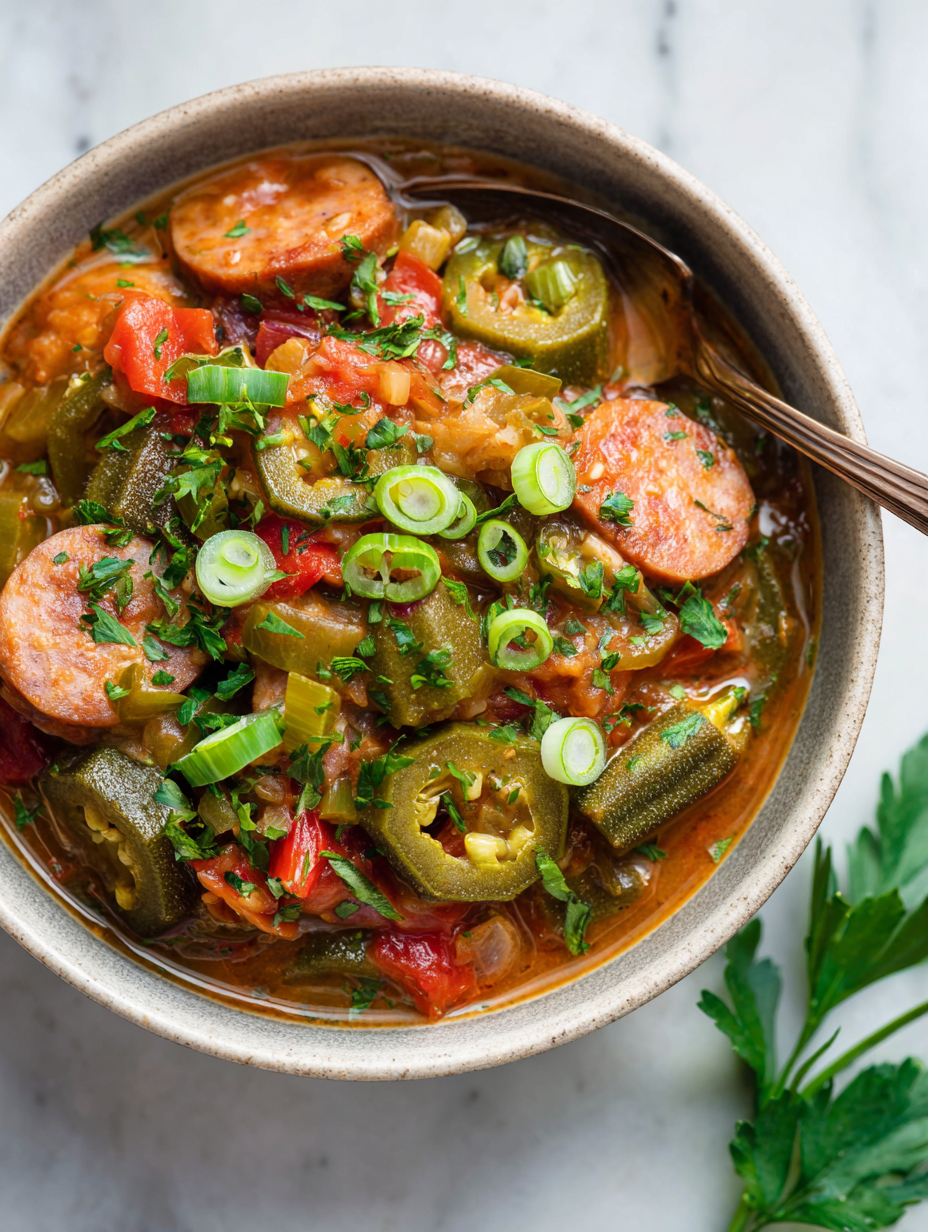
Vegan Gumbo
Ingredients
Equipment
Method
- Heat a large heavy-bottomed pot over medium heat and add a tablespoon of oil. Once shimmering, add diced onions, chopped bell peppers, and celery. Sauté for 8-10 minutes, stirring frequently, until the vegetables are soft and fragrant, and the onions turn golden.
- Add minced garlic and smoked paprika to the pot. Stir well and cook for about 1 minute until the mixture becomes fragrant and the garlic is just starting to brown.
- Stir in the sliced okra and cook for another 5 minutes, allowing it to soften and release some of its natural slime, which will help thicken the gumbo. The okra should turn tender and slightly slimy, coating the vegetables.
- Pour in the vegetable broth and add the diced tomatoes, thyme, bay leaf, salt, and pepper. Stir everything together and bring to a gentle simmer. Let it bubble softly for about 30 minutes, stirring occasionally to prevent sticking.
- Taste the gumbo and adjust the seasoning with more salt, pepper, or a squeeze of lemon juice to brighten the flavors. If the broth isn’t thick enough, mash some of the cooked okra directly in the pot or stir in a pinch of filé powder if available.
- Remove the bay leaf and stir in chopped green onions just before serving. The vibrant green tops add a fresh, peppery note to the rich stew.
- Serve the gumbo hot, garnished with extra green onions if desired. Enjoy its bold, smoky flavor and hearty texture.
Pro tips for perfect vegan gumbo
- Bolded mini-head: Sauté spices first → Releases smoky aroma and deepens flavor right away.
- Bolded mini-head: Use a heavy-bottomed pot → Prevents hot spots and ensures even cooking of thick stew.
- Bolded mini-head: Add okra gradually → Keeps slime manageable and evenly distributed throughout the gumbo.
- Bolded mini-head: Taste and adjust before serving → Balances smoky, tangy, and savory notes perfectly.
- Bolded mini-head: Let the gumbo rest → Allows flavors to meld, resulting in a richer, more cohesive dish.
- Bolded mini-head: Incorporate lemon juice at the end → Brightens the overall flavor and cuts through richness.
Common mistakes and how to fix them
- FORGOT to thaw frozen okra → Thaw and pat dry to reduce slime.
- DUMPED the spices early → Sauté spices with veggies for full flavor release.
- OVER-TORCHED the roux → Cook over low heat, stir constantly until rich and dark.
- MISSED taste test at the end → Adjust seasoning with salt, lemon, or hot sauce before serving.
Quick fixes and pantry swaps
- If sauce is too thick, splash in hot broth and stir to loosen.
- When the gumbo lacks smoky depth, add a pinch of smoked paprika or a dash of liquid smoke.
- Splash lemon juice at the end to brighten flavors if it tastes dull or flat.
- Patch over-seasoned gumbo with a splash of water or broth—then simmer gently to mellow.
- Shield delicate okra from overcooking by adding it later in the simmering process.
Prep, store, and reheat tips
- Chop vegetables like bell peppers, onions, and celery a day in advance; store in an airtight container in the fridge—veggies stay vibrant and ready to sauté.
- Cook and cool the gumbo fully before refrigerating; it keeps well for 2-3 days, and the flavors deepen overnight, becoming more integrated and smoky.
- Reheat gently on the stove over medium heat, stirring occasionally. Expect the aroma to revive with smoky, savory notes, and the texture to thicken slightly upon standing.
- For longer storage, freeze in portions for up to 3 months. Thaw in the fridge overnight, then reheat on the stove, adding a splash of broth if it thickens too much.
Top questions about vegan gumbo
1. Can I skip okra or substitute it?
Use okra for that natural thickening and slimy texture, which gives the gumbo its authentic feel.
2. What’s a good substitute for smoked paprika?
Smoked paprika adds that essential smoky depth; chipotle powder can work for a spicier version.
3. Can I use water instead of broth?
Use vegetable broth—homemade or store-bought—rich and well-seasoned to boost flavor.
4. How do I add brightness to the gumbo?
Add lemon juice or apple cider vinegar at the end to brighten the flavors and cut through richness.
5. How long should I cook the gumbo?
Simmer uncovered for about 30 minutes until the flavors meld and the broth thickens to your liking.
6. When should I add green onions?
Stir in chopped green onions and season to taste before serving for fresh, vibrant flavor.
7. How should I store leftovers?
Store in airtight containers in the fridge for up to 3 days, or freeze for longer storage.
8. How do I reheat the gumbo without losing flavor?
Reheat gently on the stove over medium heat, stirring occasionally and adding broth if needed.
9. Can I freeze vegan gumbo?
Yes, you can freeze it in portions. Thaw overnight in the fridge before reheating.
10. What if my gumbo is too thick?
If the gumbo is too thick, splash in hot broth or water and stir until it loosens up.
This vegan gumbo isn’t just about replacing meat—it’s about layering smoky, bold flavors that feel just as indulgent. Each spoonful brings back memories of family gatherings and slow Sunday afternoons, but with a plant-based twist that keeps it fresh and honest.
In a world where comfort food often feels indulgent or complicated, this dish stands out as a simple, soulful, and deeply satisfying option. It’s a reminder that hearty, flavorful meals can be made from everyday ingredients and still carry a little piece of history in every bite.

Hi, I’m Clara Sage – and welcome to my kitchen of small revelations.
I created The Language of Aha not just as a recipe blog—but as a space to celebrate the little lightbulb moments that happen in the kitchen.