
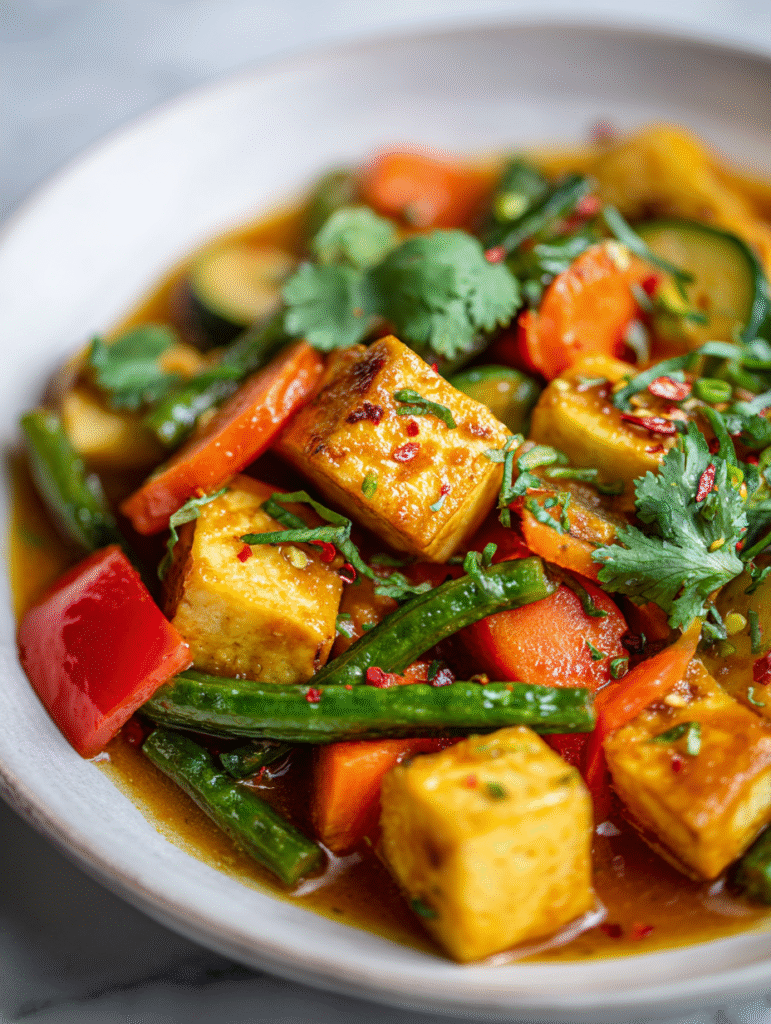
This tofu vegetable curry is my go-to for busy weeknights when I want something nourishing but don’t want to spend hours in the kitchen. It’s all about using simple, honest ingredients—firm tofu, fresh vegetables, and a handful of spices—that come together quickly and leave you feeling satisfied without the fuss.
I love how adaptable this dish is. Whatever veggies I have in the fridge—carrots, bell peppers, spinach—they all find a place here. It’s a reminder that good food doesn’t need to be complicated, just honest and cooked with care. Plus, the aroma of garlic, ginger, and warm spices fills the house, making even the busiest evenings feel special.
Focusing on how this tofu vegetable curry can be a comforting, budget-friendly weeknight dinner that still feels indulgent and nourishing, emphasizing the importance of simple, honest ingredients and the joy of slow, mindful cooking.
Finding Comfort in Simple Cooking
- Cooking this curry always reminds me of lazy Sunday afternoons, when the house smells warm and inviting.
- There’s a quiet pride in turning simple ingredients into something so flavorful, almost meditative.
- I find comfort in how forgiving this dish is—adjusting the spice levels or veggies feels like a small, creative act.
- Sharing this curry with friends always sparks conversations about childhood memories of home-cooked meals.
The story behind this recipe
- This curry was born out of a busy week when I needed something quick, filling, and honest. I was tired of ordering takeout but still craved a warm bowl that felt like a hug. The first time I threw this together, I realized how forgiving and adaptable it can be—perfect for improvising with what’s in the fridge.
- It’s become my go-to comfort food after a long day, a reminder that simple ingredients can create something deeply satisfying. The smell of garlic and spices simmering always takes me back to lazy weekends in my childhood kitchen, where food was about warmth and care. Now, I make it often, tweaking it to fit whatever’s lingering in my produce drawer.
- heading: ‘The story behind this recipe’
Cultural and Historical Tidbits
- This curry style has roots in Southeast Asian home cooking, where quick, adaptable meals are essential for busy families.
- Tofu, originally from ancient China, was historically seen as a humble protein but became a versatile ingredient worldwide, especially in vegetarian dishes.
- The use of fresh vegetables and spices in this curry reflects a tradition of balancing flavors and seasonal ingredients, making each batch slightly unique.
- In many Asian cultures, curry dishes like this are shared family-style, emphasizing communal eating and warmth around the table.
Ingredient breakdown: key components
- Tofu: I prefer firm tofu, it holds up nicely and gets a satisfying chew. Press out excess moisture before cubing—water makes the curry watery. Feel free to try smoked or extra-firm for a deeper flavor.
- Carrots: I love the crunch and sweetness they add. Slice thin for quick cooking or thicker for a tender bite. Bright orange and juicy, they’ll turn tender and slightly caramelized when sautéed.
- Bell Peppers: Use whichever colors you like—red, yellow, or green. They soften quickly, releasing a sweet aroma. For a smoky twist, char them over an open flame before chopping.
- Coconut Milk: I use full-fat for richness—silky and fragrant, it makes the curry feel indulgent. Light coconut milk works if you want a lighter dish, but it’s less creamy and a tad thinner in texture.
- Spices: My secret is a good-quality curry powder—smoky, warm, with a hint of cumin. Toast the spices briefly in oil to deepen their aroma. If you’re sensitive to heat, start with less and adjust.
- Ginger & Garlic: Fresh is best—pungent and zesty, they bloom when sautéed. Mince finely to avoid overpowering bites. If fresh isn’t available, a teaspoon of paste works, but it’s not quite the same.
- Lime or Lemon: A squeeze at the end brightens the whole dish—vivid and zesty. Use fresh citrus for that sharp, clean finish, especially if the curry feels a little dull after simmering.
Spotlight on key ingredients
Tofu:
- I prefer firm tofu, it holds up nicely and gets a satisfying chew. Press out excess moisture before cubing—water makes the curry watery. Feel free to try smoked or extra-firm for a deeper flavor.
- Carrots: I love the crunch and sweetness they add. Slice thin for quick cooking or thicker for a tender bite. Bright orange and juicy, they’ll turn tender and slightly caramelized when sautéed.
Vegetables & Aromatics:
- Bell Peppers: Use whichever colors you like—red, yellow, or green. They soften quickly, releasing a sweet aroma. For a smoky twist, char them over an open flame before chopping.
- Ginger & Garlic: Fresh is best—pungent and zesty, they bloom when sautéed. Mince finely to avoid overpowering bites. If fresh isn’t available, a teaspoon of paste works, but it’s not quite the same.
Notes for ingredient swaps
- Dairy-Free: Swap coconut milk for cashew cream. It’s creamier and a bit nuttier, but still rich and smooth.
- Vegetables: Use zucchini or snap peas instead of bell peppers for a crisper bite and milder sweetness.
- Tofu: Firm or extra-firm tofu works best, but tempeh can be a hearty, protein-rich alternative—just fry it until golden.
- Spices: If curry powder isn’t available, blend turmeric, cumin, coriander, and a pinch of cinnamon for a custom mix.
- Acid: Lime juice is classic, but lemon works just as well, adding a brighter, zesty punch to finish.
- Oil: Use neutral oils like canola or vegetable; sesame oil adds a nutty aroma but can overpower delicate flavors if used excessively.
- Sweeteners: A teaspoon of honey or agave can balance spice heat, but skip if you prefer a strictly savory curry.
Equipment & Tools
- Large skillet or wok: For even cooking and stir-frying ingredients.
- Spatula: To stir and turn ingredients without breaking tofu.
- Sharp knife: For precise chopping of vegetables and tofu.
- Cutting board: To prepare ingredients safely.
- Measuring spoons: To measure spices and liquids accurately.
- Bowl: For marinating tofu and holding prepped ingredients.
Step-by-step guide to tofu vegetable curry
- Equipment & Tools: Gather a large skillet or wok for even heat distribution, a spatula for stirring, a sharp knife and cutting board for prep, a measuring spoons for spices, and a bowl for tofu marinade.
- Press the tofu: Wrap in a clean towel, set a weight on top, press for 15 minutes to remove excess moisture. Cut into 1-inch cubes.
- Marinate tofu: Toss cubes with 1 tbsp soy sauce and 1 tsp cornstarch. Set aside to absorb flavors while you prep vegetables.
- Prep vegetables: Slice carrots thin, chop bell peppers into bite-sized pieces, mince garlic and ginger finely. Keep everything within reach.
- Heat oil: Place skillet over medium heat (~160°C/320°F). When shimmering, add tofu. Fry until golden, about 4-5 minutes, turning occasionally. Remove and set aside.
- Sauté aromatics: In the same skillet, add a splash more oil if needed. Cook garlic and ginger for 30 seconds until fragrant and slightly golden, about 2-3 minutes. Add spices and toast briefly until aromatic.
- Cook vegetables: Add carrots and bell peppers. Stir and cook for 5-7 minutes until they soften slightly but still have some crunch. Smell should be sweet and smoky.
- Add liquids: Pour in coconut milk, scraping up any browned bits from the bottom. Bring to a gentle simmer, about 4 minutes. Return tofu to the pan, stir to coat everything well.
- Simmer: Reduce heat to low (~80°C/175°F). Let simmer uncovered for 10 minutes, stirring occasionally. Vegetables should be tender but not mushy, and the sauce slightly thickened.
- Final touches: Squeeze lime juice over the curry. Taste and adjust salt or spice. Optional: sprinkle with chopped cilantro or green onions before serving.
- Rest and serve: Let the curry sit for 2 minutes off heat. Serve over steaming rice or noodles. The flavors deepen slightly as it rests.
Let the curry rest for 2 minutes off heat to allow flavors to meld. Serve hot over rice or noodles, garnished with herbs if desired.
How to Know It’s Done
- Tofu is golden and crispy outside, tender inside.
- Vegetables are tender yet retain some crunch, vibrant in color.
- Sauce is creamy, fragrant, and slightly thickened, coats ingredients well.
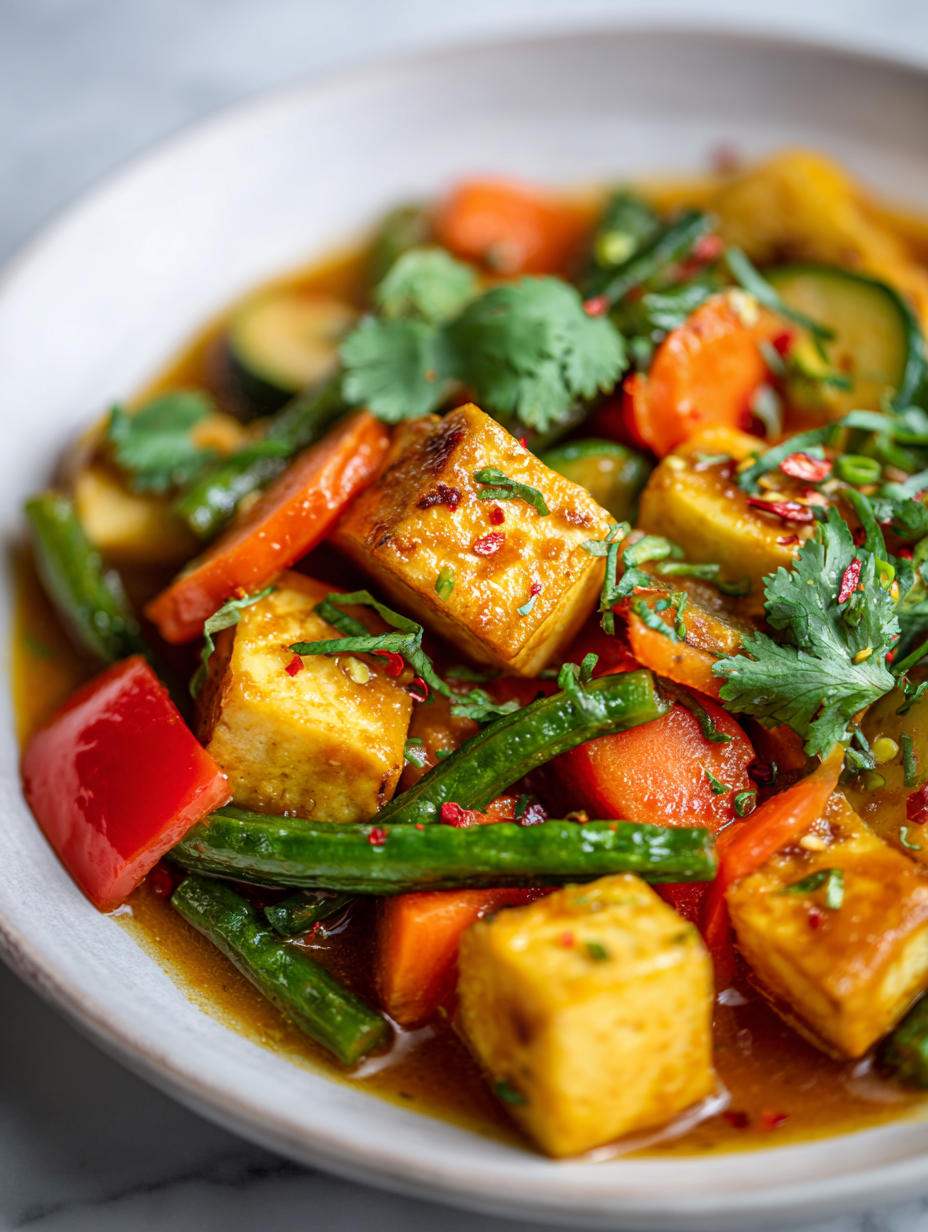
Tofu Vegetable Curry
Ingredients
Equipment
Method
- Press the tofu for about 15 minutes wrapped in a towel with a weight on top, then cut into 1-inch cubes.
- Toss the tofu cubes with soy sauce and cornstarch, then set aside to marinate while you prepare the vegetables.
- Slice the carrots into thin rounds, chop the bell pepper into bite-sized pieces, and mince the garlic and ginger finely.
- Heat one tablespoon of oil in a large skillet or wok over medium heat until shimmering, then add the tofu cubes. Fry until golden and crispy, about 4-5 minutes, turning occasionally. Remove and set aside.
- In the same skillet, add the remaining oil and sauté the garlic and ginger for about 30 seconds until fragrant and slightly golden.
- Add the curry powder and toast it briefly with the aromatics until aromatic, about 1 minute.
- Stir in the sliced carrots and chopped bell peppers, cooking for about 5-7 minutes until they soften slightly and smell sweet and fragrant.
- Pour in the coconut milk, scraping up any browned bits from the bottom of the pan. Bring to a gentle simmer for 4 minutes, allowing the sauce to meld and thicken slightly.
- Return the crispy tofu to the skillet, stirring gently to coat everything in the sauce. Reduce heat to low and simmer uncovered for about 10 minutes, until the vegetables are tender and the sauce is creamy.
- Squeeze fresh lime juice over the curry, stir briefly, and taste. Adjust salt and pepper as needed. Garnish with chopped cilantro or green onions if desired.
- Serve hot over steamed rice or noodles, enjoying the comforting aroma and vibrant flavors of this simple, nourishing curry.
Pro tips for tofu vegetable curry
- Press tofu: Remove excess moisture for crisper edges and less watery curry. Wrap in a towel, weigh it down for 15 mins.
- Toast spices: Briefly toast curry powder or whole spices in oil to unlock deeper, more complex flavors before adding liquids.
- Cook vegetables properly: Sauté carrots and peppers until just tender but still vibrant—overcooking dulls their color and texture.
- Add coconut milk carefully: Pour slowly while stirring to avoid curdling and ensure a silky, even sauce consistency.
- Finish with acid: A squeeze of lime brightens the whole dish, balancing richness and intensifying flavors right before serving.
- Simmer gently: Keep the curry at a gentle simmer (around 80°C/175°F) to meld flavors without breaking down ingredients.
- Adjust seasoning: Taste and add salt or a splash more lime at the end—flavors deepen as the curry rests a few minutes.
Common mistakes and how to fix them
- FORGOT to press tofu: Do it for 15 minutes to avoid watery curry.
- DUMPED spices too early: Toast them briefly in oil for deeper aroma.
- OVER-TORCHED vegetables: Stir constantly to prevent burning and bitterness.
- UNDER-COOKED sauce: Simmer until creamy and slightly thickened, about 10 minutes.
Quick fixes and pantry swaps
- When wateriness appears, splash in a bit more coconut milk and simmer to thicken.
- If tofu sticks to the pan, patch with a quick splash of oil and gentle scraping.
- Splash soy sauce on dull vegetables for a quick flavor boost and color deepening.
- Shield burned spices by removing the pan from heat immediately and adding a splash of water.
- Rescue a bland curry by stirring in fresh lime juice and a pinch of salt, then simmer briefly.
Prep, store, and reheat tips
- Prep the tofu: Press and cube the tofu a day ahead, then marinate in soy sauce and cornstarch overnight for extra flavor and crispness, keeping it in the fridge for up to 24 hours.
- Chop vegetables: Slice carrots, peppers, and mince garlic and ginger the night before. Store in airtight containers in the fridge for up to 24 hours, keeping them crisp and fresh.
- Cook the curry base: Prepare the spice and coconut milk mixture in advance, then cool and store in a sealed container for up to 2 days. Reheat gently, stirring until smooth and fragrant.
- Reheating: Gently warm the curry over low heat, stirring occasionally. The flavors deepen, and the sauce thickens slightly, so add a splash of water or coconut milk if it thickens too much.
- Shelf life: This curry keeps well for 3–4 days in the fridge. The tofu may lose some crispness, but the flavors will remain vibrant and comforting.
Top questions about tofu curry
1. Can I use soft tofu instead?
Use firm or extra-firm tofu, pressed well to remove excess water, for the best texture and less watery sauce.
2. Will soft tofu work in this recipe?
Yes, but soft tofu will break apart more easily and make the curry creamier and less firm.
3. How can I adjust the spice level?
To make it spicier, add more curry powder or a pinch of chili flakes during cooking. For milder, reduce spices or skip chili.
4. Can I substitute coconut milk?
You can swap coconut milk with cashew cream or almond milk for a different but still rich sauce.
5. How long does it last in the fridge?
Leftovers keep well in the fridge for up to 3 days. Reheat gently on the stove, stirring, until hot and fragrant.
6. Can I freeze this curry?
Yes, you can freeze the curry for up to 2 months. Thaw in the fridge overnight and reheat gently on the stove.
7. Can I prepare this in advance?
Press and marinate the tofu ahead of time to intensify flavor and crispness, saving you time when cooking.
8. Should I add acid at the end?
Add a squeeze of lime or lemon at the end to brighten flavors and balance the richness of the sauce.
9. How do I know when vegetables are done?
Ensure vegetables are cooked just until tender—overcooking dulls color and texture, reducing freshness.
10. What’s the best simmering temperature?
Use a gentle simmer (around 80°C/175°F) to meld flavors without breaking down ingredients or over-thickening.
This tofu vegetable curry is a reminder that comfort food can be simple, honest, and deeply satisfying. It’s perfect for those busy nights when you need nourishment without fuss, and the aroma of garlic, spices, and coconut milk brings a small moment of peace.
Cooking it slowly, letting the flavors meld, makes every spoonful feel a little more treasured. It’s a dish that’s easy to adapt, forgiving in its ingredients, and always welcoming—just like the best kind of home cooking.

Hi, I’m Clara Sage – and welcome to my kitchen of small revelations.
I created The Language of Aha not just as a recipe blog—but as a space to celebrate the little lightbulb moments that happen in the kitchen.