
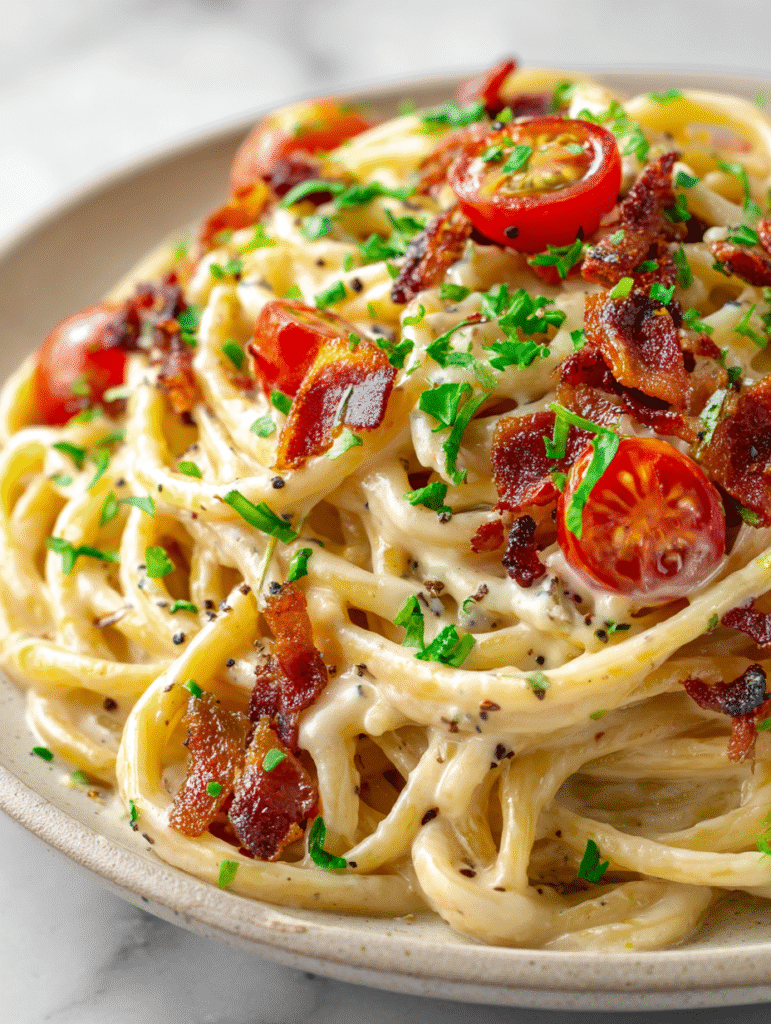
This vegan carbonara isn’t just about mimicking the creamy, smoky richness of the original. It’s a conscious twist that feels just as indulgent, but with a lighter footprint. I love how it sneaks in familiar comfort while being kind to the planet.
Making this dish felt like a small act of rebellion—reclaiming a classic and making it sustainable without sacrificing flavor. It’s perfect for cozy nights when you want something familiar but also want to feel good about what’s on your plate.
There’s something nostalgic about carbonara, right? But this version keeps that warmth alive, using everyday pantry ingredients and a few clever swaps. It’s a reminder that comfort food can also be a step toward a better future.
Focusing on how this vegan carbonara can be a comforting yet sustainable twist on a classic, blending nostalgia with eco-conscious choices.
Personal Inspiration
- This recipe started from a late-night craving for comfort but with a purpose. I wanted something rich and smoky, like the classic carbonara, but made vegan and lighter without losing that cozy texture. It’s a dish that reminds me how clever swaps can still deliver on nostalgia.
- I experimented with different plant-based ingredients, trying to mimic the creamy egg-y texture and smoky punch. The moment I hit the right balance—creamy cashew sauce with a smoky splash of smoked paprika—I knew I had something special. It’s become my go-to when I want a quick, satisfying meal that feels indulgent but actually isn’t.
- heading: ‘The story behind this recipe’
Key Ingredients Breakdown
- Cashews: I love how creamy and rich they get when soaked—makes the sauce velvety. Skip soaking if you’re in a rush, but expect a slightly grainier texture.
- Nutritional Yeast: It adds that cheesy, umami punch, like a whisper of aged parmesan. Increase a little for extra depth, or tone down if you prefer milder flavor.
- Smoked Paprika: This is my secret to that smoky bite—bright, peppery, and just a touch sweet. Use less if you want subtler smoke, or a pinch of liquid smoke for more impact.
- Plant-Based Bacon: I prefer crispy, smoky strips—think bacon but vegan. If you want a softer texture, cook them a bit less; for crunch, let them crisp up longer until crackling.
- Pasta: I stick with spaghetti for that classic feel—al dente, with a slight bite. Whole wheat works beautifully if you want more fiber, but may take a minute longer to cook.
- Nutritional Boost: I sometimes toss in a splash of lemon juice or zest—brightens the sauce and cuts through the richness. Skip if you prefer a mellow taste, but don’t forget to taste and adjust.
- Salt & Pepper: I keep it simple here—season generously but taste as you go. The smoky and cheesy flavors should shine, so balance accordingly.
Spotlight on key ingredients
Cashews:
- I love how creamy and rich they get when soaked—makes the sauce velvety. Skip soaking if you’re in a rush, but expect a slightly grainier texture.
- Nutritional Yeast: It adds that cheesy, umami punch, like a whisper of aged parmesan. Increase a little for extra depth, or tone down if you prefer milder flavor.
- Smoked Paprika: This is my secret to that smoky bite—bright, peppery, and just a touch sweet. Use less if you want subtler smoke, or a pinch of liquid smoke for more impact.
Nutritional Yeast:
- It’s my go-to for that cheesy flavor—adds depth without dairy. Toast it lightly in a dry pan for a nuttier aroma.
- Smoked Paprika: Smoky, vibrant, and brightens the sauce instantly. A little goes a long way—start small, taste, then add more if needed.
Notes for ingredient swaps
- Dairy-Free: Use coconut cream or cashew cream instead of traditional cheese — it adds richness without dairy, but might be slightly sweeter.
- Gluten-Free: Swap regular pasta for chickpea or rice pasta — they hold sauce well but have a different texture and cooking time.
- Smoky Flavor: Add a few drops of liquid smoke or smoked sea salt for a deeper smoky punch if you can’t find smoked paprika.
- Vegan Bacon: Try thinly sliced smoked tempeh or coconut chips cooked until crispy — they mimic bacon’s crunch and smoky flavor.
- Nut-Free: Use sunflower seed butter or tahini in the sauce for creaminess — keep in mind they bring a different flavor profile.
- Lemon Brightness: Substitute lemon zest with a splash of apple cider vinegar for a tangy lift, especially if citrus isn’t your thing.
- Herbs: Fresh thyme or parsley can replace basil or oregano — add just before serving for freshness and color.
Equipment & Tools
- Large pot: Boil pasta efficiently in plenty of salted water.
- Skillet: Sauté bacon, onions, and combine sauce for flavor melding.
- Blender or food processor: Create a smooth, creamy sauce from soaked cashews and seasonings.
- Measuring cups and spoons: Ensure accurate ingredient portions for balance.
- Cooking spoon: Stir and combine ingredients smoothly.
Step-by-step guide to vegan carbonara
- Gather your equipment: a large pot for boiling pasta, a skillet for sauce, blender or food processor, and a stirring spoon. Boil water in the pot, salt generously, and cook spaghetti until just al dente, about 8-10 minutes at 100°C (212°F).
- Drain the pasta, reserving about 1 cup of starchy water. Set aside. While pasta cooks, soak 1 cup of cashews in hot water for at least 15 minutes to soften.
- In your blender, combine soaked cashews, 1/4 cup nutritional yeast, 1 teaspoon smoked paprika, a squeeze of lemon, and 1/2 cup plant-based milk. Blend until smooth and creamy. Taste and adjust salt or lemon if needed.
- Heat a tablespoon of oil in your skillet over medium heat (about 160°C/320°F). Add finely chopped onion and garlic, sauté until fragrant, about 2 minutes. Add vegan bacon strips, cook until crispy and smoky, about 3-4 minutes.
- Pour the cashew sauce into the skillet with the bacon and onions. Warm gently, stirring continuously, for 2-3 minutes. If the sauce is too thick, add reserved pasta water gradually until silky and coat the pasta well.
- Add the drained pasta to the skillet, toss to coat evenly. Cook for another minute so flavors meld. Check for seasoning, add more salt, pepper, or lemon zest as desired.
- Remove from heat. Let sit for 1-2 minutes to thicken slightly. Plate immediately, garnishing with extra nutritional yeast or fresh herbs if you like.
- Finish with a drizzle of olive oil or a sprinkle of smoked paprika for extra smoky aroma. Serve hot, with a side of greens or crusty bread.
Let the dish rest for 1-2 minutes to thicken slightly. Finish with a touch of olive oil or smoked paprika. Serve immediately, garnished with herbs or extra nutritional yeast for added flavor and visual appeal.
How to Know It’s Done
- Sauce is silky and coats pasta evenly without clumping.
- Bacon strips are crispy and smoky, not soggy.
- Pasta is al dente, with a slight bite, and well coated.
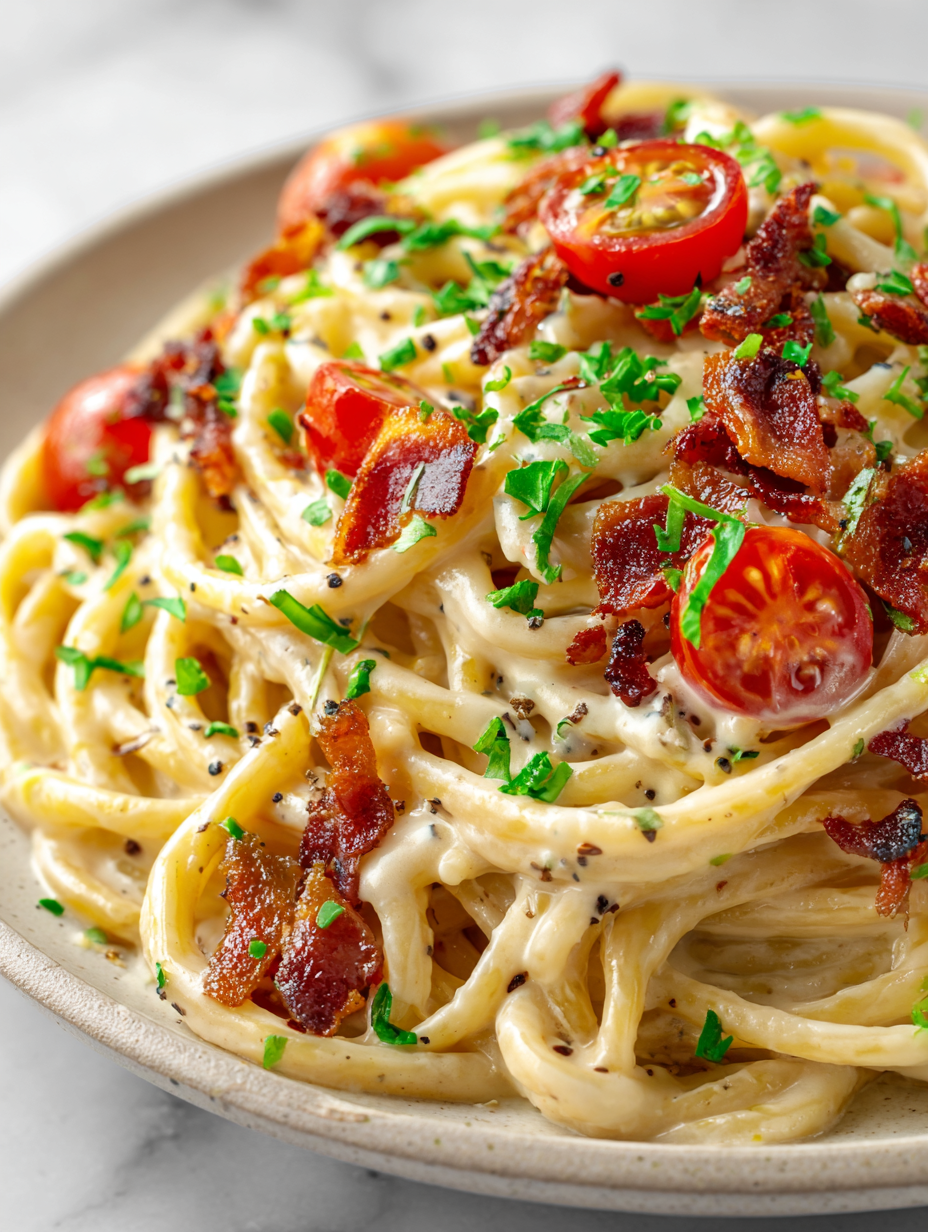
Vegan Carbonara
Ingredients
Equipment
Method
- Start by bringing a large pot of salted water to a boil and cook the spaghetti until just al dente, about 8-10 minutes. Drain and set aside, reserving a cup of pasta water.
- While the pasta cooks, drain the soaked cashews and add them to your blender along with nutritional yeast, smoked paprika, plant-based milk, lemon zest, and lemon juice. Blend until smooth and creamy, scraping down the sides as needed.
- Heat olive oil in a skillet over medium heat, about 160°C (320°F). Add the finely chopped onion and minced garlic, sautéing until fragrant and translucent, about 2 minutes.
- Add the vegan bacon strips to the skillet and cook until crispy and smoky, about 3-4 minutes. Remove from heat and set aside.
- Pour the blended cashew sauce into the skillet with the sautéed onion, garlic, and vegan bacon. Warm gently over low heat, stirring continuously, until the sauce is heated through and slightly thickened, about 2-3 minutes. Add reserved pasta water a tablespoon at a time if the sauce needs loosening.
- Add the cooked spaghetti to the skillet and toss everything together until the pasta is evenly coated with the sauce. Let it cook for another minute to meld the flavors, then taste and adjust seasonings with salt, pepper, or more lemon if desired.
- Serve immediately, garnished with additional lemon zest or fresh herbs if you like, and enjoy the creamy, smoky vegan carbonara.
Tips & Tricks for Perfect Vegan Carbonara
- Use high-speed blending to achieve a silky, lump-free sauce—don’t rush the process.
- Toast nutritional yeast lightly before blending for a richer, nuttier flavor.
- Cook vegan bacon strips until just crispy to maintain smoky flavor without burning.
- Reserve some pasta water—it’s your secret weapon for smoothing out the sauce if it thickens too much.
- Sauté garlic on medium heat until fragrant but not browned—this keeps the aroma sweet and mild.
- Toss pasta in the sauce off the heat to prevent clumping and ensure a glossy coat.
- Finish with a splash of lemon or a pinch of smoked paprika to amplify smoky depth and brightness.
Common mistakes and how to fix them
- FORGOT to taste and adjust seasoning before serving, fix with more salt or lemon.
- DUMPED in too much liquid; fix by simmering to thicken sauce naturally.
- OVER-TORCHED the vegan bacon, make sure to cook on medium heat for crispy but not burnt.
- MISSED the salt at the start, re-season the sauce after blending for depth.
Quick fixes and pantry swaps
- If sauce is too thick, splash in warm water and stir until silky.
- When bacon isn’t crispy enough, cook a minute longer, but watch for burning.
- Splash soy sauce or miso for umami if you lack nutritional yeast.
- Patch flavor by adding a squeeze of lemon or a pinch of smoked paprika.
- Shield pasta from sticking by tossing with a little olive oil before serving.
Prep, store, and reheat tips
- You can prepare the cashew sauce up to 2 days ahead; keep in an airtight container in the fridge. The sauce will thicken slightly—just whisk in a splash of water or plant milk to loosen before using.
- Cook the pasta al dente and store it separately in an airtight container for up to 24 hours. Reheat briefly in boiling water or microwave with a splash of water to revive its texture.
- Crisp the vegan bacon just before serving, as it loses crunch over time. If needed, re-crisp in a hot skillet for a minute or two.
- Reheat the assembled dish gently on the stove over low heat, stirring constantly until warmed through. The sauce may thicken; add a little extra plant milk or pasta water to restore creaminess.
- Leftovers will keep well for 2-3 days in the fridge. When reheating, do so carefully to preserve the sauce’s silky texture and smoky flavor. Avoid overheating, which can cause separation.
Top questions about vegan carbonara
1. Can I make the sauce without cashews?
Use soaked cashews blended until smooth for a creamy, cheesy texture that mimics eggs and cheese. Skip soaking for a slightly grainier sauce.
2. What if I don’t have nutritional yeast?
Yes, nutritional yeast adds a cheesy flavor, but you can try vegan Parmesan or miso for a different umami punch.
3. How do I know when the pasta is perfectly cooked?
Cook the pasta until just al dente, about 8-10 minutes, and taste it to avoid over or undercooking.
4. My sauce is too thick, what do I do?
Add a splash of reserved pasta water to loosen the sauce if it’s too thick or clumpy.
5. How can I make it more smoky?
Use smoked paprika or liquid smoke to get that smoky flavor; adjust to your preference for intensity.
6. What’s the best plant-based bacon to use?
Crispy vegan bacon or tempeh strips work best; cook until crispy but not burnt for maximum flavor.
7. How do I reheat vegan carbonara without losing texture?
Reheat leftovers gently in a skillet or microwave, adding a splash of plant milk to restore creaminess if needed.
8. Can I add lemon to this dish?
For extra brightness, add lemon zest or a squeeze of lemon juice at the end for a fresh, zesty note.
9. Is this dish gluten-free?
Use gluten-free pasta if needed, but keep in mind it may have a different texture and cooking time.
10. When should I taste and adjust the seasoning?
Taste and adjust seasoning before serving—more salt, pepper, or lemon can really balance the flavors.
This vegan carbonara isn’t just a meal; it’s a reminder that comfort food can be thoughtful and sustainable. It’s perfect for cozy nights or when you need a dish that feels indulgent without the guilt.
Sharing this dish feels like reclaiming a classic while making it kinder to the planet. It’s a simple, honest way to enjoy something familiar and nourishing, with a little extra purpose behind each bite.

Hi, I’m Clara Sage – and welcome to my kitchen of small revelations.
I created The Language of Aha not just as a recipe blog—but as a space to celebrate the little lightbulb moments that happen in the kitchen.