
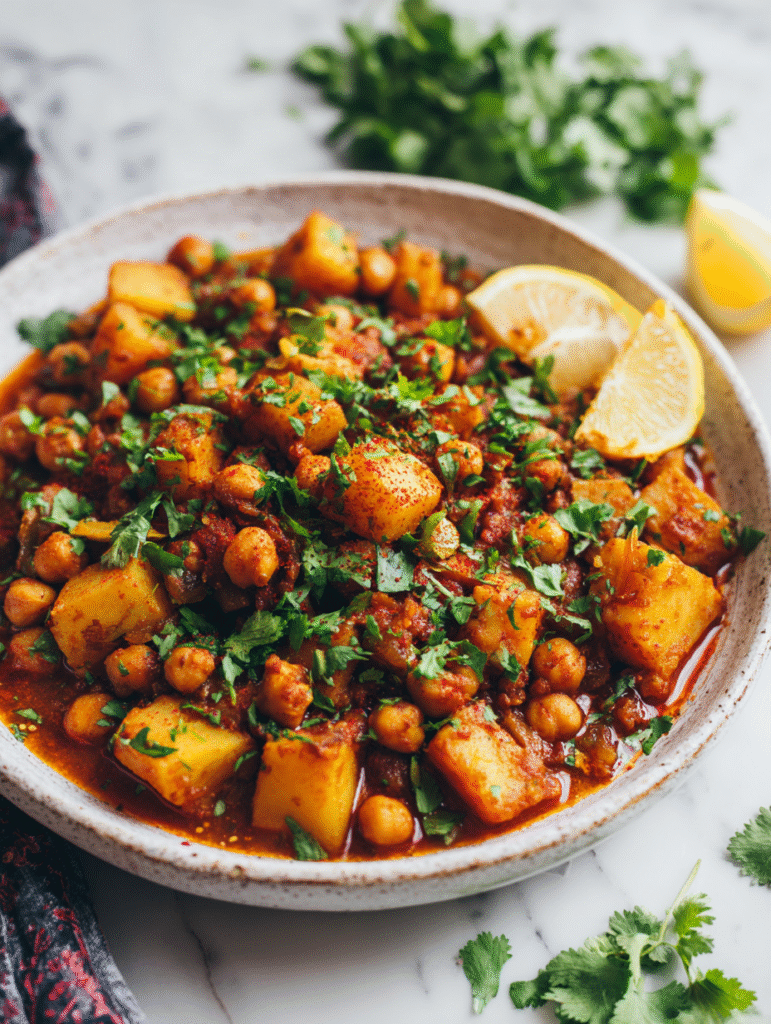
This chickpea potato curry is my go-to for those nights when I need something warm and filling but don’t want to fuss with a long list of ingredients. It’s like a hug in a bowl—simple pantry staples, a bit of spice, and a splash of coconut milk or tomato sauce that turns everything into something cozy and satisfying.
What I love most is how adaptable it is. No fancy ingredients needed—just chickpeas and potatoes, which I always have lurking in the back of my pantry. It’s perfect for those last-minute dinners when the fridge’s a little empty but you still crave something soulful that tastes like a proper meal.
This recipe is inspired by the need for a comforting, hearty dish that uses pantry staples—canned chickpeas and potatoes—making it perfect for last-minute dinners or when the fridge feels empty but you crave something soulful and satisfying.
Unexpected comfort in pantry staples
- Making this dish always takes me back to childhood Sunday dinners, the smells of cumin and garlic filling the house.
- There’s a strange pride in turning simple cans and potatoes into something that feels like a warm hug after a long day.
- I get a little thrill every time I find the perfect balance of spice—just enough to make your nose tingle without overwhelming.
- Cooking this makes me feel connected to my roots, a reminder that comfort often comes from humble ingredients.
Unexpected comfort in pantry staples
- This dish came together one rainy afternoon when I was digging through my pantry, looking for something comforting but quick. I remembered how my grandmother used to throw together chickpeas and potatoes with whatever spices she had, making magic out of humble ingredients. It’s funny how a simple dish like this can bring back so many quiet, cozy memories of her kitchen.
- One particular evening, I was feeling pretty overwhelmed, and I threw this together on a whim. The smell of cumin, garlic, and simmering tomatoes filled the kitchen, instantly soothing my nerves. It’s become my way to reset after a hectic day—something honest, filling, and warm, no fuss required.
- heading: ‘Unexpected comfort in pantry staples’
Historical and cultural notes
- This curry has roots in Indian home cooking, where pantry staples like chickpeas and potatoes are household staples for quick, nourishing meals.
- Historically, hearty stews with legumes and root vegetables were common in many cultures, especially in times of scarcity or for peasant families.
- The combination of chickpeas and potatoes became popular in vegetarian communities for its protein and carb combo, making it a filling, affordable dish.
- In some regions, this dish is a weekend comfort food, slowly simmered to develop rich flavors, often with a dash of local spice blends.
Ingredient breakdown: key components
- Chickpeas: Canned chickpeas are my favorite for their creamy texture—rinse well to remove that metallic taste, then gently mash some for extra body in the curry.
- Potatoes: I prefer starchy Russets; they break down slightly, creating a velvety sauce. Slice evenly to cook through at the same rate.
- Coconut milk: Adds richness and sweetness—look for full-fat kinds for that silky mouthfeel. If you want less coconut flavor, swap with a splash of cream or cashew cream.
- Spices: Toast cumin and coriander seeds first for a nutty depth. Fresh garlic and ginger brighten the dish, so don’t skimp on those.
- Tomatoes: Use canned crushed or diced for a bright, tangy base—roasted tomatoes give a deeper, smoky flavor if you prefer a richer taste.
- Fresh herbs: Cilantro at the end lifts everything—chop it finely to sprinkle just before serving for maximum aroma and color.
- Oil and seasoning: A good splash of neutral oil helps bloom spices—avoid rushing this step, or the flavors won’t develop fully.
Spotlight on key ingredients
Chickpeas:
- Creamy, hearty beans that soften beautifully and absorb flavors, becoming almost velvety in the curry.
- Potatoes: Starchy and tender, they break down slightly to thicken the sauce and add a satisfying bite.
Potatoes:
- Coconut Milk: Adds a rich, silky texture and a hint of sweetness; watch for a luscious, lemon-bright aroma as it simmers.
- They release a starchy, earthy scent as they cook, contributing to the sauce’s thick, comforting texture.
Notes for ingredient swaps
- Dairy-Free: Swap coconut milk with cashew cream or almond milk for a lighter, nutty flavor.
- Vegetarian: Use vegetable broth instead of water when cooking potatoes for extra depth.
- Low-Sodium: Rinse canned chickpeas thoroughly to reduce salt; opt for no-salt added tomatoes.
- Spice Level: Skip or reduce chili powder if you prefer milder heat; add fresh chili for adjustable spice.
- Fresh Herbs: Substitute cilantro with parsley or basil if unavailable, but expect a different aroma.
- Tomatoes: Use fresh ripe tomatoes instead of canned for a brighter, more intense tang.
- Oil: Replace neutral oil with ghee or coconut oil for richer, more pronounced flavor.
Equipment & Tools
- Heavy-bottomed skillet: Ensures even heat and prevents sticking.
- Wooden spoon: For stirring spices and avoiding scratching the pan.
- Sharp knife: Chopping ingredients precisely and safely.
Step-by-step guide to chickpea potato curry
- Gather your equipment: a large heavy-bottomed skillet (for even heat), a wooden spoon (for stirring), and a sharp knife (for chopping).
- Heat 2 tbsp of neutral oil over medium heat—about 160°C / 320°F—until shimmering but not smoking.
- Add 1 tsp cumin seeds; toast until fragrant and slightly darkened, about 30 seconds. (Look for a nutty aroma and a crackle.)
- Stir in 1 finely chopped onion; cook until translucent, about 5 minutes. It should smell sweet and be lightly golden.
- Add 3 minced garlic cloves and 1 tbsp grated ginger; sauté until fragrant, roughly 1 minute. You’ll notice a sharp, spicy aroma filling the air.
- Stir in 1 tbsp curry powder and 1 tsp smoked paprika; cook for 30 seconds to bloom the spices. The mixture should turn a deep, smoky hue.
- Add 2 diced potatoes (about 1.5 cm / 0.6 inch cubes); cook for 5 minutes, stirring occasionally. They should start to soften and turn slightly golden.
- Pour in 1 can (400g) crushed tomatoes or diced tomatoes; simmer for 10 minutes. The sauce should thicken, with a rich, tangy smell.
- Stir in 1 can (400g) drained chickpeas; cook for another 10 minutes, uncovered. The chickpeas will soak up flavors and become tender.
- Add 200ml coconut milk; stir well and simmer gently for 10 more minutes. The curry should be creamy, fragrant, and bubbling gently.
- Check for seasoning: add salt, a pinch of sugar if needed, and adjust spices to taste. The sauce should have a balanced, bright aroma with a hint of spice.
- Finish with chopped cilantro; sprinkle over just before serving. It should shimmer with fresh green and smell citrusy.
Once cooked, turn off heat and let the curry rest for 5 minutes. Serve hot with rice or flatbread, garnished with fresh cilantro for a bright finish.
How to Know It’s Done
- The potatoes are tender when pierced with a fork, and the sauce is thick and coats the ingredients.
- The curry smells fragrant with toasted spices, garlic, and ginger, without any raw or burnt aroma.
- The chickpeas are soft but not mushy, with a slight creamy texture inside when pressed lightly.
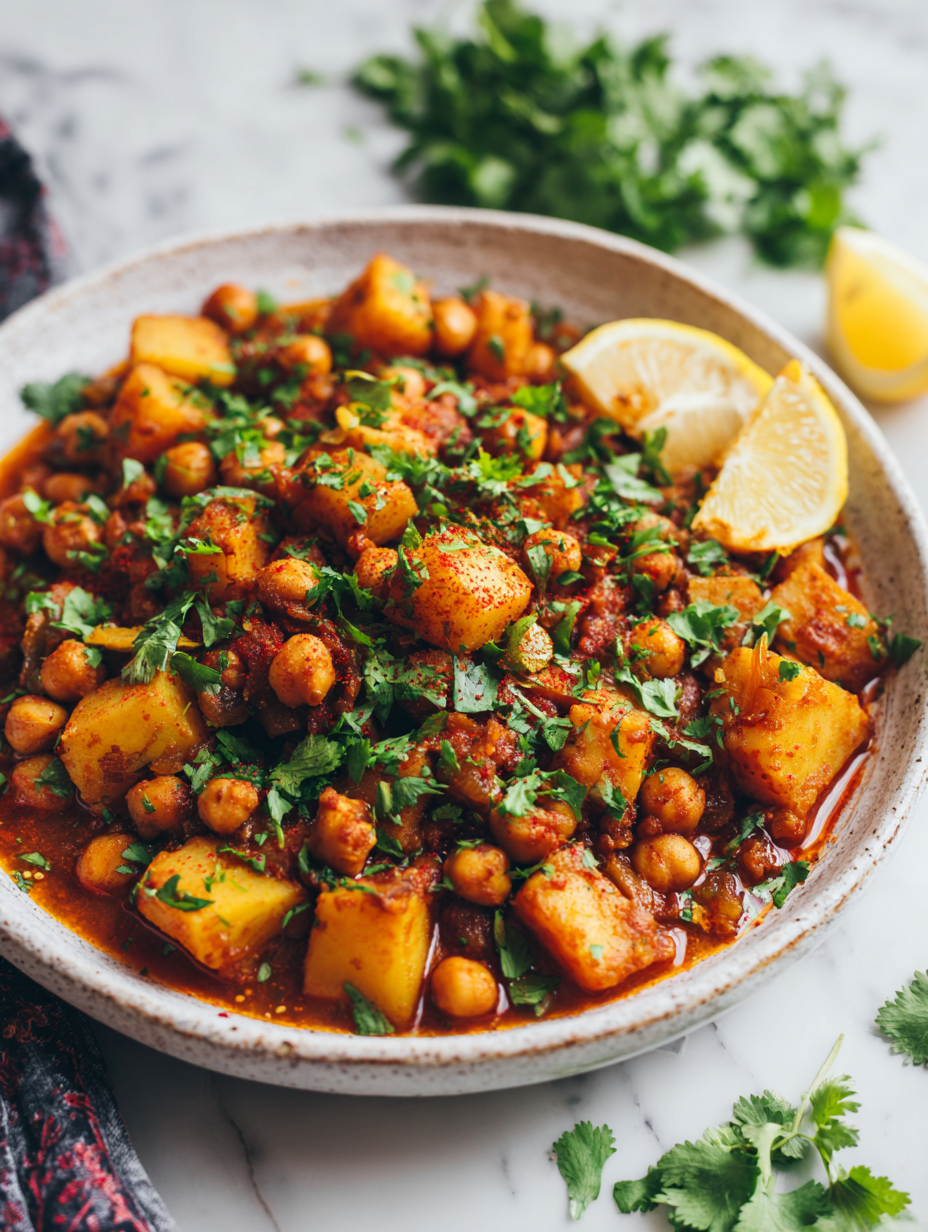
Chickpea Potato Curry
Ingredients
Equipment
Method
- Heat the oil in a heavy-bottomed skillet over medium heat until shimmering.
- Add the cumin seeds and toast them for about 30 seconds until fragrant and slightly darkened, listening for a crackling sound.
- Stir in the chopped onion and cook, stirring occasionally, until translucent and lightly golden, about 5 minutes. The onion should smell sweet and aromatic.
- Add the minced garlic and grated ginger, cooking for another minute until fragrant and slightly bubbling.
- Stir in the curry powder and smoked paprika, cooking for 30 seconds to bloom the spices and release their aroma.
- Add the diced potatoes and cook, stirring occasionally, for about 5 minutes until they start to soften and turn golden around the edges.
- Pour in the crushed tomatoes and simmer gently for 10 minutes, allowing the sauce to thicken and the flavors to meld, with a rich, tangy aroma filling the kitchen.
- Stir in the drained chickpeas and cook uncovered for another 10 minutes, letting them absorb the flavors and become tender.
- Pour in the coconut milk, stir well, and simmer gently for 10 more minutes until the curry is creamy and bubbling softly, with a fragrant aroma.
- Season with salt to taste, stirring to combine. The sauce should be thick, smooth, and vibrant.
- Remove from heat and sprinkle chopped cilantro over the top for a fresh, bright finish.
- Serve the warm, creamy curry over rice or with flatbread, enjoying the comforting aroma and tender ingredients.
Tips and tricks for best results
- Bolded mini-head: Toast spices first to unlock their aromatic oils—smell that nutty, fragrant aroma before adding liquids.
- Bolded mini-head: Rinse chickpeas thoroughly—removes metallic taste and excess salt, ensuring a cleaner, fresher flavor.
- Bolded mini-head: Cook potatoes until just tender—overcooking makes them mushy, undercooking leaves them hard; aim for a slight jiggle.
- Bolded mini-head: Use full-fat coconut milk for extra creaminess—less rich versions can make the sauce feel thin and flat.
- Bolded mini-head: Simmer uncovered to thicken—allow the sauce to reduce and develop a richer, more concentrated flavor.
- Bolded mini-head: Finish with fresh cilantro—chop finely and sprinkle just before serving for maximum aroma and color.
- Bolded mini-head: Adjust seasoning at the end—taste and add salt or a squeeze of lemon to brighten the overall flavor.
Common mistakes and how to fix them
- FORGOT to adjust heat → the pan may burn spices, lower to medium after initial toast.
- DUMPED ingredients too quickly → add spices gradually, sense aroma before proceeding.
- OVER-TORCHED spices → reduce heat and add a splash of water to cool down pan.
- SKIPPED rinsing chickpeas → rinse thoroughly to remove metallic taste and excess salt.
Quick fixes and pantry swaps
- If sauce is too thick, splash in hot water and stir until smooth and shimmering.
- When chickpeas taste metallic, rinse thoroughly to refresh flavor and remove excess salt.
- Splash a little lemon juice if curry feels flat or dull on the palate.
- Patch over burnt spices with a small amount of fresh oil and toast new spices quickly.
- Shield potatoes from overcooking by checking their firmness after 5 minutes of simmering.
Prep, store, and reheat tips
- Chickpeas can be cooked and stored in the fridge for up to 3 days; their creamy texture deepens after sitting.
- Potatoes can be peeled and chopped a day ahead; keep submerged in water to prevent browning and maintain freshness.
- The curry flavors develop more overnight—store it in an airtight container in the fridge for up to 2 days, then reheat gently, watching for bubbling around the edges.
- Reheating: warm on the stove over low heat, stirring occasionally until steaming and fragrant; avoid boiling to keep the coconut milk silky.
- Allow the curry to rest for 5 minutes after reheating to let flavors meld and settle, enhancing the overall depth and aroma.
Top questions about chickpea potato curry
1. Can I use dried chickpeas instead of canned?
Canned chickpeas are easiest—just rinse off the metallic taste and they’re ready to go. Fresh ones are fine if cooked properly, but they take longer and can be more mushy.
2. What type of potatoes should I use?
Regular potatoes work well, but starchy Russets give a creamier sauce. Waxy potatoes hold their shape better but can make the curry a bit chunkier.
3. Can I skip coconut milk?
Full-fat coconut milk adds richness and a silky texture that balances the spices. Light coconut milk or even cashew cream can substitute if you want less fat.
4. Can I add other vegetables to this curry?
Yes, you can add other vegetables like spinach, bell peppers, or carrots—just chop and add towards the end to keep their texture.
5. How do I make it milder or spicier?
Adjust the spice level by adding more or less chili powder or fresh chilies. Taste as you go to find your perfect heat.
6. How long does leftovers last?
This dish tastes best fresh, but you can store leftovers in the fridge for up to 2 days. Reheat gently on the stove until steaming, not boiling, to keep it silky.
7. Can I make this ahead?
For a deeper flavor, let the curry sit overnight in the fridge. The spices meld, making it more flavorful the next day.
8. What if spices burn?
To prevent burning, keep the heat moderate when toasting spices. If spices start to burn, lower the heat immediately and add a splash of water.
9. What equipment do I need?
Use a heavy-bottomed skillet to prevent scorching and ensure even cooking. A sharp knife helps chop potatoes and garlic efficiently.
10. When should I add salt and acid?
Taste and adjust salt and acidity at the end—adding a squeeze of lemon or lime brightens the dish and enhances flavors.
This simple curry is a reminder that comfort food can come from pantry staples and a bit of patience. It’s perfect for those days when you want warmth without fuss, and the smells of cumin and garlic fill the house with a cozy, inviting aroma.
No matter how often I make it, I’m always surprised by how a handful of ingredients can turn into something so satisfying. It’s a dish that invites you to slow down, taste each spice, and appreciate the humble beauty of everyday cooking.

Hi, I’m Clara Sage – and welcome to my kitchen of small revelations.
I created The Language of Aha not just as a recipe blog—but as a space to celebrate the little lightbulb moments that happen in the kitchen.