
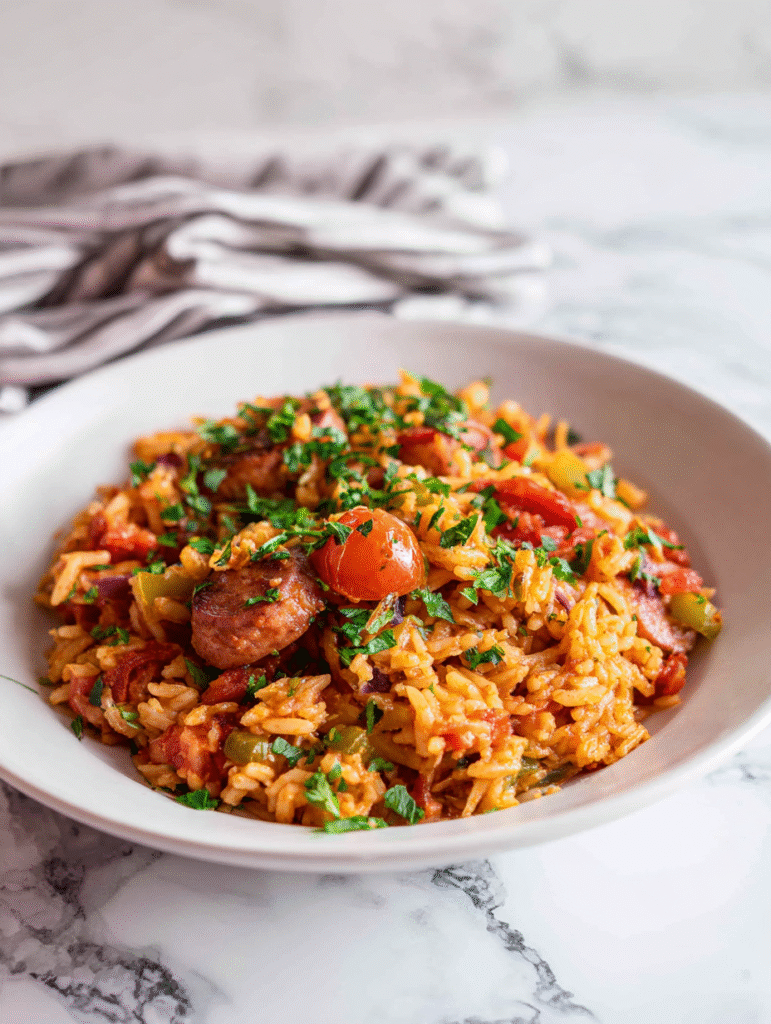
Vegan jambalaya might sound like an oxymoron at first—no smoky sausage, no tender shrimp—but trust me, it can be just as rich and satisfying. The trick is in layering flavors with smoked paprika, caramelized vegetables, and a good splash of vegetable broth. When it comes together, the aroma alone makes your kitchen feel like a cozy bayou corner.
What I love about making this dish is how adaptable it is. You can toss in whatever hearty vegetables you have on hand—bell peppers, okra, tomatoes—and still get that deep, smoky bite. It’s a one-pot wonder that feels like a warm hug, especially on nights when you want something comforting but plant-based.
Focusing on how to make vegan jambalaya that captures the smoky, hearty essence of traditional versions without relying on meat or seafood, emphasizing flavor depth through clever use of spices and smoky vegetables.
The secret smoky depth
- Making this vegan jambalaya reminds me how smoky, hearty flavors can come from simple vegetables and spices, no meat needed.
- I still get a rush of pride when I serve this dish to friends who aren’t vegan and watch their surprised faces at how satisfying it is.
- Cooking this dish on a chilly evening makes the kitchen smell like a Cajun bayou—smoky, spicy, and just a little chaotic in the best way.
- There’s a nostalgic comfort in stirring this pot, the aroma filling the room with memories of family gatherings and lively dinners.
- Every time I make it, I feel a little more connected to the roots of traditional Cajun cooking, just with a plant-based twist.
The inspiration behind this dish
- This vegan jambalaya came out of a kitchen experiment when I was craving something smoky and hearty but wanted to keep it plant-based. I started playing with smoked paprika, caramelized onions, and a medley of bell peppers, and suddenly, I had this rich, comforting dish that felt like a warm hug from the bayou. It’s become a go-to recipe when I want something filling and flavorful without relying on traditional seafood or sausage.
- Cooking this dish is a bit of a reminder that you don’t need animal products to get that deep smoky flavor. It’s all about layering spices and building up a good caramelization on the vegetables. Every time I make it, I think about how food can surprise you—how bold, satisfying flavors can come from simple, humble ingredients. Plus, it’s such a flexible recipe that I often toss in whatever veggies I have kicking around, making it a perfect cleanup dish, too.
- heading
- story_type
Historical & Cultural Roots
- Vegan jambalaya is a modern twist on the classic Cajun dish, developed as plant-based diets gained popularity in Louisiana kitchens.
- The dish’s roots trace back to the Creole and Cajun communities, who traditionally used smoked meats and seafood for deep flavor, now replaced with smoked paprika and vegetables.
- Historically, jambalaya was a way for early settlers to create hearty, flavorful meals with limited ingredients, making it naturally adaptable for vegan versions today.
Key Ingredient Insights
- Smoked paprika: I love how this spice adds that deep, smoky flavor that mimics traditional smoked meats—don’t skip it, or you’ll miss that richness.
- Bell peppers: Sweet, tender, and colorful—I caramelize these to bring out their natural sugars, which adds a subtle sweetness that balances the spices.
- Celery and onions: The classic ‘holy trinity,’ cooked until translucent and fragrant, they form the savory base—don’t rush this step, or the flavor won’t develop fully.
- Tomatoes: Juicy and slightly tangy, I use canned diced to add a bright, acidic note—opt for fresh only if they’re in season and ripe.
- Andouille-style vegan sausage: I prefer plant-based sausage for that smoky, spicy bite—look for one with a good sear and smoky aroma; skip if you want a lighter version.
- Okra: Slimy to some, but I love how it thickens the dish and adds a unique texture—slice thin and cook until just tender for the best bite.
- Vegetable broth: Use a rich, homemade or store-bought broth to amplify the smoky, savory depth—add a splash of liquid smoke if you want even more punch.
Spotlight on key ingredients
Smoked paprika:
- I love how this spice adds that deep, smoky flavor that mimics traditional smoked meats—don’t skip it, or you’ll miss that richness.
- Bell peppers: Sweet, tender, and colorful—I caramelize these to bring out their natural sugars, which adds a subtle sweetness that balances the spices.
- Okra: Slimy to some, but I love how it thickens the dish and adds a unique texture—slice thin and cook until just tender for the best bite.
Vegan sausage and tomatoes:
- Vegan sausage: I prefer plant-based sausage for that smoky, spicy bite—look for one with a good sear and smoky aroma; skip if you want a lighter version.
- Tomatoes: Juicy and slightly tangy, I use canned diced to add a bright, acidic note—opt for fresh only if they’re in season and ripe.
- Vegetable broth: Use a rich, homemade or store-bought broth to amplify the smoky, savory depth—add a splash of liquid smoke if you want even more punch.
Notes for ingredient swaps
- Smoked paprika: Use chipotle powder for extra heat and smokiness, but reduce other spices slightly to balance. Expect a bolder, spicier flavor.
- Vegetables: Carrots or zucchini can replace bell peppers—still add sweetness or moisture but change the texture noticeably.
- Vegan sausage: Try tempeh slices seasoned with smoked paprika and liquid smoke—chewier, nuttier bite, less smoky aroma compared to sausage.
- Tomatoes: Fresh ripe tomatoes can work in summer; use canned for consistent acidity and richness, especially off-season.
- Broth: Water with a splash of liquid smoke and soy sauce can substitute vegetable broth—less depth, but still flavorful if seasoned well.
- Okra: Eggplant slices can mimic its thickening effect if you dislike slimy textures—softer bite, milder flavor.
- Rice: Quinoa or cauliflower rice can be used for gluten-free or lower-carb versions—different texture and flavor, but still hearty.
Equipment & Tools
- Deep skillet or Dutch oven: To cook everything evenly in one pot.
- Stirring spoon: To stir and combine ingredients without breaking the rice.
- Measuring cups: To measure liquids and spices accurately.
- Sharp knife: To chop vegetables and sausage slices precisely.
- Lid: To trap steam and cook the rice evenly.
Step-by-step guide to vegan jambalaya
- Gather your equipment: a large deep skillet or Dutch oven, stirring spoon, measuring cups, and a sharp knife. The skillet should be big enough to hold the rice and vegetables comfortably.
- Heat the skillet over medium heat (about 160°C / 320°F). Add a splash of oil—olive or vegetable—and let it warm up until shimmering.
- Add diced onions, bell peppers, and celery. Sauté for about 8-10 minutes, stirring occasionally. The vegetables should become soft, fragrant, and slightly caramelized around the edges.
- Stir in minced garlic and smoked paprika. Cook for 30 seconds until fragrant—be careful not to burn the garlic. The aroma should be smoky and inviting.
- Pour in the diced tomatoes and vegetable broth. Bring to a gentle simmer and let cook for 5 minutes, allowing the flavors to meld. If using canned tomatoes, the mixture should darken slightly and be fragrant.
- Add the sliced vegan sausage and okra. Stir well, then pour in the rinsed long-grain rice. Mix thoroughly, ensuring the rice is coated with the spice and vegetable mixture.
- Cover the skillet with a lid, reduce heat to low (about 80°C / 175°F), and let cook undisturbed for 20-25 minutes. Do not lift the lid too often to keep the steam trapped. Check for a gentle simmer and slight bubbling around the edges.
- Check the rice: it should be tender, with a slight chew, and the mixture should be thickened and slightly translucent. If not done, add a splash more broth and cook a few minutes longer.
- Remove from heat and let rest, covered, for 5 minutes. This helps the flavors settle and the rice to finish absorbing any residual moisture.
- Finish with a quick stir, taste for seasoning—add salt or hot sauce if needed—and serve hot, garnished with chopped green onions or parsley if desired.
Let the jambalaya rest off heat for 5 minutes, then fluff gently with a fork. Serve directly from the pot, garnished with chopped herbs or a squeeze of lemon if desired.
How to Know It’s Done
- Rice is tender but not mushy; it should have a slight chew and be fully cooked through.
- The dish should smell smoky and spicy, with a deep, savory aroma from the caramelized vegetables.
- The mixture is thickened and slightly translucent, with no excess liquid pooling at the bottom.
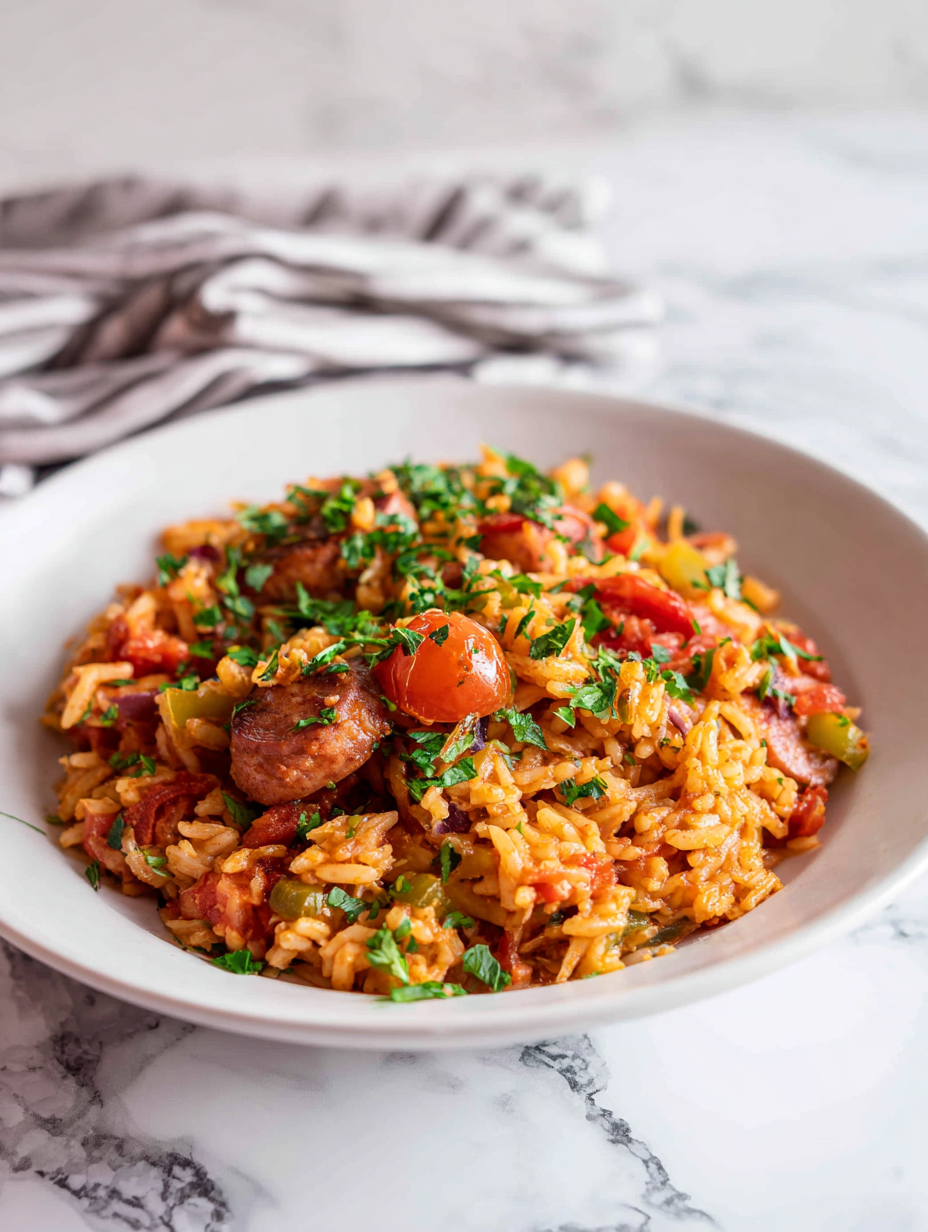
Vegan Jambalaya
Ingredients
Equipment
Method
- Heat a deep skillet over medium heat and add the oil. Swirl to coat the bottom evenly.
- Add diced onion, bell pepper, and celery to the skillet. Sauté for about 8-10 minutes, stirring occasionally, until the vegetables are soft and fragrant with a slight caramelization around the edges.
- Stir in the minced garlic and smoked paprika. Cook for 30 seconds until the mixture becomes fragrant and smoky, avoiding burning the garlic.
- Add the canned diced tomatoes and vegetable broth to the skillet. Bring the mixture to a gentle simmer and cook for about 5 minutes, allowing the flavors to meld and the liquid to slightly reduce.
- Stir in the sliced vegan sausage and sliced okra. Cook for 2-3 minutes until the okra begins to soften and release some of its characteristic slime, adding thickness to the dish.
- Pour in the rinsed rice and stir well to coat the grains with the flavorful mixture. Spread the rice evenly across the skillet.
- Cover the skillet with a lid and reduce the heat to low. Let simmer gently for 20-25 minutes, avoiding lifting the lid too often so the rice can absorb the flavors and cook through.
- Check the rice for doneness; it should be tender and fluffy, with a slight translucence. If needed, add a splash more broth and cook a few minutes longer.
- Remove the skillet from heat and let it rest, covered, for about 5 minutes. This helps the flavors settle and the rice to finish absorbing any remaining moisture.
- Gently fluff the jambalaya with a fork, then serve hot, garnished with chopped herbs or a squeeze of lemon if desired. Enjoy the smoky, hearty flavors in every bite!
Pro Tips for Perfect Vegan Jambalaya
- Caramelize the veggies: Sauté the peppers, onions, and celery until they develop a deep, sweet aroma and slight char for richness.
- Layer spices early: Toast smoked paprika and spices with the vegetables to release their full smoky, fragrant potential.
- Use aromatic liquids: Add a splash of vegetable broth and a hint of liquid smoke to intensify smoky depth—don’t skimp here.
- Cook rice carefully: Rinse the rice well and simmer gently, avoiding stirring too much to keep grains fluffy and non-mushy.
- Check for doneness: The rice should be tender, with a slight translucence, and the dish thickened but not dry—taste and texture are your guides.
- Finish with resting: Let the jambalaya sit off heat for 5 minutes, allowing flavors to meld and rice to absorb remaining moisture.
- Adjust seasoning: Taste after resting and add hot sauce or salt gradually—flavor develops as it sits, so don’t over-salt at first.
Common mistakes and how to fix them
- FORGOT to adjust heat when adding spices → Lower heat to prevent burning spices.
- DUMPED all liquids at once → Add broth gradually for better absorption and flavor control.
- OVER-TORCHED the vegetables → Stir constantly to avoid burning and develop even caramelization.
- MISSED resting time → Let the dish rest 5 minutes for flavors to meld and rice to finish.
Quick fixes and pantry swaps
- If the dish tastes flat → Splash in a little liquid smoke for instant smoky depth.
- When rice is undercooked → Cover and simmer a few more minutes, adding a splash of broth if needed.
- Splash with hot sauce when too bland → Adds immediate heat and brightness to balance flavors.
- Patch burnt vegetables → Remove from heat quickly, stir in fresh vegetables, and restart sautéing.
- Shield from over-torching → Use a heat diffuser or reduce burner to prevent scorching and smoky bitterness.
Prep, store, and reheat tips
- Prep all vegetables and chop the vegan sausage a day ahead. Store in airtight containers in the fridge, crisp and fresh for up to 24 hours.
- Cook the rice separately if you prefer to reheat without over-softening. Keep in an airtight container for up to 3 days, or freeze for up to a month for longer storage.
- The jambalaya flavors deepen after sitting overnight—store leftovers in the fridge for up to 4 days, covered tightly to retain aroma and prevent drying out.
- Reheat gently on the stovetop over low heat, stirring occasionally. Add a splash of broth or water to loosen the mixture if it thickens excessively, and look for that smoky aroma to re-emerge.
Top questions about vegan jambalaya
1. Can I make vegan jambalaya smoky without meat or seafood?
Use smoked paprika and liquid smoke to mimic smoky meats. The aroma should be warm and inviting.
2. Can I use water instead of broth?
Yes, you can substitute vegetable broth with water plus a splash of soy sauce or miso for depth.
3. Can I use frozen okra?
Frozen okra works fine; just thaw and pat dry to prevent excess sliminess during cooking.
4. What if the rice isn’t tender enough?
If the rice is undercooked, add a bit more broth and simmer uncovered for a few more minutes.
5. How do I spice it up if it’s too mild?
Adjust spice levels by adding more smoked paprika or hot sauce after tasting the finished dish.
6. How long can I store leftovers?
Leftovers keep well for up to 4 days in the fridge, and reheating on the stovetop preserves flavor best.
7. How can I brighten the flavor at serving?
Adding a squeeze of lemon or vinegar brightens the dish and balances smoky flavors nicely.
8. Can I substitute the rice?
Yes, quinoa or cauliflower rice are good low-carb or gluten-free options, but they will change texture.
9. How do I avoid burning the veggies?
Ensure to cook the vegetables until caramelized for maximum flavor; burnt vegetables will turn bitter.
10. What equipment is best for this recipe?
Use a wide, deep skillet to allow even cooking and prevent overcrowding, which steams instead of sears.
This vegan jambalaya isn’t just a meal; it’s a reminder that bold, smoky flavors can come from humble, plant-based ingredients. It’s perfect for those cozy nights when you crave something rich but want to stay true to a plant-based diet.
Every spoonful carries a bit of that smoky, spicy magic, and it’s a dish I keep returning to—whether for comfort, celebration, or simply to prove that vegan cooking can be deeply satisfying.

Hi, I’m Clara Sage – and welcome to my kitchen of small revelations.
I created The Language of Aha not just as a recipe blog—but as a space to celebrate the little lightbulb moments that happen in the kitchen.