
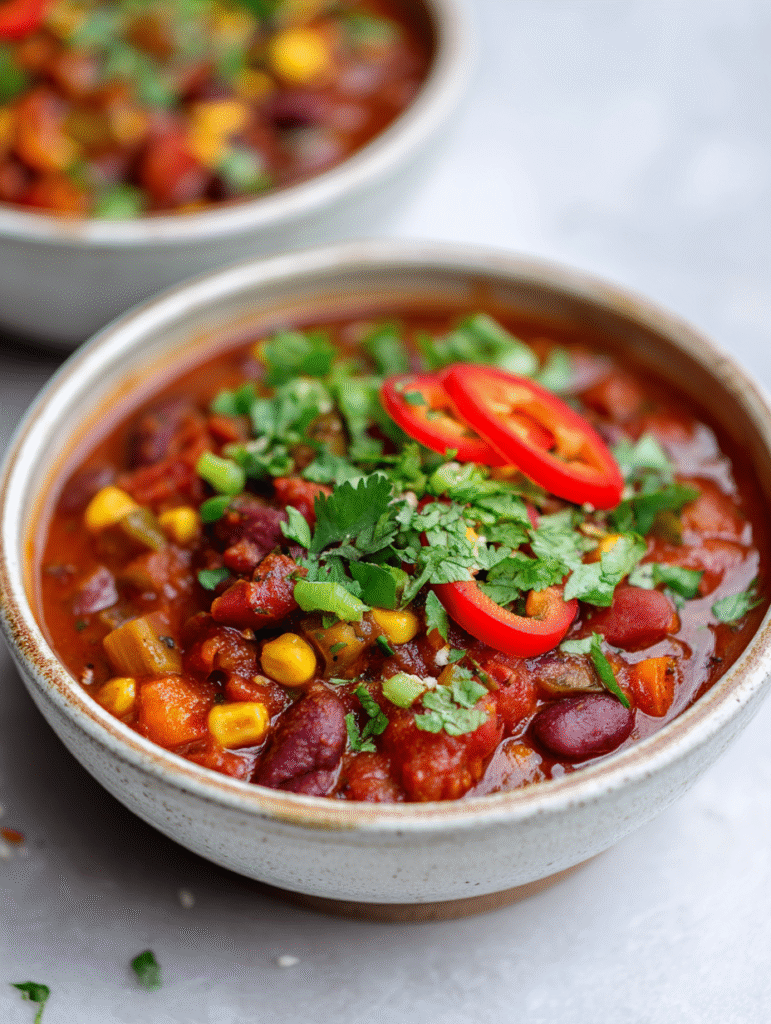
There’s something about a bowl of vegan chili that feels like a warm blanket on a cold night. It’s the kind of dish that gathers you in, filling your kitchen with smoky, spicy aromas that make the house feel like a haven. I’ve always loved how it brings back memories of Sunday dinners, long chats, and the simple joy of comfort food that’s both hearty and wholesome.
This recipe is my go-to when I want something nourishing and familiar, but with a bit of a twist. It’s forgiving, adaptable, and built for slow simmering, where flavors deepen and mingle. It’s more than just a meal—it’s a small act of kindness in a bowl, perfect for cozy evenings or when I need a bit of grounding.
Focusing on the comforting, nostalgic power of vegan chili as a kind of edible hug during chilly evenings, emphasizing its warm, hearty qualities that evoke family dinners and slow Sundays.
The soulful comfort of hearty chili
- Cooking this chili feels like a warm hug after a long day, especially when the house fills with smoky, spicy scents.
- I remember making this with my grandma’s secret spice blend, and it still brings a rush of nostalgia every time.
- There’s a chaotic joy in chopping all these vegetables, knowing it’s going to turn into something comforting and filling.
- I take pride in how this dish always turns out hearty without feeling heavy, even on the busiest nights.
- Sometimes, I add a splash of hot sauce just to kick it up—reminds me that a little chaos can be delicious.
The inspiration behind this chili
- This recipe came from late-night craving and a messy pantry. I wanted something warm, filling, but flexible enough to use whatever I had on hand. It’s become a kind of culinary therapy for me—chopping veggies while the chili simmers, releasing that smoky, spicy aroma that instantly reassures. It’s funny how a simple pot of chili can turn a hectic day into a moment of calm and comfort.
- I remember the first time I made it with a dash of cumin and a splash of lime, feeling like I was creating a little bowl of happiness. Over the years, I’ve tweaked it—more beans, less heat, extra corn—to suit my mood. But the core—those slow-simmered flavors and that cozy, smoky scent—remains the same. It’s my go-to for chilly nights, and a reminder that good food doesn’t need to be complicated.
- It’s not fancy, just honest. And honestly, that’s what makes it special to me—something you can rely on, no matter how chaotic your day was. A bowl of this chili feels like a small act of kindness, especially when topped with fresh cilantro or a squeeze of lemon. It’s the kind of dish that’s as much about the moment as the ingredients, and I love that about it.
Trivia and historical tidbits
- Vegan chili’s roots trace back to hearty American comfort foods, but it gained popularity among plant-based communities in the late 20th century.
- The use of beans, spices, and smoky ingredients in chili reflects a long tradition of slow-cooked stews meant to sustain long journeys and cold nights.
- Modern vegan chili often substitutes traditional meat with hearty vegetables and legumes, a shift driven by both health trends and environmental concerns.
- Some recipes incorporate unexpected ingredients like cocoa powder or smoked paprika, adding depth and complexity to the classic smoky flavor.
Key ingredients and their secrets
- Canned black beans: I love how soft and creamy they become, adding a hearty texture. Rinse well to remove excess salt—skip if you want a creamier chili, keep the liquid for richness.
- Smoked paprika: It’s the smoky backbone in this dish, giving that deep, roasted flavor. If you don’t have it, a dash of chipotle powder works—just watch the heat.
- Diced tomatoes: I prefer fire-roasted for added depth and a hint of charred sweetness. Fresh tomatoes can work in summer, but expect a fresher, lighter taste.
- Onions and bell peppers: The base aromatics. I sauté them until they’re soft and slightly caramelized—brings out their natural sweetness, which balances the spice. Use poblano for a milder, earthier flavor.
- Chili powder and cumin: They create that warm, familiar aroma. Toast the spices briefly in the pan before adding liquids—this wakes up their flavors and avoids a raw taste.
- Vegetable broth: I use low-sodium to control salt, but a splash of smoky chipotle in the broth can deepen the flavor. Keep it simmering gently to meld everything beautifully.
- Optional corn or zucchini: I add these near the end for a burst of sweetness or freshness. They soften quickly, so don’t overcook—just enough to meld into the chili’s cozy texture.
Spotlight on key ingredients
Black beans:
- I love how they become creamy and tender after simmering. Rinse well to remove excess salt—skip if you want a richer, thicker chili, use the liquid for extra body.
- Smoked paprika: It’s the smoky backbone, releasing a deep, roasted aroma. If unavailable, chipotle powder adds heat and smoke—adjust to taste.
Diced tomatoes and bell peppers:
- Diced tomatoes: I prefer fire-roasted for a hint of char and sweetness. Fresh in summer, but canned adds richness and depth, especially when simmered slowly.
- Bell peppers: Their natural sweetness and slight crunch add freshness. Poblano peppers bring an earthy, smoky flavor that balances the spice and richness.
Notes for ingredient swaps
- Canned beans: I prefer black beans for their creamy texture and mild flavor. Swap with kidney or pinto beans if you like a different bite.
- Smoked paprika: It’s the smoky core, but if you don’t have it, use a pinch of chipotle powder—just be mindful of the heat level.
- Diced tomatoes: Fire-roasted give a charred, rich flavor, but fresh tomatoes work in summer—expect a brighter, lighter chili.
- Bell peppers: Any color works, but Poblano adds an earthy note. Feel free to skip if you want a simpler flavor.
- Vegetable broth: Use low-sodium for control, or add a splash of smoked paprika or chipotle for extra depth if you like it smoky.
- Corn or zucchini: Add near the end for sweetness or freshness. If you skip, the chili stays cozy and hearty without them.
- Onions and garlic: Essential aromatics—if out, leeks or shallots can fill in, but expect a slightly different aroma profile.
Equipment & Tools
- Large heavy-bottomed pot: Ensure even heat distribution for gentle simmering.
- Sharp knife: Chop vegetables efficiently and safely.
- Cutting board: Provide a stable surface for chopping.
- Stirring spoon: Mix ingredients and prevent sticking.
Step-by-step guide to vegan chili
- Gather all equipment: a large heavy-bottomed pot (for even heat), a sharp knife, cutting board, and stirring spoon. Prepare by rinsing beans and chopping vegetables.
- Heat the pot over medium heat (about 160°C / 320°F). Add a splash of oil, then sauté chopped onions and bell peppers until soft, about 5-7 minutes. They should become fragrant and slightly caramelized.
- Stir in minced garlic and spices (chili powder, smoked paprika, cumin). Cook for 1-2 minutes until aromatic and the spices darken slightly, releasing a smoky smell.
- Add diced tomatoes (with juices) and vegetable broth to the pot. Bring to a gentle simmer, around 85°C / 185°F. Let it cook uncovered for about 15 minutes, stirring occasionally, until the mixture thickens and flavors meld.
- Stir in rinsed black beans, corn (if using), and season with salt and pepper. Continue simmering on low heat (about 85°C / 185°F) for another 15-20 minutes, uncovered. The chili should be thick, fragrant, and bubbling gently.
- Taste and adjust seasoning if needed—more chili powder for heat, lime juice for brightness, or salt to enhance flavors. If the chili becomes too thick, add a splash more broth and simmer briefly.
- Turn off heat and let sit for 5-10 minutes to allow flavors to deepen. Serve hot, garnished with fresh cilantro or a squeeze of lemon, if desired.
Let the chili rest for 5-10 minutes off heat before serving. This allows flavors to settle and intensify. Ladle into bowls and garnish with herbs or a squeeze of lemon for added brightness.
How to Know It’s Done
- Vegetables are tender and fragrant before adding liquids.
- Chili has thickened slightly and smells smoky and spicy.
- Beans are heated through and integrated into the sauce, not raw.
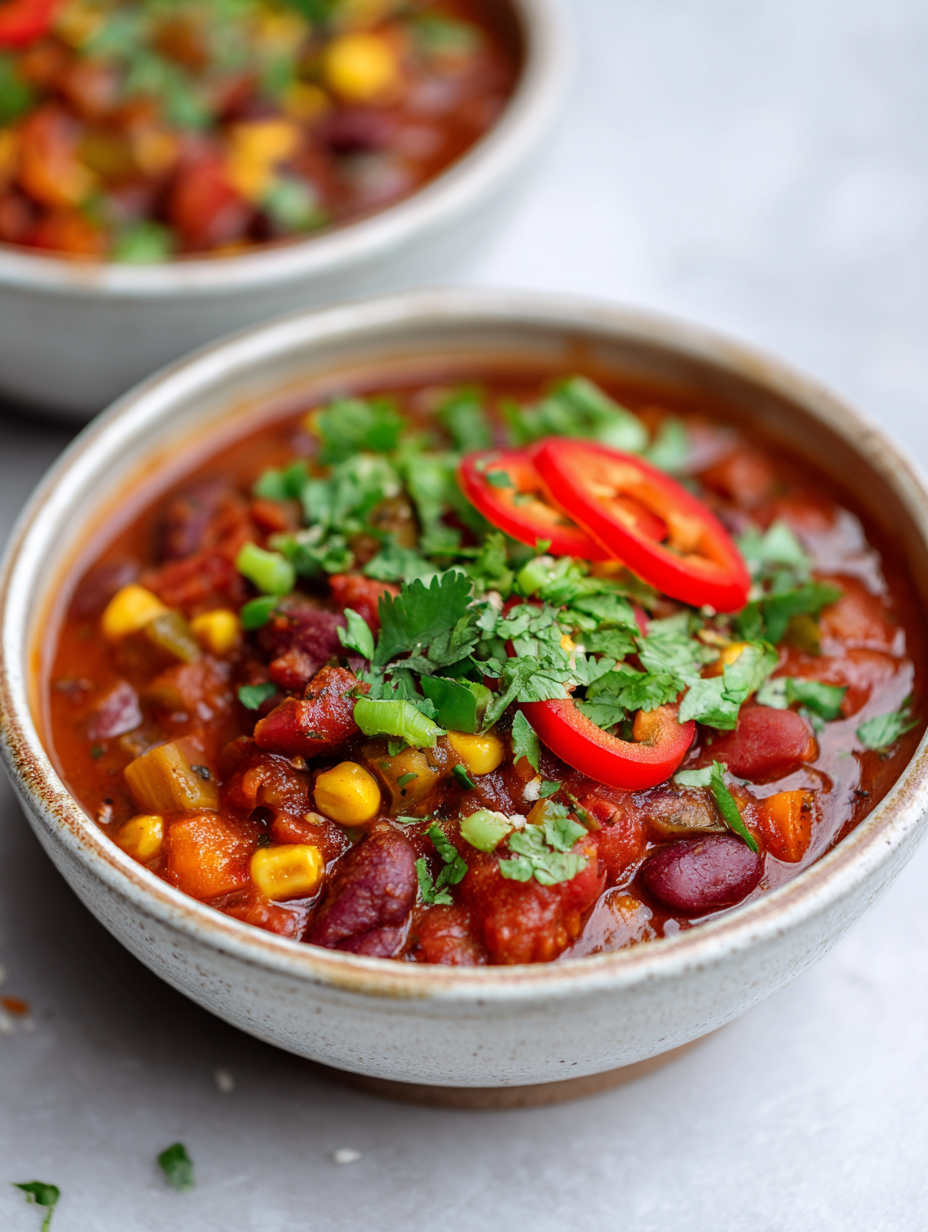
Vegan Chili
Ingredients
Equipment
Method
- Heat the large pot over medium heat and add a splash of oil. Once shimmering, add the diced onion and bell pepper. Sauté for about 5-7 minutes until they become fragrant and start to caramelize at the edges, filling your kitchen with a sweet, smoky aroma.
- Add the minced garlic, chili powder, smoked paprika, and cumin to the pot. Stir constantly for about 1-2 minutes until the spices release their fragrant oils and turn a deeper color, creating a smoky, spicy base.
- Pour in the fire-roasted diced tomatoes along with their juices, and add the vegetable broth. Stir everything together, scraping up any browned bits from the bottom of the pot. Bring the mixture to a gentle simmer, and cook uncovered for about 15 minutes, allowing the flavors to meld and the sauce to thicken slightly.
- Stir in the rinsed black beans, and add the corn kernels if using. Continue simmering for another 15-20 minutes on low heat, stirring occasionally. The chili should thicken further, become fragrant, and develop its rich, smoky flavor.
- Taste the chili and season with salt and pepper as needed. If you want it spicier, add a dash of hot sauce or more chili powder. Let it sit for a few minutes off heat to allow the flavors to deepen.
- Spoon the hearty chili into bowls, garnishing with fresh herbs or a squeeze of lime if desired. Serve hot, enjoying the thick, smoky, and satisfying texture that makes this dish a comforting favorite.
Tips for Perfect Vegan Chili
- Bolded mini-head: Toast spices briefly before adding liquids—this awakens their smoky, fragrant qualities.
- Bolded mini-head: Sauté vegetables over medium heat until they develop a slight caramelization—adds depth and sweetness.
- Bolded mini-head: Use a heavy-bottomed pot for even heat distribution and better simmer control.
- Bolded mini-head: Taste and adjust seasoning at the end—sometimes a squeeze of lemon brightens all the flavors.
- Bolded mini-head: Let the chili rest for 5-10 minutes after simmering—this helps flavors meld and intensify.
- Bolded mini-head: If chili thickens too much, stir in a splash of broth and simmer briefly to loosen it up.
- Bolded mini-head: For a smoky boost, add a pinch of smoked paprika or chipotle powder—adjust to your heat preference.
Common mistakes and how to fix them
- FORGOT to check seasoning? Taste and adjust salt or spice before serving.
- DUMPED too much water? Simmer uncovered longer to thicken the chili.
- OVER-TORCHED the beans? Rinse and soak before cooking again.
- MISSED the resting time? Let chili sit 5 minutes for flavor to settle.
Quick fixes and pantry swaps
- When sauce is too watery, splash in a bit more tomato paste and simmer until thickened.
- If beans are undercooked, add a splash of broth and simmer a few minutes longer.
- Splash some lemon juice when smoky flavor is too muted—brightens the whole dish.
- Patch over-seasoned chili with a dollop of coconut milk for creaminess and mellow heat.
- Shield the chili from scorching by stirring frequently during simmering—prevents burnt spots.
Prep, store, and reheat tips
- Prepare the chili up to the end of simmering stage; the flavors deepen and become more harmonious overnight. Reheat gently to avoid overcooking the beans and vegetables, maintaining their texture and aroma.
- Store leftovers in an airtight container in the fridge for up to 4 days. The smoky, spicy scent will intensify, and the chili will thicken slightly—stir in a splash of water or broth when reheating if it thickens too much.
- For longer storage, freeze in individual portions for up to 3 months. The chili develops a richer, more concentrated flavor after freezing—thaw in the fridge overnight before reheating.
- Reheat on the stove over low heat, stirring occasionally. The chili should shimmer gently and smell warm and inviting, with spices and smoky aroma filling the kitchen. Adjust seasoning if needed after reheating.
Top Questions About Vegan Chili
1. Can I make this chili spicier?
Yes, you can add a splash of liquid smoke for an extra smoky flavor if you miss that depth.
2. How do I adjust the spice level?
Absolutely. Add more chili powder, cayenne, or chopped fresh peppers to boost heat.
3. Can I swap out the beans?
Use different beans like kidney or pinto if you prefer a different texture or flavor.
4. Can I use fresh tomatoes instead of canned?
Yes, fresh tomatoes can be used in summer, but canned, fire-roasted ones give a richer, smoky flavor.
5. How can I add more brightness to the chili?
Stir in lemon juice or vinegar at the end to brighten flavors if the chili feels flat.
6. My chili is too thick, what now?
If it’s too thick, add a little broth or water and simmer briefly until it loosens up.
7. How long does leftover chili last?
Store leftovers in an airtight container in the fridge for up to 4 days, reheating gently on the stove.
8. Can I freeze vegan chili?
You can freeze it in portions for up to 3 months; thaw overnight in the fridge before reheating.
9. How do I reheat the chili?
Reheat on low heat, stirring occasionally, until fragrant and steaming hot—about 10 minutes over gentle simmer.
10. What if my beans turn mushy?
Overcooking beans can make them mushy. Add a splash of broth and simmer briefly to revive texture.
This vegan chili really feels like a warm hug on a chilly night, especially when the smoky aroma fills the house. It’s honest, hearty, and perfect for when you want something nourishing without fuss. In these busy times, a simple pot of chili can be a small act of kindness you come back to again and again.
And honestly, there’s something satisfying about knowing it’s all plant-based and flexible—perfect for whatever you have in the fridge. It’s a dish that invites improvisation and patience, and I think that’s what makes it special in my kitchen.

Hi, I’m Clara Sage – and welcome to my kitchen of small revelations.
I created The Language of Aha not just as a recipe blog—but as a space to celebrate the little lightbulb moments that happen in the kitchen.