
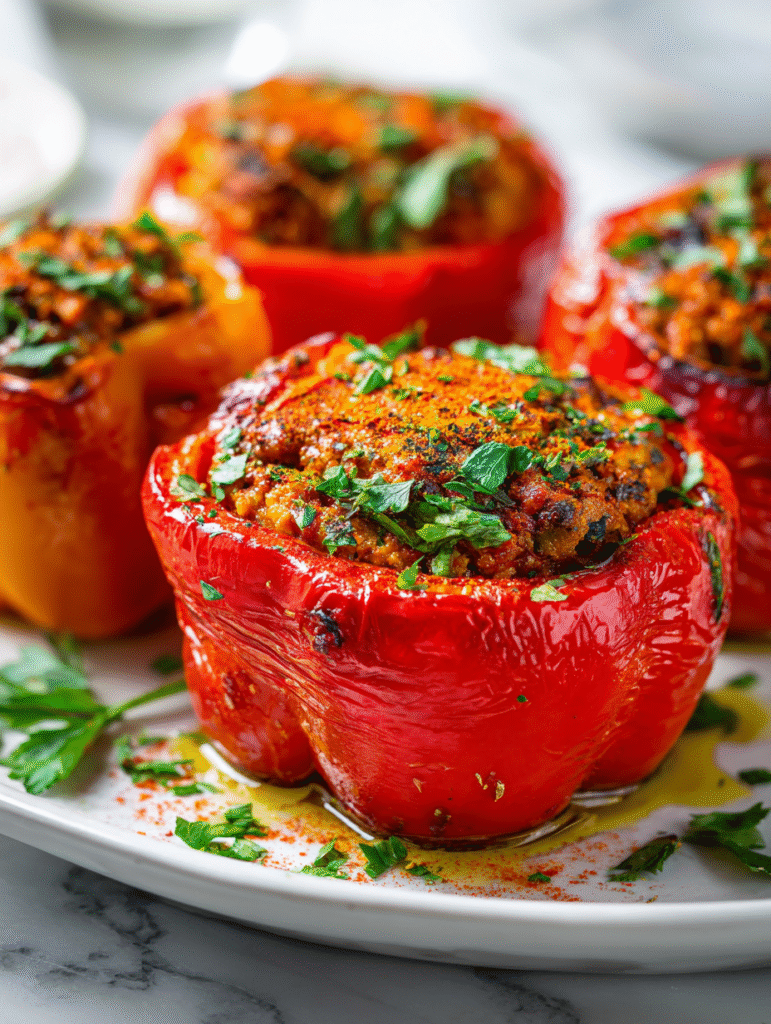
Vegan stuffed peppers often get a bad rap for being bland or just a side dish, but I like to think of them as a blank canvas for smoky, cheesy flavors that mimic traditional comfort food. The trick is in the unexpected ingredients—roasted tomatoes and toasted nuts—that add depth and richness without any dairy. It’s a dish that surprises even non-vegans with its indulgent, satisfying profile.
What I love about this recipe is how adaptable it is. You can tweak the spices, insert your favorite herbs, or swap in different nuts to keep it interesting. Plus, it’s a one-pan wonder that’s easy to assemble and even easier to impress, whether it’s for a weeknight dinner or a casual gathering.
Making these peppers feels like a small act of rebellion—vegan, yes, but also deeply flavorful and comforting. It’s a reminder that plant-based doesn’t mean sacrificing flavor, especially when you lean into the smoky, nutty, cheesy notes that make this dish so memorable.
Focusing on how to make vegan stuffed peppers that mimic the smoky, cheesy richness of traditional versions, using unexpected ingredients like roasted tomatoes and toasted nuts to create a satisfying, indulgent flavor profile.
Vegan Peppers with a Smoky Twist
- This dish reminds me of summer evenings cooking outdoors, the smell of roasted peppers filling the air with a sense of nostalgia.
- I used to shy away from stuffed peppers because I thought they were too complicated, but this recipe made me realize how forgiving and easy they are.
- There’s a quiet pride in filling these peppers with a perfect mix of smoky, cheesy, and nutty flavors that even my non-vegan friends ask for again.
- Every time I make these, I feel a small thrill of rebellion—vegan doesn’t mean boring or bland, especially when seasoned with smoked paprika and lemon zest.
The inspiration behind this dish
- This recipe came about from a messy kitchen experiment that turned into a revelation. I was trying to make something hearty and smoky with what I had—roasted peppers, leftover nuts, and a jar of sun-dried tomatoes. The flavors clicked quickly, and I realized this could be more than just a one-off dish. It became my go-to for nights when I want something satisfying but still plant-based and simple.
- What fuels me is how this dish feels like a little rebellion—vegan, yes, but rich and indulgent enough to fool anyone. It’s a reminder that flavor doesn’t have to come from cheese or meat. Instead, it’s all about balancing smoky, nutty, and bright notes in a way that keeps my kitchen lively and my taste buds happy.
- heading
- story_type
Historical and Cultural Roots
- Stuffed peppers date back centuries, with roots in Mediterranean and Middle Eastern cuisines where vegetables were filled with grains and herbs.
- Vegan versions emerged in the 20th century as plant-based diets gained popularity, emphasizing flavor and texture that mimic traditional comfort foods.
- The use of roasted peppers and smoky seasonings in vegan recipes often mirrors techniques from Spanish and Mexican culinary traditions, adding depth and warmth.
Key ingredients and tips
- Bell peppers: I prefer to use organic, firm peppers that are bright in color and have a slight give when pressed. For a sweeter touch, choose red or orange varieties. If your peppers are soft or blemished, skip or use for another dish.
- Quinoa: Toasted lightly before cooking, it adds a nutty aroma that complements the smoky flavors. Rinse well to avoid bitterness, and cook with vegetable broth for extra depth. If you’re short on time, use pre-cooked grains or rice.
- Sun-dried tomatoes: They pack a concentrated, tangy sweetness that really lifts the filling. Soak in hot water if dry, then chop finely. If you don’t have sun-dried, roasted cherry tomatoes work well for a similar zing.
- Nuts: Toasted walnuts or pecans bring a crunchy, smoky contrast. I love the texture they add, but if you have allergies or prefer softer textures, use toasted seeds like pumpkin or sunflower. For a creamier filling, blend some nuts into the mixture.
- Smoked paprika: This is the secret to that deep smoky flavor without any actual smoke. Use a good-quality one, and be generous—your nose will thank you. If you want more heat, add a pinch of cayenne.
- Plant-based cheese: Look for a melting type, like cashew-based or coconut oil-based cheeses. If you’re avoiding processed foods, mash some avocado with lemon juice for a creamy, bright alternative. It won’t melt but adds richness.
- Fresh herbs: Parsley, basil, or cilantro—whatever you have—bring life to the dish. Chop finely and sprinkle on top after baking for a fresh burst. Dried herbs won’t give the same vibrancy, so adjust accordingly.
Spotlight on key ingredients
Bell peppers:
- I look for firm, brightly colored peppers with a slight give. Blemished ones should be used soon or avoided, as they won’t hold up well during roasting.
- Their charred, smoky aroma when roasted is what makes this dish memorable. The slight sweetness intensifies, balancing the savory filling.
Sun-dried tomatoes:
- I soak them in hot water if they’re dry, releasing a concentrated tangy sweetness. They add a vibrant, oozy burst of flavor in every bite.
- Chop finely to distribute evenly. Their chewy texture contrasts beautifully with the soft, roasted peppers and crunchy nuts.
Notes for ingredient swaps
- Vegan Cheese: Use mashed avocado with lemon juice for creaminess, though it won’t melt like store-bought cheese.
- Bell Peppers: Try poblano or hatch chilies for a smoky kick, or use zucchini boats for a milder flavor.
- Nuts: Swap walnuts for toasted sunflower or pumpkin seeds for a softer crunch and nutty flavor.
- Sun-Dried Tomatoes: Use roasted cherry tomatoes or fresh sun-ripened tomatoes for a brighter, juicier filling.
- Smoked Paprika: If you lack smoked paprika, use chipotle powder or a dash of liquid smoke for smoky depth.
- Herbs: Fresh thyme or oregano can replace parsley or basil, adding different aromatic notes.
- Grains: Quinoa can be replaced with cooked millet or bulgur for a different texture and flavor profile.
Equipment & Tools
- Oven: To roast peppers and bake the stuffed peppers.
- Baking dish: Holds peppers during roasting and baking.
- Skillet: To toast nuts and quinoa for flavor.
- Knife: To cut peppers, chop ingredients.
- Cutting board: Work surface for chopping vegetables and nuts.
- Spoon or small scoop: To stuff the peppers evenly.
Step-by-step guide to stuffed peppers
- Preheat your oven to 200°C (390°F). Slice the tops off 4 large bell peppers, removing seeds and membranes. Place them in a baking dish, cut side up, and roast for 20 minutes until slightly softened and charred at the edges. Remove and set aside to cool slightly.
- While peppers roast, prepare the filling. In a dry skillet over medium heat, toast 1/2 cup chopped nuts (walnuts or pecans) for 3-4 minutes, until fragrant and slightly toasted. Transfer to a bowl.
- In the same skillet, add 1 cup rinsed quinoa and toast for 2 minutes, stirring constantly. Pour in 2 cups vegetable broth, bring to a boil, then reduce heat to low. Cover and simmer for 15 minutes until fluffy and the liquid is absorbed. Let cool a bit.
- Chop 1/2 cup sun-dried tomatoes finely. In a large bowl, combine the cooked quinoa, sun-dried tomatoes, toasted nuts, 1 teaspoon smoked paprika, 1/2 teaspoon salt, and freshly ground black pepper. Drizzle in 1 tablespoon olive oil and mix well.
- Taste the mixture. Adjust seasoning with more smoked paprika or salt if needed. For extra creaminess, mash in a small ripe avocado if desired.
- Stuff each roasted pepper with the filling, pressing gently to pack. Place the stuffed peppers back in the baking dish. Bake at 200°C (390°F) for an additional 10-12 minutes, until the filling is heated through and slightly crispy on top.
- Remove from oven and let rest for 5 minutes. Garnish with chopped fresh herbs like parsley or basil before serving. Serve warm, with a squeeze of lemon if desired.
Let the stuffed peppers rest for 5 minutes after baking. Garnish with chopped herbs and a squeeze of lemon for brightness. Serve warm, directly on plates with any accumulated juices.
How to Know It’s Done
- Peppers are tender and slightly charred at edges.
- Filling is hot, slightly crispy on top, and well-seasoned.
- Quinoa is fluffy and fully cooked, not chalky or underdone.
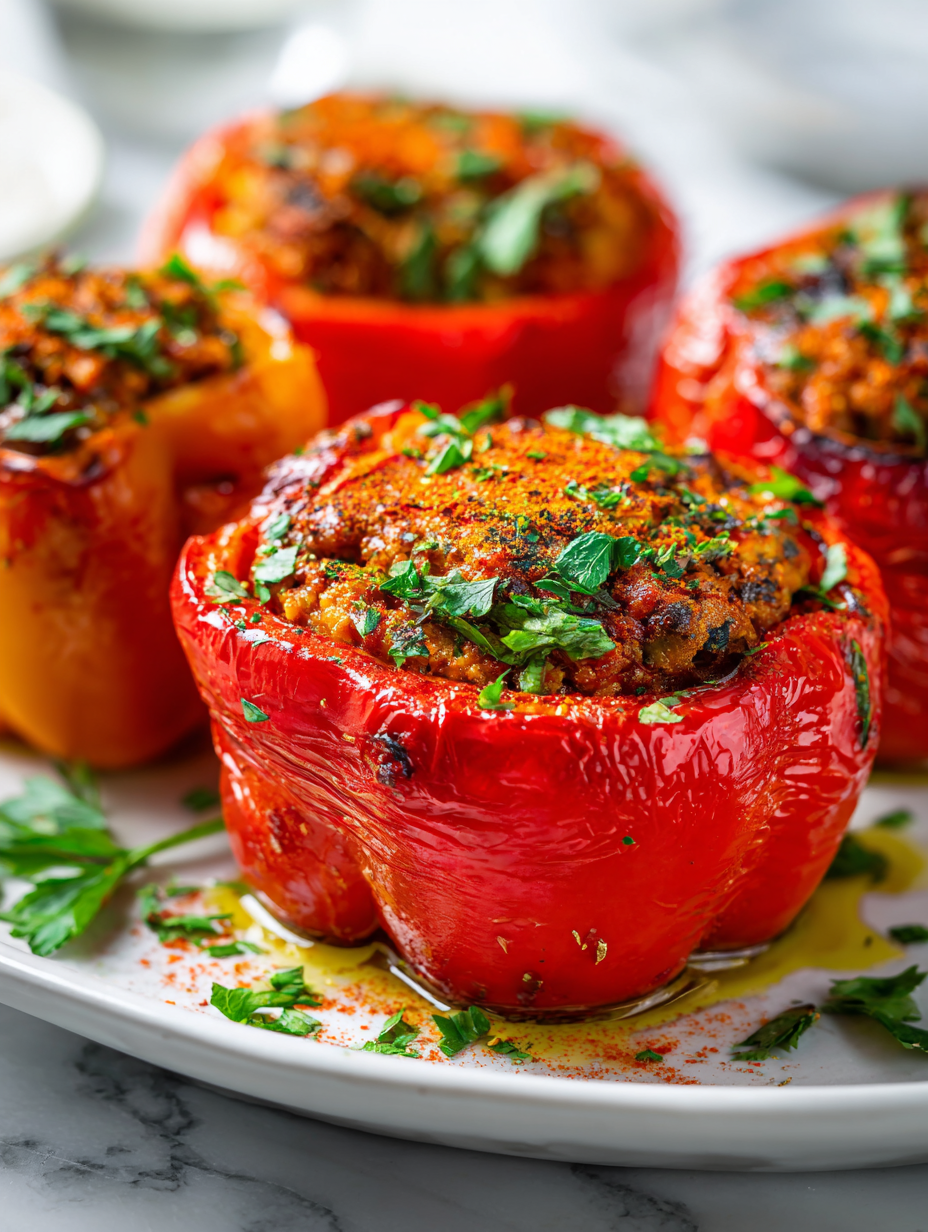
Vegan Smoky Stuffed Peppers
Ingredients
Equipment
Method
- Preheat your oven to 200°C (390°F). Slice the tops off the bell peppers and carefully remove the seeds and membranes. Place them cut side up in a baking dish, ready to be roasted.
- Toast the nuts in a dry skillet over medium heat until fragrant and golden, about 3-4 minutes, stirring frequently. Transfer to a bowl and set aside.
- In the same skillet, add the rinsed quinoa and toast for 2 minutes until it releases a nutty aroma. Pour in the vegetable broth, bring to a boil, then reduce heat to low, cover, and simmer for 15 minutes until fluffy. Remove from heat and let cool slightly.
- Chop the soaked sun-dried tomatoes finely. In a large bowl, combine the cooked quinoa, chopped sun-dried tomatoes, toasted nuts, smoked paprika, and a drizzle of olive oil. Mix well to incorporate all flavors evenly.
- If using, mash the ripe avocado into the mixture for extra creaminess and richness, stirring until smooth. Season with salt and pepper to taste.
- Gently stuff each roasted pepper with the quinoa filling, pressing softly to pack the mixture in. Place the filled peppers back in the baking dish.
- Bake the peppers at 200°C (390°F) for an additional 10-12 minutes, until the filling is heated through and slightly crispy on top. You’ll smell the smoky spices and hear a gentle bubbling as they cook.
- Remove from the oven and let rest for 5 minutes. Garnish with freshly chopped herbs for a burst of color and freshness.
- Serve these smoky, hearty stuffed peppers warm, accompanied by a squeeze of lemon or your favorite sauce for extra brightness.
Pro tips for perfect stuffed peppers
- Bold flavors: Toast nuts until fragrant and slightly golden to bring out their smoky aroma.
- Layer aromas: Sauté sun-dried tomatoes briefly before mixing to intensify their tangy sweetness.
- Use high heat: Roast peppers at 200°C (390°F) until charred at edges for a smoky, tender bite.
- Pack gently: When stuffing peppers, press filling softly to avoid spilling and uneven cooking.
- Broil for finish: Broil stuffed peppers for 2-3 minutes at the end to develop a slightly crispy top.
- Taste and adjust: Always taste the filling before stuffing; adjust seasoning with smoked paprika or salt.
- Rest before serving: Let baked peppers sit for 5 minutes to allow flavors to meld and filling to set.
Common mistakes and how to fix them
- FORGOT to preheat oven: Always preheat to 200°C (390°F) for even roasting and baking.
- DUMPED filling too quickly: Gently pack the filling into peppers to prevent overflow and uneven cooking.
- OVER-TORCHED peppers: Cover with foil if edges brown too fast, or lower oven temp slightly.
- MISSED resting time: Let peppers rest 5 minutes after baking for juices to settle and flavors to meld.
Quick fixes and pantry swaps
- When peppers are overcooked, splash with a little water, cover, and steam briefly to revive firmness.
- If filling is too dry, open a jar of olives or pickles for a salty, briny boost—instant flavor rescue.
- DUMPED too much oil into the filling? Pat nuts dry before toasting to prevent excess greasiness.
- Splash a squeeze of lemon or a dash of vinegar if the dish feels flat or dull in flavor.
- Patch flavor gaps with a pinch of smoked paprika or extra herbs—your nose will pick up the difference.
Prep, store, and reheat tips
- Prepare the filling mixture and refrigerate for up to 24 hours; flavors deepen and meld overnight, making assembly quicker.
- Roast peppers a day ahead; once cooled, keep them in an airtight container in the fridge for up to 2 days to prevent wilting.
- Reheat the stuffed peppers in a 180°C (355°F) oven for 10-12 minutes until warmed through, the filling will become oozy and fragrant.
- Leftovers can be stored in the fridge for up to 3 days; reheat until the filling is hot and bubbling, with a slight crackle on top for best texture.
Top questions about vegan stuffed peppers
1. How do I choose the best peppers?
Look for firm, brightly colored peppers with a slight give when pressed. Blemished ones might not roast well.
2. Can I use other grains or sun-dried tomatoes?
Use cooked grains like quinoa or rice, and soak sun-dried tomatoes if they’re dry for better texture and flavor.
3. What’s the ideal oven temperature for roasting peppers?
Roast peppers at 200°C (390°F) until slightly charred for smoky flavor and tender bites, about 20 minutes.
4. How do I prevent spilling when stuffing peppers?
Stuff peppers gently to avoid spilling filling; press down slightly to pack, then bake until hot and crispy on top.
5. Can I prepare this dish ahead of time?
Refrigerate prepared filling up to 24 hours; reheat stuffed peppers at 180°C (355°F) for 10 minutes for best texture.
6. What if my peppers are overcooked or too soft?
If peppers become too soft, cover with foil and lower oven temp slightly during reheating to prevent overcooking.
7. What are good substitutions for smoked paprika?
Replace smoked paprika with chipotle powder or a dash of liquid smoke for smoky depth, adjusting for heat preference.
8. Can I substitute dried herbs for fresh?
Use fresh herbs like parsley or basil for a vibrant flavor boost; dried herbs will be less lively.
9. What are good nut or seed alternatives?
If nuts are unavailable, toasted pumpkin or sunflower seeds add crunch and nuttiness with a different flavor profile.
10. How do I store leftovers?
Look for peppers with a slight give and vibrant color. Avoid those with blemishes or soft spots for roasting.
These vegan stuffed peppers are a reminder that plant-based can be deeply satisfying without sacrificing flavor or comfort. The smoky, nutty aroma filling the kitchen makes it hard to wait, and the tender peppers hold a filling that’s rich and textured, even without cheese.
Whenever I make this dish, I think about how simple ingredients can come together into something unexpectedly indulgent. It’s perfect for nights when I want something hearty but still fresh and vibrant. Honestly, it’s a dish I keep coming back to, especially when I need a little culinary reassurance.

Hi, I’m Clara Sage – and welcome to my kitchen of small revelations.
I created The Language of Aha not just as a recipe blog—but as a space to celebrate the little lightbulb moments that happen in the kitchen.